There are several veteran gamers who've complained about how 4th Edition D&D has become more reliant on miniatures. Imagine my surprise when this was confirmed by browsing through the Dungeon Master's Guide: it lists D&D Miniatures as "What You Need to Play". Of course I'd like to qualify that statement. I don't think the current edition of D&D is reliant in miniatures. It has, however, become more reliant on the battle grip or a map (this is either more retro-D&D for you or a slight increase in reliance if your basis is D&D 3.X). What's the difference? Well, honestly, you don't need miniatures for the game. If spending money is a concern for you, you can simply use tokens, counters, or markers to represent your PCs and the monsters you're facing. (You can check out Fiery Dragon's free PDF of counters for use in Keep of the Shadowfell.) The battle grid, on the other hand, reflects the tactical aspects injected into the game.
The first nuance of the game is the decision to stick to 1-inch squares. Now many tactically-oriented gamers will praise the value of hex-based maps. To avoid a long discussion on the matter, I'll simply agree with the superiority of hex-based maps. However, there's one advantage 1-inch squares have over hexes: they're simpler to create. If I were to make my own D&D map, it's really as simple as getting a ruler and a marker. Squares are easier to draw than hexagons, especially when you're in a rush. And D&D 4E is a game where you might want to create your own maps as well as take advantage of the various products out there (whether it's Dungeon Tiles or third-party maps). I'll explain below how to take advantage of the terrain.
The second nuance of the game is simplifying movement, especially consistently counting diagonals as one square. This honestly sped up our game as our PCs moved into optimal positions and it was simple as counting 1, 2, 3, 4, 5 (or in the case of one player, 5, 10, 15, 20). That's not to say opposition to movement still isn't there. There's Difficult Terrain for example which counts as 2 squares. The departure from the 3.X movement rules however has avoided questions like "how much movement is it costing me to travel diagonally twice over Difficult Terrain?". Also, the addition of push/pull/slide effects might complicate matters if you do use the "every other diagonal costs 2 squares" rule. I mean what happens if you choose to slide an opponent two squares diagonally? Is that possible? Thankfully, the simplification of the rules avoids this type of questions. And if it's game balance that you're concerned about, just remember this: everyone (PCs or Monsters) can move diagonally without penalties, so it's an even playing field!
The third nuance of the game are the push/pull/slide effects. When I first read the rules, the inclusion of such effects baffled me. I mean why bother? My first impression was that such effects would be limited to creating flanking maneuvers. After running the game however, I discovered I was wrong. The push/pull/slide effects leads to interesting tactical situations not apparent until you play the game. For example, there was one scenario when the party's Fighter and Paladin charged a pack of wolves. Thanks to initiative and some smart movements on my part, I eventually surrounded them to the point that I even knocked one of the PCs unconscious. Now in 3.X, if you're surrounded on all adjacent sides, there's not really much else you can do aside from killing one of your opponents and making a break for it. In this edition of the game, the party's Rogue and Warlord eventually broke through the "wall of wolves" to rescue their teammates as well as creating flanking and tactically-superior maneuvers (i.e. placing the wolves in Difficult Terrain, pushing them to one side, etc.). Push/pull/slide have given the game an extra layer of depth that's not readily apparent but will keep combat interesting even if you're fighting kobolds for the nth time.
The fourth nuance of the game is that terrain actually matters now. It can be a table in a bar, bushes in the wilderness, or a coffin in a dungeon. This is why you want to create your own maps or even use third-party maps as is: because the details matter. Between the push/pull/slide effects, the various terrain effects (Difficult Terrain, Blocking Terrain, Challenging Terrain, Obscuring Terrain, etc.), and Traps/Hazards, the lay of the land matters. Want to jump over the bar table to reach the goblin at the other end? Make an Athletics/Acrobatics check to do so. How about that Brute charging the party's Wizard? Push them into that wilderness where they'll slow to a crawl! Oh, and that coffin you're standing beside? It's a trigger for those flying darts! D&D 4E can be Iron Heroes or Tomb of Horrors, depending on your play style. Moreover, those random details in maps start to matter. Don't remove them, work with them!
Fifth, because of the emphasis on larger and bigger maps, ranged attackers start to matter again. I mean when I was playing 3.X, if anyone was playing a ranged character, any opponent could probably get to them in a charge. Aside from that, they were reduced to 5-ft. steps and then shooting. Here, ranged attackers (either on the side of the players or the GM) start to matter again. Finding a tactically safe position to fire from afar is a viable method in the game, just as artificially holding off the attackers from the party's Wizard or Ranger thanks to the Defenders. The terrain features also add options to the game, whether for ranged attackers (i.e. Difficult Terrain) or against them (i.e. Obscuring Terrain). Melee fighters must also choose their abilities wisely as their attacks can help their allies (pushing an enemy into the line of fire) or hinder them (tripping the enemy gives the ranged attacker penalties to hit).
Let's wrap things up by combining all of these elements into a concrete example. Let's say you're using a chessboard as a battle grid (come on, you know you always wanted to run that chess-based dungeon; see Dragon Magazine #358 for ideas). The PCs are on one side and the Monsters are on the other. The simplest, and perhaps most boring method, is to have the squares have no impact on the game. But let's see what kind of games we can run by changing all the black squares. If we assume all the black squares are Difficult Terrain, then it suddenly slightly becomes more difficult to get to the ranged attackers in each party. Also, this encourages diagonal movement for the melee attackers as passing through white squares is the optimum choice when it comes to movement. The Warlord and the Rogue on the other hand, both of which have abilities to slide and/or move before/after the attack, might move through those black squares to catch enemies unaware. Change the black squares to Blocking Terrain and suddenly the ranged attackers are at a disadvantage as many of their opponents aren't in their line of sight or have cover at the very least. Melee characters or the Wizard will be able to block off certain parts of the terrain completely, isolating monsters or "herding" them into the line of fire. Switching the black squares to Challenging terrain (i.e. skill checks are needed) shuffles things again. Lightly-armored and skilled characters might gamble on the black squares while heavily-armored characters will most likely travel through white squares. Ranged attackers again are at an advantage in this set-up, but it's not always as clear-cut, especially if you mix it up with Obscuring terrain. You could even include Hazards, Traps, or simply alternate effects (Blocking Terrain simply shifts to Challenging Terrain, either every other round or at odd numbers in the initiative track) to produce a diverse set of effects.
That's not to say you couldn't do all of this in previous editions of the game but with more defined roles (i.e. The Fighter impedes opponents from moving away from him, the Warlord able to slide and move allies into other squares, etc.) and rules that support this style of play (it's explicitly written in the Dungeon Master's Guide), the terrain and tactical movement starts to matter more and opens up new strategies for the game.
Sunday, June 15, 2008


Friday, June 13, 2008
Top 10 Best-Sellers as of 2008/6/8
From USA Today's best-seller list (you can find out their basis here):
- When You Are Engulfed in Flames by David Sedaris
- New Moon by Stephenie Meyer
- Twilight by Stephenie Meyer
- The Last Lecture by Randy Pausch and Jeffrey Zaslow
- Eclipse by Stephenie Meyer
- High Noon by Nora Roberts
- Nothing to Lose by Lee Child
- Lover Enshrined by J.R. Ward
- The Shack by William P. Young
- Step on a Crack by James Patterson and Michael Ledwidge
Post-Independence Day Plug
One of the conceits of the film Independence Day is that America--and by extension, the world--won its independence from aliens on that particular holiday.
Well, yesterday was the Philippines's Independence Day (although the holiday was moved to the previous Monday so that people can enjoy a three-day weekend). After the celebration, the zombies came.
It's been raining as of late and whenever I'd pass a street or pothole, it would be quite wet. Today, it's wet all right but not due to the rain. There's also some difficulty navigating through the streets as they're either littered with parts unmentionable or cordoned off by the various traffic enforcers.
When I was four, I remember tanks parading Edsa, commemorating the recently-concluded Edsa Revolution. The tanks are currently stationed at Edsa but civilians don't get to touch them. Instead, they're surrounded by platoons, and snipers are probably hidden in the MRT's railways.
I have a fashion photo shoot later for work. Hopefully the photo doesn't turn out like this:
Well, yesterday was the Philippines's Independence Day (although the holiday was moved to the previous Monday so that people can enjoy a three-day weekend). After the celebration, the zombies came.
It's been raining as of late and whenever I'd pass a street or pothole, it would be quite wet. Today, it's wet all right but not due to the rain. There's also some difficulty navigating through the streets as they're either littered with parts unmentionable or cordoned off by the various traffic enforcers.
When I was four, I remember tanks parading Edsa, commemorating the recently-concluded Edsa Revolution. The tanks are currently stationed at Edsa but civilians don't get to touch them. Instead, they're surrounded by platoons, and snipers are probably hidden in the MRT's railways.
I have a fashion photo shoot later for work. Hopefully the photo doesn't turn out like this:
Thursday, June 12, 2008
My D&D 4E Books Are Here!
Bad News: My local gaming store doesn't carry the latest 4E Dungeons & Dragons books (or the latest 3.5 books either for that matter).
Good News: The 4E Dungeons & Dragons books just arrived at my local comic store.
For the past few weeks, I've been passing by Comic Quest every Thursday (they get their stocks every Wednesday evening but fate has not been kind as ever since Memorial Day, their stocks have been arriving a day or two late--this isn't limited to just that particular comic shop) hoping to catch Keep on the Shadowfell. Today, I passed by and disposed of half of my monthly income. It was a windfall as not only was Keep on the Shadowfell there but so were the 4E Boxed Set and some dice. Here's the breakdown:
Keep on the Shadowfell: P1,500 or $35.00
Dungeons & Dragon Dice: P600 or $14.00
Player's Handbook: P1,500 or $35.00
Boxed Set: P4,000 or $93.00
I only bought Keep on the Shadowfell and the Boxed Set. I'm still deliberating whether to buy the dice mainly because the local gaming store only sells d6's (Warhammer!) and d20s (Magic: The Gathering life tracker? D&D Miniatures?).
Now I'm broke. But I have a game on Saturday, so...
Good News: The 4E Dungeons & Dragons books just arrived at my local comic store.
For the past few weeks, I've been passing by Comic Quest every Thursday (they get their stocks every Wednesday evening but fate has not been kind as ever since Memorial Day, their stocks have been arriving a day or two late--this isn't limited to just that particular comic shop) hoping to catch Keep on the Shadowfell. Today, I passed by and disposed of half of my monthly income. It was a windfall as not only was Keep on the Shadowfell there but so were the 4E Boxed Set and some dice. Here's the breakdown:
Keep on the Shadowfell: P1,500 or $35.00
Dungeons & Dragon Dice: P600 or $14.00
Player's Handbook: P1,500 or $35.00
Boxed Set: P4,000 or $93.00
I only bought Keep on the Shadowfell and the Boxed Set. I'm still deliberating whether to buy the dice mainly because the local gaming store only sells d6's (Warhammer!) and d20s (Magic: The Gathering life tracker? D&D Miniatures?).
Now I'm broke. But I have a game on Saturday, so...
Plug: Conrad Williams at the Shirley Jackson Awards Blog
It's Conrad Williams's turn to get interviewed over at the Shirley Jackson Awards Blog.
2008/6/12 Tabletop RPG Podcasts
Every Thursday, I post links to various podcasts that deals with tabletop RPGs.
Tabletop RPG (Mostly)
General Discussions/Reviews/Everything Else
- Pulp Gamer episodes: The Settlers of Catan (The Game Kennel), First Look at 4th Edition (Out of Character), Games in the Library (GTS Seminars).
- Fist Full of Comics and Games episodes: Monarchs Comics Briefing for May 30, 2008, Monarchs Comics Briefing for June 4, 2008.
- Geek Radio Daily episodes: June 5, 6, 9, 10, 11; Forgotten Cartoons (That Didn't Work) (GRD Weekly).
- Fell Calls!, a podcast on the Iron Kingdoms, episodes: Just Like WoW.
- Secret Identity episodes: Issue #117.
- The Order 66 Podcast, a podcast on d20 Star Wars Saga Edition, episodes: Off the Railroad Tracks and In the Weeds.
- 3.5 Private Sanctuary, a D&D 3.5 Podcast, has an episode on Pathfinder 3 Alpha Reviewed.
- Bear Swarm! episodes: An Interesting Fact, 4th Edition Dungeons & Dragons Midnight Release (bonus).
- This Modern Death episodes: Player Input in World Building.
- Ninja vs Pirates episodes: Where is Dungeons & Dragons Insider?
- Brilliant Gameologists episodes: The Joys of Min/Maxing (MinMax)
- Amorphous Blob Games episodes: Review: Dungeons & Dragons 4th Edition.
- All Games Considered episodes: Transitions and Demon Hunters.
- 2d6 Feet in a Random Direction episodes: Episode 33.
- Fear the Boot episodes: Rational Shame and Party Conflict, Creating Party Conflict.
- Have Games, Will Travel episodes: For a Few More Games #9.
- Wandering Geek episodes: Heroes & Villains (WGPR).
- Echoes from the Rifts, a podcast on Palladium Books, episodes: Goodbye.
- Geekerati episodes: The continuing evolution of science fiction.
- What Are You Working On? episodes: Episode 16.
- Secret Identity interviews Antony Johnston (Wasteland).
- Fist Full of Comics and Games episodes: Keith Dallas and Jim Beard from TwoMorrows Publishing’s Flash Companion.
- Stabbing Contest chats with a bunch of gamers: Ryan Macklin, Mickey, and WillH.
- Heroic Cthulhu episodes: Gamer Talk Eighteen (1, 2), Gamer Talk Nineteen (1, 2, 3), Suicide Girls (1, 2, 3, 4, 5), Shop Till You Drop (1, 2, 3, 4, 5, 6, 7), Frenzy Two (1, 2, 3, 4, 5, 6, 7, 8, 9, 10, 11, 12, 13), Basketball (1, 2, 3, 4).
- RPGMP3 episodes: Rolemaster (3), Keep on the Shadowfell (1),
- Dragon Magazine podcasts: Penny Arcade/PVP Podcast Episode 2.
- Gamer's Haven episodes: Keep on the Shadowfell (1).
- Fist Full of Comics and Games episodes: The Red Star from Green Ronin (3).
- Colorado Story Games episodes: Dirty Secrets (2).
- Virtual Play episodes: Dungeons & Dragons 4E.
- Role Playing Public Radio episodes: GURPS Yakuza - Stray Dog.
- Gamer Radio Zero features Dungeons & Dragons Insider and 4E Launch and D&D Game Day, Raven's Art, and PHB2 Spoilers.
Wednesday, June 11, 2008
Essay: Finding The Philippines in Western Speculative Fiction
Every Wednesday, I have an essay on any topic that catches my fancy!
Growing up in the Philippines, one of the things I noticed early on was the clash of cultures. One part wants to be Asian, another part American, and a third part to be distinctly Filipino--whatever that means. This phenomenon could be seen in our language, our laws, our religion, our architecture, and in our entertainment (TV, Radio). When it came to literature however, I simply stuck to reading books from the West, mainly because I was more proficient with English than Filipino (and it seems that many Filipinos forget too easily that English was the national language of the country not too long ago), and because they were the books I found in the bookstore and in the library. It wasn't until high school that I realized that I enjoyed reading science fiction and fantasy and it was only then that my personal odyssey began.
My first foray into the genre would be the mass-market paperback authors (mainly because they were the only books available in the bookstore): Terry Brooks, Terry Goodkind (who had just debuted at the time), David Eddings, Robert Jordan, etc. Perhaps because of the fact that the fantasy I was reading was disjointed from the real world (i.e. they're set in their own setting), I simply took it all in as a reader. Eventually though, as my reading tastes evolved and I swallowed the pro-Filipino propaganda drilled into me by the academe, I started to wonder if the fantasy and science fiction stories I read would forever be filled with Western constructs.
To be fair, Western speculative fiction has incorporated various cultures in its long history. There's simply a plurality of cultures in Frank Herbert's Dune. Raymond E. Feist's Riftwar Saga has a Japanese influence that was later expanded by Janny Wurts. Roger Zelazny's Lord of Light would never exist without the influence of Indian myth and religion. But as for the Philippines, even until now, I'm not quite sure how the Western world or the global world sees us. Are we part of history 101? Or are we simply some obscure third-world country that scholars are aware of? Is there more to the Philippines beyond World War II and People Power?
Luckily, Robert Heinlein's Starship Troopers had been adapted into a movie at the time. When I finally found a copy of the book, the text took on an unexpected "surprise" twist thanks to my heritage. For a brief time, Filipino science fiction fans rallied under the idea that they were oppressed because of the changes made to the movie, specifically changing the ethnicity of its protagonist. In retrospect, the Filipino reference in the novel is only cosmetic (I mean let's face it: whether Heinlein's hero was Filipino or Puerto Rica or Chinese, it would have little impact on the story) although I'm sure Filipino readers would get a kick out of the fact that the main character of a popular science fiction novel shared the same heritage as themselves.
This made me realize that as a Filipino reader, I was thrilled at the occasional Filipino reference. It's uncommon enough unlike ninjas and terra cotta warriors and kitsunes which have become overused (well, at least the ninjas part). Again, the reference doesn't have to be huge. For me, it's a big treat when I read stories like "Vacancy" by Lucius Shepard, "The Night Market" by Holly Black, or "The Occultation" by Laird Barron as they reference the Philippines or draw from its vast lore. Speculative fiction stories don't need to take place outside of my country and my culture has appeal to other speculative fiction fans.
One thing I'm starting to notice are the Australian speculative fiction writers. I enjoy Terry Dowling and Margo Lanagan's stories and they're not the only Australian writers of the genre. Sometimes, they incorporate into their fiction Australia as a setting or feature Australian protagonists--and it works perfectly with the story. I'm hoping one day the same can be said for Filipino writers and Philippine fiction. As it is, the only noteworthy stories (internationally) so far have been Dean Alfar's "L'Aquilone du Estrellas (The Kite of Stars)" and Kristin Mandigma's "Excerpt from a Letter by a Social-realist Aswang". Hopefully, more fiction will turn up in the future (mental note: stop writing these essays and start working on those stories!).
This makes me wonder: among other science fiction and fantasy fans, what other cultures haven't yet been fully explored in fiction?
Growing up in the Philippines, one of the things I noticed early on was the clash of cultures. One part wants to be Asian, another part American, and a third part to be distinctly Filipino--whatever that means. This phenomenon could be seen in our language, our laws, our religion, our architecture, and in our entertainment (TV, Radio). When it came to literature however, I simply stuck to reading books from the West, mainly because I was more proficient with English than Filipino (and it seems that many Filipinos forget too easily that English was the national language of the country not too long ago), and because they were the books I found in the bookstore and in the library. It wasn't until high school that I realized that I enjoyed reading science fiction and fantasy and it was only then that my personal odyssey began.
My first foray into the genre would be the mass-market paperback authors (mainly because they were the only books available in the bookstore): Terry Brooks, Terry Goodkind (who had just debuted at the time), David Eddings, Robert Jordan, etc. Perhaps because of the fact that the fantasy I was reading was disjointed from the real world (i.e. they're set in their own setting), I simply took it all in as a reader. Eventually though, as my reading tastes evolved and I swallowed the pro-Filipino propaganda drilled into me by the academe, I started to wonder if the fantasy and science fiction stories I read would forever be filled with Western constructs.
To be fair, Western speculative fiction has incorporated various cultures in its long history. There's simply a plurality of cultures in Frank Herbert's Dune. Raymond E. Feist's Riftwar Saga has a Japanese influence that was later expanded by Janny Wurts. Roger Zelazny's Lord of Light would never exist without the influence of Indian myth and religion. But as for the Philippines, even until now, I'm not quite sure how the Western world or the global world sees us. Are we part of history 101? Or are we simply some obscure third-world country that scholars are aware of? Is there more to the Philippines beyond World War II and People Power?
Luckily, Robert Heinlein's Starship Troopers had been adapted into a movie at the time. When I finally found a copy of the book, the text took on an unexpected "surprise" twist thanks to my heritage. For a brief time, Filipino science fiction fans rallied under the idea that they were oppressed because of the changes made to the movie, specifically changing the ethnicity of its protagonist. In retrospect, the Filipino reference in the novel is only cosmetic (I mean let's face it: whether Heinlein's hero was Filipino or Puerto Rica or Chinese, it would have little impact on the story) although I'm sure Filipino readers would get a kick out of the fact that the main character of a popular science fiction novel shared the same heritage as themselves.
This made me realize that as a Filipino reader, I was thrilled at the occasional Filipino reference. It's uncommon enough unlike ninjas and terra cotta warriors and kitsunes which have become overused (well, at least the ninjas part). Again, the reference doesn't have to be huge. For me, it's a big treat when I read stories like "Vacancy" by Lucius Shepard, "The Night Market" by Holly Black, or "The Occultation" by Laird Barron as they reference the Philippines or draw from its vast lore. Speculative fiction stories don't need to take place outside of my country and my culture has appeal to other speculative fiction fans.
One thing I'm starting to notice are the Australian speculative fiction writers. I enjoy Terry Dowling and Margo Lanagan's stories and they're not the only Australian writers of the genre. Sometimes, they incorporate into their fiction Australia as a setting or feature Australian protagonists--and it works perfectly with the story. I'm hoping one day the same can be said for Filipino writers and Philippine fiction. As it is, the only noteworthy stories (internationally) so far have been Dean Alfar's "L'Aquilone du Estrellas (The Kite of Stars)" and Kristin Mandigma's "Excerpt from a Letter by a Social-realist Aswang". Hopefully, more fiction will turn up in the future (mental note: stop writing these essays and start working on those stories!).
This makes me wonder: among other science fiction and fantasy fans, what other cultures haven't yet been fully explored in fiction?
Tuesday, June 10, 2008
Plug: Christopher Golden at the Shirley Jackson Awards Blog
The talented Mr. Christopher Golden is interviewed over at the Shirley Jackson Awards Blog.
Feature: Interview with John Joseph Adams
Every Tuesday, I'll have a feature article posted.
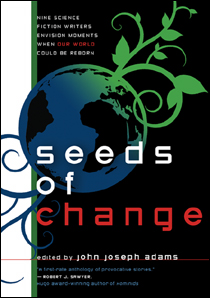
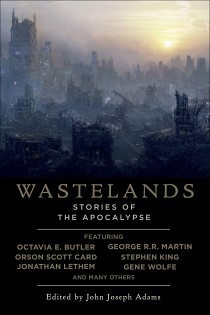

John Joseph Adams is the assistant editor at The Magazine of Fantasy & Science Fiction. In addition, he is the editor of anthologies like Wasteland: Stories of the Apocalypse and Seeds of Change. He has also contributed to various publications including Kirkus Review, Publishers Weekly, Intergalactic Medicine Show, and SCI FI Wire.
Thanks for agreeing to the interview. First off, between the Pirate Issue of Shimmer Magazine, Wasteland: Stories of the Apocalypse, and the upcoming Seeds of Change from Prime Books, do you envision yourself being a famous anthology editor along the lines of Ellen Datlow or Gardner Dozois in the future? Was this something you planned?
Well, it's a bit too early to say I'll one day be as famous as Ellen or Gardner, but it's not out of the realm of possibility. I don't mean that to sound self-aggrandizing, it's just that I'm in a good position to maybe achieve that level of name-recognition. I've also already got another anthology in the pipeline--The Living Dead, which is a reprint anthology of zombie stories--so that should help too.
I don't know that you could say becoming a "famous" editor is something I planned, but becoming an editor with some name-recognition (and perhaps more importantly, good sales figures) was something obviously I want to achieve, if only so that I can continue editing anthologies.
On the other hand, if you're asking, did I plan this out when I was in college, and cunningly landed myself a position at F&SF in order to build a reputation, learn the necessary skills, and develop a list of contacts in order to become an anthologist--well, the answer to that is no. Getting the job at F&SF was itself the goal; all that's come after it has just been gravy.
After the early success of Wastelands, Sean Wallace of Prime approached me about editing an original anthology for him. We bounced some ideas back and forth, and eventually he (or rather, I think it might have been Prime's Stephen Segal) came up with the basic premise for Seeds of Change; they ran it by me, and I immediately liked the idea; I had already decided to do a book for them, so since both they and I were happy with the theme, that's what we went with.
It was exciting for me, being my first opportunity to edit an original anthology. Of course, I had a taste of this while editing Shimmer's pirate issue, which was, essentially, an original anthology. But Seeds was a bit different--I was working with a larger budget, so I could go out and solicit stories from some of my favorite writers.
Editing an original anthology and a reprint anthology are very different animals. For one thing, a reprint anthology requires a lot of research into your theme, and requires a lot of reading--kind of like sifting through a gigantic slush pile, albeit a slush pile wherein the level of quality is pretty high (since it consists of previously published stories by professional writers).
An original anthology doesn't require all of that. The main challenge with an original anthology is that there's a good chance several of the writers who say they'll write something for you won't come through in time, leaving you short and forcing you to go find something to fill a slot in the book. I was fortunate in that that didn't happen to me with Seeds; oh, several writers who said yes did fail to submit something on time, but I ended up with enough good material to fill the book. I'm quite happy with the way it turned out, and looking back am kind of amazed that it came together as well as it did, considering all the things that could have gone wrong.
What was your criteria in picking stories for Seeds of Change? For Wasteland?
For Wastelands, I just wanted to select what I felt were the best post-apocalyptic stories from the last 20-25 years or so. (Also, I purposely avoided selecting anything that had appeared in the anthology Beyond Armageddon, which is pretty much the only other post-apocalyptic SF reprint anthology.) Also, length was a bit of a consideration--so I didn't use David Brin's novella "The Postman" (not only because it's very long, but because it's so well known in its novel-length version) or Orson Scott Card's novella "West," which I prefer to "Salvage" (though obviously, I like it very much as well).
For Seeds of Change, I just picked what I thought were the best stories from the ones that were submitted--those that were the best, and fit the theme, too, of course. The idea was to write stories about paradigm shifts--technological, scientific, political, or cultural--and how individuals and societies deal with such changes. The idea was to challenge our current paradigms and speculate on how they might evolve in the future, either for better or for worse. That theme is pretty broad, so I didn't have much trouble with stories not conforming to it.
Any interesting anecdotes when it comes to your anthologies?
One story in Seeds of Change--"Endosymbiont" by Blake Charlton--had been written independently of the anthology, and I only knew about it because I knew Blake from a number of conventions we both attended. We'd become good friends as a result, and so when he wrote the story, he emailed it to me after I'd asked to see it. By that time, I'd already invited a bunch of authors to submit stories, so I waited to see who delivered and what was submitted. Once I filled all but one of the slots in the table of contents, I thought back to Blake's story, and how it fit so perfectly with not only the theme of the anthology but also the underlying message that SF can be a way of bringing about social change. The problem was that it was about twice as long as I could take (which is why I hadn't considered it earlier on). But I talked to the publisher and it turned out that the extra space in the book wasn't a problem, and so we made it fit.
Similarly in Wastelands, Jerry Oltion's original story, "Judgment Passed," existed independently of the book, and I only knew of it because Jerry had sent it to me back when I had been trying to sell an original anthology of post-apocalyptic fiction. I liked it a lot, and had planned to use it if anyone had wanted to publish that original anthology, but, alas, no one did. But when it came time to put together Wastelands, I thought to ask Jerry if he'd published it anywhere, in which case I could reprint it. He hadn't, so I was bummed at first, until I thought, "Hey, there's no rule that says you can't put an original story in an anthology of reprints." In the end, I think it adds something to the book, having the one original in there, and I think it certainly is on par with the other stories included in the anthology, so it fits in nicely.
I'm currently consulting the entrails of dead animals. They say that Seeds of Change isn't your last anthology. What are your other projects in the works?
As I mentioned earlier, I've got The Living Dead forthcoming from Night Shade Books in September of this year. I'm also editing another original anthology for Prime called Federations, which will be an SF anthology about intergalactic societies. I've talked to both Night Shade and Prime about other projects after those two as well, but details of those will have to remain a mystery for now (for one thing, even I don't know all the details about them yet).
Do you think your job as assistant editor in The Magazine of Fantasy & Science Fiction played a big role in getting you involved in your various projects?
Absolutely. It all comes back to F&SF. It's a great thing to have on your resume if you're looking for work in the SF/F field. When I was looking to do some freelance writing, I'm sure it went a long way in convincing Locus to give me a shot as a reviewer, and then things kind of snowballed from there, in terms of building a reputation. My experience writing for Locus helped land me a gig at Publishers Weekly, PW opened the doors at Kirkus, and so on. Of course, this didn't happen overnight; I worked at F&SF for about three years before I started publishing reviews, etc., and then another three years or so after that before I sold Wastelands.
It's theoretically possible I could have achieved some of this other stuff without the help of F&SF, but it would have been much more unlikely.
What do you look for in a story as an editor? As a general reader? (Is there a difference?)
What I look for as an editor and as a reader are usually the same thing, though it depends on the project. If I'm editing a theme anthology, obviously I need to pass on anything that doesn't fit the theme, even if, as a reader, I really like it.
As for what it is I'm looking for, I find it really hard to quantify. If you've ever perused the writers' guidelines for various publications, you will have noticed that almost none of them actually do attempt to explain what it is they're looking for, except in the most general sense.
I will say that I think that in general originality is overrated; to me, the overall execution of a story is far more important than a truly original idea. I'm happy to read different takes on the same subject, provided, of course, that the author does enough with the concept to make his/her take distinct. (Good thing, otherwise it would be tough to edit theme anthologies, wouldn't it?) Don't get me wrong--I do appreciate those never-seen-anything-like-it-before stories; I'm just saying that that's not the only important ingredient in a great story, and in fact is not always necessary.
How did you fall in love with science fiction and fantasy? Did you ever envision yourself working as an editor? Did you ever consider writing fiction as a potential career path? (And if so, what happened?)
I was a genre reader from a pretty young age--almost all of the books I remember reading as a kid were SF or fantasy, but I didn't really identify as a genre reader until I was much older, 18 or so. As a kid I read all the late Robert Asprin's Myth books, Piers Anthony's Xanth novels, The Hitchhiker's Guide to the Galaxy series, the Chronicle of Narnia--that kind of thing. Thing is, my sister--who is six years older than me--started working at a bookstore as one of her first jobs, and so she just gave me lots of books (stripped mass markets, mostly!) and I never actually went to the store to browse myself, so I didn't realize that most of the stuff I liked came from the SF section.
It's funny, trying to pinpoint exactly what led me here is very difficult--there were many roads I started down, but it seems they all led to the same place. My love of Star Trek and Star Wars got me reading the novels based on those series, which got me to try some "real" SF when I ran out of those to read. Playing D&D led me to read lots of the various tie-in novels. Reading lots of medical thrillers led me to Michael Crichton, which led me to other books with strong science content like his, of which, of course, there are plenty in SF. So, it was inevitable really.
To answer the other part of your question: Yes, I did consider writing fiction as a career path--in fact, when I was in college, that's what I intended to do with my life. I didn't envision myself being an editor until I took some creative writing classes. Those classes were my first experiences workshopping stories, or really even meeting and talking to other writers. After college, I still intended to become a writer, but I had the idea to get a job as an editor while I pursued a career in writing, figuring that I would learn a lot about the writing process by doing so. I certainly did learn a lot, but I've found it very difficult to write fiction while working as an editor, so that got put on hold shortly after I started working at F&SF. I'll probably return to writing fiction some day. I realize that a lot of people probably say that. But should I manage it, I'll be ten times the writer I ever was--reading vast quantities of slush is seriously probably the best way for a writer to learn about writing.
Who are some of your favorite authors or what are some of your favorite books?
My favorite book is The Stars My Destination by Alfred Bester. Other favorites include A Canticle for Leibowitz by Walter M. Miller and Earth Abides by George R. Stewart. I'm also a huge fan of Stephen King's Dark Tower series and Orson Scott Card's Alvin Maker series. A recent favorite is Naomi Novik's Temeraire series; it's ridiculous how much I love those books.
Oh, and George R. R. Martin's Song of Ice and Fire is the best epic fantasy I've ever read. I recently recommended it to my sister. When she read the back cover--which features that quote calling Martin the "American Tolkien"--she raised her eyebrows, questioning the high praise, to which I replied "Fuck Tolkien. That's the real shit right there." I've actually only read the first two books in the series so far; given the pace at which he's writing them, I'm trying to savor them. (Also, it's hard to find clear enough space on my calendar to find time to read the other two.)
As for favorite authors, aside from loving the authors of the books mentioned above, I really enjoy Robert J. Sawyer's work as well as Jack McDevitt's.
Incoming geek question! How have RPGs like Dungeons & Dragons affected your life? How about heavy metal?
As I mentioned above, D&D was a pretty important factor in my life, at least in terms of determining my career path. Besides furthering my interest in the fantasy genre, it really stimulated my creativity. My first attempt at creativity was running my own campaign as a Dungeon Master. I enjoyed doing that, but to me it wasn't as fun as playing; I determined that it was the interactive part of it that bugged me -- I had carefully scripted out what I wanted to happen, but the players had ideas of their own, of course. So I decided to try writing fiction as a result--since that's essentially what you're doing when you run a D&D campaign, if you eliminate the decision-making abilities of the other players. The first thing I wrote was not, as you might expect, a D&D-like epic fantasy story--it was a space opera adventure novel. It's terrible. I did finish a whole novel, though, so I was proud of that. I later adapted it into a screenplay (for a class in college), and in that form it was substantially better--good enough that it was optioned by a production company--but still pretty bad.
As for metal, it's harder to say. I mean, it's certainly a huge part of my life--probably 95% of my music listening is metal, and I listen to my iPod all day at work (both at F&SF and my freelance stuff--I'm listening now as I write this, too, of course). But it hasn't led me down any career paths or anything like that. If anything, I'd say it probably served as a bit of a social albatross (which, I suppose, is somewhat appropriate given the antisocial tendencies of metal bands). By that I just mean that I never seem to make friends with people who like the same music as I do, so that's one less thing I have to discuss about when making conversation.
How did you end up working as the assistant of The Magazine of Fantasy & Science Fiction? What are some of the challenges there? The most fun experiences?
After college, I moved up to New Jersey with the intent of getting a job in publishing. I was born in New Jersey and lived here until I was about eight or nine, but I lived in Florida for most of my life, so when I moved back, I had some family up here, which made it easier to settle in--in fact, made it possible for me to pursue my career in publishing, as my initial part-time salary wasn't enough to really afford to live on, especially not in this area, where the cost of living is so high.
I had saved up some money (well, saved up some student loan money) so that when I moved back to NJ, I could take my time finding a job so that I could find something I actually wanted to do. I first queried Gordon Van Gelder, the publisher and editor of F&SF, in February of 2001. He wrote back saying that he didn't have any openings at the time, but that I should check back later in the year. I kept looking elsewhere for a few months and didn't find anything I liked, so I wrote back in May, figuring that three months is "later in the year." As it happened, Gordon's previous assistant had just given his notice, so he invited me to come up to Hoboken for an interview. We did the interview over lunch at a diner down the street from the F&SF office and just basically talked about SF and fantasy. During the interview, I won some points by saying my favorite book is The Stars My Destination, lost some points by saying I liked Michael Crichton. Won other points by saying that The Matrix is an ambitious and interesting film with amazing special effects and action sequences but is ultimately a colossal failure. Also, I admitted to being perplexed at the popularity of Robert Jordan's Wheel of Time novels; though I did so cautiously, sure that everyone working in the fantasy genre thought he was Tolkien-reborn, I did say that I only made it through book five, and only that far because of peer-pressure.
The most fun experience associated with F&SF has probably been being exposed to SF conventions. I'd never been to one before, so that was quite an eye-opener. I now love going to conventions. (This year, I'll be at Readercon and Worldcon, and maybe World Fantasy.) As for the fun I have while actually working, the best part is discovering a story in the slush that Gordon buys and publishes.
What's your ideal job or do you already have it?
My job is pretty great, though I admit my ideal job would be Gordon's job (or Stan Schmidt's or Sheila Williams's, etc.). That should be no surprise--I think that any other assistant editor who says he doesn't want the top spot is probably lying (or followed the wrong career path).
What in your opinion is the biggest change the industry is currently facing?
For magazines, it's probably the post office, which keeps raising the mailing rates, with the most recent hikes being the result of some legislation that was in effect written by Time Warner, so that the rate structure greatly benefits publications with circulations over a million (and/or in the hundreds of thousands).
In general, I guess the biggest change publishing is facing is the growing prevalence of electronic markets, electronic submissions, and web marketing--book trailers, social networking, etc.
What advice do you have for aspiring authors? For aspiring editors? For aspiring freelance writers?
Authors: I said it before, and I'll say it again--get a gig reading slush. You'll learn lots.
Editors: If you're aspiring and still in college, try to get an internship; actual publishing experience is pretty hard to come by without one. Also, be prepared for low wages and long hours, and not nearly enough time at work to do all the reading you have to do.
Freelance Writers (by which, I assume you mean writers of reviews, interviews, etc., or non-fiction, in other words): Focus on building a portfolio of articles to showcase your skills to potential markets; starting small can lead you to bigger and better things.
Anything else you'd like to plug?
I'd just say that it's important to support the independent presses--like my publishers Night Shade Books and Prime Books--however you can. Order and pre-order early and often! (And direct from the publisher, when possible.) Similarly, if you enjoy reading a magazine, don't just buy it on the newsstand--subscribe! (And definitely subscribe direct, not through a subscription agency!) Every little bit helps.
John Joseph Adams is the assistant editor at The Magazine of Fantasy & Science Fiction. In addition, he is the editor of anthologies like Wasteland: Stories of the Apocalypse and Seeds of Change. He has also contributed to various publications including Kirkus Review, Publishers Weekly, Intergalactic Medicine Show, and SCI FI Wire.
Thanks for agreeing to the interview. First off, between the Pirate Issue of Shimmer Magazine, Wasteland: Stories of the Apocalypse, and the upcoming Seeds of Change from Prime Books, do you envision yourself being a famous anthology editor along the lines of Ellen Datlow or Gardner Dozois in the future? Was this something you planned?
Well, it's a bit too early to say I'll one day be as famous as Ellen or Gardner, but it's not out of the realm of possibility. I don't mean that to sound self-aggrandizing, it's just that I'm in a good position to maybe achieve that level of name-recognition. I've also already got another anthology in the pipeline--The Living Dead, which is a reprint anthology of zombie stories--so that should help too.
I don't know that you could say becoming a "famous" editor is something I planned, but becoming an editor with some name-recognition (and perhaps more importantly, good sales figures) was something obviously I want to achieve, if only so that I can continue editing anthologies.
On the other hand, if you're asking, did I plan this out when I was in college, and cunningly landed myself a position at F&SF in order to build a reputation, learn the necessary skills, and develop a list of contacts in order to become an anthologist--well, the answer to that is no. Getting the job at F&SF was itself the goal; all that's come after it has just been gravy.
How did Seeds of Change come about? Was it something you pitched to Prime Books or something they commissioned you to work on? What's the biggest difference/challenge in working in this anthology compared to Wasteland?
After the early success of Wastelands, Sean Wallace of Prime approached me about editing an original anthology for him. We bounced some ideas back and forth, and eventually he (or rather, I think it might have been Prime's Stephen Segal) came up with the basic premise for Seeds of Change; they ran it by me, and I immediately liked the idea; I had already decided to do a book for them, so since both they and I were happy with the theme, that's what we went with.
It was exciting for me, being my first opportunity to edit an original anthology. Of course, I had a taste of this while editing Shimmer's pirate issue, which was, essentially, an original anthology. But Seeds was a bit different--I was working with a larger budget, so I could go out and solicit stories from some of my favorite writers.
Editing an original anthology and a reprint anthology are very different animals. For one thing, a reprint anthology requires a lot of research into your theme, and requires a lot of reading--kind of like sifting through a gigantic slush pile, albeit a slush pile wherein the level of quality is pretty high (since it consists of previously published stories by professional writers).
An original anthology doesn't require all of that. The main challenge with an original anthology is that there's a good chance several of the writers who say they'll write something for you won't come through in time, leaving you short and forcing you to go find something to fill a slot in the book. I was fortunate in that that didn't happen to me with Seeds; oh, several writers who said yes did fail to submit something on time, but I ended up with enough good material to fill the book. I'm quite happy with the way it turned out, and looking back am kind of amazed that it came together as well as it did, considering all the things that could have gone wrong.
What was your criteria in picking stories for Seeds of Change? For Wasteland?
For Wastelands, I just wanted to select what I felt were the best post-apocalyptic stories from the last 20-25 years or so. (Also, I purposely avoided selecting anything that had appeared in the anthology Beyond Armageddon, which is pretty much the only other post-apocalyptic SF reprint anthology.) Also, length was a bit of a consideration--so I didn't use David Brin's novella "The Postman" (not only because it's very long, but because it's so well known in its novel-length version) or Orson Scott Card's novella "West," which I prefer to "Salvage" (though obviously, I like it very much as well).
For Seeds of Change, I just picked what I thought were the best stories from the ones that were submitted--those that were the best, and fit the theme, too, of course. The idea was to write stories about paradigm shifts--technological, scientific, political, or cultural--and how individuals and societies deal with such changes. The idea was to challenge our current paradigms and speculate on how they might evolve in the future, either for better or for worse. That theme is pretty broad, so I didn't have much trouble with stories not conforming to it.
Any interesting anecdotes when it comes to your anthologies?
One story in Seeds of Change--"Endosymbiont" by Blake Charlton--had been written independently of the anthology, and I only knew about it because I knew Blake from a number of conventions we both attended. We'd become good friends as a result, and so when he wrote the story, he emailed it to me after I'd asked to see it. By that time, I'd already invited a bunch of authors to submit stories, so I waited to see who delivered and what was submitted. Once I filled all but one of the slots in the table of contents, I thought back to Blake's story, and how it fit so perfectly with not only the theme of the anthology but also the underlying message that SF can be a way of bringing about social change. The problem was that it was about twice as long as I could take (which is why I hadn't considered it earlier on). But I talked to the publisher and it turned out that the extra space in the book wasn't a problem, and so we made it fit.
Similarly in Wastelands, Jerry Oltion's original story, "Judgment Passed," existed independently of the book, and I only knew of it because Jerry had sent it to me back when I had been trying to sell an original anthology of post-apocalyptic fiction. I liked it a lot, and had planned to use it if anyone had wanted to publish that original anthology, but, alas, no one did. But when it came time to put together Wastelands, I thought to ask Jerry if he'd published it anywhere, in which case I could reprint it. He hadn't, so I was bummed at first, until I thought, "Hey, there's no rule that says you can't put an original story in an anthology of reprints." In the end, I think it adds something to the book, having the one original in there, and I think it certainly is on par with the other stories included in the anthology, so it fits in nicely.
I'm currently consulting the entrails of dead animals. They say that Seeds of Change isn't your last anthology. What are your other projects in the works?
As I mentioned earlier, I've got The Living Dead forthcoming from Night Shade Books in September of this year. I'm also editing another original anthology for Prime called Federations, which will be an SF anthology about intergalactic societies. I've talked to both Night Shade and Prime about other projects after those two as well, but details of those will have to remain a mystery for now (for one thing, even I don't know all the details about them yet).
Do you think your job as assistant editor in The Magazine of Fantasy & Science Fiction played a big role in getting you involved in your various projects?
Absolutely. It all comes back to F&SF. It's a great thing to have on your resume if you're looking for work in the SF/F field. When I was looking to do some freelance writing, I'm sure it went a long way in convincing Locus to give me a shot as a reviewer, and then things kind of snowballed from there, in terms of building a reputation. My experience writing for Locus helped land me a gig at Publishers Weekly, PW opened the doors at Kirkus, and so on. Of course, this didn't happen overnight; I worked at F&SF for about three years before I started publishing reviews, etc., and then another three years or so after that before I sold Wastelands.
It's theoretically possible I could have achieved some of this other stuff without the help of F&SF, but it would have been much more unlikely.
What do you look for in a story as an editor? As a general reader? (Is there a difference?)
What I look for as an editor and as a reader are usually the same thing, though it depends on the project. If I'm editing a theme anthology, obviously I need to pass on anything that doesn't fit the theme, even if, as a reader, I really like it.
As for what it is I'm looking for, I find it really hard to quantify. If you've ever perused the writers' guidelines for various publications, you will have noticed that almost none of them actually do attempt to explain what it is they're looking for, except in the most general sense.
I will say that I think that in general originality is overrated; to me, the overall execution of a story is far more important than a truly original idea. I'm happy to read different takes on the same subject, provided, of course, that the author does enough with the concept to make his/her take distinct. (Good thing, otherwise it would be tough to edit theme anthologies, wouldn't it?) Don't get me wrong--I do appreciate those never-seen-anything-like-it-before stories; I'm just saying that that's not the only important ingredient in a great story, and in fact is not always necessary.
How did you fall in love with science fiction and fantasy? Did you ever envision yourself working as an editor? Did you ever consider writing fiction as a potential career path? (And if so, what happened?)
I was a genre reader from a pretty young age--almost all of the books I remember reading as a kid were SF or fantasy, but I didn't really identify as a genre reader until I was much older, 18 or so. As a kid I read all the late Robert Asprin's Myth books, Piers Anthony's Xanth novels, The Hitchhiker's Guide to the Galaxy series, the Chronicle of Narnia--that kind of thing. Thing is, my sister--who is six years older than me--started working at a bookstore as one of her first jobs, and so she just gave me lots of books (stripped mass markets, mostly!) and I never actually went to the store to browse myself, so I didn't realize that most of the stuff I liked came from the SF section.
It's funny, trying to pinpoint exactly what led me here is very difficult--there were many roads I started down, but it seems they all led to the same place. My love of Star Trek and Star Wars got me reading the novels based on those series, which got me to try some "real" SF when I ran out of those to read. Playing D&D led me to read lots of the various tie-in novels. Reading lots of medical thrillers led me to Michael Crichton, which led me to other books with strong science content like his, of which, of course, there are plenty in SF. So, it was inevitable really.
To answer the other part of your question: Yes, I did consider writing fiction as a career path--in fact, when I was in college, that's what I intended to do with my life. I didn't envision myself being an editor until I took some creative writing classes. Those classes were my first experiences workshopping stories, or really even meeting and talking to other writers. After college, I still intended to become a writer, but I had the idea to get a job as an editor while I pursued a career in writing, figuring that I would learn a lot about the writing process by doing so. I certainly did learn a lot, but I've found it very difficult to write fiction while working as an editor, so that got put on hold shortly after I started working at F&SF. I'll probably return to writing fiction some day. I realize that a lot of people probably say that. But should I manage it, I'll be ten times the writer I ever was--reading vast quantities of slush is seriously probably the best way for a writer to learn about writing.
Who are some of your favorite authors or what are some of your favorite books?
My favorite book is The Stars My Destination by Alfred Bester. Other favorites include A Canticle for Leibowitz by Walter M. Miller and Earth Abides by George R. Stewart. I'm also a huge fan of Stephen King's Dark Tower series and Orson Scott Card's Alvin Maker series. A recent favorite is Naomi Novik's Temeraire series; it's ridiculous how much I love those books.
Oh, and George R. R. Martin's Song of Ice and Fire is the best epic fantasy I've ever read. I recently recommended it to my sister. When she read the back cover--which features that quote calling Martin the "American Tolkien"--she raised her eyebrows, questioning the high praise, to which I replied "Fuck Tolkien. That's the real shit right there." I've actually only read the first two books in the series so far; given the pace at which he's writing them, I'm trying to savor them. (Also, it's hard to find clear enough space on my calendar to find time to read the other two.)
As for favorite authors, aside from loving the authors of the books mentioned above, I really enjoy Robert J. Sawyer's work as well as Jack McDevitt's.
Incoming geek question! How have RPGs like Dungeons & Dragons affected your life? How about heavy metal?
As I mentioned above, D&D was a pretty important factor in my life, at least in terms of determining my career path. Besides furthering my interest in the fantasy genre, it really stimulated my creativity. My first attempt at creativity was running my own campaign as a Dungeon Master. I enjoyed doing that, but to me it wasn't as fun as playing; I determined that it was the interactive part of it that bugged me -- I had carefully scripted out what I wanted to happen, but the players had ideas of their own, of course. So I decided to try writing fiction as a result--since that's essentially what you're doing when you run a D&D campaign, if you eliminate the decision-making abilities of the other players. The first thing I wrote was not, as you might expect, a D&D-like epic fantasy story--it was a space opera adventure novel. It's terrible. I did finish a whole novel, though, so I was proud of that. I later adapted it into a screenplay (for a class in college), and in that form it was substantially better--good enough that it was optioned by a production company--but still pretty bad.
As for metal, it's harder to say. I mean, it's certainly a huge part of my life--probably 95% of my music listening is metal, and I listen to my iPod all day at work (both at F&SF and my freelance stuff--I'm listening now as I write this, too, of course). But it hasn't led me down any career paths or anything like that. If anything, I'd say it probably served as a bit of a social albatross (which, I suppose, is somewhat appropriate given the antisocial tendencies of metal bands). By that I just mean that I never seem to make friends with people who like the same music as I do, so that's one less thing I have to discuss about when making conversation.
How did you end up working as the assistant of The Magazine of Fantasy & Science Fiction? What are some of the challenges there? The most fun experiences?
After college, I moved up to New Jersey with the intent of getting a job in publishing. I was born in New Jersey and lived here until I was about eight or nine, but I lived in Florida for most of my life, so when I moved back, I had some family up here, which made it easier to settle in--in fact, made it possible for me to pursue my career in publishing, as my initial part-time salary wasn't enough to really afford to live on, especially not in this area, where the cost of living is so high.
I had saved up some money (well, saved up some student loan money) so that when I moved back to NJ, I could take my time finding a job so that I could find something I actually wanted to do. I first queried Gordon Van Gelder, the publisher and editor of F&SF, in February of 2001. He wrote back saying that he didn't have any openings at the time, but that I should check back later in the year. I kept looking elsewhere for a few months and didn't find anything I liked, so I wrote back in May, figuring that three months is "later in the year." As it happened, Gordon's previous assistant had just given his notice, so he invited me to come up to Hoboken for an interview. We did the interview over lunch at a diner down the street from the F&SF office and just basically talked about SF and fantasy. During the interview, I won some points by saying my favorite book is The Stars My Destination, lost some points by saying I liked Michael Crichton. Won other points by saying that The Matrix is an ambitious and interesting film with amazing special effects and action sequences but is ultimately a colossal failure. Also, I admitted to being perplexed at the popularity of Robert Jordan's Wheel of Time novels; though I did so cautiously, sure that everyone working in the fantasy genre thought he was Tolkien-reborn, I did say that I only made it through book five, and only that far because of peer-pressure.
The most fun experience associated with F&SF has probably been being exposed to SF conventions. I'd never been to one before, so that was quite an eye-opener. I now love going to conventions. (This year, I'll be at Readercon and Worldcon, and maybe World Fantasy.) As for the fun I have while actually working, the best part is discovering a story in the slush that Gordon buys and publishes.
What's your ideal job or do you already have it?
My job is pretty great, though I admit my ideal job would be Gordon's job (or Stan Schmidt's or Sheila Williams's, etc.). That should be no surprise--I think that any other assistant editor who says he doesn't want the top spot is probably lying (or followed the wrong career path).
What in your opinion is the biggest change the industry is currently facing?
For magazines, it's probably the post office, which keeps raising the mailing rates, with the most recent hikes being the result of some legislation that was in effect written by Time Warner, so that the rate structure greatly benefits publications with circulations over a million (and/or in the hundreds of thousands).
In general, I guess the biggest change publishing is facing is the growing prevalence of electronic markets, electronic submissions, and web marketing--book trailers, social networking, etc.
What advice do you have for aspiring authors? For aspiring editors? For aspiring freelance writers?
Authors: I said it before, and I'll say it again--get a gig reading slush. You'll learn lots.
Editors: If you're aspiring and still in college, try to get an internship; actual publishing experience is pretty hard to come by without one. Also, be prepared for low wages and long hours, and not nearly enough time at work to do all the reading you have to do.
Freelance Writers (by which, I assume you mean writers of reviews, interviews, etc., or non-fiction, in other words): Focus on building a portfolio of articles to showcase your skills to potential markets; starting small can lead you to bigger and better things.
Anything else you'd like to plug?
I'd just say that it's important to support the independent presses--like my publishers Night Shade Books and Prime Books--however you can. Order and pre-order early and often! (And direct from the publisher, when possible.) Similarly, if you enjoy reading a magazine, don't just buy it on the newsstand--subscribe! (And definitely subscribe direct, not through a subscription agency!) Every little bit helps.
Monday, June 09, 2008
Dyslexia Query
I was googling "dyslexia" and "writers" and I stumbled upon this article. There are a couple of statements that bothered me but the one that made me wonder was this paragraph near the end:
I mean yes, writing is certainly a bigger hurdle to overcome for dyslexic writers, but various people find ways to cope and submit a "clean" manuscript nonetheless. There's this article for example on how someone suffering from dyslexia manages. In an interview at The Fix, Sam Henderson turns her dyslexia around and uses it to fuel her creative side.
So, in your opinion, should the publishing industry make allowances for dyslexic writers?
Edit: To authors suffering from dyslexia, do you submit "unpolished" manuscripts?
Another problem the Dyslexic writer has that some agents won’t deal with dyslexic or reading impaired writers. They often feel that they are not up to snuff or because of the editing needed, and the immense errors. To them its too much trouble and many dyslexic writers are forced to go to the self-publishing methods. And often take months doing editing. Not all grammar check and spell check software can compensate for technical reference or specifics. And sometimes grammar check just sounds so wrong when it makes corrections.Should agents and editors make allowances for dyslexic authors, at least when it comes to spelling and grammar?
I mean yes, writing is certainly a bigger hurdle to overcome for dyslexic writers, but various people find ways to cope and submit a "clean" manuscript nonetheless. There's this article for example on how someone suffering from dyslexia manages. In an interview at The Fix, Sam Henderson turns her dyslexia around and uses it to fuel her creative side.
So, in your opinion, should the publishing industry make allowances for dyslexic writers?
Edit: To authors suffering from dyslexia, do you submit "unpolished" manuscripts?
Book Review: Saffron and Brimstone: Strange Stories by Elizabeth Hand
Every Monday, I'll be doing spoiler-free, bite-sized book reviews.
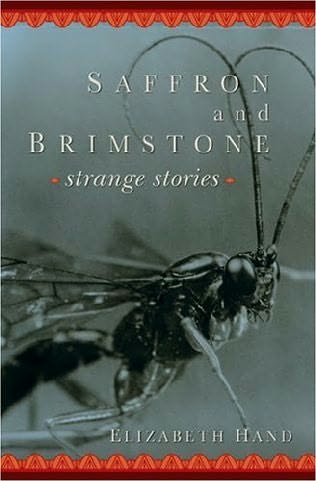 This collection of short stories from Hand can be divided into two parts. The first is comprised of four unrelated and quite lengthy short stories, three of which are derived from her earlier short story collection, Bibliomancy. The second part is simply titled The Lost Domain: Four Story Variations and while all four stories stand stand well on its own, they do share common themes and motifs. Overall, I enjoyed every single story and they showcase Hand's astounding writing ability. She can be as technical and detailed as the story needs to be yet remain lyrical and mesmerizing all throughout. She has also mastered the craft of characterization and knows when to use subtlety. The first three stories in the collection are easily my favorites. "Cleopatra Brimstone" is a combination of magic-realism and horror and exhibits all of Hand's strengths and what makes her stories work. "Pavane for the Prince of the Air" is both heart-wrenching and subtle while "The Least Trumps" embodies terrific characterization. While these are my favorite three, any of the stories in this book is easily a match for any other author's short fiction. Saffron and Brimstone is easily a must-have in any critical reader's collection.
This collection of short stories from Hand can be divided into two parts. The first is comprised of four unrelated and quite lengthy short stories, three of which are derived from her earlier short story collection, Bibliomancy. The second part is simply titled The Lost Domain: Four Story Variations and while all four stories stand stand well on its own, they do share common themes and motifs. Overall, I enjoyed every single story and they showcase Hand's astounding writing ability. She can be as technical and detailed as the story needs to be yet remain lyrical and mesmerizing all throughout. She has also mastered the craft of characterization and knows when to use subtlety. The first three stories in the collection are easily my favorites. "Cleopatra Brimstone" is a combination of magic-realism and horror and exhibits all of Hand's strengths and what makes her stories work. "Pavane for the Prince of the Air" is both heart-wrenching and subtle while "The Least Trumps" embodies terrific characterization. While these are my favorite three, any of the stories in this book is easily a match for any other author's short fiction. Saffron and Brimstone is easily a must-have in any critical reader's collection.Rating: 4.5/5.
Rating System:
1 - There are better ways to spend your time.
2 - Ho hum books, usually typical of its genre. Probably only recommendable to die-hard fans.
3 - A cut above the rest, usually with one or more elements that sets it apart from the norm.
4 - Highly recommended and is easily a pioneer of the genre.
5 - A classic or it will be.
Book Review: 20th Century Ghosts by Joe Hill
Every Monday, I'll be doing spoiler-free book reviews.
 I found this book to be an impressive collection and for the most part, I have only one complaint when it comes to my version: it lacks a table of contents. 20th Century Ghosts compiles fifteen (sixteen if you count the hidden story) stories from author Joe Hill and each are not only well-written but contain an element of horror in it, be it psychological, supernatural, or both. Hill has a strong sense of character and perhaps any horror story necessitates such a talent or else it might fall flat. However, Hill isn't simply about the horror but rather his technical skill in narrating the story and use of various elements. For example, one of my favorite stories in the collection is "Pop Art" and more or less reads like a mundane, down-to-earth story save for one fact: that the narrator's best friend is an inflatable boy. Throughout the entire story, Hill treats it with all seriousness and respect and at the end of the day, is a story about the human condition that's as dramatic and compelling as any non-speculative fiction story out there. "Voluntary Committal" is perhaps the longest story in the book and Hill uses this space to tell an elaborate story. The main character has two foils, one his supposed best friend, the other his schizophrenic sibling. Much like "Pop Art", this read like an entirely mundane story save for one element that make it fantastical yet nonetheless integral to the story. The titular piece, "20th Century Ghost", is simply well-written and well-crafted, proof that Hill knows how to deliver a good story rather than just relying on shocking endings. Overall it's a solid collection of short stories, especially if you want to read good horror fiction that goes beyond gruesomeness and surprise shockers.
I found this book to be an impressive collection and for the most part, I have only one complaint when it comes to my version: it lacks a table of contents. 20th Century Ghosts compiles fifteen (sixteen if you count the hidden story) stories from author Joe Hill and each are not only well-written but contain an element of horror in it, be it psychological, supernatural, or both. Hill has a strong sense of character and perhaps any horror story necessitates such a talent or else it might fall flat. However, Hill isn't simply about the horror but rather his technical skill in narrating the story and use of various elements. For example, one of my favorite stories in the collection is "Pop Art" and more or less reads like a mundane, down-to-earth story save for one fact: that the narrator's best friend is an inflatable boy. Throughout the entire story, Hill treats it with all seriousness and respect and at the end of the day, is a story about the human condition that's as dramatic and compelling as any non-speculative fiction story out there. "Voluntary Committal" is perhaps the longest story in the book and Hill uses this space to tell an elaborate story. The main character has two foils, one his supposed best friend, the other his schizophrenic sibling. Much like "Pop Art", this read like an entirely mundane story save for one element that make it fantastical yet nonetheless integral to the story. The titular piece, "20th Century Ghost", is simply well-written and well-crafted, proof that Hill knows how to deliver a good story rather than just relying on shocking endings. Overall it's a solid collection of short stories, especially if you want to read good horror fiction that goes beyond gruesomeness and surprise shockers.Rating: 4/5.
Rating System:
1 - There are better ways to spend your time.
2 - Ho hum books, usually typical of its genre. Probably only recommendable to die-hard fans.
3 - A cut above the rest, usually with one or more elements that sets it apart from the norm.
4 - Highly recommended and is easily a pioneer of the genre.
5 - A classic or it will be.
Friday, June 06, 2008
Top 10 Best-Sellers as of 2008/6/1
From USA Today's best-seller list (you can find out their basis here):
- The Last Lecture by Randy Pausch and Jeffrey Zaslow
- Blood Noir by Laurell K. Hamilton
- Twilight by Stephenie Meyer
- Eclipse by Stephenie Meyer
- High Noon by Nora Roberts
- The Lost Duke of Wyndham by Julia Quinn
- New Moon by Stephenie Meyer
- Hide by Lisa Gardner
- The Host by Stephenie Meyer
- Odd Hours by Dean Koontz
Thursday, June 05, 2008
Plug: Barbara and Christopher Roden at the Shirley Jackson Awards Blog
Over at the Shirley Jackson Awards Blog, Barbara and Christopher Roden talk about their anthology At Ease With the Dead.
Wednesday, June 04, 2008
2008/6/5 Tabletop RPG Podcasts
Every Thursday, I post links to various podcasts that deals with tabletop RPGs.
Tabletop RPG (Mostly)
General Discussions/Reviews/Everything Else
- Pulp Gamer episodes: The Not-So Gamer (Out of Character), Retailer Strategies for Maximizing 4E Sales (Gama Trade Show Seminars).
- Fist Full of Comics and Games episodes: Monarchs Comics Briefing for May 26, 2008; d20 Modern & Spirit of the Century (The Superhero Summit), The Tim Monroe Show (8-Bit and Beyond), Monarchs Comics Briefing for May 30, 2008.
- Geek Radio Daily episodes: May 29, 30; June 2, 3.
- Fell Calls!, a podcast on the Iron Kingdoms, episodes: Not A MMORPG.
- Secret Identity episodes: Issue #116.
- The Order 66 Podcast, a podcast on d20 Star Wars Saga Edition, episodes: Imperial Light, Less Filling/Tastes Great.
- 3.5 Private Sanctuary, a D&D 3.5 Podcast, has a new episode.
- Wapcaplets episodes: Mail Bag Jun 1 2008.
- Bear Swarm! episodes: Break That Girl, Not Recording.
- The Wandering Men episodes: Trail Thankfulness (1, 2).
- This Modern Death episodes: KublaCon Recap.
- The Tome Show, a D&D Podcast, episodes: 4e Core First Glance.
- Role Playing Public Radio episodes: Let's Split Up Gang!
- Radio Free Hommlet episodes: Keep on the Shadowfell.
- Nuketown Radio Active episodes: Geeking Out at Balticon.
- Ninja vs Pirates episodes: DnD and a Game Design Proof.
- Master Plan episodes: Lessons I've Learned 1, On Mythender.
- Geekson! episodes: Mad Scientists.
- Brilliant Gameologists episodes: Gaming is Like... (GM).
- Amorphous Blob Games episodes: The Other Rules.
- All Games Considered episodes: BashCon Part 1 (AGC Extra), Decision: A Vegas After Midnight Story.
- Head Games Podcast episodes: Grand Theft Podcast.
- Secret Identity interviews James Wyatt (4E DMG).
- Yog-Sothoth interviews Lovecraft scholar S.T. Joshi.
- The Independent Insurgency interviews Anna Kreider on Thou Art But A Warrior.
- The Digital Front interviews Don Dehm of Pulp Gamer.
- Pulp Gamer episodes: Phil Lacefield Jr.
- Green Ronin Podcast episodes: Erik Mona on Open Gaming.
- Geek Radio Daily episodes: Stranger Things Interview.
- Fist Full of Comics and Games episodes: Motor City Comic Con - Interviews with Comic and Gaming Pros, Motor City Comic Con - Interviews with Media Personalities.
- The Game's The Thing episodes: Online Tabletop Gaming with Kevin Melka (Fantasy Grounds II).
- Heroic Cthulhu episodes: Gamer Talk Fifteen (1, 2, 3), Return of the Monolith (1, 2, 3, 4, 5, 6, 7, 8, 9), Detect (1, 2, 3, 4, 5), Wild Hunt (1, 2, 3, 4, 5, 6, 7, 8, 9, 10, 11, 12, 13, 14, 15, 16, 17, 18, 19, 20, 21, 22, 23, 24, 25, 26), Gamer Talk Sixteen (1, 2), Skater (1, 2, 3), Gamer Talk Seventeen (1, 2, 3, 4).
- RPGMP3 episodes: Traveler (3), Warlords of the Accordlands (24, 25).
- The Rolemonkeys episodes: It's a Dog's Life Session 1a: "Hitting the Trail".
- One Man and His Dice, a podcast on Tentacles 2008, episodes: What I Have Learnt about Glorantha.
- Dragon Magazine podcasts: Penny Arcade/PVP Podcast episode 1.
- The Tome Show, a D&D Podcast, episodes: Shadowfell AP 1.
- Gamer's Haven episodes: Long Time at Lonely Point (Mutants & Masterminds Freedom City).
- Fist Full of Comics and Games episodes: The Red Star from Green Ronin (2).
- Colorado Story Games episodes: Dirty Secrets (1).
- Role Playing Public Radio episodes: Raillery: A Comedy Video Podcast.
- Yog-Sothoth has videos of Living Dungeon 2008 Video.
- Gamer Radio Zero features Sara Girard and D&D 4E.
Subscribe to:
Posts (Atom)