Every Wednesday, I have an essay on any topic that catches my fancy!
Growing up in the Philippines, one of the things I noticed early on was the clash of cultures. One part wants to be Asian, another part American, and a third part to be distinctly Filipino--whatever that means. This phenomenon could be seen in our language, our laws, our religion, our architecture, and in our entertainment (TV, Radio). When it came to literature however, I simply stuck to reading books from the West, mainly because I was more proficient with English than Filipino (and it seems that many Filipinos forget too easily that English was the national language of the country not too long ago), and because they were the books I found in the bookstore and in the library. It wasn't until high school that I realized that I enjoyed reading science fiction and fantasy and it was only then that my personal odyssey began.
My first foray into the genre would be the mass-market paperback authors (mainly because they were the only books available in the bookstore): Terry Brooks, Terry Goodkind (who had just debuted at the time), David Eddings, Robert Jordan, etc. Perhaps because of the fact that the fantasy I was reading was disjointed from the real world (i.e. they're set in their own setting), I simply took it all in as a reader. Eventually though, as my reading tastes evolved and I swallowed the pro-Filipino propaganda drilled into me by the academe, I started to wonder if the fantasy and science fiction stories I read would forever be filled with Western constructs.
To be fair, Western speculative fiction has incorporated various cultures in its long history. There's simply a plurality of cultures in Frank Herbert's Dune. Raymond E. Feist's Riftwar Saga has a Japanese influence that was later expanded by Janny Wurts. Roger Zelazny's Lord of Light would never exist without the influence of Indian myth and religion. But as for the Philippines, even until now, I'm not quite sure how the Western world or the global world sees us. Are we part of history 101? Or are we simply some obscure third-world country that scholars are aware of? Is there more to the Philippines beyond World War II and People Power?
Luckily, Robert Heinlein's Starship Troopers had been adapted into a movie at the time. When I finally found a copy of the book, the text took on an unexpected "surprise" twist thanks to my heritage. For a brief time, Filipino science fiction fans rallied under the idea that they were oppressed because of the changes made to the movie, specifically changing the ethnicity of its protagonist. In retrospect, the Filipino reference in the novel is only cosmetic (I mean let's face it: whether Heinlein's hero was Filipino or Puerto Rica or Chinese, it would have little impact on the story) although I'm sure Filipino readers would get a kick out of the fact that the main character of a popular science fiction novel shared the same heritage as themselves.
This made me realize that as a Filipino reader, I was thrilled at the occasional Filipino reference. It's uncommon enough unlike ninjas and terra cotta warriors and kitsunes which have become overused (well, at least the ninjas part). Again, the reference doesn't have to be huge. For me, it's a big treat when I read stories like "Vacancy" by Lucius Shepard, "The Night Market" by Holly Black, or "The Occultation" by Laird Barron as they reference the Philippines or draw from its vast lore. Speculative fiction stories don't need to take place outside of my country and my culture has appeal to other speculative fiction fans.
One thing I'm starting to notice are the Australian speculative fiction writers. I enjoy Terry Dowling and Margo Lanagan's stories and they're not the only Australian writers of the genre. Sometimes, they incorporate into their fiction Australia as a setting or feature Australian protagonists--and it works perfectly with the story. I'm hoping one day the same can be said for Filipino writers and Philippine fiction. As it is, the only noteworthy stories (internationally) so far have been Dean Alfar's "L'Aquilone du Estrellas (The Kite of Stars)" and Kristin Mandigma's "Excerpt from a Letter by a Social-realist Aswang". Hopefully, more fiction will turn up in the future (mental note: stop writing these essays and start working on those stories!).
This makes me wonder: among other science fiction and fantasy fans, what other cultures haven't yet been fully explored in fiction?
Showing posts with label Speculative Fiction. Show all posts
Showing posts with label Speculative Fiction. Show all posts
Wednesday, June 11, 2008


Saturday, May 31, 2008
Plug: Andrew Drilon in No Formula: Stories from the Chemistry Set Vol. 1

My buddy Andrew Drilon is getting is getting his comics published internationally in No Formula: Stories from the Chemistry Set Vol. 1 by Desperado Publishing. The comics are taken from The Chemistry Set site and Andrew has been cited before in places like The Journal of Mythic Arts for his comics like Mang Tomas the Storyhunter and Grinwit (which is included in the book).
I'd like to add that Andrew Drilon is a talented fiction writer as well (damn you... art skills and writing skills all in one person... and he has youth with him!) and one of my favorite stories of his is Cramming in Diliman.
Monday, April 28, 2008
Call For Submissions: HAUNTED LEGENDS
From Nick Mamatas:
Below are the submission guidelines for the forthcoming anthology Haunted Legends. We are releasing them now so that submitters have all of May and June and much of July to write a new story for us. Do not submit immediately. Do not submit trunk stories.
-------
Haunted Legends, to be published by Tor Books, seeks to reinvigorate the genre of "true" regional ghost stories by asking some of today's leading writers to riff on traditional tales from around the world. We don't just want you to retell an old ghost story, but to renovate it so that the story is dark and unsettling all over again.
Classic tales of the Jersey Devil, the spirits of the Tower of London, ghost lights, and phantom hitchhikers continue to capture the imagination. The Haunted Legends difference is that our contributors will tell the stories in ways they've never been told before.
We pay 6 cents a word, up to 8000 words.
The open-reading period will begin on midnight, EDT of July 15, 2008 and end 11:59p.m., July 31, 2008.
All submissions must be emailed as a RTF file to Ellen Datlow and Nick Mamatas at hauntedlegends@gmail.com. Please send no more than one submission. Please send no correspondence, such as queries, to hauntedlegends@gmail.com either before or after the reading period – all mail sent to the address at any time other than the reading period will be automatically deleted unread.
Note that much of the anthology is full and that a large number of ghost stories, especially those with an American or UK origin, are thus already “taken” by authors who have been personally solicited for work. Your best bet for this anthology is to go far afield – we are especially interested in renovations of traditional ghost stories from Africa, Latin America, and Asia, or in other tales that may not be well-known.
We also want to emphasize that we are interested only in traditional ghost stories made new again by the ingenuity of the writer. We do not want “campfire” versions of old stories, or slavish recitations. Think of new forms, new voices, new themes, new ways of considering these classic tales. Do not send us your trunk stories. It should be as though your version was always occulted within the classic rendition, but never before perceived or acknowledged.
And now, a brief AFAQ (anticipated frequently asked questions):
May I query you with an idea for a ghost story to make sure that it has not already been taken?
No, you may not. If you believe that your idea is already taken, you may wish to research another idea. Indeed, even if the idea has not already been claimed by one of the solicited authors, you may well still face competition from a dozen other variations in the slush. Novelty is your best approach.
Well, what if I query you anyway?
I may decide to give you a misleading answer, or no answer at all.
So how about if I query Ellen Datlow instead? She’s the nice one, anyways.
You have misapprehended the situation. Let us put it this way: when was the last time Ellen Datlow had an open-reading period for any of her original anthologies? She doesn’t want your queries either.
Can I just make up a ghost story?
No. You have to find an existing one and renovate it in an utterly brilliant fashion.
How will you will be able to tell the difference?
We are obsessive experts and we are friends with even more obsessive experts.
Is this all some kind of cruel joke?
I’d call it the end result of a large number of compromises, all of which were necessary to guarantee any sort of open-reading period.
This is madness! Why does everything have to be so hard all the time? We are we pitted against one another in these awful competitions, and for crumbs? Crumbs, I tell you, crumbs, as if we were starving rats! I hate you!
Fools! Your despair only makes me stronger!
Monday, April 21, 2008
Unsung Heroes of Audiobooks
I just finished with my SFFaudio duties and while I don't really listen to audiobooks or fiction podcasts, I'm always looking for people overlooked in the industry and in this case, it's people reading the stories in audiobooks and podcasts (in the sense that they're not as popular as authors or editors unless they're celebrities in the first place or the authors themselves).
So my question is, who are your favorite readers? Stephen Eley? Mur Lafferty? Or the author of the piece?
So my question is, who are your favorite readers? Stephen Eley? Mur Lafferty? Or the author of the piece?
Saturday, April 19, 2008
Science Fiction and Filipino Literature
Luis Katigbak posted a link to a Filipino essay about Science Fiction and Filipino Literature (http://dakilapinoy.wordpress.com/2008/04/16/science-fiction-at-panitikang-tagalog/) written by local poet/editor Roberto Añonuevo. It's in Filipino however.
Here's my unofficial translation of the piece into English (and I hope he doesn't mind me posting it):
Science fiction, be it stories or novels, is currently popular and appeals to the youth. The said work did not truly arise from young writers stemming from the University of the Philippines or Ateneo de Manila University. It draws its roots from Tagalog and aspiring writers should look back at its history.
It possibly started from the korido* Ibong Adarna where the song of the magical bird can heal any physical sickness. Also, the droppings of the Adarna can turn anyone it touches into stone. The affected person can revert to their original form only if they are drenched with water from the hermit who possesses hidden knowledge like science.
It took a long time before science fiction penetrated the Philippines. When Doktor Satan, written by Mateo Cruz Cornelio, was written in 1945, it drew in readers and introduced them to this new genre. This is fiction based on the world of science, albeit science combined with such fertile imagination that it almost becomes believable to people looking for relief from sickness.
Doktor Satan revolves around the life of Dr. Alberto Estrella. Alberto's dilemma is that his mother had fallen ill and he needs to find a new medicine that can cure her. He researched intensively until one day, he was able to revive the life of the Russian Igor who had committed suicide and so his suspicion that he had found a medicine for immortality was reinforced.
Alberto drank this drug that he invented but unfortunately, started experiencing unexpected side-effects. His personality was subsumed by the spirit of Satan who had a fierce attitude. Eventually, Alberto slew his girlfriend because of his inability to suppress this force. Alberto continued to spread terror until he was slain by his brother Pepe who was an agent of the law. Meanwhile, Alberto's mother recovered from her sickness after she drunk the medicine given to her by her son.
It is easy to say that Cornelio was influenced by the works of Mary Wollstonecraft Shelley's Frankenstein (1818; 1831) or Robert Louis Stevenson's Dr. Jekyll and Mr. Hyde (1886) which is the suspicion of the critic Soledad S. Reyes. However the works of Cornelio is not an intentional imitation because his desire was to find a a cure for the illnesses of man is not exclusive to the West but present as well in the myths and legends of Asia.
If we go back to the events of the decade 1930 - 1940, it is a time when science was making great breakthroughs. One of these is the discovery of Ernest O. Lawrence, the classification of blood cells in people; the progress of Max Theiler against yellow fever; and the research of Otto Warburg with regards to the enzyme. From biology to chemistry, from physics to medicine, there were a lot of discoveries that culminated with the invention of the atom bomb that destroyed millions of lives in Nagasaki and Hiroshima. The period when Cornelio wrote his novel was a time of dread and it is not surprising that man would seek a cure for sickness.
Science fiction did not end with Cornelio. In 1959, Nemesio E. Caravana would write the novel Ang Puso ni Matilde that was serialized in the magazine Aliwan. This is different from all the other works of Caravana because it was gambling on a concept that the masses could not fully understand.
"Matilde" is not human but a female bulldog. Matilde is the loyal dog of Dr. Lino Romasanta. This novel revolves around the theme of transplanting the heart of one dog to the body of Angela, the girlfriend of Lino. Dr. Razul raped Angela, who afterwards went crazy and later suffered a heart attack. Lino swore that he would revive his beloved and marry her. A skilled surgeon, Lino extracted Angela's heart and replaced it with Matilde's. Angela was revived but her behavior started changing, sometimes behaving like a human, at other times like a wild dog. Thus began the challenge of Lino as a devout husband and agent of medicine.
If we look back at history, the first successful operation with regards to the heart of a dog was in 1914 which can be attributed to Dr. Alexis Carrel. Meanwhile, the first human heart transplant was performed by Dr. Christiaan N. Barnard in 1967 at Groote Schuur Hospital, Cape Town, South Africa. This means that Caravana guessed the possibility of transplanting a human heart; however, the theme of his novel revolved around transplanting the heart of a bulldog into the body of a human.
A new generation of youth must discover this work of Caravana. Caravana's language is polished and his characterization is believable. The author also used compelling locations and impressive use of words that if this were cinema, it would be described as 'stealing your breath away'. Here is one example that takes place after the wedding ceremony of Lino and Angela:
*A poetic form
Here's my unofficial translation of the piece into English (and I hope he doesn't mind me posting it):
Science fiction, be it stories or novels, is currently popular and appeals to the youth. The said work did not truly arise from young writers stemming from the University of the Philippines or Ateneo de Manila University. It draws its roots from Tagalog and aspiring writers should look back at its history.
It possibly started from the korido* Ibong Adarna where the song of the magical bird can heal any physical sickness. Also, the droppings of the Adarna can turn anyone it touches into stone. The affected person can revert to their original form only if they are drenched with water from the hermit who possesses hidden knowledge like science.
It took a long time before science fiction penetrated the Philippines. When Doktor Satan, written by Mateo Cruz Cornelio, was written in 1945, it drew in readers and introduced them to this new genre. This is fiction based on the world of science, albeit science combined with such fertile imagination that it almost becomes believable to people looking for relief from sickness.
Doktor Satan revolves around the life of Dr. Alberto Estrella. Alberto's dilemma is that his mother had fallen ill and he needs to find a new medicine that can cure her. He researched intensively until one day, he was able to revive the life of the Russian Igor who had committed suicide and so his suspicion that he had found a medicine for immortality was reinforced.
Alberto drank this drug that he invented but unfortunately, started experiencing unexpected side-effects. His personality was subsumed by the spirit of Satan who had a fierce attitude. Eventually, Alberto slew his girlfriend because of his inability to suppress this force. Alberto continued to spread terror until he was slain by his brother Pepe who was an agent of the law. Meanwhile, Alberto's mother recovered from her sickness after she drunk the medicine given to her by her son.
It is easy to say that Cornelio was influenced by the works of Mary Wollstonecraft Shelley's Frankenstein (1818; 1831) or Robert Louis Stevenson's Dr. Jekyll and Mr. Hyde (1886) which is the suspicion of the critic Soledad S. Reyes. However the works of Cornelio is not an intentional imitation because his desire was to find a a cure for the illnesses of man is not exclusive to the West but present as well in the myths and legends of Asia.
If we go back to the events of the decade 1930 - 1940, it is a time when science was making great breakthroughs. One of these is the discovery of Ernest O. Lawrence, the classification of blood cells in people; the progress of Max Theiler against yellow fever; and the research of Otto Warburg with regards to the enzyme. From biology to chemistry, from physics to medicine, there were a lot of discoveries that culminated with the invention of the atom bomb that destroyed millions of lives in Nagasaki and Hiroshima. The period when Cornelio wrote his novel was a time of dread and it is not surprising that man would seek a cure for sickness.
Science fiction did not end with Cornelio. In 1959, Nemesio E. Caravana would write the novel Ang Puso ni Matilde that was serialized in the magazine Aliwan. This is different from all the other works of Caravana because it was gambling on a concept that the masses could not fully understand.
"Matilde" is not human but a female bulldog. Matilde is the loyal dog of Dr. Lino Romasanta. This novel revolves around the theme of transplanting the heart of one dog to the body of Angela, the girlfriend of Lino. Dr. Razul raped Angela, who afterwards went crazy and later suffered a heart attack. Lino swore that he would revive his beloved and marry her. A skilled surgeon, Lino extracted Angela's heart and replaced it with Matilde's. Angela was revived but her behavior started changing, sometimes behaving like a human, at other times like a wild dog. Thus began the challenge of Lino as a devout husband and agent of medicine.
If we look back at history, the first successful operation with regards to the heart of a dog was in 1914 which can be attributed to Dr. Alexis Carrel. Meanwhile, the first human heart transplant was performed by Dr. Christiaan N. Barnard in 1967 at Groote Schuur Hospital, Cape Town, South Africa. This means that Caravana guessed the possibility of transplanting a human heart; however, the theme of his novel revolved around transplanting the heart of a bulldog into the body of a human.
A new generation of youth must discover this work of Caravana. Caravana's language is polished and his characterization is believable. The author also used compelling locations and impressive use of words that if this were cinema, it would be described as 'stealing your breath away'. Here is one example that takes place after the wedding ceremony of Lino and Angela:
Hindi matingkala ang kagalakang nag-uumapaw sa puso ni Dr. Romasanta nang matapos na kasal. Masigla at halos pasagsag na inilabas niya ng simbahan ang kanyang magandang asawa.It is good if we can look back at previous works before we declare what new innovations we are making in literature whether it is in English or in Filipino here in the Philippines. Looking back at our past is to look at the future potential of our national literature.
Gayunman, nang sila’y magkasama na sa awto ay hindi pa rin lubusang mapawi sa isipan ni Lino ang pag-aalaala. Baka sumpungin ng pagkaaso si Angela. Hindi nakaila kay Angela ang pag-iisip ni Lino.
—Bakit ba tila may inaalala ka?—pansin ni Angela.
—A, walang anuman,—pakli ng manggagamot. —Naisip ko lamang na tutuksuhin tayo ng ating mga kaibigan.
—Maano kung manukso sila,—ani Angela.—Bakit, ikahihiya mo ba ako kaninuman?
—Hindi sa ikahihiya. Ang totoo’y ikinararangal kita, Angela. Para sa akin ay ikaw na ang lahat: ang langit, kaligayahan at lahat-lahat na!
Gayon na lamang ang pagbabatian nang dumating na ang bagong kasal sa tahanan ng lalaki. Gaya ng sinabi ni Lino, gayon na lamang ang panunukso sa kanila ng mga dinatnan.
At dumating ang oras ng salu-salo. Sabay-sabay na nagsiluksok ang lahat sa isang mahabang mesa. May biruan at may tawanan. Madalas nilang pasaringan ng biro ang mga bagong kasal. Nguni’t napuna ni Dr. Romasanta na walang imik si Angela. Napansin din niyang nananalim ang mga mata nitong nakatitig sa buto ng hita ng litson.
Kinabahan si Lino. Sinapantaha niyang hindi malayong sumpungin si Angela. Nakita niyang gumalaw-galaw ang mga labi nitong walang iniwan sa asong si Matilde. (Ika-21 labas, Ang Puso ni Matilde ni Nemesio E. Caravana, Aliwan, 7 Oktubre 1959).
*A poetic form
Tuesday, April 01, 2008
The Year’s Best Fantasy and Horror 2008: Twenty-first Annual Collection TOC
From Ellen Datlow:
The Year’s Best Fantasy and Horror 2008: Twenty-first Annual Collection
Edited by Ellen Datlow and Kelly Link & Gavin J. Grant
Table of Contents
“The Cambist and Lord Iron: A Fairy Tale of Economics” Daniel Abraham
“The Gray Boy’s Work” M.T. Anderson
“Troll” (poem) Nathalie Anderson
“The Monsters of Heaven” Nathan Ballingrud
“The Forest” Laird Barron
“Reversal of Fortune” Holly Black
“The House of Mechanical Pain” Chaz Brenchley
“The Merchant and the Alchemist’s Gate” Ted Chiang
“Scenes of Hell” (poem) Billy Collins
“Toother” Terry Dowling
“The Drowned Life” Jeffrey Ford
“The Last Worders” Karen Joy Fowler
“Monkey” (poem) Eliza Griswold
“Up the Fire Road” Eileen Gunn
“Winter’s Wife” Elizabeth Hand
“A Perfect and Unmappable Grace” Jack Haringa
“The Evolution of Trickster Stories Among the Dogs of North Park After the Change” Kij Johnson
“The Boulder” Lucy Kemnitzer
“The Hill” Tanith Lee
“The Ape Man” Alexander MacBride
“Lovers (Jafaar the Winged)” (poem) Khaled Mattawa
“Hum Drum” Gary McMahon
“A Thing Forbidden” Donald Mead
“England and Nowhere” Tim Nickels
“Sir Hereward and Mister Fitz Go to War Again” Garth Nix
“Valentine, July Heat Wave” Joyce Carol Oates
“Mr. Poo Poo” Reggie Oliver
“Fragrant Goddess” Paul Park
“Holiday” M. Rickert
“Vampires in the Lemon Grove” Karen Russell
“Rats” Veronica Schanoes
“The Fiddler of Bayou Teche” Delia Sherman
“Village Smart” (poem) Maggie Smith
“The Tenth Muse” William Browning Spencer
“Follow Me Home” Sonya Taaffe
“The Swing” Don Tumasonis
“Closet Dreams” Lisa Tuttle
“The Seven Devils of Central California” Catherynne M. Valente
“Splitfoot” Paul Walther
“The Hide” Liz Williams
The Year’s Best Fantasy and Horror 2008: Twenty-first Annual Collection
Edited by Ellen Datlow and Kelly Link & Gavin J. Grant
Table of Contents
“The Cambist and Lord Iron: A Fairy Tale of Economics” Daniel Abraham
“The Gray Boy’s Work” M.T. Anderson
“Troll” (poem) Nathalie Anderson
“The Monsters of Heaven” Nathan Ballingrud
“The Forest” Laird Barron
“Reversal of Fortune” Holly Black
“The House of Mechanical Pain” Chaz Brenchley
“The Merchant and the Alchemist’s Gate” Ted Chiang
“Scenes of Hell” (poem) Billy Collins
“Toother” Terry Dowling
“The Drowned Life” Jeffrey Ford
“The Last Worders” Karen Joy Fowler
“Monkey” (poem) Eliza Griswold
“Up the Fire Road” Eileen Gunn
“Winter’s Wife” Elizabeth Hand
“A Perfect and Unmappable Grace” Jack Haringa
“The Evolution of Trickster Stories Among the Dogs of North Park After the Change” Kij Johnson
“The Boulder” Lucy Kemnitzer
“The Hill” Tanith Lee
“The Ape Man” Alexander MacBride
“Lovers (Jafaar the Winged)” (poem) Khaled Mattawa
“Hum Drum” Gary McMahon
“A Thing Forbidden” Donald Mead
“England and Nowhere” Tim Nickels
“Sir Hereward and Mister Fitz Go to War Again” Garth Nix
“Valentine, July Heat Wave” Joyce Carol Oates
“Mr. Poo Poo” Reggie Oliver
“Fragrant Goddess” Paul Park
“Holiday” M. Rickert
“Vampires in the Lemon Grove” Karen Russell
“Rats” Veronica Schanoes
“The Fiddler of Bayou Teche” Delia Sherman
“Village Smart” (poem) Maggie Smith
“The Tenth Muse” William Browning Spencer
“Follow Me Home” Sonya Taaffe
“The Swing” Don Tumasonis
“Closet Dreams” Lisa Tuttle
“The Seven Devils of Central California” Catherynne M. Valente
“Splitfoot” Paul Walther
“The Hide” Liz Williams
Wednesday, March 19, 2008
Essay: One Speculative Fiction Story to Rule Them All
Every Wednesday, I have an essay on any topic that catches my fancy!
One common tendency for people is to over-simplify, to boil everything down into one neat formula. That's the appeal of black-and-white morals where things are clear-cut and easily defined. Unfortunately, it is not a place that encourages deliberation, discussion, or individual opinion.
My personal experience with this stems from non-fans of any genre or medium. For example, in college, I was often found sitting on the library's entrance, reading a fantasy or science fiction novel. In one instance, a friend approached me and wanting to start some idle chatter, asked me what I was reading and what the book was about. Now I have no qualms about answering the former but for me, the latter is a dead-end question. First of all, if an entire novel can be summarized in one sentence, or even in a brief discussion, why bother reading the book at all? Second, if I knew how the book would turn out, then I wouldn't be reading it in the first place. There are some situations where after reading the prologue, you know where the book is headed. But honestly, how can one make that claim until you've actually finished the book and talk about it with certainty? So my common practice was to hand them the book I was reading and let them make their own decisions. After a few seconds of looking at the book's cover and reading the back copy, they'd ask what genre it was.
"Fantasy," I told them.
"Is that like Lord of the Rings? Or Harry Potter?" Both books were at the time the craze, especially in light of Hollywood and the money the movies were raking in.
Not that I'm against Lord of the Rings or Harry Potter as the poster boys of the genre but there's more to fantasy than those two series. Dragonlance, for example, despite the Tolkienesque elements it inherited from D&D, is not Lord of the Rings. Lemony Snickett or Chronicles of Narnia or His Dark Materials may be young adult fantasy but they are different in subject matter and voice when compared to each other or Harry Potter. Here, we see a tendency to oversimplify, to encapsulate thousands, if not millions of books, under one neat category, as if they were all clones of each other.
To be fair, I've made the same mistake in the past. Fantasy and science fiction are my personal causes because I love them but when it comes to other genres, I am as ignorant as the rest. I think every non-romance reader has this idea that romance novels are these cheesy, simple stories of love, heartbreak, and sex. But what would I know having never read Mills & Boon or Danielle Steele or whatever popular romance literature out there? I'm sure even within the confines of the romance genre, there are various styles, techniques, and narrative forms that distinguishes one book from another.
These days, in terms of local lit, a friend is in crisis as a stranger asked him what the difference was between the various local speculative fiction publications (as if they were that many). I could rant about the difference in editors, publication objective, and featured authors but I'd be ignoring the obvious: the fact that the various publications feature different stories that all qualify as speculative fiction for I do not think there is any single story that encapsulates or defines the entire genre. Even if two stories share the same author, they will be different stories and simply not be identical to each other.
One common tendency for people is to over-simplify, to boil everything down into one neat formula. That's the appeal of black-and-white morals where things are clear-cut and easily defined. Unfortunately, it is not a place that encourages deliberation, discussion, or individual opinion.
My personal experience with this stems from non-fans of any genre or medium. For example, in college, I was often found sitting on the library's entrance, reading a fantasy or science fiction novel. In one instance, a friend approached me and wanting to start some idle chatter, asked me what I was reading and what the book was about. Now I have no qualms about answering the former but for me, the latter is a dead-end question. First of all, if an entire novel can be summarized in one sentence, or even in a brief discussion, why bother reading the book at all? Second, if I knew how the book would turn out, then I wouldn't be reading it in the first place. There are some situations where after reading the prologue, you know where the book is headed. But honestly, how can one make that claim until you've actually finished the book and talk about it with certainty? So my common practice was to hand them the book I was reading and let them make their own decisions. After a few seconds of looking at the book's cover and reading the back copy, they'd ask what genre it was.
"Fantasy," I told them.
"Is that like Lord of the Rings? Or Harry Potter?" Both books were at the time the craze, especially in light of Hollywood and the money the movies were raking in.
Not that I'm against Lord of the Rings or Harry Potter as the poster boys of the genre but there's more to fantasy than those two series. Dragonlance, for example, despite the Tolkienesque elements it inherited from D&D, is not Lord of the Rings. Lemony Snickett or Chronicles of Narnia or His Dark Materials may be young adult fantasy but they are different in subject matter and voice when compared to each other or Harry Potter. Here, we see a tendency to oversimplify, to encapsulate thousands, if not millions of books, under one neat category, as if they were all clones of each other.
To be fair, I've made the same mistake in the past. Fantasy and science fiction are my personal causes because I love them but when it comes to other genres, I am as ignorant as the rest. I think every non-romance reader has this idea that romance novels are these cheesy, simple stories of love, heartbreak, and sex. But what would I know having never read Mills & Boon or Danielle Steele or whatever popular romance literature out there? I'm sure even within the confines of the romance genre, there are various styles, techniques, and narrative forms that distinguishes one book from another.
These days, in terms of local lit, a friend is in crisis as a stranger asked him what the difference was between the various local speculative fiction publications (as if they were that many). I could rant about the difference in editors, publication objective, and featured authors but I'd be ignoring the obvious: the fact that the various publications feature different stories that all qualify as speculative fiction for I do not think there is any single story that encapsulates or defines the entire genre. Even if two stories share the same author, they will be different stories and simply not be identical to each other.
Friday, March 14, 2008
The First Filipino SF Collection?
Apparently, Jose Ma. Espino published a collection of short stories in 1999 entitled Orbit 21: Twenty-One Stories of Fantasy and Science Fiction (alternative link here).
Wednesday, February 20, 2008
Essay: Creating A "Best Of" Anthology for Philippine Speculative Fiction
Every Wednesday, I have an essay on any topic that catches my fancy!
This essay's for Banzai Cat who wants to talk about the intricacies of making a Philippine speculative fiction list.
A couple of us Filipino science fiction and fantasy fans are eagerly awaiting a thick tome of the year's best Philippine speculative fiction short stories in the vein of Ellen Datlow/Gavin Grant/Kelly Link's The Year's Best Fantasy and Horror or Gardner Dozois's The Year's Best Science Fiction. There's nothing like the thrill of holding all your favorite short stories in just one book because let's face it, tracking down the various publications, whether online or print, can be time consuming or sometimes, simply impossible (thanks to small print runs or simply a lack of a good distribution channel). And thankfully, I think we've reached the point where we can actually have such an anthology--it's been three years since the Philippine speculative fiction movement gained some headway (note: Dear Mr./Ms. Anonymous, if you're going to comment to tell me that local speculative fiction has always existed, just stop right here because beyond three years ago, no one was even using the term Philippine speculative fiction nor do I feel was there a venue for such work to be published) and there's a couple of local publications and venues since then that have sprung up and started publishing science fiction and fantasy short stories.
So far though, what we have are lists. Don recently gained some web presence as he posted his list of the year's best speculative fiction (alas, my own list has been neglected) and I have another friend who has kept her top reading list private. Unfortunately, not everyone is Rich Horton so lists will remain lists but I've given some thought on publishing an anthology. Aside from the logistical nightmare (i.e. seeking an ISBN, seeking the rights from various writers, etc.) involved, here's some of the difficulties a would-be editor faces (and this isn't a list of excuses not to do such an anthology but rather one should be prepared for ahead of time).
First off, creating an anthology isn't be for the faint of heart. At the end of the day, when you make that list, there'll be someone criticizing you. It could be one of the writers you excluded, it could be a fan who simply begs to disagree, or it might be one of the more conservative groups who'll ask what right do you have to publish such an anthology. Compiling an anthology is pretty much like writing a review and it can draw heat towards you as well as praise. And perhaps one thing to remember is that when you're doing a local anthology, we all live in the same country and it's really a small nation. I wouldn't be surprised if you encountered authors on a regular basis and you might be living a block away from your worst critic. Balls of steel? Check.
Second, doing a "best of" anthology is a lot of work and many people are daunted by the task--mostly by their desire to be "fair". One needs to go through a wide variety of material and honestly not all that material is easy to acquire. I mean good luck finding back issues of The Philippines Free Press or Philippine Graphic. Oh, and if you thought tracking down all those publications is difficult, wait 'til you have to actually read them. Reading and re-reading takes time and while making a simple top ten list of the best stories you've read for the year is relatively simple, the pressure starts piling up when you're doing something as authoritative as a "best of" anthology (never mind the fact that everything is subjective). But don't get me wrong, this challenge isn't insurmountable. I do think it's possible to go through a lot of reading materials and as for acquiring them, well, there's always the Internet and one can always make an open call to submit stories published in the year. Will you get all the stories that's ever published in the year? Probably not. But it's the closest and I'm of the opinion that instead of getting it perfect, just get it out.
Third is classifying the stories. If we're going for speculative fiction, we have much leeway. But if you're going for something more specific such as science fiction or fantasy or horror, then one will eventually run into a story that'll make you wonder whether this belongs to one category or the other (and sometimes it's both). I can even imagine a scenario where the author might become angry at where you classified their particular work ("I'm not fantasy, I'm fiction!").
Fourth, what's your criteria for choosing a particular story or author? Here, a lot of elements will come into play. Classifying stories for me is important because the editor might want to create an anthology where half the stories are fantasy and half of the others are science fiction. What if there's a disproportionate amount of stories chosen? Does it matter to you? Another monkey wrench in your decision making process might be a prolific author. What if the author has two good stories? Do we simply choose one story to give an opportunity for another author or do we acquire both stories? Or maybe we do it the other way around: we think of the various authors to include and then choose their best work. Is that any more valid? Oh, and if the editor is an author himself/herself, there'll always be someone ready to criticize him or her (even other editors) if they include their own story in the anthology (whether it is indeed worthy of inclusion or not).
Having said all that, there are several good reasons to produce an anthology of reprints. The first thing that comes to mind is that it gives the stories of various authors a new lease on life. People who weren't able to acquire the publication in which the story was previously published in now have the chance to finally read it. It's not only the author who's reaping the rewards: readers of the said anthology might look at the references and become interested in the publication in which the story was originally printed, especially if they weren't even aware that said publication was in existence or printing that kind of stories in the first place. But first and foremost I think is the fact that here is an anthology of speculative fiction that features the "best of the best". Is it subjective? Yes, absolutely. But that's besides the point. Any one's list of best speculative fiction stories are just as opinionated and biased. But unlike a list, an anthology can be verified by the reader--people can actually read the story (as opposed to tracking it down) and judge for themselves whether the story is truly good or not.
This essay's for Banzai Cat who wants to talk about the intricacies of making a Philippine speculative fiction list.
A couple of us Filipino science fiction and fantasy fans are eagerly awaiting a thick tome of the year's best Philippine speculative fiction short stories in the vein of Ellen Datlow/Gavin Grant/Kelly Link's The Year's Best Fantasy and Horror or Gardner Dozois's The Year's Best Science Fiction. There's nothing like the thrill of holding all your favorite short stories in just one book because let's face it, tracking down the various publications, whether online or print, can be time consuming or sometimes, simply impossible (thanks to small print runs or simply a lack of a good distribution channel). And thankfully, I think we've reached the point where we can actually have such an anthology--it's been three years since the Philippine speculative fiction movement gained some headway (note: Dear Mr./Ms. Anonymous, if you're going to comment to tell me that local speculative fiction has always existed, just stop right here because beyond three years ago, no one was even using the term Philippine speculative fiction nor do I feel was there a venue for such work to be published) and there's a couple of local publications and venues since then that have sprung up and started publishing science fiction and fantasy short stories.
So far though, what we have are lists. Don recently gained some web presence as he posted his list of the year's best speculative fiction (alas, my own list has been neglected) and I have another friend who has kept her top reading list private. Unfortunately, not everyone is Rich Horton so lists will remain lists but I've given some thought on publishing an anthology. Aside from the logistical nightmare (i.e. seeking an ISBN, seeking the rights from various writers, etc.) involved, here's some of the difficulties a would-be editor faces (and this isn't a list of excuses not to do such an anthology but rather one should be prepared for ahead of time).
First off, creating an anthology isn't be for the faint of heart. At the end of the day, when you make that list, there'll be someone criticizing you. It could be one of the writers you excluded, it could be a fan who simply begs to disagree, or it might be one of the more conservative groups who'll ask what right do you have to publish such an anthology. Compiling an anthology is pretty much like writing a review and it can draw heat towards you as well as praise. And perhaps one thing to remember is that when you're doing a local anthology, we all live in the same country and it's really a small nation. I wouldn't be surprised if you encountered authors on a regular basis and you might be living a block away from your worst critic. Balls of steel? Check.
Second, doing a "best of" anthology is a lot of work and many people are daunted by the task--mostly by their desire to be "fair". One needs to go through a wide variety of material and honestly not all that material is easy to acquire. I mean good luck finding back issues of The Philippines Free Press or Philippine Graphic. Oh, and if you thought tracking down all those publications is difficult, wait 'til you have to actually read them. Reading and re-reading takes time and while making a simple top ten list of the best stories you've read for the year is relatively simple, the pressure starts piling up when you're doing something as authoritative as a "best of" anthology (never mind the fact that everything is subjective). But don't get me wrong, this challenge isn't insurmountable. I do think it's possible to go through a lot of reading materials and as for acquiring them, well, there's always the Internet and one can always make an open call to submit stories published in the year. Will you get all the stories that's ever published in the year? Probably not. But it's the closest and I'm of the opinion that instead of getting it perfect, just get it out.
Third is classifying the stories. If we're going for speculative fiction, we have much leeway. But if you're going for something more specific such as science fiction or fantasy or horror, then one will eventually run into a story that'll make you wonder whether this belongs to one category or the other (and sometimes it's both). I can even imagine a scenario where the author might become angry at where you classified their particular work ("I'm not fantasy, I'm fiction!").
Fourth, what's your criteria for choosing a particular story or author? Here, a lot of elements will come into play. Classifying stories for me is important because the editor might want to create an anthology where half the stories are fantasy and half of the others are science fiction. What if there's a disproportionate amount of stories chosen? Does it matter to you? Another monkey wrench in your decision making process might be a prolific author. What if the author has two good stories? Do we simply choose one story to give an opportunity for another author or do we acquire both stories? Or maybe we do it the other way around: we think of the various authors to include and then choose their best work. Is that any more valid? Oh, and if the editor is an author himself/herself, there'll always be someone ready to criticize him or her (even other editors) if they include their own story in the anthology (whether it is indeed worthy of inclusion or not).
Having said all that, there are several good reasons to produce an anthology of reprints. The first thing that comes to mind is that it gives the stories of various authors a new lease on life. People who weren't able to acquire the publication in which the story was previously published in now have the chance to finally read it. It's not only the author who's reaping the rewards: readers of the said anthology might look at the references and become interested in the publication in which the story was originally printed, especially if they weren't even aware that said publication was in existence or printing that kind of stories in the first place. But first and foremost I think is the fact that here is an anthology of speculative fiction that features the "best of the best". Is it subjective? Yes, absolutely. But that's besides the point. Any one's list of best speculative fiction stories are just as opinionated and biased. But unlike a list, an anthology can be verified by the reader--people can actually read the story (as opposed to tracking it down) and judge for themselves whether the story is truly good or not.
Tuesday, February 12, 2008
Night Shade and Prime Books in the Philippines
In the past few years, my tastes as an SF&F fan has slowly been shifting from mainstream titles to some of the more critical releases (but I still very much enjoy both). Unfortunately, situated out here in the Philippines, well, finding more of the latter in the shelves of local bookstores is highly unlikely.
There has always been two options for die-hard bibliophiles. One is to order the books online but I don't have a credit card and shipping costs can be quite expensive. I usually limit such purchases such as when I can leech off a friend going to the US or a relative. The other alternative is to special order them from bookstores. Now ordering from bookstores has worked out quite well for me except lately it's been turning out to be more expensive, especially since the devaluation of the dollar (the costs for ordering books is the same as it was last year despite the strengthening of the peso).
But last year, I was spoiled. Powerbooks started stocking titles from non-mainstream publishers like Night Shade Books and Prime Books. I was devouring titles like The Best Science Fiction and Fantasy of the Year Volume One; Black Thorn, White Rose; Fantasy: Best of the Year 2007; Science Fiction: Best of the Year 2007; Hart & Boot & Other Stories. Because the bookstore stocked them and weren't special orders, their price remained competitive.
Now my dilemma is because I have no control over what the local bookstore stocks or will stock, I have no idea whether they'll continue the trend. Publishers like Tor and Del Rey, I'm 75% sure that the local bookstores will acquire their titles. But Night Shade and Prime Books? Recently paid a visit to the bookstore and I haven't seen sightings of the new Rich Horton anthologies.
Now I was listening to Rick Kleffel's interview with Jeremy Lassen, publisher of Night Shade Books, on bookselling and distribution. One thing Lassen mentioned was that their current distributor is Diamond Books. Now Diamond Books is under the Diamond Comics imprint, which is the same distributor most comic book shops in the Philippines use. I checked their list of clients and aside from Night Shade Books, Wild Side Press (the parent company of Prime Books) is also under Diamond Books.
I checked with Vin, and apparently, you can order those books from Comic Quest. Yes, it's strange, ordering books from comic shops (which I think is a nice juxtaposition considering I get some of my comics from bookstores). The fact that they're currently operating on a $1.00 = P50.00 exchange rate ain't bad either (it's certainly a better rate than what I'm getting at A Different Bookstore). And while you might think I'm biased opting for Comic Quest (because I'm the guy who updates their blog), well, theoretically you can get the same stuff from other comic shops. But when was the last time you saw non-comic related books on the shelves of comic stores? Filbar's has a secondhand book market true but as far as SF&F books, not really. The other comic shops simply concentrate on their comics and manga, and to some extent, their gaming materials (CCGs, random miniatures, etc.) but that's it. Comic Quest has been the only comic shop that aside from the offerings of other comic shops, sells RPGs, board games, and yes, books.
There has always been two options for die-hard bibliophiles. One is to order the books online but I don't have a credit card and shipping costs can be quite expensive. I usually limit such purchases such as when I can leech off a friend going to the US or a relative. The other alternative is to special order them from bookstores. Now ordering from bookstores has worked out quite well for me except lately it's been turning out to be more expensive, especially since the devaluation of the dollar (the costs for ordering books is the same as it was last year despite the strengthening of the peso).
But last year, I was spoiled. Powerbooks started stocking titles from non-mainstream publishers like Night Shade Books and Prime Books. I was devouring titles like The Best Science Fiction and Fantasy of the Year Volume One; Black Thorn, White Rose; Fantasy: Best of the Year 2007; Science Fiction: Best of the Year 2007; Hart & Boot & Other Stories. Because the bookstore stocked them and weren't special orders, their price remained competitive.
Now my dilemma is because I have no control over what the local bookstore stocks or will stock, I have no idea whether they'll continue the trend. Publishers like Tor and Del Rey, I'm 75% sure that the local bookstores will acquire their titles. But Night Shade and Prime Books? Recently paid a visit to the bookstore and I haven't seen sightings of the new Rich Horton anthologies.
Now I was listening to Rick Kleffel's interview with Jeremy Lassen, publisher of Night Shade Books, on bookselling and distribution. One thing Lassen mentioned was that their current distributor is Diamond Books. Now Diamond Books is under the Diamond Comics imprint, which is the same distributor most comic book shops in the Philippines use. I checked their list of clients and aside from Night Shade Books, Wild Side Press (the parent company of Prime Books) is also under Diamond Books.
I checked with Vin, and apparently, you can order those books from Comic Quest. Yes, it's strange, ordering books from comic shops (which I think is a nice juxtaposition considering I get some of my comics from bookstores). The fact that they're currently operating on a $1.00 = P50.00 exchange rate ain't bad either (it's certainly a better rate than what I'm getting at A Different Bookstore). And while you might think I'm biased opting for Comic Quest (because I'm the guy who updates their blog), well, theoretically you can get the same stuff from other comic shops. But when was the last time you saw non-comic related books on the shelves of comic stores? Filbar's has a secondhand book market true but as far as SF&F books, not really. The other comic shops simply concentrate on their comics and manga, and to some extent, their gaming materials (CCGs, random miniatures, etc.) but that's it. Comic Quest has been the only comic shop that aside from the offerings of other comic shops, sells RPGs, board games, and yes, books.
Bloggasm Questions the Profitability of SF&F E-Zines
From Ellen Datlow
Bloggasm has a feature article entitled The Rise of the Genre E-Zine: Will It Ever Find a Profitable Model? Here's an excerpt:
Bloggasm has a feature article entitled The Rise of the Genre E-Zine: Will It Ever Find a Profitable Model? Here's an excerpt:
Over the next few years the online magazine went on to become an award-winning juggernaut within the speculative fiction community. Because it paid per-word rates higher than any other genre magazine (both print and online) and was headed by a well-respected editor, it quickly gained street cred with popular writers. It wasn’t long before stories published in SCI FICTION made it onto the finalist ballots of just about every major SF award. In 2002 and 2005, Datlow received the Hugo Award for Best Editor, perhaps the most prestigious honor for someone within her profession.But despite these accomplishments, in 2005 SCI FICTION met its end. In 2004, NBC bought the Sci Fi Channel, and Datlow told me that even though the fiction site was pulling in “good numbers,” it wasn’t performing quite as well as other sections of SciFi.com. Soon, she was informed that the ezine would close its doors forever.
Thursday, January 17, 2008
JayCon VIII
From Jay Lake:
Save the date. JayCon VIII, my 8th annual 37th birthday party, will be Saturday, June 7th, here in the Portland area. Details forthcoming.
Monday, January 14, 2008

Friday, January 11, 2008
Upcoming Author Interviews
Just plugging my own blog and I'd like to mention that in the next few weeks, I'll be having some interviews in my blog.
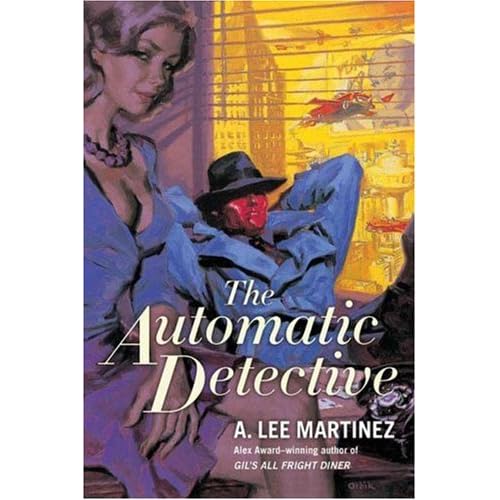
The first one starts tomorrow on A. Lee Martinez Appreciation Day!! Award-winning author A. Lee Martinez will be releasing his new novel, The Automatic Detective, on February 5, 2008.
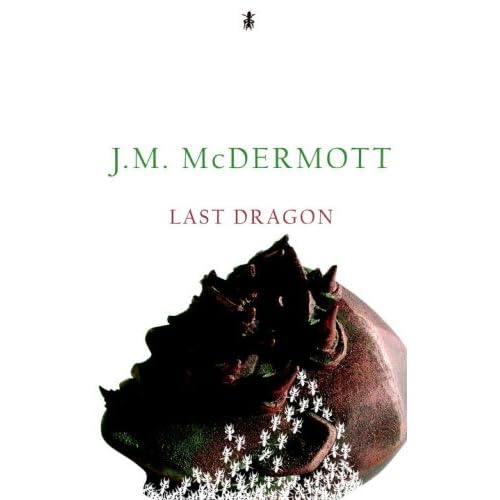
 Then on Tuesday, January 15, in my features entry, I'll be interviewing J.M. McDermott who's making his novel debut, Last Dragon, on February 5, 2008 as well.
 The Tuesday after that, January 22, it's Rob Rogers who's also debuting with his first novel, Devil's Cape, which will be released on April 1, 2008.

The first one starts tomorrow on A. Lee Martinez Appreciation Day!! Award-winning author A. Lee Martinez will be releasing his new novel, The Automatic Detective, on February 5, 2008.
Then on Tuesday, January 15, in my features entry, I'll be interviewing J.M. McDermott who's making his novel debut, Last Dragon, on February 5, 2008 as well.The Tuesday after that, January 22, it's Rob Rogers who's also debuting with his first novel, Devil's Cape, which will be released on April 1, 2008.
Wednesday, January 09, 2008
How Many Ways Can You Say Multiverse?
Perhaps one of the more interesting concepts (I wouldn't even necessarily limit it to science fiction) in the past few decades is the term multiverse, supposedly popularized by Michael Moorcock in his Eternal Champion stories. And as much as I love the term, I think it's been overused and even cliche. Yet as a reader, aspiring writer, and GM, it's a tool that can't easily be thrown out the window. In fact, many people have used the same concept albeit phrased it in different terms (planes, dimensions, hyperspace, etc.). Here's two that I've managed to discover. Any recommendations for alternatives to Multiverse?
- Paraverse: In The Gods Themselves by Isaac Asimov, humanity "discovers" a new power source by accessing a paraverse--a universe very much unlike our own. This was in the 70's and while parallel universe's probably aren't revolutionary, what makes this paraverse particularly different from something like say, alternate timelines, is that it's really a universe that's vastly alien and obeys different laws of physics.
- Omniverse: While many have claimed to have used the term, I find omniverse interesting because of its usage of omni to suggest a sense of perfection and completeness. Recently, I came upon it in the Mutants and Masterminds Freedom City campaign setting where the Omniverse takes the place of DC's Multiverse.
Friday, January 04, 2008
Plugging Noctem Aeternus
I plugged it a few months ago and the magazine just came out so in case you didn't, check out Noctem Aeternus, a speculative fiction magazine that contains elements of horror. The non-fiction section for this month even has an interview with Ramsey Campbell and Rob Zombie! And it's all free!
Monday, December 24, 2007
Philippine Speculative Fiction Vol. 3 at Fully Booked
From Dean Alfar:
Philippine Speculative Fiction III is now available at all Fully Booked branches in the Mega Manila area (Bonifacio High Street, Rockwell, Greenhills, Gateway).
Make sure to get a copy - it makes a swell gift, I tell you.
Wednesday, December 19, 2007
Where To Avail of Philippine Speculative Fiction Vol. 3
Just another last minute plug, if you want to a copy of Philippine Speculative Fiction Vol. 3, you can get them either from me (charlesatan[at]gmail[dot]com) or from Banzai Cat. They won't be in bookstores until next year. Another source is Dominique Cimafranca who has them available in both Dumaguete and Davao City. Retail price is P300.00.
Monday, December 17, 2007
CharleSATAN's Snarky Bibliophile Fights
It's Christmas, I'm biased, but I'll try to be entertaining (or failing that, just plain mean). Hopefully both publishers will not get offended. But seriously, buy all of the publications mentioned. At worst, they're great Christmas gifts that'll make you look smart.
Round 1: Expeditions Vol. 1 vs Philippine Speculative Fiction Vol. 3
Expeditions Vol. 1
Pros: It has a friggin' introduction by Neil Gaiman! And artwork by Leinil Yu!
Cons: 9 short stories for P500. And not all of those stories are that great.
Why You Should Buy It: If you're planning on participating in next year's competition, this is probably the type of fiction that the judges will like. The book has Neil Gaiman's signature on it ('nuff said).
Philippine Speculative Fiction Vol. 3
Pros: I'm in it. It's the biggest local speculative fiction compilation yet.
Cons: You can't get it at bookstores. It has an ad at the last page.
Why You Should Buy It: Get this book if you're a Filipino who wants to read sci-fi or fantasy without feeling guilty. Also, this book is cheaper.
The Final Verdict:
On one hand, you have a book that doesn't have my name on it. On the other hand, you have a book that does.
That aside, Expeditions costs P500 at least and gives you nine stories. Philippine Speculative Fiction Vol. 3 costs you P300 and gives you 21 stories. What's my point? I don't know, I'm not a math genius. All I care is that I'm a Neil Gaiman whore so I'm buying the former.
Round 2: Story Philippines vs Philippine Genre Stories
Story Philippines
Pros: It's huge!
Cons: It's huge!
Why You Should Buy It: To show everyone in the MRT that you're a literary snob and that you love reading.
Philippine Genre Stories
Pros: It fits in your pocket.
Cons: What does the publisher/editor know about fiction anyway?
Why You Should Buy It: If somebody asks, the cover is misleading enough that you can claim you're reading komiks.
The Final Verdict:
It's a David and Goliath fight! Story Philippines is run by an actual staff while Philippine Genre Stories is being published and edited by one man. But their dark secret is that they're both part of the Chinese publishing mafia. They're both graduates of Xavier! Do you think you have a choice? They've already monopolized the market!
Round 3: Salamanca vs The Kite of Star and Other Stories
Salamanca
Pros: It won a Palanca!
Cons: It's a novel!
Why You Should Buy It: Because it's a Philippine novel that's not required reading for class.
The Kite of Stars and Other Stories
Pros: It doubles as a romance collection because half the stories deal with either love or heartbreak.
Cons: You're only willing to pay for the cheaper version when the more expensive one is the only copy available.
Why You Should Buy It: It's a collection of local speculative fiction short stories that's not published by Dean Alfar himself.
The Final Verdict:
Who is the better Alfar? One is published by Ateneo University Press, the other by Anvil Publishing. Alfar, Ateneo, Anvil--all begin with the letter A. It's another conspiracy I tell you!
Round 1: Expeditions Vol. 1 vs Philippine Speculative Fiction Vol. 3
Expeditions Vol. 1
Pros: It has a friggin' introduction by Neil Gaiman! And artwork by Leinil Yu!
Cons: 9 short stories for P500. And not all of those stories are that great.
Why You Should Buy It: If you're planning on participating in next year's competition, this is probably the type of fiction that the judges will like. The book has Neil Gaiman's signature on it ('nuff said).
Philippine Speculative Fiction Vol. 3
Pros: I'm in it. It's the biggest local speculative fiction compilation yet.
Cons: You can't get it at bookstores. It has an ad at the last page.
Why You Should Buy It: Get this book if you're a Filipino who wants to read sci-fi or fantasy without feeling guilty. Also, this book is cheaper.
The Final Verdict:
On one hand, you have a book that doesn't have my name on it. On the other hand, you have a book that does.
That aside, Expeditions costs P500 at least and gives you nine stories. Philippine Speculative Fiction Vol. 3 costs you P300 and gives you 21 stories. What's my point? I don't know, I'm not a math genius. All I care is that I'm a Neil Gaiman whore so I'm buying the former.
Round 2: Story Philippines vs Philippine Genre Stories
Story Philippines
Pros: It's huge!
Cons: It's huge!
Why You Should Buy It: To show everyone in the MRT that you're a literary snob and that you love reading.
Philippine Genre Stories
Pros: It fits in your pocket.
Cons: What does the publisher/editor know about fiction anyway?
Why You Should Buy It: If somebody asks, the cover is misleading enough that you can claim you're reading komiks.
The Final Verdict:
It's a David and Goliath fight! Story Philippines is run by an actual staff while Philippine Genre Stories is being published and edited by one man. But their dark secret is that they're both part of the Chinese publishing mafia. They're both graduates of Xavier! Do you think you have a choice? They've already monopolized the market!
Round 3: Salamanca vs The Kite of Star and Other Stories
Salamanca
Pros: It won a Palanca!
Cons: It's a novel!
Why You Should Buy It: Because it's a Philippine novel that's not required reading for class.
The Kite of Stars and Other Stories
Pros: It doubles as a romance collection because half the stories deal with either love or heartbreak.
Cons: You're only willing to pay for the cheaper version when the more expensive one is the only copy available.
Why You Should Buy It: It's a collection of local speculative fiction short stories that's not published by Dean Alfar himself.
The Final Verdict:
Who is the better Alfar? One is published by Ateneo University Press, the other by Anvil Publishing. Alfar, Ateneo, Anvil--all begin with the letter A. It's another conspiracy I tell you!
Praise for A Kite of Stars and Other Stories
Jeffrey Ford is one of my favorite short story writers and I'm glad to hear he likes Dean Alfar's A Kite of Stars and Other Stories as well as mentioning that the Philippines has "a few very distinct voices" when it comes to speculative fiction.
Subscribe to:
Posts (Atom)