Showing posts with label book review. Show all posts

Tuesday, April 10, 2012

Book Review: After the Fall, Before the Fall, During the Fall

I've said it before and I'll say it again: the novella is an interesting format and it's good to see that US publishers like Tachyon Publications is publishing this kind of material (in the UK, my go to press would be PS Publishing). As far as the genre is concerned, After the Fall, Before the Fall, During the Fall by Nancy Kress is reminiscent of the type of science fiction some older fans have come to associate with the brand: it's focused on plot and the central idea. The length gives Kress the space to explore her central theme without becoming dragging.

As a personal preference, I've discovered that while I enjoy a plotty, well-planned story, I look for something more. Kress's novella fails to impress because it doesn't address the latter concerns. The prose is functional, just the right amount of description and action but nothing that charms you immediately. While the characters are fleshed out and have distinct personalities, they are transparent in their service to the plot. One point of view for example is Julie and while Kress does give her nuances, at the back of my mind is that she's female because her pregnancy will somehow factor in the story. The other point of view is Pete—and his presence could have made this a YA story—and there's something clinical about him even during his acts of rebellion. Thematically, the book is the spiritual successor to the writing style of Asimov and Clarke, with the science at the forefront of the book's thesis.

There are touches to the narrative that I did enjoy, such as the approach when it comes to the science. Julie's algorithm for example encounters some difficulties due to human behavior. She also encounters various political hurdles in her career and relationships, which is quite realistic. Pete's scenario, on the other hand, feels like an oversimplification (in much the same way the Laws of Robotics are an oversimplification but we're dealing with people here, not robots)—especially the phrase his mentor McAllister repeatedly tells him—but at least it provides a credible Adam-and-Eve scenario and leaves space for conflict.

Where Kress drops the ball is towards the end, where everything feels rushed. Julie's discoveries are quick and delivered secondhand, as opposed to the slow build-up Kress employs in the beginning. I have issues with her epiphany, as it feels a bit left field. It's definitely hinted at from Pete's perspective, but I was looking for more clues other than the third point-of-view character.

After the Fall, Before the Fall, During the Fall conforms to an old school-style of science fiction while tackling a modern concern, filtered through the writing lens of Nancy Kress. I'm not thrilled by the author's writing style, but I could easily envision myself from a decade ago enjoying this novella.

Monday, April 09, 2012

Book Review: Blood and Other Cravings edited by Ellen Datlow

 With prominent franchises like The Vampire Chronicles, Vampire the Masquereade, Stookie Stackhouse, and the much maligned-Twilight series, one common misbelief held by a number of people is that vampires are cliched, stale, and unoriginal. Deviate too far from what's established, and you end up alienating a segment of the population, in much the same way "sparkling vampires" have become a joke—even if the original Stoker novel did not involve Dracula burning in sunlight. On the other hand, too faithful renditions written without style or deliberation end up as pastiches that prove the misconception. The real dilemma isn't the usage of vampires, but rather how to present them in such a way that invigorates the imagination and interests readers. Ellen Datlow is no stranger to anthologies, and in 2011, along with co-editor Terri Windling, they released an impressive vampire-themed YA anthology, Teeth: Vampire Tales. The question is whether Blood and Other Cravings can similarly stimulate the adult reader, and leave a distinct impression.

What gives Blood and Other Cravings depth is the way it interacts with readers, stirring debate and creating dialog. It does so because Datlow and her contributors aren't focused on the literal vampire—although there's no shortage of that here—but the metaphor of what it represents. It's tapping into the zeitgeist, and one constant lurking question is who preys on whom, or who is the vampire? Take for example "Keeping Corky" by Melanie Tem, which at first glance seems gimmicky (in the same sense that "Flowers for Algernon" gives the initial impression that it's a one-trick pony when it's not), but if you dig deeper, reveals this constant interplay between parasite and prey, and changes how you read the narrator's plight. While it could be said that the supernatural element could have been discarded, its presence adds another facet to the relationships. By the time you finish the story, the question isn't so much who is the vampire, but who are the vampires.

And then there is the craft of the short story: powerful, well-written pieces that rely on technique rather than simply conceit to win the reader over. There's "Shelf-Life" by Lisa Tuttle, where the narrator's seemingly-arbitrary obsession with houses comes full circle by the time you reach the end. It's a terrific example of synthesis between character, setting, and conflict, and the presence of a recurring theme enriches the narrative. It's a very character-driven story, however, and part of the allure is understanding the narrator's psyche and her concerns, which does not diminish the vampirism element that is the heart and blood (no pun intended) of the anthology. Or "Toujours" by Kathe Koja, which is all about restraint and sub-text. She never outright states the implication of her protagonist's actions, but reading between the lines and interpreting the ending's ambiguity is part of the enjoyment.

That's not to say every story wins you over. A lot are, for the most part, entertaining reads that satiate you until the main course like "Needles" by Elizabeth Bear, a buddy story featuring non-standard vampires, and "Baskerville's Midgets" by Reggie Oliver, an atmospheric haunted house story that differentiates the dwarves from the midgets. I'm not a big fan of flash fiction, and there are two that I found memorable. "Caius" by Bill Pronzini and Barry N. Malzberg had a strong opening, but fails me for two reasons: the vampire-as-metaphor felt heavy-handed, and ultimately lacks a payoff beyond the initial premise. It's not an issue of word count, as a similar short piece is "First Breath" by Nicole J. LeBoeuf. LeBoeuf knows the limitations—and strengths—of the flash fiction format as her story left a distinct, romantic image in mind, while still providing substance.

If the other stories were appetizers, then what do I consider the main course? The last three stories in the book are quite long and leave room for deliberation. "Mulberry Boys" by Margo Lanagan packs so much in her narrative, presenting not just a new kind of vampire (and subverting the concept in the process), but creating this miniature dystopian society that leads to some difficult choices. There's also her prose style, which relies on implication, and leaves the details for the reader to sort out. A lot in "The Third Always Beside You" by John Langan seems boring on paper, especially when you consider a good chunk of the story revolves around dialog between a woman and her aunt. But that's where Langan's technique wins you over, from his astute observations on human behavior, the body language that occurs in a restaurant, to characterization that feels inevitable and holistic. I'm less forgiving of "The Siphon" by Laird Barron. On one hand, at times it feels indulgent, with its mythological allusions and its reliance on the stereotype, but on the other hand, it's a powerful pastiche, a modern Lovecraftian story that embraces this formula.

Blood and Other Cravings is the critical reader's anthology. What lurks on the surface isn't as important as what lies underneath and while the stories work on a literal level, jaded readers will find richness in what's implicit. This isn't a book on vampires as much as it is about vampirism, and that's a legitimate approach to circumvent the cliche.

Monday, March 26, 2012

Book Review: Panverse Three edited by Dario Ciriello


The impetus of the Panverse series, according to editor Dario Ciriello in the introduction, is to provide a) a market for high-quality novellas, b) a venue for new authors, and c) publish work that "told a story." As a reader, however, those aren't necessarily qualities that I look for in a publication, or rather, those qualities can be very subjective.

Take for example the first point: what does a "high-quality novella" mean? Each reader will have different standards, and for me, a novella is a commitment, so the text needs to justify its length. Just as some readers might feel there are "padded" novels which could have been tighter and shorter, one important quality for me in judging a novella is whether the author can either sustain the reader's interest, or provide a compelling reason for telling such a long story. There's the opening piece, "Orion Rising" by Jason Stoddard, which, honestly, fails to impress. It's not a bad story, but it is merely competent for what seems like a tedious story. I define it as tedious because there's no single element that is striking: the language and style is plain, the plot feels too predictable, and the focus is too diffused (which is peculiar considering there are only two points of view). The only justification for the story's length is due to the characterization, but it is transparently slow, and fails to reward the reader considering the investment in time. In other words, "Orion Rising" would have been better as a short story.

Which isn't to say this impetus for the anthology is a failure. "The Man Who Ended History: A Documentary" by Ken Liu conveys so much that many short stories, novellas, novelettes, and even novels, fail to do. First, there is the best practice of "show, don't tell," which the author breaks, but the text doesn't feel didactic due to the epistolary format. By showcasing snippets and different points of view, Liu converts what seems like a blunt, direct method and transforms it into something complex and subjective, mirroring one of the themes of the story. And whereas other writers might home in on one central point, the author provides dissenting paradigms that feels holistic without sacrificing his thesis. One of my problems with some of the novellas in the book is that they tend to revolve around a single idea or impression, which feels like wasted potential considering the format. Here, the conflict exist on several layers: objective history vs. subjective history, preservation of the past vs. concerns of the present, the individual vs. the community, etc. I'm not even touching the surface as it covers other sentiments like colonialism, the expatriate experience, cultural relations, the generation gap, and even "The White Man's Burden" (which is relevant considering the recent Kony fiasco). The more baggage the reader has, the more they have to process, and the richer this narrative becomes. Personally, the issue of comfort women in the Philippines follows the same concerns of the characters in the story. And while lesser writers might attempt to provide a neat answer, Liu shows us a more complex and human reality that feels neither preachy nor a cop-out. The author also gets away with what seems like predictable elements, such as the revelation at the end, which catches you off-guard and feels inevitable. This is a story I could discuss on and on, but my main point here is the discourse it elicits from the reader. If there is one flaw in the piece, it is the author's notes at the end, which can be interpreted as the author tipping his hand.

As far as the second rational for the anthology is concerned, we can make arguments as to what constitutes new authors, but in my subjective assessment, it meets my criteria. I've previously heard of Stoddard, Liu, and Don D'Ammassa before, but I'm honestly not that familiar with their work, nor would the casual genre fan immediately recognize them.

The last point, again, is quite vague for me (I think every successful text, no matter how experimental, surreal, or incomprehensible, at some level has some story to tell), but I'll interpret it as wanting submissions that are plot-driven. In that regard, the anthology succeeds, but it begs the question, does that necessarily make for a satisfying read? Take "Junction 5" by Gavin Salisbury as an example: in many ways, it follows the template of the opening story, and in that sense, also inherits its weaknesses. Perhaps what sets it apart from Stoddard's story is that it uses an unfamiliar setting—more "imaginative," perhaps implausible science fiction as opposed to alternate history science fiction—and so manages to evoke the reader's sense of wonder. And while that's an improvement over "Orion Rising," it's ultimately forgettable in the way most competent stories are. (And in retrospect, Stoddard's usage of the familiar leaves a stronger imprint than Salisbury's otherwordly setting.)

"Martyrs," by D'Ammassa, is what I'd call an idea story in the sense that the purpose of the text is to discuss the thought experiment presented by the author. That, in itself, is not necessarily a criticism, as many of the best science fiction stories are what I'd label as idea stories (and best fits the mold of stories with plot), but the weakness of this text is that it fails to be this rich, engaging narrative due to the author's methodology. D'Ammassa's technique is awfully transparent, whether it's the seeding of the character's personal interests and how it relates to the mystery, or that the characters are, for the most part, vectors for exposition. That's not to say the characters are simply the author's mouthpieces, as there's some personality invested in them, but as a writer and a critic, the story constantly makes you conscious of the author's intervention. Again, not a bad story per se, but it's a piece that's easily discernible and fails to strike a chord.

"Dust to Dust" by Tochi Onyebuchi is perhaps a criticism of personal preference. A personal, character-driven story using speculative fiction elements set in the backdrop of historic events seemed compelling initially but eventually felt dragging. I can see, however, how others can appreciate this story, at how Onyebuchi ties disparate threads, and plays around with the concept of alchemy.  

As far as overall scope is concerned, Ciriello has crafted an anthology with a strong focus on science fiction. Perhaps the most fantastical of the five is "Dust to Dust" but there's still a strong argument for classifying it as science fiction. It also covers a wide variety of the field, whether it's hard science fiction to something more along the lines of space opera. While I am, admittedly, not as impressed with several of the novellas in Panverse Three, "The Man Who Ended History: A Documentary" is a must read, and easily exemplifies what the editor is attempting to do with the series.

Wednesday, February 22, 2012

Book Review: Sleight of Hand by Peter S. Beagle


Peter S. Beagle is such a talented writer that you could easily pick up any of his recent collections and it'll keep you up all night. What sets Sleight of Hand apart from his other books, however, are two things: 1) There's something apropos with what the title implies—magic and the sense of wonder that goes along with it. Most of the stories fall under that category and it's a convenient framework for these stories. 2) While Beagle is able to work with any genre, there's a certain set of stories which you associate with him. Sleight of Hand includes those that break that mold, and provides a glimpse of Beagle's continuing evolution as a short fiction writer.

When it comes to short story collections, it's not just the stand-out stories that I'm interested in. I'm looking for consistency, or failing that, the versatility of the author. Beagle doesn't disappoint and pulls off what few writers actually manage to do, retaining both qualities in addition to delivering a memorable, resonant story. In fact, perhaps the only "disappointment" of all the stories is "The Best Worst Monster"—and I use the term disappointment not because the story is bad or even competent, but because it feels out of place with its tone and length, at least in comparison to the other, much more engaging stories in the book. At his best, Beagle knows how to tug at the reader's emotional strings, and you can't help but shed a tear by the time you finish "The Woman Who Married the Man in the Moon," "Sleight of Hand," and "The Rabbi's Hobby." But being a familiar Beagle reader, what excites me are the stories which don't seem like stories he would have written, yet impresses nonetheless. There's "The Bridge Partner" which arguably isn't speculative fiction, yet there's the sensibilities of the fantastic—and the horrific. What's unappealing about "Dirae" when I first read it in Warriors is that it lacks the sense of wonder that I expect from Beagle, but that's not necessarily a bad thing: this is a different kind of story involving a different kind of metamorphosis and resolution. And then there's "Vanishing" which deals with a subject matter I never thought Beagle would explore, yet fits perfectly with the kind of fiction he's known for, excelling in characterization and emotional resonance.

In many ways, it's difficult to write a review of Beagle's collections because it's all too easy to end up with nothing but praises. There are thirteen stories in Sleight of Hand for example and they're all remarkable stories—caveats explained above—and this isn't an anomaly but the norm for him. So if you've missed out on Beagle's relatively new fiction, I unreservedly recommend you grab a copy of this book immediately.

Tuesday, February 21, 2012

Book Review: The Freedom Maze by Delia Sherman


"Plain" writing can be deceptive. If it's too seamless without the fanfare of style, gimmicks, or a high concept, it's all too easy to dismiss a story or a book. Delia Sherman's The Freedom Maze is one such title. At first glance, there doesn't seem to be anything out of the ordinary to make it stand out (aside from the lovely cover by Kathleen Jennings). But that's the beauty of the book: it's actually flawless and excels in every category of the writer's checklist: setting, characterization, plot, description, etc., to the point that no single quality stands out, at least initially. The writing is so even and seamless that it's a textbook example of avoiding preciosity, and makes for an elegant reading experience.

There's several elements to praise Sherman. As far as the craft is concerned, she has to be credited for maintaining the reader's interest without resorting to cliffhangers and fancy (or desperate) attempts at accelerating the novel's momentum. The book moves at a steady pace and takes its time, even when our heroine is placed in a dangerous situation. It's amazing how Sherman accomplishes this feat without being obtrusive or anti-climactic.

Then there is her characterization and how complex and layered the characters are. Take for example our protagonist: she's vulnerable and foolish, but not to the point where the reader feels frustrated with the character. Her paradigm by the end of the novel could easily have been a didactic representation of stories that deal with slavery, but her crisis in the current era leads to a different, albeit parallel, epiphany. The antagonists in the story aren't caricatures, but they feel genuinely human, even when they're committing acts we should abhor.

What has personal resonance for me, however, is that underneath all this technique, The Freedom Maze feels like a post-modern fantasy story. One issue with "portal" fantasy stories like The Lion, The Witch, and the Wardrobe is the ease in which the protagonists travel from one world to another (or in this case, one time period to another) without much consequence. Here, Sherman fleshes out those implications, and that feels refreshing as an avid fantasy reader.

If you're looking for good storytelling with depth, Delia Sherman's The Freedom Maze is the book for you. There's an important coming-of-age story to be told and Sherman does so using the essentials of good writing.

Monday, February 20, 2012

Book Review: The Thorn and The Blossom by Theodora Goss


For me, there are two kinds of fiction readers: those that revel in formula, and those that are searching for something new. Not that the two are mutually exclusive but rather an expectation we bring when it comes to the reading experience. What's tricky when it comes to "originality" is that we often assume new material is what should amaze us: a new concept, a new technique, a new approach. But the truth is, even experiments can be poorly executed, and the reading experience isn't any better because of it. What's interesting with The Thorn and The Blossom by Theodora Goss is that it's a healthy compromise between both, and a good example of flawless execution.

What's immediately striking about The Thorn and The Blossom is its packaging: an accordion-style, spineless book which can be read in either direction. Part of the novelty is that it has two stories, each one showcasing a different perspective of the same narrative. Which, if we'll be honest, isn't new, but it's not common either. The entire package—the story, the layout, the author's style—however is what makes the book unique and worthy of interest.

In terms of the story, this is where the formula is evident. The Thorn and The Blossom follows the standard romance plot, and Goss doesn't deviate too much from the tropes established in the genre. In terms of execution though, her lines are beautiful and engrossing, and thankfully doesn't tread into preciosity. The characterization lures you in and if we were to assess it on simply that level, it's wonderful entertainment.

It's not immediately apparent but there's something rich beneath the seemingly-mundane text Goss presents to us. There's the ending, for example, which is not only open-ended, but noticing the implicit details in both stories changes the way the story is resolved. There's the issue of perspective, and if it's just characterization we're talking about, The Thorn and The Blossom is a good example of subjectivity and interpretation. There's also the parallelism between the legend in the story and the plight of the characters, which evokes sensibilities of speculative fiction without necessarily treading into that territory directly.

The Thorn and The Blossom is a compelling, entertaining romance that incorporates the best elements of print, design, perception, and clean writing.

Friday, January 20, 2012

Book Review: Sourdough and Other Stories by Angela Slatter

There's an art to introductions and afterwords — in this case written by Robert Shearman and Jeff VanderMeer respectively — and what's difficult about writing this review is that they've said what I wanted to say when it comes to Angela Slatter's Sourdough and Other Stories. The former sets the tone for the collection, while the latter captures what makes Slatter's writing unique and refreshing. I'll steal a line from VanderMeer:
"You could call what she's created her 'take' on folk-tales, but I think that's too limiting. She's not just riffing off of what's gone before but creating something new that's less stylised and more three-dimensional."
Whether it's anthologies or collections, chronology is important. There's a rationale behind the editor's — or in this case, author's — choice. The opening story, "The Shadow Tree," is brief but quickly sets expectations for the stories to come, conveying the atmosphere of a dark fairy tale. More importantly, it hints that this could be something along the lines of Arabian Nights, with Slatter acting as a modern Scheherazade. That's not quite the case when the reader gets to the second story, but that concept resurfaces as the collection progresses. To a certain extent, Sourdough and Other Stories feels more like a mosaic because of the interconnectedness; part of the pleasure of rereading the book is discovering all sorts of links between the stories. And here's what's brilliant: some writers simply order the related stories consecutively. If the reader isn't paying attention, they can miss out on the fact that the minor characters in the current story were the main characters from the second story that preceded it. The stories actually work quite well independently. However, there'll always be that extra layer between the reader's imagination and the gap between stories, which Slatter stimulates. The power of the final story in the book, "Under the Mountain," is that it's propelled by everything else that came before it, much like a rollercoaster that's reached its apex before the steep descent. Thematically, it also goes back to what was established in "The Shadow Tree," and an example of how the collection is greater than the sum of its parts.

Slatter also manages to strike the balance between maintaining tone without losing the reader's interest. One glaring flaw of Lovecraft's collections is that after the third story or so, it's likely that the reader will get bored due to the formula and repetitiveness of his style. Here, there's always something new to look forward to, yet each story still follows the established framework. Related to that is there's no weak story in the collection: every piece, from start to finish, is excellent. Forget mediocrity, these stories are enough to rekindle a jaded reader's interest. Good writers are able to write a great story; doing several of them, while still retaining the same motif, and then delivering something more, is a feat few writers can claim.

When it comes to themes, there's always this sense of darkness that's missing from many of today's sanitized fairy tales. Slatter isn't being cruel to stand out, but the tragedy and hubris feels natural and organic, a necessity rather than narrative contrivance. That's not to say there are no happy endings here, but they come at a steep price. Nor are the stories feeble attempts at didactic moralization. Slatter's protagonists are also female, embracing the adversities they encounter and using it to fuel their metamorphosis. Even as they commit selfish acts, the readers understand their motivation, and sympathizes with them. It's that delicate balance that propels her stories from being pastiches and homages to something uniquely Slatter.

I came upon Sourdough and Other Stories at the dealer's room during World Fantasy Convention 2011. It was expensive, competing with my budget for other rare books like those published by PS Publishing. But I bought it, and having read read it, I feel I underpaid for it. Readers — genre fans or otherwise — should read Angela Slatter's fiction. Discovering her book is the equivalent of realizing you've fallen for your best friend: they've been there all this time, it's only recently that you've noticed their great qualities, and there's still time to re-assess your original appraisal.

Thursday, January 19, 2012

Book Review: Death's Heretic by James L. Sutter


Neither crime nor mystery is alien to speculative fiction: most of the novels in Isaac Asimov's Robot series, for example, are mysteries, or at the very least, logic puzzles (this is also true for the Foundation stories). So it's not surprising to see those kind of elements in more recent novels like The City and The City by China Mieville, or Zoo City by Lauren Beukes. Death's Heretic follows that vein of mystery-in-my-fantasy but to anyone who's Game Mastered a Dungeons & Dragon's game, the concept isn't so far fetched: the constraints are all there, the Game Master simply has to make sure they follow all the rules. Of course the elements of what makes a great game doesn't necessarily translate to fiction and James L. Sutter has a handle on that. When we think about stories set in a Dungeons & Dragons setting (or in this case, Pathfinder's Golarion), one element that frequently comes to mind is the concept of the adventuring party. Sutter eschews that approach — and he's not the first one to do so either — and goes for a more focused narrative. Death's Heretic revolves around Salim Ghadafar, a warrior that's coerced into the service of a death goddess.

From a perspective of craft, Sutter is transparent when it comes to technique. The template, especially with the formula for most mysteries, is evident. The author doesn't abuse this, however, and makes every scene interesting, whether it's complex suspects or interesting vistas. The key here is that Sutter doesn't repeat himself, and maintains the momentum he's established. As far as the story is concerned, the only qualm I have is when Salim finally encounters the culprit of the crime. The author breaks consistency with what was previously established, not to the point that it disrupts the plot, but it is a bit jolting if the reader remembers the details from the previous scene.

A lot of the appeal of Death's Heretic stems from Sutter's protagonist, Salim. Dungeons & Dragons — hence Pathfinder — has a cosmology where the objective existence of deities can be proven. Salim professes to be an atheist and that's tricky to pull off, given the assumptions of the setting. But neither is this a propaganda tract as Sutter does justice when it comes to the portrayal of the other side. What's compelling is that the premise establishes complications and conflict, and the dynamic there is played up. Salim isn't simply a lone wolf archetype, but a genuine, fleshed-out character.

For the most part, Death's Heretic channels the spirit of classic sword & sorcery, adapts it for a modern audience, and is sprinkled with Sutter's personal touch. It makes for fast, leisurely reading, the equivalent of a summer blockbuster movie for speculative fiction.

Wednesday, January 18, 2012

Book Review: Bad Power by Deborah Biancotti

Disclosure: I'm the eBook designer for Twelfth Planet Press.

For me, it's interesting how Western culture has commercially appropriated the term superheroes. In many ways, it's an over-examined construct that's often been linked to spandex-clad characters. Japan, for example, has no shortage of people possessing strange, uncanny abilities rivaling that of Superman or Mr. Fantastic, but we don't call them superheroes. If you distill them down to their core concept, they are nothing more than fantasy — or science fiction, depending on your poison. Unfortunately, at least as far as fiction is concerned, most attempts to tackle the superhero sub-genre, when they're not media tie-ins, end up as either pastiches, homages, or parodies. Enter Bad Power, a collection which utilizes elements that we've come to associate with superheroes, but Deborah Biancotti avoids the baggage that usually comes with the term, especially since she never uses it.

The stories in Bad Power revert to the core concept of superheroes. The characters don't have spectacular origin stories, but revolve around dealing with the fantastical in the what appears to be the mundane world. In many ways, it's reminiscent of what made the TV show Heroes good, while avoiding the pitfalls it made. It's not because Biancotti avoids the term superheroes, but rather due to her avoidance of overused tropes and conventions. Yet she's also tapping into the same zeitgeist, as evidenced by the title, or the way she subverts those cliches. There are no supervillains in the book for example, although some characters are clearly flawed and immoral.

There are two things you need to know about Bad Power. The first is that it takes place in the modern world, with the public remaining mostly ignorant about the existence of people with powers. The second is that the book contains five stories, each a standalone piece, but are also connected so that reading all of them creates a holistic description of the setting. Some of the stories work better independently than others. "Cross That Bridge," for example, is perfectly readable even if you haven't read what preceded it, although doing so adds another layer to the narrative. "Web of Lies," on the other hand, doesn't have as much of an impact, unless you understand the backstory behind it, or the implications of the ending.

Biancotti's technique always revolves around character, or more precisely, her primary protagonists. It's not only through their perspective that you view the world, but you also sympathize with them and relate with their circumstance. It's what makes "Bad Power" and "Cross That Bridge" the strongest stories in the collection, because it leaves this emotional resonance rather than simply piquing your sense of mystery.

For the most part, Bad Power is an interesting and fun read. It's brief enough so you never get tired, and the order of the stories (read it in chronological order!) has a significant bearing on how you interpret them.

Tuesday, January 17, 2012

Book Review: Under the Moons of Mars edited by John Joseph Adams


A decade ago, I still sought classic science fiction and fantasy texts, such as Heinlein and Saberhagen. Unfortunately, while some works were readable, several failed to withstand the test of time, whether due to a readership that has grown and matured, or simply because of outdated norms. I never got to read Edgar Rice Burroughs's Barsoom series, nor do I have the inclination to do so, since it's probably one of those works that fall under the latter (problematic probably doesn't even begin to describe it). Still, with the Barsoom series celebrating its centennial this year — along with the coinciding movie debut John Carter — I picked up Under the Moons of Mars without knowing anything about Barsoom save for the premise, and simply trusting John Joseph Adams and the anthology's contributors.

Those sharing my plight have nothing to fear. Under the Moons of Mars works even without prior knowledge of Burroughs's fiction, and those that are baffled can consult the Appendix by Richard A. Lupoff (never needed it). As an anthology, the book has an interesting structure, because it's entertaining and convincing, and this is coming from a reader who doesn't romanticize Burroughs. No story feels derivative, and each one explores a different facet of Barsoom's cosmology (it's surprising how many of the stories don't feature John Carter as a main character). This, in fact, ties in to what makes the politics of Barsoom problematic, although it is not without its own redeeming qualities, as pointed out by Tamora Pierce in the Foreword. Some stories book subvert and modernize the mythos — and more importantly, does so in an engaging fashion — which is what makes them stand-out: "The Ape-Man of Mars" by Peter S. Beagle, "Vengeance of Mars" by Robin Wasserman, "Woola's Song" by Theodora Goss, "A Game of Mars" by Genevieve Valentine, "A Sidekick of Mars" by Garth Nix, and "Coming of Age on Barsoom" by Catherynne M. Valente for example. Their equivalent is the contribution of John Gardner's Grendel and Marion Zimmer Bradley's Mists of Avalon to Beowulf and Le Morte d'Arthur respectively. Other stories, on the other hand, remain distinctly the author's own while still being faithful to the conventions of the milieu: "A Tinker of Warhoon" tackles some of the themes Tobias S. Buckell has written in his other works, while Valente's piece is distinctly Valente, even as she makes herself part of the story.

Each story is also accompanied by an illustration. They are a welcome visual, especially for Barsoom's propensity for alien physiques, but some of the artwork would have been more impressive had they been rendered in color. (A lot work well with the black and white medium.)

I won't lie. Under the Moons of Mars has a tough constraint to work with, and the authors make the most out of that framework. The stories in this anthology are fun and interesting, perhaps the same emotions evoked by fans who read Edgar Rice Burroughs in their childhood. I wouldn't label them as the best of the best, but the inner child in me is gleeful when I read about a standoff between John Carter and Tarzan, or discover the secret habits of calots (they need their own plushie...).

Monday, January 16, 2012

Book Review: Song of the Serpent by Hugh Matthews


If there is an argument for character vs. plot (although there is no shortage of plot in the book), Song of the Serpent by Hugh Matthews should be the textbook example. The appeal of the novel is its protagonist, Kunzle the Quick. In many ways, he is the stereotypical thief: quick-witted, cowardly, and an opportunist. The problem of lesser writers, however, is actually conveying those three qualities to the reader. Kunzle is easily one of the most charming characters I've read recently (he's charming to the reader; people who meet him hate his guts) and carries the narrative forward as he injects levity and entertainment without jolting the reader from the seriousness of the circumstance. The strength of Matthews's writing is that his characters have this sense of vulnerability: Kunzle is hardly the best thief in the business, and that can be said for his companions — or the antagonists in the story. This is media tie-in fiction but it's hardly one where the protagonists are invincible.

What readers need to know about the Pathfinder Tales line is that it's Dungeons & Dragons with the serial numbers filed off. There's an appendix at the back but honestly, it's unnecessary, mainly because the narrative follows the best practices for telling a story, and most of the fantasy references like dwarves and orcs have become part of the zeitgeist. Matthews writes a compelling beginning, and it's enough to pique the reader's interest. Matthews's alter-ego has professed his interest in Jack Vance and the novel captures the atmosphere of the stories of the Dying Earth series, albeit modernized and adapted for Pathfinder's setting.

One problem with Song of the Serpent is that the tone shifts in the middle of the book: while the battle scene is competent, it detracts from the character-centric development and slows down the momentum. Because Kunzle is easily the most fleshed-out character, whenever the spotlight drifts away from him diminishes the reader's interest. While his solo adventures were fun to read, towards the end of the book, he's surrounded by companions — not quite the standard adventuring party — and while they have their own quirks and foibles, they're not as remarkable as Kunzle. Only the ambitious troll comes close to matching the thief's personality.

That's also not to downplay the impact of the mystery surrounding the various characters, which Matthews brings to a satisfying conclusion. What starts out as a rescue-the-princess story evolves into something more convoluted, and that's not necessarily a bad thing. Whatever weaknesses Song of the Serpent has is redeemed by the last line of the novel, which stays true to the characterization of Kunzle. It's a punchline, yes, but it's an entertaining one.

Friday, January 13, 2012

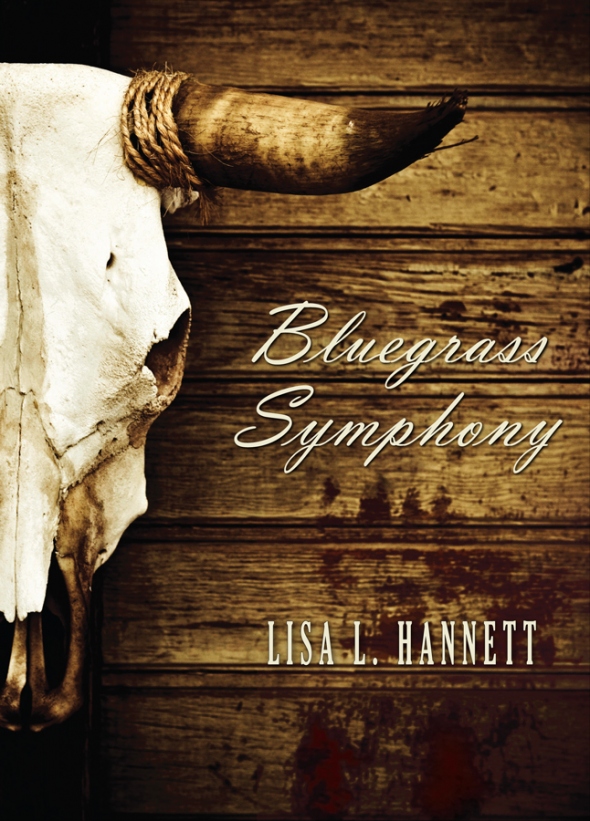
Book Review: Bluegrass Symphony by Lisa L. Hannett

 "It's not fair," I told Lisa L. Hannett over Twitter. When we talk about an author's style, it's usually a quality that's refined and polished over years. Hannett is one of those rare writers who can write using a variety of voices — and does so wonderfully. It's not simply having an ear for dialog, but possessing the ability to translate what's spoken into the written word and using it to convey to readers the mindset, upbringing, and culture of her characters. Every story in Bluegrass Symphony, for example, has a unique, unmistakable narrator. It's not simply knowing the difference between first-, second-, and third-person narratives, but knowing when to use it and understand the nuances of each perspective. Some writers, for example, avoid second-person because it's difficult to immerse the reader, but when Hannett does utilize it, it's a seamless experience. It's also not simply about sticking to one central theme as Hannett writes using different premises: fortune-telling hens, soul-smoking mayors, minotaur-infested dystopias, or even immortality-rewarding beauty pageants. But despite these seemingly disparate concepts, there's also this sense that this is uniquely a Hannett piece, as the reader will always find some form of tragedy and darkness lurking underneath every story.

That's the impression one gets after reading Bluegrass Symphony, and it's a clever title for a short story collection. There's no story titled "Bluegrass Symphony," and the author provides an explanation at the end of the book, but just from hearing those two words, it already conveys a certain expectation — and the reader wouldn't be wrong. If this were the Philippines, I'd label Hannett's stories as provincial, but for non-Filipinos, the country, would be a better description. Hannett certainly captures that kind of atmosphere, even when she's writing all these diverse stories — and as an aside, another unfair fact is that eleven of the twelve of the stories in this collection are original to the book. They are all very good stories, immediately winning you over with tone and character, but they're also challenging that if you skip a beat, you'll miss out on important details. There's insight at the end of each story, but it's not necessarily one that readers will always welcome: Hannett's fiction seldom ends pleasantly, or if it does, it comes at a steep price. "From the Teeth of Strange Children," for example, explores various types of relationships (some predatory, some otherwise), in addition to contributing something new to the vampire mythology. The exploration of these relationships is what makes the story shine, and it's these mixture of emotions that give it resonance. I'm still on the fence when it comes to the the effectiveness of the ending in "The Short Go: A Future In Eight Seconds," but it's a memorable dystopia, one that Hannett writes convincingly through her effective characterization. "Down the Hollow" is transgressive and haunting, yet is brief enough and contains all the elements that makes Hannett's stories wonderful and unique.

Bluegrass Symphony is one of those collections that feels more like an anthology due to the author's wide range. This is easily a must-read book of 2011, doubly so since most of the stories aren't reprints.

Thursday, January 12, 2012

Book Review: Zoo City by Lauren Beukes

There are novels that defy categorization: they don't fit into common marketing conventions, or at the very least, aren't limited to the stereotypes associated with their genre. The prose of Zoo City wasn't immediately striking — its appeal to me was due to an entirely different reason — but there's skill in it being plain. And perhaps that's the paradox here. There's so much going on in Zoo City: it's science fiction, it's fantasy, it's crime... but the narrative is focused, down-to-earth, and ultimately, the conceit doesn't get in the way of telling an actual story. Lauren Beukes writes a complete, solid novel, and while some writers mask their weaknesses with style, Beukes allows her text stand on its own, guiltless in front of a jury.

What is memorable, however, is how there's this continuous interaction with the reader even once you've put the book down. I've spent the past few days pondering on the possibilities of Zoo City fan fiction, and it's not everyday that such a story inspires me so. Nonwriters might simply dismiss this as the concept, the same way that they might approach an author and offer to sell them an "idea" they had. But that's not truly the case, as it's Beukes's execution (in this case, conscious restraint) that makes the novel work. I've heard comparisons to Philip Pullman's Golden Compass but I think those conclusions are unfair because the animal companions — for lack of a better term — behave differently in each novel (the social implications alone are different). There is also the way that Beukes hints, insinuates, and implies a larger backstory, but never tips her hand. In that sense, Zoo City feels like a realist novel, as the reader remains ignorant of the underlying cosmology of the world by the time they reach the end. Instead, the anchor to the narrative is the central protagonist, and her ending isn't a convenient resolution.

In terms of technique, Beukes utilizes elements of the epistolary novel to great effect. They feel authentic and modern; whether they'll date themselves in the future is best left to speculation, but as far as the present is concerned, it's well done. Nor do I feel, at any point, that they are extraneous. The inclusion is justified and again, Beukes doesn't jump at every opportunity to insert news clipping, emails, or letters. There's a compelling reason for their place in the story, and the author includes just enough to whet your appetite without breaking the momentum.

Perhaps a key element in describing Beukes's style in Zoo City is restraint. The author never feels insecure about their technique or the reader's intelligence. What you end up with is this polished novel that's clear, concise, and imaginative, without drawing too much attention to its uniqueness. That might be a detraction for some narratives but in the case of Zoo City, it works.

Wednesday, January 11, 2012

Book Review: Queen of Kings by Maria Dahvana Headley


Some novels take time to develop: it can be front-loaded exposition or a scenic tour of the book's setting. What's striking about Queen of Kings is Maria Dahvana Headley eschews that method and delivers a story that dives immediately into the action and never gives the reader time to catch their breath. It's one exciting scene after another, making this a quick read that can't be put down.

It's a common misconception that the appeal of a story is its concept — in this case, the secret history of a shapeshifting, blood-drinking Cleopatra. While that's a reasonable elevator pitch, what makes the novel work is Headley's conscious decisions with technique. First, the chapters are quick and short, and while the descriptions can get sparse, it follows the narrative's agenda of getting to the exciting bits as soon as possible. Second, the author has an awareness of her genre's strengths and weaknesses. The introduction of certain characters like the senate or Virgil might appear abrupt, but since this is historical fantasy, the reader is equipped with knowledge of these personalities so their presence feels natural — if not outright warranted by the reader. On the other hand, characters that are new to the story are given their proper introduction, but just enough so that it doesn't bog down the narrative. By most accounts, Headley exercises brevity, and it's a practice that's in the service of the story.

The third element that makes Queen of Kings such an enticing read is the way the author tackles conflict. In many traditional narratives, high fantasy included, there is the sense that the reader knows how it's all going to end. One reason for this is that conflict — and war — tends to be polarized: you have the protagonist's side and the opposing side, usually good vs. evil. That's not the case in Queen of Kings as there are numerous agendas in play at any given time so it's not even a two-front war but sheer chaos. It even comes to a point where the reader isn't sure whether they should be rooting for a particular character or not. What's impressive with Headley is that while some authors might hold back, whether in creating too many factions or simply the lengths the various characters will go to, here it all seems like an organic progression that keeps the reader guessing. Is it contrived? Of course, it is, and Headley even scores bonus points when it comes to aligning the narrative with known history, but what's satisfactory is that it never seems manufactured. Contributing to this is the continuous sense of confusion among the characters, especially early in the novel, where their perception is different from what's objectively taking place. We've seen it utilized to great effect in epic fantasies like The Wheel of Time or A Song of Ice and Fire, but all Headley needs is a few pages and two chapters to illustrate contrasting views of the same incident. There are other techniques which Headley uses such as juxtaposition, but for the most part, it's the author's ability to weave the illusion of chaos that sets the book apart.

In Queen of Kings, the reader never knows what's going to happen next as alliances are made left and right, along with betrayals and double-crosses that go hand in hand with them. The presence of history and mythology is also a resource the author mines, which makes its inclusion a rational and seeded solution. Maria Dahvana Headley writes a focused, compelling narrative that excels in what it's supposed to do, and is a great example of synergy with authorial intent.

Tuesday, January 10, 2012

Book Review: Engines of Desire: Tales of Love & Other Horrors by Livia Llewellyn

I want to begin this review with a digression: what makes a great James Bond actor? Arguably, the best in the film's franchise, whether it's Sean Connery or Daniel Craig (sorry Pierce Brosnan), is due to their unpredictability. Despite their charm, there's always this sense that they can murder you without a moment's hesitation. This element isn't limited to what's written on the script but extends to the charisma, personality, and believability of the actor. I bring this up because one recurring motif in Livia Llewellyn's stories is the way she writes her characters: they are compelling protagonists, but the reader is never quite sure whether they should ally — I use the term because they automatically win the reader's sympathy — with them or fear them. In most cases, it's both, and it's amazing how Llewellyn conveys this through prose — without the aid of actors.

As a collection, Engines of Desire is aptly titled. There's a certain roughness when it comes to the word "engine" but it's also workman-like and efficient. Llewellyn's prose isn't perfect as there's bits here and there that could be polished, but overall, it gets the job done. The inclusion of desire, on the other hand, is what separates the author from her peers, as it is a common element in most of Llewellyn's stories. If the topic was Lovecraft's bane, the author incorporates it into her narrative and channels it into something primal that triggers our collective lizard-brain. It's sensual, yes, but just like her protagonists, one must always question whether surrendering to it is safe. The image that springs to mind when describing this collection is that of an Ouroboros: the narrative is engaging, but it also fuel for what comes next, thus creating this cycle of satisfaction and hunger.

There are ten stories in this book and the only time the author falters for me is "Brimstone Orange" mainly due to its length. One would argue that the other flash fiction piece in the collection, "Teslated Salishan Evergreen," should suffer such a fate, but its parameters are well-defined (a faux encyclopedic entry on a fictional plant) and the concept is executed perfectly. When it comes to must-reads, it's a tie between "At the Edge of Ellensburg" and "Jetsam". Both contain elements of what makes Llewellyn terrific and unique: forbidden passion, characters that are double-edged, and a darkness that simultaneously destroys and saves. Thematically, the two stories are different from each other, but both bear the distinction of a Llewellyn story without the heavy-handedness of Lovecraft pastiches. "Her Deepness," a lengthy, fantastical (steampunkish?) piece, is similarly engaging, although it lacks a certain level of eroticism that marks her other stories.  Still, it's a memorable story that digs deep into one's inner darkness, both literally and figuratively. The titular story, "Engines of Desire," is nothing to shrug off, and it's an interesting technique that showcases why O. Henry-type stories aren't necessarily to be praised: Llewellyn reveals her hand early on and it's the character's motivation that piques the reader's curiosity.

While Llewellyn's writing can be demure when it needs to be, for the most part, it's seldom elegant, and that's the potency of the author's technique. Imagine the word "fuck" for example, and while other writers might use it to simply insult, Llewellyn's apt usage is such that it both seduces and kicks the reader in the groin. The author is unapologetic when it comes to Engines of Desire, and to read such a collection is to know corrupted passion. Such base emotions are seldom spoken in polite company, and that's where this book revels in.

Monday, November 14, 2011

Book Review: After the Apocalypse by Maureen F. McHugh

The problem with being a relatively new genre reader (just the past decade — less if you consider my familiarity with the short story format) is that I'm unfamiliar with a lot of authors. For example, I'd probably miss out on someone like Peter S. Beagle (The Last Unicorn film aside) if he didn't have a recent resurgence in terms of output. Maureen F. McHugh is one such writer: I didn't immediately appreciate the significance of Small Beer Press publishing her short story collection. In retrospect, I've read some of her short stories in the past, notably in original anthologies from talented editors like Ellen Datlow and Jonathan Strahan. Initially, I never made the association between McHugh's name and her stories, because at the time, the writing style and technique wasn't immediately striking, at least compared to the other stories in the aforementioned books. (There is also the fact that I was a different kind of reader back then.) In McHugh's latest short story collection, After the Apocalypse, I'm given the opportunity to re-evaluate my assumptions, thanks to the presentation of her stories in a different context.

Short story titles can be difficult, especially if you're a writer whose style has a wide range. I'm not against the current practice of naming a short story collection after one of your stories (sometimes not necessarily the most famous one, which is the case here), but with that limitation, some titles fail to convey the theme (or lack of a theme as the case may be) of an author's body of work. That's not the case with After the Apocalypse as I find it captures the mood and atmosphere of the included stories. It's not all post-apocalyptic, at least not in the general sense: the stories are all personal, and whatever bleakness and darkness that is present is due to the author's strength in characterization and empathy. On that level, After the Apocalypse immediately conveys to you what you need to know about this book.

In terms of story, McHugh's style is best described as slow, deliberate, and very character-focused. This can lead to emotional and heavy stories, which is a testament to the potency of the narrative. Take, for example, the horror element of some of her stories: it's not evident in the beginning, but it creeps up on you by the time you read the last line (nor is it a case of simply O. Henry plots). I attribute this to characterization, especially the way McHugh crafts convincing — and sympathetic — characters. Take, for example, the opening piece, "The Naturalist." Early in the story, you're rooting for the protagonist. Until you discover something reprehensible about them, but this revelation is what makes them compelling. That's also the case with the titular story, "After the Apocalypse." It's not that these characters are beyond our social norms, but their behavior are aspects of ourselves that's magnified to a certain degree that it crosses a moral line. One would even argue that in the latter story, the line is never crossed. It's this ambiguity that makes for a rich narrative that continues the dialogue even when you've put the book down.

Another topic that needs to be addressed — which is a non-issue for me but might be the case for some readers — is genre boundaries. I'm not exactly the type of reader to quibble whether a story is science fiction, fantasy, or something else: I'm more interested in whether it works, whether it was convincing, or whether it was entertaining. All the stories in After the Apocalypse succeeds on those counts. But if you want to quibble on some of the stories, whether they are indeed fantasy or science fiction, well, McHugh does have that kind of vagueness. "The Lost Boy: A Reporter at Large" and "The Effect of Centrifugal Forces" feels like realist* stories for example. But for me, it's not just the tone that makes them science fictional, but the subject matter, as they are based on science; mundane science fiction if you will (which is an interesting debate because "The Kingdom of the Blind" is just as likely to happen in the real world but the concept of artificial intelligence, at least as far as the present paradigm is concerned, still feels very science fictional).

At first glance, McHugh seems to employ traditional writing techniques, but if you dig deeper, there's actually a lot of experimentation taking place. "The Lost Boy: A Reporter at Large" for example is a documentary in prose format, and while other writers have attempted something similar (to varying degrees of effectiveness), the context and presentation is different, and what works here for example might not work in a different short story. (In the novel format, compare World War Z vs. Feed.) There's also the issue of characterization which I've already brought up: choice of characters, point of view, etc. all play a part and McHugh constantly presents us with tough choices without being didactic.

There are nine stories in this collection and what makes this book a must-have is the three originals. They're not, by any means, gimped short stories but well-polished and striking in their own right. I can easily imagine "The Effect of Centrifugal Forces" and "After the Apocalypse" finding their way to awards ballots because they're that potent and disturbing, while there's something cathartic when it comes to "Honeymoon."

If you haven't discovered McHugh yet, After the Apocalypse is a must-have. There's a few collections I'd nominate for an award like The Shirley Jackson Awards, and this is one of them.

*Or maybe that's the conceit, that McHugh imagined a condition that sounds plausible and incorporated it into the fiction.

Book Review: The Brief Wondrous Life of Oscar Wao by Junot Diaz


What immediate fascinates me about The Brief Wondrous Life of Oscar Wao — and this isn't readily apparent once you're done reading the novel — is that it's a different kind of book depending on who you are. A more formally-trained reader for example might home in on the history and politics of the book, an immigrant might relate to the expatriate experience of the characters, a geek might applaud all the comic and D&D and anime allusions, and wallflowers will outright identify themselves with Oscar Wao. It's the secret plurality of the book (because I think the ability of a novel to address multiple concerns isn't exclusive to Junot Diaz's writing) that makes The Brief Wondrous Life of Oscar Wao accessible to all kinds of readers, whether you're a Pulitzer judge or a fanboy in line at a convention. Which is quite a paradox because on paper, this seems like the most exclusive book to hit the shelves: it uses Spanish frequently, invokes a vast knowledge of pop culture ranging from Marvelman to Macross, and features footnotes the size of vignettes. And this is a testament of Diaz's skill as a writer that he makes it work.

In terms of craft, there's a cadence to Diaz's writing style that sucks you in: the beat and the flow makes the pop culture analogies effective instead of sticking out like a sore thumb. And speaking of allusions, as a genre fan, the way he utilizes geekspeak as metaphors is simply impressive: Kimota! 4d10. Ringwraiths. It's very much possible that the reader won't get all — or any — of the references (and with the popularity of the Lord of the Rings movies, the rise of MMORPGs, and comics going digital, the likelihood of catching the nuances keeps on improving) but the story works regardless of that. And that pretty much sums up the language barrier as well as the mood and context clues are enough to guide the ignorant reader. But if you are the perfect, ideal reader (Carlos Hernandez's Oscar Wao: Murdering Machismo comes to mind), then the book becomes this rich, vibrant novel that's daring and (I wouldn't call it ahead of its time in terms of reader reciprocity) timely. And then there are the usual stuff: tone, character, telling details, and a larger-than-life antagonist that never makes a personal appearance (well, he does in a brief scene) but dominates most of the book.

It's the personal impact, however, that strikes home. The Philippines for example was also a colony of Spain (and faces American colonialism) and I can relate to the language and the themes. We have our own Trujillo in the form of Marcos and the feudal (as well as misogynistic) atmosphere and mindset is (unfortunately) all too common in the present. Oscar Wao belongs to my generation, from the comics he reads, the games he plays, and even his luck with women (perhaps the only disconnect is that he is overweight and I am underweight). I'm not quite the ideal reader but it's close.

To claim that The Brief Wondrous Life of Oscar Wao is fun is an understatement. But much like Lolita and stories by Gene Wolfe, there's a lot more one can get from digging beyond the surface. There's something for everyone and it's a compellingly-written narrative.

Wednesday, November 09, 2011

Book Review: Naked City: Tales of Urban Fantasy edited by Ellen Datlow


In the hands of a talented editor, the term urban fantasy can be this flexible theme that's not limited by sub-genre. That's the initial impression I got with Naked City: Tales of Urban Fantasy, as it features all sorts of stories ranging from high fantasy, noir, mythic fiction, and horror (or some combination thereof). Admittedly, there are readers who find comfort in formula, but if you're the type that revels in the unknown, willing to be surprised or charmed or horrified (trick or treat!), then this is the book for you.

Admittedly, I read Naked City under the worst possible circumstances — that is, one story at a time over a period of two months, which is slow for an anthology with twenty stories. Combine this with the fact that Ellen Datlow has released several anthologies this year, so things can get a bit blurry. But in many ways, this is the harshest test for a book: which stories leave a lasting impression and which are forgettable? It's a testament to the editor and contributors at how striking many of these stories are, even when read independently and a review is being written weeks after the last story is read.

For me, the stories in the anthology can be divided into one of two categories: those that are simply fun, and those that are meaty, bizarre, and takes some time to process. Not that a story is exclusive to one of these two, nor is "fun" a term that's articulate enough to describe what makes the story work, but these categorization helps me classify which stories can be read on the surface level, and which ones require a significant investment on the reader's part.

There's more of the former than the latter. "On the Slide" by Richard Bowes has this definite noir cinema atmosphere and the mashup is actually relevant to the story; "The Duke of Riverside" by Ellen Kushner is a welcome return to the world of Swordspoint; "Fairy Gifts" by Patricia Briggs combines vampires with the fey; "Priced to Sell" by Naomi Novik is funny and cosmopolitan; and there's something loosely Lovecraftian in "The Colliers' Venus (1893)" by Caitlin R. Kiernan. While the plot of these stories can be summed up in an elevator pitch, they successfully conjure one dominant emotion as you're reading through the story, whether it's foreboding, dread, or whimsiness.

When it comes to the meaty, complex stories, there's three that I'd like to tackle. First, there's "The Projected Girl" by Lavie Tidhar. It's atmospheric and continually blurs the line between the supernatural and the realistic. Legedermain is employed as the author uses his protagonist's history to link the conflict to present events and everything seamlessly falls into place. There's something formulaic about the story but Tidhar is transparent about this and doesn't really care: his style mesmerizes you and takes you for an enjoyable ride.

"Daddy Longlegs of the Evening" by Jeffrey Ford is deceptive; there's a playful tone to the story and it's evident that Ford is having a fun time writing this piece. Of course underneath all of that is this layer of darkness, and the author continually juggles the reader's sense of wonder along with dread and the weird.

Last is "The Skinny Girl" by Lucius Shepard. I'm not from Mexico, but Shepard crafts this believable setting that's peppered with telling details and nuances. What wins you over is the slow transformation of the protagonist, at how his skepticism eventually transforms and evolves. It's a bait that the reader is all-too-willing to partake and Shepard pulls it off.

The three aforementioned stories are already well worth the price of entry to Naked City but what's great about the anthology is that there's a lot of strong, memorable stories that defies formula and actually reinvigorates our understanding of the term urban fantasy.

Tuesday, November 08, 2011

Book Review: Yarn by Jon Armstrong


Cyberpunk never really appealed to me although its central themes continues to be relevant to this day. While I can enjoy the tropes and formulas of a sub-genre, the real challenge is how to appropriate and rejuvenate cyberpunk for a new generation of readers. While not outrightly labeled as cyberpunk, Yarn conjures the same atmosphere and rebellion. Everything from the hyper-commercialist society (with its own maleficent Lady Gaga/Madonna figure), the oppression of the rural citizen, the paranoia, and even the jarring jargon is included. Yet this is not readily apparent when you start reading the book and that's probably a good thing. Jon Armstrong takes it slow and builds up his world piece by piece.

One of the striking details in the novel is the role yarn plays in the book. Armstrong subverts the notion of sewing and uses this as part of the action. If the fusion of martial arts and guns gave birth to Gun Kata, then here, the author creates his own Yarn-fu if you will. While this might make for entertaining reading, it's disappointing though to see that for a fashion-centric novel, the protagonist's sewing skills are seldom used for actual creation. Instead, it becomes a vehicle for another way of committing violence and theft.

The author excels in characterization and he immerses us with juxtaposition between his protagonist's present and past. Initially, it's the former predicament that compels the reader but soon, the former gives way to the latter. In this, there is an uneven sense of conflict, although it is no less interesting. Much of the suspense is the flashback, although the reader is aware that the main character survives. The predicament of the present, on the other hand, has less immediacy of a threat, although the pendulum again swings in the other direction by the time we reach the climax. Armstrong does a risky attempt at narration near the final part of the book where he alternates between present and past with no breaks but for me, it worked.

Yarn also has this sense of contrivance as a narrative but this is fiction we are reading and Armstrong is unapologetic about connecting and resolving what he's established in the beginning of the book. Ideas, themes, and emotional roller coasters are constantly reinforced, making for a more conservative narrative. Still, despite its shortcomings, Yarn has a unique identity and fresh voice, and Armstrong executes his concept with flair and energy.

Monday, November 07, 2011

Book Review: Steampunk! edited by Kelly Link and Gavin J. Grant

As a reader, I am ambivalent when it comes to the theme of steampunk, but the Young Adult (YA) — more on the "adult" side rather than "children's" — aspect of this anthology is something I can comprehend and appreciate. If you want to get down to the nitty gritty of this book, Steampunk! follows the paradigm of anthologies in the sense that some stories fail to impress but there are also selections that make the purchase worth the price of admission. (As an aside, as an owner of the European version of the book — pictured above — the US packaging is more striking.)

Despite the notions at what makes a story steampunk, there's actually a variety of setting and styles in this anthology that doesn't limit itself to the Victorian period. "The Last Ride of the Glory Girls" for example is a fun fantasy Western while "Peace in Our Time" by Garth Nix and "The Oracle Engine" by M.T. Anderson has this Roman-era atmosphere. "The Summer People" by Kelly Link and "Steam Girl" by Dylan Horrocks also shows how to do steampunk in the modern setting, and each one does so in a unique way.

When it comes to the stories that disappointed me, it's interesting to note that they failed not because the writing was incompetent, but because the story didn't go far enough. The opening story, "Some Fortunate Future Day" by Cassandra Clare, is a good example of this: the protagonist of the story owns a time-traveling device and the author attempts to avoid a Groundhog Day-style narrative when that's the initial expectation. Clare attempts to craft this ambiguous ending in which the reader fills in the gap but instead, the end felt like a cop-out. Similarly, the comic "Seven Days Beset by Demons" by Shawn Cheng is impressive thematically (one day represents one of the Seven Sins), even if at times I feel Cheng is stretching the definition of a particular vice, but it takes the easy way out when it comes to the resolution of the story: the protagonist encounters conflict but never really overcomes — or failing that, compromises — the challenge. That's not to say that I feel every story must end with a positive ending but here, it feels like plot was sacrificed at the expense of theme, and I'm one of those readers who want more of the former than the latter. That's also not to say that what either story attempts can't be achieved. The other comic in the anthology, "Finishing School" by Kathleen Jennings, promises a continuation of the narrative but it ends at the right point where the reader is satisfied with the existing story and leaves enough hints to compel them to read more (if ever such an opportunity arises).

Having said that, I don't judge an anthology by its weakest stories but by its strongest. And Steampunk! packs a whallop. The highlight of the book is easily Kelly Link's story for the year, "The Summer People," especially for those who didn't catch it in the current issue of Tin House. In many ways, this is an evolution of Link's writing, stylistically a stark contrast to her earlier work. What's impressive with "The Summer People" is the conflicting emotions it instills in the reader by the time they reach the ending, and this I attribute to Link crafting a holistic and sympathetic protagonist. There is also the author's reinforcement of her bargain theme that doesn't come off as didactic.

The other stories in the book are simply fun. "The Ghost of Cwmlech Manor" by Delia Sherman for example combines the Gothic atmosphere with humor and, of course, steampunk, while "Everything Amiable and Obliging" by Holly Black uses a tried-and-tested trope often used in boys anime/manga and subverts it. But what really stands out for me is "Hand in Glove" by Ysabeau S. Wilce which showcases the author's range and creates this deceptively simple mystery that packs a lot of elements like humor, the scientific method, mad scientists, and compelling characters with distinct voices. I'm seldom impressed by Cory Doctorow's fiction, but "Clockwork Fagin" was enjoyable as it was faithful to the tone and trope the author was attempting to evoke. It feels like there's a larger, longer narrative surrounding this piece, but the brief snapshot Doctorow focuses on is enough to slate the reader... for now.

Overall, this was as fun, accessible anthology, and despite the initial misses (the two stories that I didn't like appears early on in the book), Steampunk! contains a lot of terrific, memorable stories. At times, I question the steampunk theme, since some of the stories would work even if that particular element was missing, but then again, I'm not exactly the type to prioritize sub-genres over good storytelling in general.