Friday, October 03, 2008

Top 10 Best-Sellers as of 2008/9/28

From USA Today's best-seller list (you can find out their basis here):

  1. Brisingr by Christopher Paolini
  2. The Story Of Edgar Sawtelle: A Novel by David Wroblewski
  3. Twilight by Stephenie Meyer
  4. New Moon by Stephenie Meyer
  5. The Shack by William P. Young
  6. Eclipse by Stephenie Meyer
  7. Breaking Dawn by Stephenie Meyer
  8. Night in Rodanthe by Nicholas Sparks
  9. The Last Lecture by Randy Pausch, Jeffrey Zaslow
  10. Untamed by P. C. Cast, Kristin Cast

Thursday, October 02, 2008

October 2 Links and Plugs

I'm currently suffering from a throat so full of phlegm that I'm using them to blow bubbles like bubble gum. Thankfully, I have no pictures. Anyway, here are some links:
And here are the book plugs:
Sly Mongoose by Tobias S. Buckell

The Long Look by Richard Parks

Tour de Lovecraft: The Tales by Kenneth Hite

2008/10/2 Tabletop RPG Podcasts

Every Thursday, I post links to various podcasts that deals with tabletop RPGs.

Tabletop RPG (Mostly)

General Discussions/Reviews/Everything Else

Interviews
Actual Play Sessions

Wednesday, October 01, 2008

October 1 Links and Plugs

Here are some links:
And here are some book plugs:

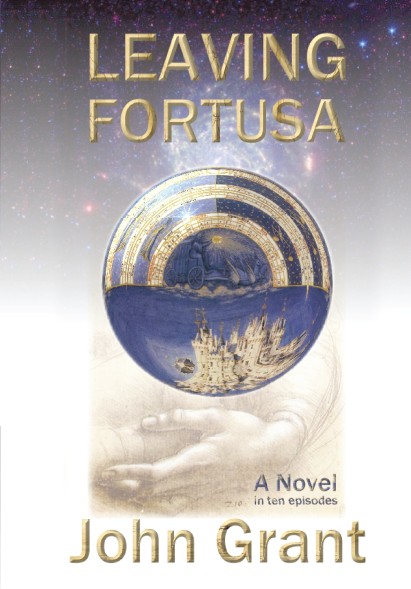
Leaving Fortusa by John Grant

Template by Matthew Hughes

Exotic Gothic 2 edited by Danel Olson

The King's Last Song by Geoff Ryman

Essay: Ratings: Who Needs Them?

Every Wednesday, I'll have an essay or a feature on any topic that catches my fancy!

In this week's book review, Jeff Vandermeer commented that I probably don't need ratings for my book reviews. Personally, ratings are this double-edged sword.

On one hand, ratings are a slippery slope that in certain ways, encourages lazy reading at the very least and lazy writing at the most. Sometimes, people pay too much attention to the ratings instead of the actual review, just like how some parents might look at their child's report card and gauge their kid based on grades alone rather than what he/she actually learned or his/her actual experiences in school.

I work for a music magazine and a few years ago, our reviews editor got a lot of flack and threatening phone calls from the bands and musicians she was reviewing. A lot of it boiled down to the actual ratings rather than the content of the review (which is usually a mixed bag and filled with constructive qualifications).

As a reader, especially when you're in a rush, there's a tendency to skip reading the review and simply focus on the ratings, in much the same way that some people read the headlines of newspapers and nothing else. It's certainly a bad habit but one that society doesn't seem too concerned chastising out of us.

Competent writers put a lot of thought into their ratings (and if there's anything I've learned using ratings, it's to identify to readers what each score means--a 2 out of 4 for example conveys different meanings to different people) although in retrospect, is there really something a score can convey that the actual review can't? I honestly think there are times when I'm depending too much on the ratings of my reviews to inform something to the reader that's not present in the text. As a writer, that's horrible: I should be able to elaborate and be concise--at least if words are going to be my medium of expression.

Once, during an editorial meeting, some of our staff proposed getting rid of ratings in the magazine's reviews. But it quickly got shut down by our publisher. Ratings are a sacred cow. And perhaps more importantly, it's "fun" for our readers. It's something they look forward to and I have a sneaking suspicion that there are more rating-readers than review-readers.

From a marketing standpoint, ratings are quite effective in selling stories to readers. Again, part of it is its visual appeal: one merely needs to glance at a rating instead of reading the entire review to grasp how the author feels about a particular subject. When I started my blog, it was a conscious decision on my part to include ratings to help draw in readers.

A lot of book review sites that I respect such as Strange Horizons or The Fix don't use ratings. Maybe it's time I drop them as well. As far as writing book reviews go, it'll help me hone my skills. As for my blog readership, I'd like to think you're the type to read the actual review (whether you agree with my review or not is another matter).

So, what do you think of ratings?

Essay: A Reaction to A Reaction

Every Wednesday, I'll have an essay or a feature on any topic that catches my fancy!

Bhex has written a reaction to my previous essay on Philippine speculative fiction. In her essay, she writes it from the stance of a Filipino writer.

Much of her thesis revolves around the idea that both in the past and the present, local publications do not reject stories simply because they have speculative fiction elements or because they lack Filipino elements. I don't really disagree when it comes to that part, although it is distressing that she was quoting an excerpt from my essay which led her to that supposition. I mean in my essay, it's not like I didn't mention the numerous Futuristic Fiction winners. Or writers like Gregorio Brillantes and Joy Dayrit and Alfred Yuson whose stories have speculative fiction elements and certainly predate Dean Francis Alfar's work (and they ought to have been published somewhere...).

And while we're on the subject of "Literary" local publications, this year's Philippines Free Press award for fiction went to F. H. Batacan's story, "Keeping Time", which is a speculative fiction piece. (And for the record, the current fiction editor of The Philippines Free Press, Angelo R. Lacuesta, has gone on record to say that he "happily dismisses notions of genre.") So no, I never claimed that local literary publications rejected speculative fiction stories. Perhaps that could have been a reasonable interpretation based on the quoted passage alone but hey, that's the problem when you read excerpts and not the entire essay--a writer's thoughts and beliefs can be misconstrued.

So where did the problem originate? A mutual acquaintance posted her own reactions to my essay and it is the same quote which Bhex was referring to. If you read the comments section, the author of the post posited the theory that her fiction would have otherwise been deemed unpublishable in magazines like The Philippine Graphic and The Philippines Free Press. It's probably more appropriate to claim that Bhex was responding to her interpretation of the essay. Maybe the title of Bhex's "A Reaction to an Essay on Philippine Speculative Fiction" should be "A Reaction to A Reaction to an Essay on Philippine Speculative Fiction". Not that I don't mind the extra hits coming from her blog, but let's give proper credit where it's due.

That aside, there are some complaints that I have with regards to her essay (the rest of her article is advice on writing and one's path as a writer).

First is her sentiment that as a speculative fiction writer, she never felt guilty about writing stories that Filipinos might not enjoy reading. To that statement, all I have to say is good for her. However, there are some local writers who feel that is a concern. Alfar struggles with it. Joseph Nacino, in the comments section of my essay, wrote this: "This is whether it's secondary worlds with no political agenda (i.e. entertainment) OR spec fic with a political agenda (i.e. Filipino-ness). My thinking is: if you can do both, then I think this excuses you from having that particular angst."

I don't think it's a phenomenon that one dismisses so easily. Personally, like Bhex, I have no qualms with writing spec fic without political agendas. But just because it is not my experience does not mean it is absent from others. Some authors will have an issue with it, others won't. But for those that do, it's certainly a hurdle to overcome.

Which brings me to my second point. She claims that "...but to say that before now, Filipino writers were not free to set their imaginations loose, because their big bad professors/teachers/mentors were going after their heads? No. This is unfair and disrespectful to the institution of Filipino literature."

I don't think writers in the past were restricted to letting their imaginations loose, but I do think that they were discouraged from pursuing writing that deviated from the norm. For example, in Bhex's own essay, she shares her experience: "...I clearly recall that it was Sir Butch Dalisay, a teacher of mine at Technical Writing and now a supporter of spec fic, who said at the workshop that he thought writing fantastic fiction seemed “frivolous” and that there are already so many interesting prompts in real life one could write about."

Now I don't now about you but "frivolous" isn't exactly an encouraging adjective. This, of course, has changed as Dalisay these days does encourage writing speculative fiction (and if everything else has truly remained the same, there is that--a professor/author who formerly discouraged spec fic writing now encourages it). However, there have been instances when the inclusion of spec fic elements has called the legitimacy of the story into question. Alfar, in numerous talks and anecdotes, shares how his stories were taken apart during workshops due to their lack of social relevance. And while not directed at spec fic, Kenneth Yu, publisher of The Digest of Philippine Genre Stories, was similarly discouraged by his professor when he submitted a Filipino mystery short story for class.

As much as the idea of the suffering author is romanticized--the type that must endure much criticism and discouragement from his peers before finally acquiring literary acceptance--is that really the kind of atmosphere we want to cultivate? Sure, there are strong-willed and determined writers out there who will write no matter what anybody else tells them or thinks about them but how many meeker writers are we losing simply because they were discouraged? Or writers who have yet to develop their own confidence and style but are shot down before they can discover themselves? And this goes for whatever genre or sub-genre you're writing for, not just speculative fiction.

And to put it bluntly, not everyone gets the same amount of criticism. Some writers are more pressured than others. For example, when it comes to Philippine speculative fiction, the spotlight tends to be on Dean Francis Alfar (for good or for ill), even if there are other talented, Palanca-winning spec fic writers out there such as Ian Rosales Casocot or Luis Katigbak. Personally, I don't get flack for my stories--because they're obscure--although there's a certain local demographic who take much offense at my essays. So a discouraging atmosphere for writing is not something I want to cultivate and that's clearly changed in the past few years in the case of spec fic, if nothing else other than the sheer number of new avenues open for publication.

In each issue of Story Philippines and The Digest of Philippine Genre Stories for example, there's at least one (if not more) story that can be classified as spec fic. Compare that to a publication like Philippine Graphic or The Philippines Free Press which only publishes one story each issue (but does so at a more frequent rate). What are the breakdowns for the past few years? Are spec fic stories the exception or the norm, especially back in the 90's?

There's also the prestige associated with the various publications. Your reputation as a writer is different if you get published in The Philippines Free Press as opposed to Philippine Speculative Fiction. I'm not saying one is better than the other but it's certainly different--and in the case of the latter, it's as reputation that wouldn't have existed a decade ago. (I won't even go on a tangent about the current feasibility of imprints such as Anvil Fantasy or anthologies like Tales of Fantasy and Enchantment.)

Oh, and if you want me to be more concrete about one of the biggest differences between back then and now? Currently, there's an active campaign to promote spec fic stories. There are actually authors and publishers stating "we want your spec fic stories!" There is undeniable encouragement opposed to passivity (at best) or discouragement (at worst).

Lastly, since we're on the topic of dispensing "writerly" advice, here's what I have to say on the subject matter: study the goals and market of the publication you're aiming for. I mean Ellery Queen's Mystery Magazine for example isn't suddenly going to publish a non-mystery, fantasy short story. The publisher of Story Philippines, a quarterly* fiction magazine, has mentioned that he's looking for stories that are entertaining. Whether they happen to be spec fic or not is incidental (and looking at the magazine's history, there's usually at least one spec fic story in each issue).

*in practice it's actually less than four issues a year.

Tuesday, September 30, 2008

Format Change and The Future

October starts tomorrow and I thought that would be a good time to implement some changes for the blog. Don't worry, most of them are minor.

First off, on Mondays, I typically do book reviews. No change there, except I'll be changing the label to include magazine reviews. (It's not like I haven't been doing those.) Also, I'll be ditching my rating system (I'll tackle the explanation tomorrow) and see how that works out.

Second, if you're fond of my interviews on Tuesday, well, there'll still be interviews. In fact, I'm way ahead of schedule that I can guarantee you there'll be interviews every week until the end of the year (well, unless I get struck by lightning...). What's going to be different are the labels: Tuesday is now Interviews instead of Features.

Third, the biggest change will be Wednesdays. It'll now be my venue for essays or feature articles. I've got this crazy set of feature articles that I've been meaning to use but haven't gotten to for the past year. It'll also allow me to do more "fun" things without pigeonholing them as essays.

Thursdays and Fridays will pretty much stay the same (unless you guys and gals have suggestions!).

Oh, and here are the awesome people I'll be interviewing for October:

October 7, 2008 - Larry (OF Blog of the Fallen)
October 14, 2008 - Greg van Eekhout
October 21, 2008 - Mary Robinette Kowal
October 28, 2008 - Jay Lake

Feature: Interview with Mur Lafferty

Every Tuesday, I'll have an interview posted.

Mur Lafferty is the author of Playing for Keeps and Tricks of the Podcasting Masters. She has published fiction with the podcast Escape Pod, Scrybe Press, Murky Depths and Hub Magazine. She currently maintains the podcasts Heaven, I Should Be Writing, and The Takeover.

Thanks for agreeing to do the interview and congrats with finding a publisher for Playing for Keeps. Let's focus first on your upcoming novel. For unfamiliar readers, can you tell us what the book is about?

Playing For Keeps is a story about people with lame superpowers who are manipulated by heroes and villains. The heroes are brave, shining, and fighting for good, but they're jerks and bullies. The villains are clearly bad guys, but they're much nicer. Our protagonists have to figure out who to support when all their lives they've been told that their powers are worthless. Keepsie Branson is the heroine, with the power to keep anything that is given to her; no one can take it away. it's a passive power that no one has respected until one of the supervillains gives her something that the heroes want.

What about you or the book in your opinion caught the attention of Swarm Press? How does it feel to have your novel finally picked up by a publisher after a long time sending it out to agents?

They liked the book, of course, but they also respected my ability to gather a large audience for the book on my own. Small presses don't have a lot of marketing dollars, and they like authors who are willing to work. I'd already proved that I am just that.

This isn't limited to Playing for Keeps but what made you decide to podcast your unpublished novels (as opposed to simply uploading the text on your blog ala John Scalzi)? As one of the first wave of podcast authors who are finally getting published in print, do you think podcasting is a viable method for new writers to break into the industry?

I've loved podcasting since 2004, and when Scott Sigler and Tee Morris showed what could be done with the medium, I saw it as first an experimental place to try out episodic fiction (with Heaven) and then as a place to put my novel that I couldn't find publishing for.

You're previously made the Playing for Keeps PDF available for download and you're going to re-release the PDF before the book's release date. What are some of the bonuses you're planning to include in the Ultra Mega Mega PDF? How do you think making your novel freely available as a downloadable PDF promotes Playing for Keeps?

The Ultra Mega Mega PDF will include the whole book, all of the original artwork done by Jared Axelrod, Natalie Metzger and JC Hutchins, then an original short story bridging the first and second book in the series, called "Parasite Awakens".

Aside from the podcast and the PDF, what are some of your other plans in promoting the novel? How can fans/readers help support/promote the book?

I'm running a video contest for the Playing For Keeps song, details are at playingforkeepsnovel.com. I'm have asked for other podcasters and writers to contribute content to revive the fancast, Stories of the Third Wave, which launched August 1. Fans can help out by spreading the word, blogging, reviewing and tagging on Amazon, and buying on the 25th. I also have a street team at thirdwave.ning.com where I assign more specific tasks.

I hope you don't take offense at this question but do you think you'd ever get your novel published if it weren't for the fact that you're Mur Lafferty, podcasting goddess, and that you already have an established fan base?

You have to remember that Podcasting is a small niche of Internet content. And SF podcasting is even smaller. Sure, I have a fan base, but it's wee compared to mainstream lit, or even SF lit. So I'd like to hope that it's based on the content, cause I'm bringing something to the table, but it's still pretty minor compared to other Internet celebs.

What's the appeal of podcasts for you?

As a listener? I like having content delivered to me. It's such a simple thing, and yet it's revolutionized internet content.

As a podcaster? It's a new playground that has plenty of room for experimentation. We still have explored all the possibilities of this medium.

What gave you the idea to start podcasting?

A friend told me he was interested in podcasting, I started listening, wondered what I could bring to the space, and I had all these essays lying around that I could sell, so I started podcasting them.

I love your I Should Be Writing podcast and you obviously do a lot of podcasting, everything from podcasting your novels to reading other author's short stories for other shows. What are some of the challenges you run into when tackling that particular medium?

I dislike audio editing. It's like dishes- it rarely takes as long as I fear it will, but I still dread doing it the next time. And when I read other peoples' work, especially fantasies, I often run into impossible pronunciations. When the author isn't me, or isn't there, I just have to wing it.

Do you think there's a short story or novel out there that simply doesn't translate well to podcasts? How about a short story or novel that gets better when it gets podcasted?

I think a story or novel with computer slang, images such as handwritten letters, purposeful misspellings, anything with visual clues are very hard to bring out in audio. On the other hand, stories that are dialogue heavy or description-rich can benefit from a talented narrator, and I think first person tales work best in audio.

In your opinion, is there a significant difference between reading a text as opposed to hearing a text?

When you're listening, you can do other things. Drive, clean, garden, exercise. When you're reading, you really can't concentrate on much else. But when yo'ure reading, it's a lot easier to skip around the book to find something you've already read, or re-read a passage, or make notes, whatever. There are trade-offs.

When did you know you wanted to be a writer?

I think I was 12 or 13 at the time. It was before high school, I know that.

What are some of your favorite books or who are some of your favorite authors?

I love Connie Willis, Neil Gaiman, Minister Faust, Ursula K Le Guin. I think Willis and Gaiman are my biggest influences, though.

How did you get your start in the fantasy/science fiction field?

Escape Pod bought my first story, and I've always written stuff that's closer to SF than "literature", so I knew I'd always be into SFF.

Some of your early work involves writing for gaming companies and magazines. How did you break into that industry?

I had a friend who was getting out of writing for White Wolf, and he recommended me to a colleague of his. I got my first job that way, and then moved on to write in several other RPGs. As for computer gaming, I just interviewed for a job as a webmaster.

I heard in some of the gaming podcasts that interviewed you that lately, you don't have much time for games but what were some of your favorite games back when you had the time to play them?

I don't have time for RPGs, but back in the day it was D&D, Shadow Run and World of Warcraft. Board gaming I still do, and I like Arkham Horror, Puerto Rico, Too Many Cooks, and most anything designed by James Ernest (Cheapass Games).

How has your game writing credits aided you in your writing career? Do you think it's a natural transition to move from RPG writing to novel writing?

Yes and no. Yes in that it teaches you writing skills, grammar skills and respect for deadlines. No, because RPG writing is not always respected outside of gaming, and it doesn't really teach you how to plot. An RPG writer's job is to introduce storylines, write backstories, or at the most creative fiction scenes, but never the beginning, middle and end to a story. Our job was to put the spark of an idea into a GM's mind and let THEM run the story as they see fit. I think the stigma about RPG writers is that every book we write will come out sounding like a typical D&D adventure.

What advice do you have for people hoping to break into the gaming industry?

That question has too many answers! First what kind of gaming, then what do they want to do? For computer gaming, if you want to do art or engineering, you need a degree. For QA, you need diligence and attention to details and patience - play in a bunch of beta tests. For design, you need to be a good writer and have taken some games that allow for level design and design some levels.

In RPGs, run games at cons, get to know the people who work the booth at your favorite company, and run more games.

For board games? I have no idea!

How about advice for people hoping to start podcasting?

Get a mic and do it. Listen to some good ones, pick up some books (I recommend Tricks of the Podcasting Masters, by Robert Walch and Mur Lafferty), and start playing. That's how a lot of us got started.

Advice for aspiring writers aside from listening to your wonderful podcast, I Should Be Writing?

My new bit of Important Advice is- if you want to do this professionally (and if you want to get paid, you want to do it professionally), act like a pro. Confident, nice, respectful. If you find yourself talking to a junior editor, or an assistant, don't blow them off - they're your best ally in getting to the editor or agent. Just be nice.

Anything else you'd like to plug?

I do have an audio drama I'm working on writing called The Takeover. It's six episodes into a 10 episode season, and can be found at zombinc.net. It's about corporate zombies (literal corporate zombies).

Monday, September 29, 2008

Philippine Speculative Fiction Volume 4 TOC and Volume 3 Honorable Mentions

First off, one of the things we look forward to when it comes to the Year's Best Fantasy and Horror are the honorable mentions list. Using my secret stalker powers (actually I blame Mike Allen), here are the ones that made it from Philippine Speculative Fiction Volume III:
  • "Hamog" by Joanna Paula L. Cailas
  • "The Datu's Daughters" by Raymond G. Falgui
  • "Pedro Diyego's Homecoming" by Apol Lejano-Massebieau
  • "In Earthen Vessels" by Rodello Santos
  • "Sidhi" by Yvette Natalie U. Tan
  • "The Ascension of Our Lady Boy" by Mia Tijam
Edit: Filipinos who made it to the short-list but not necessarily in Philippine Speculative Fiction Vol. 3:
As far as Philippine Speculative Fiction Volume IV goes, Dean has posted the TOC and breakdown (50-50 split of male/female authors and 17 authors who weren't published in the previous volumes):
  • A League of Champions by Ronald Cruz
  • A Retrospective on Diseases for Sale by Charles Tan
  • All We Need is Five Meals a Day by Jose Elvin Bueno
  • Beats by Kenneth Yu
  • Breaking the Spell by Rochita Loenen-Ruiz
  • Breathing Space by Maryanne Moll
  • Dino's Awesome Adventure by Carljoe Javier
  • Dreams of the Iron Giant by Joseph Nacino
  • First of the Gang to Die by Paolo Jose Cruz
  • From Abecediarya by Adam David
  • Haya Makes A HUG by Erica Gonzales
  • Hopscotch by Anne Lagamayo
  • Mang Marcing and the Four Horsemen of the Apocalypse by Vincent Simbulan
  • Parallel by Eliza Victoria
  • Press Release by Leo Magno
  • Revenge of the Tiktaks by Noel Tio
  • Sky Blue by Celestine Trinidad
  • The Dance of the Storm by Isabel Yap
  • The Day That Frances, The Copywriter, Became God by Monique Francisco
  • The Maiden's Song by Kathleen Aton-Osias
  • The Paranoid Style by Sharmaine Galve
  • The Rooftops of Manila by Crystal Gail Shangkuan Koo
  • The Secret Origin of Spin-Man by Andrew Drilon
  • The Sewing Project by Apol Lejano-Massebieau

Book Review: The New Weird edited by Ann & Jeff Vandermeer

Every Monday, I'll be doing spoiler-free, bite-sized book reviews.

"Bringing order to madness," is probably how I'd best describe The New Weird. The Vandermeers attempt to explain the movement called the New Weird which in itself is difficult to define. What you end up is an indispensable tome when it comes to tackling that particular topic or if you need a primer on the subject.

Rather than simply following a text book format or that of an anthology, The New Weird combines the best of both worlds. It is divided into four sections, each one tackling a different aspect of the term. In the introduction, Jeff Vandermeer does a good job of giving us a brief overview and the goals of the book.

The first part, entitled "Stimuli", has a good selection of stories that influenced the New Weird such as Clive Barker's "In the Hills, the Cities". For the most part, these stories are quite readable and enjoyable, but it clearly hasn't crossed into the border of the "too bizarre".

The second part, "Evidence", moves into stories and novel excerpts of what can be considered the New Weird proper. Rather than simply talking about the New Weird, these stories show us what it is. Some of these stories are easily identifiable thanks to its aliens voice and form such as "The Lizard of Ooze" by Jay Lake, "Letters from Tainaron" by Leena Krohn, and "The Ride of the Gabbleratchet" by Steph Swainston. It has to be said that some of these stories aren't easy-reading and might make some readers uncomfortable or alienate them too much (which, in part, is the nature of the beast). On the other hand, there were some stories that surprised me in the sense that I never considered them New Weird before, such as Jeffrey Ford's "At Reparata", which just goes to show how diverse this sub-genre can be.

The third part, "Symposium", collects discussions and debates, whether it's authors attempting to define the term and question whether it should exist, to editors from around the world discussing the impact of it on their culture. This is the nonfiction section and I think it's appropriate that this is located in the third section instead of barraging readers with information overload in the first part.

"Laboratory", the fourth part, is the most interesting for me because it is an experiment in narrative, with various authors building up on Paul Di Filippo's short "Death in a Dirty Dhoti" and appropriating New Weird elements for their own. This can be best described as non-New Weird writers writing New Weird. I found some stories curious and interesting but the cumulative effect is where it shines.

Should you still need further reading, the editors have provided an indispensable Recommended Reading list.

Overall, if you're looking for a resource on the New Weird or interested in acquiring familiarity with it, this is your bible (at least until someone else comes up with with a book that is better, if not as competent, as this one) in the sense that it's not definitive but rather a jumping off point. The Vandermeer's choice of sections is to be commended. On the other hand, if you're looking for something good to read, The New Weird is a double-edged sword: I find that the New Weird is not to everyone's tastes (personally I'm divided on the subject). If you do like the New Weird, grab this anthology. If you don't know enough whether to like or dislike the New Weird, save yourself much time and money by giving this book a shot. Similarly, since New Weird is a term that's difficult to define, the next time someone asks you what it is, just hand them this book; it'll save you hours and hours of discussion.

Rating: 3.5/5.

Rating System:

1 - There are better ways to spend your time.
2 - Ho hum books, usually typical of its genre. Probably only recommendable to die-hard fans.
3 - A cut above the rest, usually with one or more elements that sets it apart from the norm.
4 - Highly recommended and is easily a pioneer of the genre.
5 - A classic or it will be.

Sunday, September 28, 2008

Book Plugs for the End of September

Here are some books that I'm personally looking forward to that should be out by the end of the month:


Neil Gaiman's The Graveyard Book.
The release date is September 30 but it's actually now available at Fully Booked (just head to the children's section).

The Year's Best Fantasy and Horror edited by by Ellen Datlow and Kelly Link & Gavin J. Grant.

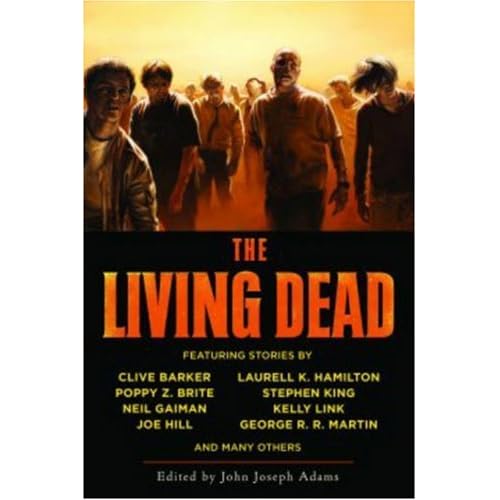
The Living Dead edited by John Joseph Adams.

Book Ordering Travails Part 3

Last Friday, I went for another round of book orders. I gave the customer service rep a list of 16 books. Here are the interesting results:

The Bad:

As far as books that I'll never be able to obtain goes, that award goes to PS Publishing as I tried to order Zoran Zivkovic's The Last Book. It's not listed in their system so I guess that rules out any PS Publishing Books.

There are also some books that are currently unavailable. For example, I gave them the ISBN for Majestrum: A Tale of Henghis Hapthorn by Matthew Hughes. What they jotted down on my list is that "No Paperback" [Available]. Same goes for John Grant's Corrupted Science (except it's "No Hardcover").

I also discovered that various books have different discounts. Michael Cisco's The Traitor for example only had a 5% discount which meant that it's really really expensive for me to acquire it. On another extreme, a book like Clockwork Phoenix, which has a retail price of $10.95, is actually costing me P1135 or $24.00.

The Good:

I'm actually grateful that I'm able to acquire books from Small Beer Press, Lethe Press, Senses Five Press, Subterranean Press, and Norilana Books.

Having said that, here's the books that I actually ended up ordering (because I was strapped for cash):

Friday, September 26, 2008

Podcast Focus: Hour of the Wolf

Every Friday, I'll talk about a podcast or two that catches my fancy.

URL: http://www.hourwolf.com
RSS Feed: N/A
Description: Jim Freund hosts a regular radio show three hours long (at the very least) that features various science fiction and fantasy authors, whether it's readings, radio plays, or interviews. This isn't strictly a podcast so there isn't much online buzz about this site. Because Hour of the Wolf is an actual radio show, which includes the music featured, the show isn't downloadable although you can listen to it via streaming.

Top 10 Best-Sellers as of 2008/9/21

From USA Today's best-seller list (you can find out their basis here):

  1. Brisingr by Christopher Paolini
  2. Twilight by Stephenie Meyer
  3. New Moon by Stephenie Meyer
  4. The Shack by William P. Young
  5. Breaking Dawn by Stephenie Meyer
  6. Eclipse by Stephenie Meyer
  7. The Story Of Edgar Sawtelle: A Novel by David Wroblewski
  8. Night in Rodanthe by Nicholas Sparks
  9. The Last Lecture by Randy Pausch, Jeffrey Zaslow
  10. Hot, Flat, and Crowded by Thomas Friedman

Thursday, September 25, 2008

2008/9/25 Tabletop RPG Podcasts

Every Thursday, I post links to various podcasts that deals with tabletop RPGs.

Tabletop RPG (Mostly)

General Discussions/Reviews/Everything Else

Interviews
Actual Play Sessions