Sybil’s Garage will be opening to submissions for issue 6 on August 11th. I will be posting more specific guidelines soon, but as always, the magazine open to all types of speculative fiction, 5000 words or less. Strong character stories are our weakness, but surprise us!We don’t see enough science fiction.*
Do not ever think the following:
a) “This is not a Sybil’s Garage story.”
You are wrong**. Give us a shot! We are actively trying to diversify both the slush pile and the types of stories we publish.
We welcome stories from non-white and non-Western point-of-views.
We look forward to your submissions!
* Less than 10% of stories we received for issue 5 were science fiction.
** Maybe. We can’t promise to like it.
Monday, July 07, 2008
Plug: Sybil’s Garage Opening to Submissions on August 11th
From Matthew Kressel:


Re-Plug: Haunted Legends Open Call
Just reminding people about the Haunted Legends Call for Submissions by Nick Mamatas:
Haunted Legends, to be published by Tor Books, seeks to reinvigorate the genre of "true" regional ghost stories by asking some of today's leading writers to riff on traditional tales from around the world. We don't just want you to retell an old ghost story, but to renovate it so that the story is dark and unsettling all over again.
Classic tales of the Jersey Devil, the spirits of the Tower of London, ghost lights, and phantom hitchhikers continue to capture the imagination. The Haunted Legends difference is that our contributors will tell the stories in ways they've never been told before.
We pay 6 cents a word, up to 8000 words.
The open-reading period will begin on midnight, EDT of July 15, 2008 and end 11:59p.m., July 31, 2008.
All submissions must be emailed as a RTF file to Ellen Datlow and Nick Mamatas at hauntedlegends@gmail.com. Please send no more than one submission. Please send no correspondence, such as queries, to hauntedlegends@gmail.com either before or after the reading period – all mail sent to the address at any time other than the reading period will be automatically deleted unread.
Note that much of the anthology is full and that a large number of ghost stories, especially those with an American or UK origin, are thus already “taken” by authors who have been personally solicited for work. Your best bet for this anthology is to go far afield – we are especially interested in renovations of traditional ghost stories from Africa, Latin America, and Asia, or in other tales that may not be well-known.
We also want to emphasize that we are interested only in traditional ghost stories made new again by the ingenuity of the writer. We do not want “campfire” versions of old stories, or slavish recitations. Think of new forms, new voices, new themes, new ways of considering these classic tales. Do not send us your trunk stories. It should be as though your version was always occulted within the classic rendition, but never before perceived or acknowledged.
Book Review: Psychological Methods to Sell Should Be Destroyed: Stories by Robert Freeman Wexler
Every Monday, I'll be doing spoiler-free, bite-sized book reviews.
 Whatever this chapbook lacks in quantity, it more than makes for it when it comes to quality. Psychological Methods to Sell Should Be Destroyed: Stories opens with an introduction from Zoran Zivkovic about the state of the publishing industry and is a must-read. It is soon followed by six impressive stories by Wexler--the longest of which is making its first appearance here. Wexler's prose is fresh and quite different, engaging in very human concerns filtered through the lens of literary style and technique that's neither condescending nor blatant yet quite accessible. "Suspension" is a great opener and sets the tone for the rest of the book. This is easily my favorite story in the bunch. Wexler delivers a well-written character-driven story about a man who has four arms lying in the snow and despite the static setting, a lot of change occurs as we progress through the narrative. "Tales of the Golden Legend" is quite a compelling read and despite the relatively short text, the author manages to give us different points of view that contribute to the overall atmosphere and story. "Valley of the Falling Clouds" is another character-driven story that is filled with romantic and mythic elements yet the end result is a horrifying epiphany. Both "The Green Wall" and "Indifference" are about men seeking something missing in their lives yet the technique Wexler employs in each is different, the former relying more on metaphor while the latter is more deceptive when it comes to the actual cause of his mental state. The newest addition, "The Sidewalk Factory: A Municipal Romance", isn't to be missed as amidst the ludicrous and satiric scenario our protagonist finds himself in, this is a very serious if not tragic piece and one can't help but be amazed at how Wexler tackles the subject matter while managing to sprinkle it with a few laughs. Psychological Methods to Sell Should Be Destroyed: Stories is definitely a great literary read and if I was previously unfamiliar with Wexler's name, that's clearly not the case now.
Rating: 4/5.
Whatever this chapbook lacks in quantity, it more than makes for it when it comes to quality. Psychological Methods to Sell Should Be Destroyed: Stories opens with an introduction from Zoran Zivkovic about the state of the publishing industry and is a must-read. It is soon followed by six impressive stories by Wexler--the longest of which is making its first appearance here. Wexler's prose is fresh and quite different, engaging in very human concerns filtered through the lens of literary style and technique that's neither condescending nor blatant yet quite accessible. "Suspension" is a great opener and sets the tone for the rest of the book. This is easily my favorite story in the bunch. Wexler delivers a well-written character-driven story about a man who has four arms lying in the snow and despite the static setting, a lot of change occurs as we progress through the narrative. "Tales of the Golden Legend" is quite a compelling read and despite the relatively short text, the author manages to give us different points of view that contribute to the overall atmosphere and story. "Valley of the Falling Clouds" is another character-driven story that is filled with romantic and mythic elements yet the end result is a horrifying epiphany. Both "The Green Wall" and "Indifference" are about men seeking something missing in their lives yet the technique Wexler employs in each is different, the former relying more on metaphor while the latter is more deceptive when it comes to the actual cause of his mental state. The newest addition, "The Sidewalk Factory: A Municipal Romance", isn't to be missed as amidst the ludicrous and satiric scenario our protagonist finds himself in, this is a very serious if not tragic piece and one can't help but be amazed at how Wexler tackles the subject matter while managing to sprinkle it with a few laughs. Psychological Methods to Sell Should Be Destroyed: Stories is definitely a great literary read and if I was previously unfamiliar with Wexler's name, that's clearly not the case now.Rating: 4/5.
Rating System:
1 - There are better ways to spend your time.
2 - Ho hum books, usually typical of its genre. Probably only recommendable to die-hard fans.
3 - A cut above the rest, usually with one or more elements that sets it apart from the norm.
4 - Highly recommended and is easily a pioneer of the genre.
5 - A classic or it will be.
Book Review: Secret Lives by Jeff Vandermeer
Every Monday, I'll be doing spoiler-free, bite-sized book reviews.
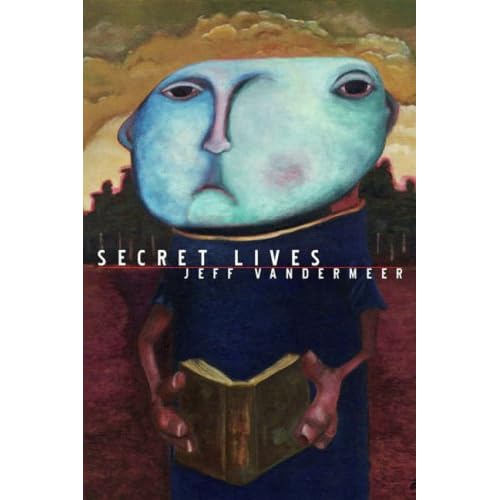 I had absolutely no idea what to expect from Secret Lives and this book certainly did surprise. Vandermeer explains the origins of Secret Lives in the introduction and as for the actual content, this is a collection of various shorts of (hopefully) fictional what-ifs of real people: a researcher is really a king, a pharmacist plans to live the double-life of a detective, etc. I'm not a fan of flash fiction and most of the stories here definitely fall under that category yet Vandermeer manages to write it with such imagination and gusto that it becomes palatable, even when reading it all in one sitting. What Vandermeer does differently is that he doesn't stick to formula even if the premise of the collection requires one to do so. He mixes things up, changes the pattern, inter-relates consecutive stories, and adds weird but relevant images to each piece. The order of the stories could have been arbitrary yet they aren't and there is a distinct rhythm and purpose when it comes to the sequence. Personally, I liked the latter part of the book as that's where some of the meatier stories are. Overall, Secret Lives is an interesting novelty book at best. Its strength is clearly its concept (where else would you buy a book compiling secret lives?) and while the writing is above average, it doesn't strike me as a must-have unless you happen to personally know one of the people mentioned in the book. Still, as far as originality and imagination goes, Secret Lives proves that Vandermeer still has his edge and this is one of the books that you take as a whole rather than focusing on its individual stories.
Rating: 3/5.
I had absolutely no idea what to expect from Secret Lives and this book certainly did surprise. Vandermeer explains the origins of Secret Lives in the introduction and as for the actual content, this is a collection of various shorts of (hopefully) fictional what-ifs of real people: a researcher is really a king, a pharmacist plans to live the double-life of a detective, etc. I'm not a fan of flash fiction and most of the stories here definitely fall under that category yet Vandermeer manages to write it with such imagination and gusto that it becomes palatable, even when reading it all in one sitting. What Vandermeer does differently is that he doesn't stick to formula even if the premise of the collection requires one to do so. He mixes things up, changes the pattern, inter-relates consecutive stories, and adds weird but relevant images to each piece. The order of the stories could have been arbitrary yet they aren't and there is a distinct rhythm and purpose when it comes to the sequence. Personally, I liked the latter part of the book as that's where some of the meatier stories are. Overall, Secret Lives is an interesting novelty book at best. Its strength is clearly its concept (where else would you buy a book compiling secret lives?) and while the writing is above average, it doesn't strike me as a must-have unless you happen to personally know one of the people mentioned in the book. Still, as far as originality and imagination goes, Secret Lives proves that Vandermeer still has his edge and this is one of the books that you take as a whole rather than focusing on its individual stories.Rating: 3/5.
Rating System:
1 - There are better ways to spend your time.
2 - Ho hum books, usually typical of its genre. Probably only recommendable to die-hard fans.
3 - A cut above the rest, usually with one or more elements that sets it apart from the norm.
4 - Highly recommended and is easily a pioneer of the genre.
5 - A classic or it will be.
Saturday, July 05, 2008
D&D 4E: To Award Or Not To Award XP
The section on awarding XP in the 4E DMG is short at just three pages yet there's a paragraph or two there that has drawn a reaction from some GMs, especially the more traditional ones. Under "Experience at the Table", there is section labeled "Absent Players" and one of the advice it gives is to reward the same amount of XP to players who missed the game compared to those who were present. Of course whether you subscribe to that belief or not, a pet peeve of mine are people who whine about it because 1) that particular section is simply a recommendation and if you don't like it so much 2) you can always simply reward XP "the default way". What the DMG does provide are options for GMs and whether you accept that method or not probably isn't as important as being consistent (which is also mentioned in the chapter).
First, let's tackle the old method of awarding XP: you show up for the game, beat monsters, steal their loot, and gain XP. There will be variations in this formula such as the GM awarding you for roleplaying, completing quests, etc., but the basic premise stays the same--you show up and participate in the game and that's the only time you get rewarded with XP. This formula is pretty consistent across a lot of RPGs, including video games and MMORPGs. In fact, that's how MMORPGs can become a time sink, when you spend much time leveling up your characters so that they can be "fun to play". The boring part of this experience, especially at low-levels, is usually what's called "grinding".
Now this first method of awarding XP is quite meritocratic. If you don't show up for the game, you don't get XP. Jeff Greiner of The Tome pretty much sums it up as the "carrot and the stick" approach. It's the basic method of enticing players to continue playing the game: the more you play, the better you become. Another variation of this is treasure (the more monsters you kill, the more treasure you get). As a GM myself, I understand why GMs will take this approach to awarding XP. I mean irregardless of how many players show up for my game (assuming the minimum amount of players is attained), I'm still 1) preparing/running a game and 2) spending the same amount of time preparing the adventure.
However, this method isn't without its flaws. What if you do have absentee players? Following this method, characters will end up with uneven levels. Let's say the highest-level character in the party is 3 levels higher than the lowest-level character. That's great news if you're the character with the highest level but what if you're the one with the lowest level? Suddenly, you're less efficient as opposed to the rest of the gaming group and on the side of the GM, it messes up my math when accounting for challenges to throw against the party. Now you might say "but D&D is a cooperative game". Sure, that's true. But let's say the absentee player is playing the role of the Defender in the group. Does it benefit the party that he has less hit points/attack bonus/powers than the rest of the players?
The larger dilemma however is that this solution does not encourage absent players to return to the game. For example, let's say a player has missed ten gaming sessions (irregardless of the reasons for doing so). Do you think playing a game where he is at a probably-ineffectual level will make him want to return? In MMORPGs, a character lagging behind in levels has various options available at his disposal to help him catch up to the level of the other players, everything from the higher-level players giving him loot that they don't need or actually spending the time with him battling foes they easily scoff at. In a tabletop RPG, there is no such option--at least without taking much time away from the rest of the gaming group or deviating from its regular plotline. There is no "grinding" in D&D, unless the GM provides the option to do so (and at this point, if grinding is unfun for your players, why put it there?). Some GMs will usually hold a "make-up session" for lagging players to catch up but in the bigger scheme of things, this expends more time on the GM all for the sake of a meritocratic ideal (and if a player is lagging behind by 3 levels, is it realistic that he'll level up three times in just one session?).
Again, as a GM, I understand the emotion "I worked hard to prepare this game and it's his/her fault for not allotting the time necessary to participate in the game". However, at this point, you have to ask yourself the question: do I really want to game with this person? If yes, then why penalize him/her for wanting to return to the game? If not, then it's probably better to communicate to the other person that you don't want to game with them rather than use XP rewards as an excuse to discourage them from playing unless you're the passive-aggressive type.
Now let's move on to the second method: awarding XP to players equally, irregardless of whether they show up for the game or not. As a GM, this makes awarding XP faster and easier. It might not be meritocratic, but at least when I come to the table, I know the party's actual level and what kind of challenge they're capable of facing. Second, both as a player and as GM, I can focus on the other aspects of the game, whether it's the roleplaying, combat, or whatever else catches your fancy instead of worrying whether I'll get XP for this or that. Now I'm not saying this method is for everyone. If you're gaming with a bunch of acquaintances or strangers, feel free to use the more traditional method of awarding XP. However, these days, I'm gaming with friends, people I've known for several years. The relevant question I'm asking is "irregardless of in-game rewards, do I want to game with these people?" My answer is yes and so I play with them.
A complaint regarding this method is this hypothetical scenario where a player might simply show up for only during the first and final session. What then? Again, let me ask you this question: do you want to play with this person? If the answer is no--and feel free to explain your reasons to this player--then simply don't game with them. You can tell them "I'm sorry but many of the other players have invested in this campaign and I think it's intrusive if you suddenly popped up for the final session." If your answer is yes, then it's in your best interest to give the player a chance to have the most fun, and this typically means starting out on an equal level with the other players. Doing so may not pay-off now, but after that last session, it might spark that player's interest in gaming again and ask if he/she can join in your next campaign where hopefully he/she will have a more consistent attendance.
If you feel you need to use a "carrot and stick" method to entice players to game, then do so. However, I've come to that point in time where I feel me and my fellow gamers are mature enough not to need in-game mechanics to entice them to play. If they want to play in my game, they're free to do so. If they don't want to, for whatever reason, they're free to do so. Sure, there's a possibility that I'll get absentee players, but I want to shift my concerns from rewarding players to making sure that they have the most fun. If other people want to game with me, they'll game with me because they want to, not because they're pressured to level up.
First, let's tackle the old method of awarding XP: you show up for the game, beat monsters, steal their loot, and gain XP. There will be variations in this formula such as the GM awarding you for roleplaying, completing quests, etc., but the basic premise stays the same--you show up and participate in the game and that's the only time you get rewarded with XP. This formula is pretty consistent across a lot of RPGs, including video games and MMORPGs. In fact, that's how MMORPGs can become a time sink, when you spend much time leveling up your characters so that they can be "fun to play". The boring part of this experience, especially at low-levels, is usually what's called "grinding".
Now this first method of awarding XP is quite meritocratic. If you don't show up for the game, you don't get XP. Jeff Greiner of The Tome pretty much sums it up as the "carrot and the stick" approach. It's the basic method of enticing players to continue playing the game: the more you play, the better you become. Another variation of this is treasure (the more monsters you kill, the more treasure you get). As a GM myself, I understand why GMs will take this approach to awarding XP. I mean irregardless of how many players show up for my game (assuming the minimum amount of players is attained), I'm still 1) preparing/running a game and 2) spending the same amount of time preparing the adventure.
However, this method isn't without its flaws. What if you do have absentee players? Following this method, characters will end up with uneven levels. Let's say the highest-level character in the party is 3 levels higher than the lowest-level character. That's great news if you're the character with the highest level but what if you're the one with the lowest level? Suddenly, you're less efficient as opposed to the rest of the gaming group and on the side of the GM, it messes up my math when accounting for challenges to throw against the party. Now you might say "but D&D is a cooperative game". Sure, that's true. But let's say the absentee player is playing the role of the Defender in the group. Does it benefit the party that he has less hit points/attack bonus/powers than the rest of the players?
The larger dilemma however is that this solution does not encourage absent players to return to the game. For example, let's say a player has missed ten gaming sessions (irregardless of the reasons for doing so). Do you think playing a game where he is at a probably-ineffectual level will make him want to return? In MMORPGs, a character lagging behind in levels has various options available at his disposal to help him catch up to the level of the other players, everything from the higher-level players giving him loot that they don't need or actually spending the time with him battling foes they easily scoff at. In a tabletop RPG, there is no such option--at least without taking much time away from the rest of the gaming group or deviating from its regular plotline. There is no "grinding" in D&D, unless the GM provides the option to do so (and at this point, if grinding is unfun for your players, why put it there?). Some GMs will usually hold a "make-up session" for lagging players to catch up but in the bigger scheme of things, this expends more time on the GM all for the sake of a meritocratic ideal (and if a player is lagging behind by 3 levels, is it realistic that he'll level up three times in just one session?).
Again, as a GM, I understand the emotion "I worked hard to prepare this game and it's his/her fault for not allotting the time necessary to participate in the game". However, at this point, you have to ask yourself the question: do I really want to game with this person? If yes, then why penalize him/her for wanting to return to the game? If not, then it's probably better to communicate to the other person that you don't want to game with them rather than use XP rewards as an excuse to discourage them from playing unless you're the passive-aggressive type.
Now let's move on to the second method: awarding XP to players equally, irregardless of whether they show up for the game or not. As a GM, this makes awarding XP faster and easier. It might not be meritocratic, but at least when I come to the table, I know the party's actual level and what kind of challenge they're capable of facing. Second, both as a player and as GM, I can focus on the other aspects of the game, whether it's the roleplaying, combat, or whatever else catches your fancy instead of worrying whether I'll get XP for this or that. Now I'm not saying this method is for everyone. If you're gaming with a bunch of acquaintances or strangers, feel free to use the more traditional method of awarding XP. However, these days, I'm gaming with friends, people I've known for several years. The relevant question I'm asking is "irregardless of in-game rewards, do I want to game with these people?" My answer is yes and so I play with them.
A complaint regarding this method is this hypothetical scenario where a player might simply show up for only during the first and final session. What then? Again, let me ask you this question: do you want to play with this person? If the answer is no--and feel free to explain your reasons to this player--then simply don't game with them. You can tell them "I'm sorry but many of the other players have invested in this campaign and I think it's intrusive if you suddenly popped up for the final session." If your answer is yes, then it's in your best interest to give the player a chance to have the most fun, and this typically means starting out on an equal level with the other players. Doing so may not pay-off now, but after that last session, it might spark that player's interest in gaming again and ask if he/she can join in your next campaign where hopefully he/she will have a more consistent attendance.
If you feel you need to use a "carrot and stick" method to entice players to game, then do so. However, I've come to that point in time where I feel me and my fellow gamers are mature enough not to need in-game mechanics to entice them to play. If they want to play in my game, they're free to do so. If they don't want to, for whatever reason, they're free to do so. Sure, there's a possibility that I'll get absentee players, but I want to shift my concerns from rewarding players to making sure that they have the most fun. If other people want to game with me, they'll game with me because they want to, not because they're pressured to level up.
Friday, July 04, 2008
Podcast Focus: The Agony Column
Every Friday, I'll talk about a podcast or two that catches my fancy.
URL: http://www.trashotron.com/agony/ (website proper), http://www.trashotron.com/agony/indexes/audio_interview_index.htm (podcasts)
RSS Feed: http://trashotron.com/agony/indexes/tac_podcast.xml
Details: The Agony Column in itself is actually an impressive site as Rick Kleffel provides daily content, everything from book reviews, commentaries, and fiction/nonfiction pieces. However, as a podcast fan, the real gem for me is the daily podcasts that Kleffel produces. Even before podcasts became mainstream, The Agony Column has been providing audio content available for download. Kleffel covers all branches of literature, from fiction to non-fiction, and aside from interviews with authors, bookstores, publicists, and publishers, he also provides news reports, book readings, and event coverages. Speculative fiction fans also might want to tune in to The Agony Column because Kleffel has recordings of the regular SF in SF gatherings.
URL: http://www.trashotron.com/agony/ (website proper), http://www.trashotron.com/agony/indexes/audio_interview_index.htm (podcasts)
RSS Feed: http://trashotron.com/agony/indexes/tac_podcast.xml
Details: The Agony Column in itself is actually an impressive site as Rick Kleffel provides daily content, everything from book reviews, commentaries, and fiction/nonfiction pieces. However, as a podcast fan, the real gem for me is the daily podcasts that Kleffel produces. Even before podcasts became mainstream, The Agony Column has been providing audio content available for download. Kleffel covers all branches of literature, from fiction to non-fiction, and aside from interviews with authors, bookstores, publicists, and publishers, he also provides news reports, book readings, and event coverages. Speculative fiction fans also might want to tune in to The Agony Column because Kleffel has recordings of the regular SF in SF gatherings.
Podcast Focus: Pulp Gamer: The Paper Game Media Network
Every Friday, I'll talk about a podcast or two that catches my fancy.
 URL: http://www.pulpgamer.com/
RSS Feed: http://www.pulpgamer.com/feeds/pg.xml
Details: If you have even the most remote interest in tabletop gaming (i.e. board games, card games, role-playing games, etc.) or interested in learning more, Pulp Gamer is the website to visit. This media network--upgraded from simply being a podcast--features a diverse selection of segments that caters to different markets, everything from retailers (GAMA Trade Show Seminars), casual gamers (Family Night), to hardcore fans (Gen Con Seminars, Inside Track). The site is a tome of resources that many people involved in the industry will find invaluable. You may not necessarily subscribe to every segment hosted by Pulp Gamer but there's probably a show that'll appeal to you. The hosts are courteous and consistent when it comes to providing family-friendly and informative content.
URL: http://www.pulpgamer.com/RSS Feed: http://www.pulpgamer.com/feeds/pg.xml
Details: If you have even the most remote interest in tabletop gaming (i.e. board games, card games, role-playing games, etc.) or interested in learning more, Pulp Gamer is the website to visit. This media network--upgraded from simply being a podcast--features a diverse selection of segments that caters to different markets, everything from retailers (GAMA Trade Show Seminars), casual gamers (Family Night), to hardcore fans (Gen Con Seminars, Inside Track). The site is a tome of resources that many people involved in the industry will find invaluable. You may not necessarily subscribe to every segment hosted by Pulp Gamer but there's probably a show that'll appeal to you. The hosts are courteous and consistent when it comes to providing family-friendly and informative content.
Top 10 Best-Sellers as of 2008/6/29
From USA Today's best-seller list (you can find out their basis here):
- Fearless Fourteen by Janet Evanovich
- Twilight by Stephenie Meyer
- New Moon by Stephenie Meyer
- Someday Soon by Debbie Macomber
- The Shack by William P. Young
- Eclipse by Stephenie Meyer
- Fast Track by Fern Michaels
- Rogue by Danielle Steele
- Lean Mean Thirteen by Janet Evanovich
- Sail by James Patterson and Howard Roughan
Plug: Flytrap Open for Submissions
Thursday, July 03, 2008
2008/7/3 Tabletop RPG Podcasts
Every Thursday, I post links to various podcasts that deals with tabletop RPGs.
Tabletop RPG (Mostly)
General Discussions/Reviews/Everything Else
- Pulp Gamer episodes: Nautilus (The Game Kennel), The Daily Grind/Manager's Toolkit (Gama Trade Show).
- Geek Radio Daily episodes: June 26, 27, 30; July 1, 2; Geeky Vacations (GRD Weekly).
- Fist Full of Comics and Games episodes: Wizard World Chicago: Friday (The Inner Circle), Monarchs Comics Briefing for June 25, 2008.
- Fell Calls!, a podcast on the Iron Kingdoms, episodes: Paint It Blue.
- Secret Identity episodes: Issue #120.
- The Order 66 Podcast, a podcast on d20 Star Wars Saga Edition, episodes: Frauleins and the Fourth of July.
- 3.5 Private Sanctuary, a D&D 3.5 podcast, episodes: Episode 39 where they talk about romance at the gaming table.
- This Modern Death episodes: Hacking Systems.
- Brilliant Gameologists episodes: Gaming at Cons (Bonus).
- Animalcast episodes: Episode 51.
- RPGCast episodes: Bass Cast 2008.
- Gateway to the Megaverse episodes: Reviews #3.
- Bear Swarm! episodes: Talk About Monkeys.
- The Tome Show episodes: Rise of the Runelords.
- Canon Puncture episodes: PTA and Lenny.
- Fear the Boot episodes: Children and Your Roleplaying Games.
- Godzilla Gaming Podcast episodes: Show 3.4.
- Ninja vs. Pirates episodes: Two Game Design Tips.
- Radio Free Hommlet episodes: Origins and The Wizard.
- Critical Hits episodes: Origins Travel Day.
- Geekerati episodes: Disgrasian Discusses Asians and Asian Culture in Film and Television.
- Geekson! episodes: Episode 96 where they talk about Indiana Jones.
- The Durham 3 episodes: Celebrating Players.
- Wandering Geek Podcast episodes: State of the Show.
- Wapcaplets episodes: Origins 2008 Day 1, 2, 3, 4.
- Secret Identity episodes: Issue #120.5 where they interview Fish.
- Critical Hits episodes: Valeria Putman Explains Dominion, Luke of Northstar Games Explains Say Anything, Lucas from FFG Explains Mutant Chronicles CMG, Steve from Kenzer and Co. Explains Aces & Eights, Mike Mearls.
- Fist Full of Comics and Games episodes: Mike Indovina of Satyr Productions, Jaysin Osterkamp of Lost Comic, Marcus Almand, Razor Kid Comics.
- Stabbing Contest episodes: TeeTeeWeeDu vs. Boomshaka with Clyde and Mickey.
- The Voice of the Revolution episodes: Dirty Secrets Review and Thor Olavsrud (Burning Wheel) Interview.
- Heroic Cthulhu episodes: Gamer Talk Twenty Four (1, 2), Kids (1, 2, 3, 4, 5, 6, 7), Gamer Talk Twenty Five (1, 2), Overtime (1, 2, 3, 4, 5), Bathroom (1, 2, 3, 4, 5, 6, 7, 8, 9, 10, 11, 12).
- RPGMP3 episodes: Rolemaster (4), Beyond the Mountains of Madness (6), Empire of the Petal Throne (3, 4), Secret Lives of Gingerbread Men, Warlords of the Accordlands (26, 27).
- Dragon Magazine podcasts: Penny Arcade/PVP Podcast (5).
- Gamer's Haven episodes: Keep on the Shadowfell (4), Mutants and Masterminds: Red Pill or Blue Pill? (5).
- Fist Full of Comics and Games episodes: 4C System (2).
- Colorado Story Games episodes: Primetime Adventures Session 1 (1).
- Role Playing Public Radio episodes: GURPS Modern League of Extraordinary Gentlemen (1).
- The Tome Show episodes: The Quest for Origins.
Wednesday, July 02, 2008
The Last Batch of Shirley Jackson Interviews
Check out the Shirley Jackson Awards Blog for two more interviews: William Browning Spencer and Joe Hill.
Various Links for the 1st Week of July
- New Clarkesworld issue!
- Clockwork Phoenix: Tales of Beauty and Strangeness edited by Mike Allen just got released.
- John Grant has a special offer (scroll to bottom) when it comes to ordering Dragons of Manhattan in the US (offer only until July 18).
- Ekaterina Sedia is now a meme. Also check out her upcoming novel to be released this month, The Alchemy of Stone.
- The Nebula Awards beta site is now up. Also check out Jen West's interview with Nancy Kress.
- Cat Rambo speaks: Ten Tips for a New Writer. She also gets interviewed over at The Fix.
- Elizabeth Bear's Ink and Steel just got released.
Essay: Abandoning Books
Every Wednesday, I have an essay on any topic that catches my fancy!
Once upon a time, I didn’t consider myself a voracious reader. And guess what, I didn’t end up reading a lot of books. For the past three years, my New Year’s Resolution has been to read more books. I’m slowly getting there. It’s amazing what you can achieve if you set your mind to accomplishing something—and bearing in mind that goal every single day. At this point, I’ve learned to do something I never thought I would do: drop a book you’re currently reading.
Starting out as a reader, I always had this mentality that if you start reading a book, you should finish reading it. (I practice the same mentality when doing book reviews.) Unfortunately, it does not take into account the quality or content of the book. For a good few years, I faithfully followed that mentality, and personally scoffed at anecdotes by friends and acquaintances when they talk about books they didn’t manage to finish and never picked up again.
Eventually though, my reading horizons expanded. Sure, I read “better” books. But I also ended up reading books that, at the very least, did not appeal to me. Unfortunately, especially when it comes to novels, there is no real “taste test”. In order to judge the quality of a story, you have to read the entire story*. And by then, it’s too late. Perhaps that’s why we rely on word-of-mouth recommendations. Or book reviews. Or blurbs. Sometimes, these recommendations, reviews, and blurbs give us hope when the story starts out slow. At other times however, a story is simply unappealing to me as the reader, whether it’s the beginning, middle, or end.
So how does one wash out that aftertaste after reading a bad book? We move on to the next book. During this time, I wasn’t yet enamored by the art of the short story so all I had to go on was novels. It’s easier to finish a short story, even a bad one, as opposed to a novel. There came a point in time when I was reading a particular novel that was a thousand pages long and didn’t particularly appeal to me. I was slogging through the text and then I said enough is enough, dropped it, mentally made a note to come back to the book in the future (eight years has passed and the bookmark should still be there), and read other books in my ever-increasing “books to be read” pile (the pile grows every year). I never quite returned to that book and along the way, there were some books that made me drop them midway.
So, what causes you to abandon reading a book? Personally, at least in the first book that I dropped, it was because the story was getting nowhere. The conflict hadn’t established itself and the author was focusing too much on the details. There is such a thing after all as characterization and set-up but if I’m two hundred pages deep (easily the size of many short novels) and the content is pretty much the same as it was on the first page, and I know there’s eight hundred pages of this to follow, well, I’m lost.
Of course not all books I stopped reading are bad or even horrible. I simply stopped reading them amidst juggling other books. I fondly remember reading Jonathan Strange and Mr. Norrel when it first came out but somehow stopped mid-way. I keep telling myself I’ll return to that book one day but the truth of the matter is, I don’t see an opening in my current schedule.
How about you, what books have you dropped and do you intend to finish them?
*Or maybe I simply had more patience back then. When I started reading fantasy, Robert Jordan’s 7th Wheel of Time book was released in paperback and I did manage to finish the entire series in two weeks during summer break.
Tuesday, July 01, 2008
Plug: Elizabeth Ziemska at the Shirley Jackson Awards Blog
More interviews for readers as I got to ask Elizabeth Ziemska three questions over at the Shirley Jackson Awards Blog.
Feature: Interview with Paolo Bacigalupi
Every Tuesday, I'll have a feature article posted.

Paolo Bacigalupi is a science fiction/fantasy writer whose stories have been published in markets like Salon.com, The Magazine of Fantasy and Science Fiction, and Asimov's Science Fiction Magazine. His stories have been nominated for various awards (Nebula, Hugo, and Seiun) including winning the Theodore Sturgeon Memorial Award. His latest short story collection, Pump Six and Other Stories, is available from Night Shade Books. NPR has a recent piece on Paolo Bacigalupi.
Hi! Thanks for agreeing to do the interview. Let's start with your latest short story collection, Pump Six and Other Stories. How did that book come about? Was it something along the lines of "I've published (and got nominated for) several stories, it's time to compile them into a collection" or did Night Shade Books approach you?
Night Shade approached me. But doing a collection had been on my mind for some time. I just wanted to put all my stories in one place, and not have them disappear after a month on the newsstand. It's a bit depressing to tell people that you're a writer and then always have to point them to lost back issues of F&SF when they ask to read your stuff.
Some of your stories like "The Calorie Man" and "Yellow Card Man" are set in the same universe. Do you have this "setting" mapped out somewhere in your notes or do you make it up as you go? How do you decide whether to revisit this setting or not when crafting your stories?
I make it up as I go along, and then try to go back and catch any places that are absurdly contradictory. Normally I brainstorm sections of description: of a world, a character or a place or situation, throwing everything I can into the piece as I hunt for the right combination of ideas and images, then I'll harvest the stuff I like the most and delete the rest. As the story builds, I start seeing connections and having little ah-ha moments and then I'll write those into the piece and go backwards into the story to insert or rewrite what I need to in order to fix discrepancies. With "The Calorie Man" universe, GM foods were originally a secondary idea that I happened across as I was writing scenes and brainstorming. The original story had nothing to do with GM technologies. I try to be flexible when I find an idea that is interesting and roll it into the story, even it if breaks the original version of a story I was creating. In terms of why I revisit worlds... I've only done it so far with "The Calorie Man" universe, and that's because I accidentally created so many ideas and characters and situations that I'm now working on a book. I fleshed the world out so completely, that there are still stories I want to explore there.
Asia features prominently in several of your stories. Can you share with us your experiences there? How do you decide whether the stories takes place in Asia or in the US?
I originally went to China as a student. Later I went back for language immersion courses, and then moved there to work after I got out of college. Traveling in Asia-- in China, India, Laos, Thailand, Hong Kong, etc.--has been formative for me. It's changed the way I look at the world, and taught me a lot about what assumptions I have about the way the world works. In terms of using Asia or the US as a setting-- it really varies. "Pop Squad" is in a Western setting because I wanted U.S./Western readers to identify with it, to project themselves into it fairly easily-- so then I could drop kick them with a couple surprises that I'd cooked up. If the setting was in a different culture, the shocks wouldn't have been as powerful. With "Yellow Card Man" I just wanted a setting that would feel "exotic" to a U.S. reader. In the case of the "The Calorie Man" I started out writing a story about an American in Bangkok, and then ended up flipping it and writing about an Indian on the Mississippi. And that had to do with the kind of story I was trying to write. One was about feeling alienated from a culture, the other was about GM food (I really have no idea how one morphed into the other). Once my focus shifted, I knew there were certain things I wanted to dramatize and that meant everything, including setting had to change. I set the story in the heartland of America's agriculture, because it's such a dominant GM place already, and I wanted someone who represented opposition to that, and Lalji represented the best version of that idea for me, mostly because I'd read an interesting newspaper article about Indian protests over the attempted patenting of basmati rice. So I guess I can explain what led to my decisions with each individual story, but I don't really have an overarching explanation. I just depends on my imagined audience and the response I'm trying to generate from the story.
When you start writing a story, do you need to have a clear agenda in mind?
It varies. With something like "Pump Six" I was interested in endocrine disruptors and intelligence shifts-- that one had an agenda and a plan right from the start. With something like "Yellow Card Man" I was just interested in exploring a character and seeing what I could learn about him. With other stories, I think I've got one plan or idea that I want to write, and it turns out that I'm completely wrong-- those stories are more like discovered objects. Like walking into a store thinking you're shopping for lawn furniture, and walking out carrying lingerie. All you can think is "huh?" I wrote a story recently called "The Gambler" for Lou Anders' Fast Forward 2 anthology that really came out of nowhere. Total surprise. So I guess the answer is that I definitely need *something* interesting to jump start a story: an image, an idea, an agenda, whatever, but I try not to stay too committed to it. If I find something better along the way, I let the story change.
In interviews at Wired Science, The Mumpsimus, and The Agony Column, you mention that you initially wrote novels that weren't science fiction. Given the chance, would you give those novels/genres/field another shot? Why the focus on science fiction?
I think when I wrote those other books, I was still trying to find my voice and purpose as a writer. I'm feeling a bit more settled these days. I like science fiction's tools. I think that's the biggest reason I write in the genre. I like how reveals work, and I like building extrapolated worlds. When I was out at SF in SF last winter, Terry Bisson mentioned something else which is pretty cool about SF and that's that we actually have a genuinely passionate reader community. It's a place where a short story can still be read and thought about and taken seriously and argued over, and that's an enormous pleasure for a writer. At this point, I suppose I could write a mainstream novel, but the idea would have to be pretty compelling. All the interesting stuff for me is tied up in extrapolations and meditations on what we are and where we're headed, and SF is the place for that. If I can take SF's tools out to a larger reader community, then obviously, that would be delightful, but I really like writing SF, so I don't think I have much interest in just changing genres for the sake of changing genres.
In Wired Science, you cite William Gibson as being responsible for your foray into the short story format. What makes you keep coming back to short story, especially now that you've broken into the field and got recognized? I know you're currently working on a novel but have you thought of experimenting in works longer than the short story such as a novella?
Novelette seems to be a natural length for me. I have an intuitive sense for how much I can pack into that space: how many characters, how many plot twists, etc. Mostly, I let the story grow to the size that feels right and almost invariably, it falls shy of novella length. Other than novelettes, I've written one genuine short story at 3000 words and it was a pretty painful exercise in learning to winnow down to the bare essentials. At the novel length, I'm still learning how much I can actually pack in. One of the reasons my current novel is taking so long is that I built a much larger book than I realized when I started. At the time, I thought I needed to really have a lot of stuff going on, so I put in four different viewpoint characters with their own plot arcs... and then found out that I'd created a monster. It's about 150,000 words now.
What made you decide to pursue being a writer? So far, what's the biggest hurdle you've had to overcome?
When I was younger, I fantasized occasionally about being a writer, but never did anything about it. It was idle fantasy on a par with imagining being an astronaut or an investment banker or an adventure travel guide. The thing that kicked me over was that I ended up working at a fairly soul-deadening job. I started writing just to pump some oxygen back into my life - not really because I wanted to be a writer, exactly, but more because I was trying to establish some sense of myself and my niche in the world. I would sit on a turnpike in rush hour traffic, surrounded by people all going to work at the same time and who would all come home with me eight hours later, and it started getting to me just how much of a cog in the machine I had become. Initially, writing was a way for me to establish a sense of identity and individuality.
I could say that my biggest hurdle was having four novels rejected in a row. But in reality, it wasn't the rejections that almost killed my writing, it was my own ego. In a lot of ways, when I was writing those four books, I was writing with the dream of getting ego gratification, with the hope of having my "genius" recognized, of being a 25-year-old writing wunderkind, etc. I suspect that ego hunger drives some portion of every writer, but at the end of the day, it's a terrible driver - it's insane and needy and it leaves you weak and desperate for outside approval. And when you don't get approval, what then? Having four of my novels rejected gave me an opportunity to reevaluate why I was writing. And it was only then that I really understood that if I was going to keep writing for the long haul, I was going to need to be writing because I enjoyed the act itself and not because I was hoping that someone else would put a stamp of approval and a six-figure advance on me. That was a hard lesson. I needed it, but was hard.
Who are some of the authors or what are some of the books (doesn't necessarily have to be in the genre) that have inspired you? What are some of the books you're currently interested in reading?
JG Ballard's Empire of the Sun. Cormac McCarthy's Blood Meridian. Hemingway's The Sun Also Rises. LeGuin's The Dispossessed. Pretty much everything by William Gibson. Lately, I've been reading SP Somtow's Dragon's Fin Soup and Jasmine Nights-- he's an amazing writer. Also reading a book by Chart Korbjitti, a Thai writer, called Mad Dogs & Co. Right now I'm interested in reading the Michael Pollen's The Omnivore's Dilemma and James Howard Kunstler's The Long Emergency, also Orhan Pamuk's Snow and The Black Book.
Your fiction tends to labeled as dystopian. Do you have any comments on that label?
It's not the label that I would have chosen automatically for myself. And there's something about it that seems to me to be a simplification-- I think because I feel like a lot of what I use for raw material is so awful that I have to tidy it up and make it nicer in order to slide it into fiction. Last year I was reading oral histories of boys who had gone into the monkhook in Thailand, and a lot of their stories are rife with abuse and starvation. If I use some of that material in my own writing and set it in the future, it gets called dystopian, but really, I'm just working with material from our own present. If we call it dystopian to show ethnic conflict or starvation or see people's ugly responses to scarcity, I have to think that we're trying very hard not to look at the world around us. I just read an article about the use of mass rape as tool for asserting control in civil wars-- this is our present, but we seem to ignore the dystopian aspects of ourselves until it's dropped into fiction. Mostly, when I see the response to what I write, I have to think that we live very sheltered lives. But even that... it's hard for me to put into words. Dystopia seems like a convenient label, and I buy into it, too, just for the sake of having a shorthand description for my writing.. I think "Pop Squad" fits my conception of a dystopia pretty clearly. Others, like "Yellow Card Man" not so much, even though it's quite a depressing world.
What's your editing process like? I read in Fantastic Reviews that you do a lot of re-writes.
It really depends on the story. Some stories come out very quickly, "The People of Sand and Slag" was worrisomely easy to write. I kept thinking it couldn't possibly be so easy. I kept thinking I was missing something. Others, like "The Fluted Girl" or "The Calorie Man" were stories that I had to write out and complete, and then throw everything away and start again because it was only after I'd finished a version of the story that I realized where the most interesting parts were. It's not so much that I'm editing, it's that I'm having a hard time finding the good stuff, and sometimes I have to write a couple versions before I can figure it out. Once I nail down the core of the story, things go pretty smoothly-- but that core is hard to find for me.
Were you naturally interest in environmental concerns, bio-engineering, and the like or do you have to do much research on these subjects for your stories?
My family moved to western Colorado to grow organic apples back in the 70's. Environmental issues have always been in my life. Working for an environmental newspaper sharpened my awareness, but my root interest in environmental concerns is something I grew up with. Sometimes I have to do a little extra research, but a lot of what I write comes from information I'm already coming across in my daily reading.
What's your criteria for what makes a short story "excellent"? Do you think your stories fall under this category?
Honestly, I just work a story until I'm exhausted with it and then I give up and send it out. It's not so much that I finish a story and behold the polished diamond with satisfaction. It's more like a feeling of resignation that I can't fix a broken toy anymore and I'm just going to have to be content with the strings and the glue and the wheel that doesn't roll. Certain things, I feel like I have a lot of control over: line level writing, original details, tight sentences, active verbs, things like that-- but the core conception of the story comes into being at some point, and even though I know it's got flaws and there are aspects of it where the premise is skating over thin ice, I just let it go because I'm too tired to keep working on it any more.
I enjoyed your reading of "The People of Sand and Slag" at SF in SF (via The Agony Column). Do you have any new insights regarding your story when you read it out loud? Do you enjoy public readings?
I really do enjoy the readings. I like the performance, and I like being with an audience that's reacting immediately to the piece. Sometime elements of the story come out more strongly as the audience reacts and I can play into those reactions and try to reinforce them, and that creates a new experience of the piece for me as well; it opens up aspects that I hadn't really thought about. With "The People of Sand and Slag," there's a certain absurdity that crops up, and it makes for a more humorous read than one might think.
What advice do you have for aspiring writers?
There are so many aspects to this question. For me, I'd say there are two major ones that have helped me as I've struggled through this process. 1) write the best story you can. Try to write stuff that's better than what you see currently being published. Make it more engaging, more shocking, more funny, more insightful, or more stylish. Raise the bar with your writing. It's the editor's job to reject you. Your job is to write something so good that he or she forgets that. 2) If you're really serious about writing, don't ever stop. Keep learning and keep improving and keep submitting your work. I've been writing for twelve years now, and I'm finally getting to a place where it feels like a some pieces are falling into place. It's a much longer process than I thought it would be.
Anything else you'd like to plug?
Nope. Thanks for the interesting questions.
Paolo Bacigalupi is a science fiction/fantasy writer whose stories have been published in markets like Salon.com, The Magazine of Fantasy and Science Fiction, and Asimov's Science Fiction Magazine. His stories have been nominated for various awards (Nebula, Hugo, and Seiun) including winning the Theodore Sturgeon Memorial Award. His latest short story collection, Pump Six and Other Stories, is available from Night Shade Books. NPR has a recent piece on Paolo Bacigalupi.
Hi! Thanks for agreeing to do the interview. Let's start with your latest short story collection, Pump Six and Other Stories. How did that book come about? Was it something along the lines of "I've published (and got nominated for) several stories, it's time to compile them into a collection" or did Night Shade Books approach you?
Night Shade approached me. But doing a collection had been on my mind for some time. I just wanted to put all my stories in one place, and not have them disappear after a month on the newsstand. It's a bit depressing to tell people that you're a writer and then always have to point them to lost back issues of F&SF when they ask to read your stuff.
Some of your stories like "The Calorie Man" and "Yellow Card Man" are set in the same universe. Do you have this "setting" mapped out somewhere in your notes or do you make it up as you go? How do you decide whether to revisit this setting or not when crafting your stories?
I make it up as I go along, and then try to go back and catch any places that are absurdly contradictory. Normally I brainstorm sections of description: of a world, a character or a place or situation, throwing everything I can into the piece as I hunt for the right combination of ideas and images, then I'll harvest the stuff I like the most and delete the rest. As the story builds, I start seeing connections and having little ah-ha moments and then I'll write those into the piece and go backwards into the story to insert or rewrite what I need to in order to fix discrepancies. With "The Calorie Man" universe, GM foods were originally a secondary idea that I happened across as I was writing scenes and brainstorming. The original story had nothing to do with GM technologies. I try to be flexible when I find an idea that is interesting and roll it into the story, even it if breaks the original version of a story I was creating. In terms of why I revisit worlds... I've only done it so far with "The Calorie Man" universe, and that's because I accidentally created so many ideas and characters and situations that I'm now working on a book. I fleshed the world out so completely, that there are still stories I want to explore there.
Asia features prominently in several of your stories. Can you share with us your experiences there? How do you decide whether the stories takes place in Asia or in the US?
I originally went to China as a student. Later I went back for language immersion courses, and then moved there to work after I got out of college. Traveling in Asia-- in China, India, Laos, Thailand, Hong Kong, etc.--has been formative for me. It's changed the way I look at the world, and taught me a lot about what assumptions I have about the way the world works. In terms of using Asia or the US as a setting-- it really varies. "Pop Squad" is in a Western setting because I wanted U.S./Western readers to identify with it, to project themselves into it fairly easily-- so then I could drop kick them with a couple surprises that I'd cooked up. If the setting was in a different culture, the shocks wouldn't have been as powerful. With "Yellow Card Man" I just wanted a setting that would feel "exotic" to a U.S. reader. In the case of the "The Calorie Man" I started out writing a story about an American in Bangkok, and then ended up flipping it and writing about an Indian on the Mississippi. And that had to do with the kind of story I was trying to write. One was about feeling alienated from a culture, the other was about GM food (I really have no idea how one morphed into the other). Once my focus shifted, I knew there were certain things I wanted to dramatize and that meant everything, including setting had to change. I set the story in the heartland of America's agriculture, because it's such a dominant GM place already, and I wanted someone who represented opposition to that, and Lalji represented the best version of that idea for me, mostly because I'd read an interesting newspaper article about Indian protests over the attempted patenting of basmati rice. So I guess I can explain what led to my decisions with each individual story, but I don't really have an overarching explanation. I just depends on my imagined audience and the response I'm trying to generate from the story.
When you start writing a story, do you need to have a clear agenda in mind?
It varies. With something like "Pump Six" I was interested in endocrine disruptors and intelligence shifts-- that one had an agenda and a plan right from the start. With something like "Yellow Card Man" I was just interested in exploring a character and seeing what I could learn about him. With other stories, I think I've got one plan or idea that I want to write, and it turns out that I'm completely wrong-- those stories are more like discovered objects. Like walking into a store thinking you're shopping for lawn furniture, and walking out carrying lingerie. All you can think is "huh?" I wrote a story recently called "The Gambler" for Lou Anders' Fast Forward 2 anthology that really came out of nowhere. Total surprise. So I guess the answer is that I definitely need *something* interesting to jump start a story: an image, an idea, an agenda, whatever, but I try not to stay too committed to it. If I find something better along the way, I let the story change.
In interviews at Wired Science, The Mumpsimus, and The Agony Column, you mention that you initially wrote novels that weren't science fiction. Given the chance, would you give those novels/genres/field another shot? Why the focus on science fiction?
I think when I wrote those other books, I was still trying to find my voice and purpose as a writer. I'm feeling a bit more settled these days. I like science fiction's tools. I think that's the biggest reason I write in the genre. I like how reveals work, and I like building extrapolated worlds. When I was out at SF in SF last winter, Terry Bisson mentioned something else which is pretty cool about SF and that's that we actually have a genuinely passionate reader community. It's a place where a short story can still be read and thought about and taken seriously and argued over, and that's an enormous pleasure for a writer. At this point, I suppose I could write a mainstream novel, but the idea would have to be pretty compelling. All the interesting stuff for me is tied up in extrapolations and meditations on what we are and where we're headed, and SF is the place for that. If I can take SF's tools out to a larger reader community, then obviously, that would be delightful, but I really like writing SF, so I don't think I have much interest in just changing genres for the sake of changing genres.
In Wired Science, you cite William Gibson as being responsible for your foray into the short story format. What makes you keep coming back to short story, especially now that you've broken into the field and got recognized? I know you're currently working on a novel but have you thought of experimenting in works longer than the short story such as a novella?
Novelette seems to be a natural length for me. I have an intuitive sense for how much I can pack into that space: how many characters, how many plot twists, etc. Mostly, I let the story grow to the size that feels right and almost invariably, it falls shy of novella length. Other than novelettes, I've written one genuine short story at 3000 words and it was a pretty painful exercise in learning to winnow down to the bare essentials. At the novel length, I'm still learning how much I can actually pack in. One of the reasons my current novel is taking so long is that I built a much larger book than I realized when I started. At the time, I thought I needed to really have a lot of stuff going on, so I put in four different viewpoint characters with their own plot arcs... and then found out that I'd created a monster. It's about 150,000 words now.
What made you decide to pursue being a writer? So far, what's the biggest hurdle you've had to overcome?
When I was younger, I fantasized occasionally about being a writer, but never did anything about it. It was idle fantasy on a par with imagining being an astronaut or an investment banker or an adventure travel guide. The thing that kicked me over was that I ended up working at a fairly soul-deadening job. I started writing just to pump some oxygen back into my life - not really because I wanted to be a writer, exactly, but more because I was trying to establish some sense of myself and my niche in the world. I would sit on a turnpike in rush hour traffic, surrounded by people all going to work at the same time and who would all come home with me eight hours later, and it started getting to me just how much of a cog in the machine I had become. Initially, writing was a way for me to establish a sense of identity and individuality.
I could say that my biggest hurdle was having four novels rejected in a row. But in reality, it wasn't the rejections that almost killed my writing, it was my own ego. In a lot of ways, when I was writing those four books, I was writing with the dream of getting ego gratification, with the hope of having my "genius" recognized, of being a 25-year-old writing wunderkind, etc. I suspect that ego hunger drives some portion of every writer, but at the end of the day, it's a terrible driver - it's insane and needy and it leaves you weak and desperate for outside approval. And when you don't get approval, what then? Having four of my novels rejected gave me an opportunity to reevaluate why I was writing. And it was only then that I really understood that if I was going to keep writing for the long haul, I was going to need to be writing because I enjoyed the act itself and not because I was hoping that someone else would put a stamp of approval and a six-figure advance on me. That was a hard lesson. I needed it, but was hard.
Who are some of the authors or what are some of the books (doesn't necessarily have to be in the genre) that have inspired you? What are some of the books you're currently interested in reading?
JG Ballard's Empire of the Sun. Cormac McCarthy's Blood Meridian. Hemingway's The Sun Also Rises. LeGuin's The Dispossessed. Pretty much everything by William Gibson. Lately, I've been reading SP Somtow's Dragon's Fin Soup and Jasmine Nights-- he's an amazing writer. Also reading a book by Chart Korbjitti, a Thai writer, called Mad Dogs & Co. Right now I'm interested in reading the Michael Pollen's The Omnivore's Dilemma and James Howard Kunstler's The Long Emergency, also Orhan Pamuk's Snow and The Black Book.
Your fiction tends to labeled as dystopian. Do you have any comments on that label?
It's not the label that I would have chosen automatically for myself. And there's something about it that seems to me to be a simplification-- I think because I feel like a lot of what I use for raw material is so awful that I have to tidy it up and make it nicer in order to slide it into fiction. Last year I was reading oral histories of boys who had gone into the monkhook in Thailand, and a lot of their stories are rife with abuse and starvation. If I use some of that material in my own writing and set it in the future, it gets called dystopian, but really, I'm just working with material from our own present. If we call it dystopian to show ethnic conflict or starvation or see people's ugly responses to scarcity, I have to think that we're trying very hard not to look at the world around us. I just read an article about the use of mass rape as tool for asserting control in civil wars-- this is our present, but we seem to ignore the dystopian aspects of ourselves until it's dropped into fiction. Mostly, when I see the response to what I write, I have to think that we live very sheltered lives. But even that... it's hard for me to put into words. Dystopia seems like a convenient label, and I buy into it, too, just for the sake of having a shorthand description for my writing.. I think "Pop Squad" fits my conception of a dystopia pretty clearly. Others, like "Yellow Card Man" not so much, even though it's quite a depressing world.
What's your editing process like? I read in Fantastic Reviews that you do a lot of re-writes.
It really depends on the story. Some stories come out very quickly, "The People of Sand and Slag" was worrisomely easy to write. I kept thinking it couldn't possibly be so easy. I kept thinking I was missing something. Others, like "The Fluted Girl" or "The Calorie Man" were stories that I had to write out and complete, and then throw everything away and start again because it was only after I'd finished a version of the story that I realized where the most interesting parts were. It's not so much that I'm editing, it's that I'm having a hard time finding the good stuff, and sometimes I have to write a couple versions before I can figure it out. Once I nail down the core of the story, things go pretty smoothly-- but that core is hard to find for me.
Were you naturally interest in environmental concerns, bio-engineering, and the like or do you have to do much research on these subjects for your stories?
My family moved to western Colorado to grow organic apples back in the 70's. Environmental issues have always been in my life. Working for an environmental newspaper sharpened my awareness, but my root interest in environmental concerns is something I grew up with. Sometimes I have to do a little extra research, but a lot of what I write comes from information I'm already coming across in my daily reading.
What's your criteria for what makes a short story "excellent"? Do you think your stories fall under this category?
Honestly, I just work a story until I'm exhausted with it and then I give up and send it out. It's not so much that I finish a story and behold the polished diamond with satisfaction. It's more like a feeling of resignation that I can't fix a broken toy anymore and I'm just going to have to be content with the strings and the glue and the wheel that doesn't roll. Certain things, I feel like I have a lot of control over: line level writing, original details, tight sentences, active verbs, things like that-- but the core conception of the story comes into being at some point, and even though I know it's got flaws and there are aspects of it where the premise is skating over thin ice, I just let it go because I'm too tired to keep working on it any more.
I enjoyed your reading of "The People of Sand and Slag" at SF in SF (via The Agony Column). Do you have any new insights regarding your story when you read it out loud? Do you enjoy public readings?
I really do enjoy the readings. I like the performance, and I like being with an audience that's reacting immediately to the piece. Sometime elements of the story come out more strongly as the audience reacts and I can play into those reactions and try to reinforce them, and that creates a new experience of the piece for me as well; it opens up aspects that I hadn't really thought about. With "The People of Sand and Slag," there's a certain absurdity that crops up, and it makes for a more humorous read than one might think.
What advice do you have for aspiring writers?
There are so many aspects to this question. For me, I'd say there are two major ones that have helped me as I've struggled through this process. 1) write the best story you can. Try to write stuff that's better than what you see currently being published. Make it more engaging, more shocking, more funny, more insightful, or more stylish. Raise the bar with your writing. It's the editor's job to reject you. Your job is to write something so good that he or she forgets that. 2) If you're really serious about writing, don't ever stop. Keep learning and keep improving and keep submitting your work. I've been writing for twelve years now, and I'm finally getting to a place where it feels like a some pieces are falling into place. It's a much longer process than I thought it would be.
Anything else you'd like to plug?
Nope. Thanks for the interesting questions.
Subscribe to:
Posts (Atom)