Friday, January 22, 2010

January 22, 2010 Links and Plugs

Magic Under Glass gets a cover change:
Bloomsbury is ceasing to supply copies of the US edition of Magic Under Glass. The jacket design has caused offense and we apologize for our mistake. Copies of the book with a new jacket design will be available shortly.
As for me, it's another of those 18-hour work days so...


Interviews

Advice/Articles
News
If I haven't plugged this before, well, now I have:

Thursday, January 21, 2010

January 21, 2010 Links and Plugs

Expect intermittent appearances from me. Phone line is grounded, so no Internet.

Also, be sure to check out the gender post links below.

Interviews
Advice/Articles
News
eBook eBook eBook:
The Spires of Denon by Kristine Kathryn Rusch

Wednesday, January 20, 2010

Feature: The Speculative Detectives

Every Wednesday, I have an essay or feature article on any topic that catches my fancy!

While elements of mystery creeping into your science fiction or fantasy isn't anything new, there's lately been a trend where books are influenced by both the noir/mystery genre and speculative fiction. You'd think they'd be derivatives but several of the titles are very distinct. Here's are a couple that I'd like to highlight:

The Last Book by Zoran Živković (PS Publishing) - The Last Book is fiction that works on multiple levels, treading metafictional ground, referencing Umberto Eco, and alluding to the mystery genre in general. Combine this with Živković's simple yet elegant language and you end up with a very unique title.

Last Days by Brian Evenson (Underland Press) - There's something immediately bizarre when you dive into Last Days, especially when you're dealing with antagonists that call themselves The Brotherhood of Mutilation (pay close attention to the book cover). Much like The Last Book, this novel is also layered as Evenson tackles philosophical quandaries and the division of the book suits this form.

The City in These Pages by John Grant (PS Publishing) - This is Grant's tribute to the Ed McBain novels and for most of the book, he succeeds in writing a compelling and believable police procedural. Since The City in These Pages is in this list, however, there's more to the story than what it originally seems...

The Little Sleep by Paul Tremblay (Holt) - While admittedly neither fantasy nor science fiction per se, The Little Sleep contains genre sensibilities (just read the first chapter). What makes this a unique P.I. novel is that the main character is narcoleptic, and that can be quite a detriment when you're investing a mystery. Readers should also keep an eye out for its sequel, No Sleep till Wonderland.

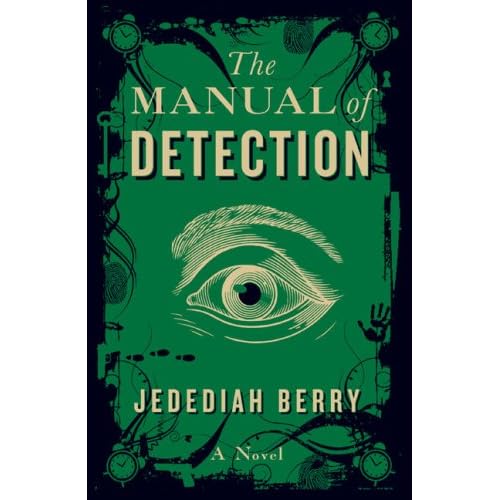
The Manual of Detection by Jedediah Berry (Penguin) - Aside from the conceit of being an actual manual of detection, Berry creates an elaborate setting and backstory for this novel which includes detective agencies and a rogue's gallery of sorts (and if that isn't noir, I don't know what is). The simplistic tone of the novel can be misleading as The Manual of Detection has its own share of intrigue.

Finch by Jeff VanderMeer (Underland Press) - Clearly fantastical from the get-go, VanderMeer inserts the noir genre into his Ambergris setting as a sense of mystery, paranoia, and vulnerability pervades the narrative.

January 20, 2010 Links and Plugs

This week's controversy revolves around Bloomsbury's second white-washed YA cover. And a related controversy is an anthology that I'm part of...

Also check out a video posted on Lou Ander's blog: Games and the Female Audience.

And here's your photo of the day (source):

artist: Anouk Kruithof

Interviews

Advice/Articles
News
And here's a spanking new cover for one of my fave books from 2009:

The Manual of Detection by Jedediah Berry

Tuesday, January 19, 2010

January 19, 2010 Links and Plugs

For reasons only known to Lavie (and probably the publisher), he needs to sell 92 copies of The Apex Book of World SF before the month is out.

Interviews
Advice/Articles
News
Since I already interviewed Nick Mamatas on Haikasoru, check out their books:


The Book of Heroes by Miyuki Miyabe

Interview: Kaolin Fire

Every Tuesday, I'll have an interview posted.

Kaolin Fire is a conglomeration of ideas, side projects, and experiments. Web development is his primary occupation, but he also develops computer games, edits Greatest Uncommon Denominator Magazine, and occasionally teaches computer science. He has had short fiction published in Strange Horizons, Tuesday Shorts, Escape Velocity, and Alienskin Magazine, among others.

Thanks for agreeing to do the interview! First off, is your name really Kaolin Fire?

It is (Kaolin Imago Fire), though that's threatened to get me into trouble at times (I've had one editor tell me they almost threw my piece out of slush for ignoring their "no pen names" rule).

What made you decide to become a writer?

It just seemed to happen to me, time and again. My mom encouraged me with writing poetry at an early age (first memories of such around age 6 or 7), and I remember writing on and off for classes or outside of classes since then. There were a number of years when I forgot about writing entirely, but it picked back up more seriously in college. A close friend got me into an online writing group and that and others like it have kept me going since.

I've always been an avid reader, and grew up in a family of readers--we'd have piles of books borrowed from the library to choose from every week--so that probably played a large part in it as well. I'd read any chance I could take, outside of tinkering with computers.

An editor?

This I fell into by way of writing, and by way of web development. Everyone needs a web developer, and if they don't think they do, they don't understand what they're missing.

Someone in my first online writing group had kind of a windfall and decided to drop a chunk on putting out a magazine. I did the web design and development to support that--making it so a dozen writers from all over the world could collaborate on selecting and editing pieces. Some of us had been critting each other for half a decade by then, but it's amazing how different actually having to select pieces for publication is. It takes it to another level, and I think that experience has really helped me see my own writing in a properly critical light.

Is it true that you work with 5 monitors, and it's still not enough?

It's definitely not enough, though the number only bumps to 5 when I've got my laptop hooked up--and it's a bit of a strain to see in comparison to the four others on my desk. The primary is 1600x1200, left and "upper right" are 1280x1024, and "lower right" is currently a 1600x1200 CRT. They're spread over two computers, and I use a software KVM called Synergy to manage them.

My current "dream" is 6 1600x1200 LCDs in a 2 tall, 3 wide grid. I also want them to put off less heat.

I tend to be working on 3 to 5 projects at a time, and any given project can easily take up 3 monitors on its own (doing a book cover, for instance--one for PhotoShop, one for browsing for reference photos, one for keeping notes--or running a 3d program, or so on).

How did you get involved with GUD Magazine?

Some time after our friend's venture ran out of steam, a few of us got back together and sought to address issues that we felt had cropped up. We wanted more individual control over each issue, a different aesthetic, a stronger purpose. We'd moved forward with our lives, some, and had some money and a lot of time to devote to the idea. Some of what we brainstormed was a lot more "in your face", but it's always been about blurring the boundaries between genre and non-genre, understanding the negative stereotypes each get and trying to raise the bar for both.

And then of course I sat down and built the website, and the initial two designs--though I was very lucky to trade a professional designer for our current one. I did a brief retrospective regarding the website designs mid-2008: http://www.gudmagazine.com/blog/archive/2008/6/8/a-website-retrospective-two-years/

What does your current role in the magazine involve?

Not foremost, but most fundamental, I keep the magazine running at a technical level. I manage the domain, the server it's on, massage the website periodically. One of the main maintenance bits I do on the website, outside of posting new pages for different sales/events we try and updating the color scheme a touch for each new issue, is adding various statistics; we've got a public page of them at http://gudmagazine.com/subs/stats.php but we have others, too, showing us how well each issue is performing, how our mailing list is doing, and such as that. I also attempt to streamline the submission and editing processes as we hit recurring snags. The last thing I did there was make the website spit out RTFs of our contract for each piece, so that we didn't have to edit them manually.

I also tend to function as the magazine's front man online--if you see GUD Magazine on twitter, facebook, myspace, gather, etc; chances are, it's me. I'm frequently checking out new online social venues, seeing if I can build a buzz or a conversation. I also poke my head in at a half dozen writing boards somewhat regularly, just to promote.

On that note, I'm also pretty much in charge of all of our advertising. I do a few long-running campaigns through Project Wonderful, but am also on the lookout for good "synergies", random opportunities both online and in print. I keep dreaming of being able to get a real radio spot together; or a billboard on a busy highway; or a tv spot. But we'd have to be doing absurdly better to risk something like that. Some of the more out-of-the-way things I've talked myself out of include advertising on pizza boxes and at gas pumps. Possibly the most out-of-the-way thing I _have_ done is put links to or ads for GUD in some of the flash games that I develop. Oh, or the "What GUD Monster" are you quiz ~ We haven't done an ad buy that was over $100, and I'd say our average spend is a few hundred dollars a year.

And then we're getting into the real nuts and bolts of the magazine. The way we have things set up, whoever is "instigating" an issue runs slush--generally puts an eye on every piece submitted, or at least sets the rules for what other people can reject. We rotate instigator-ship to give each other a chance to recover from that, and to keep the tone of the magazine shifting a bit (though we have a shared dream, as it were, that we're all working towards). It would actually be kind of interesting to see how many pieces I've rejected over the course of the magazine (I'm a junkie for statistics), but that's one I haven't gotten around to implementing.

Of course, we'll all jump in and comment on anything that the instigator is uncertain of. The instigator also generally figures out issue ordering, handles contracts, and blurbs. Our amazing copyeditors (Julia Bernd and Debbie Moorhouse) step in after acceptance, work everything into a standard format, fact check, and discuss any "big picture" problems they see with the contributors. After two or more sets of this, the instigator comes back in and approves/rejects any minor edits/suggestions and does a bit more tinkering--and that version, cleaned up, gets sent back to the contributor for approval. It's a little more awkward when one of our two primary copyeditors is also the issue instigator, but it still gets done.

Once the copy is cleanproofed and accepted, our layout guru (Sue Miller) sets it out in InDesign; and more recently she's been doing some creative tinkering with the covers, which I've really enjoyed. She does the full cover layout, including author names on the back, blurbs, etc. This then goes back to the contributors for one last approval before we move to print.

Which brings me to shipping and distribution, which I'm also largely in charge of these days. Once Sue confirms the proof copy, I get a large number of boxes; with Issue 4, Julia Bernd and Michael Ellsworth (Consulting Editor) came down for a "shipping party" to get review copies, contributor copies, and subscriptions out. I try to go down to the post office once every week or two to ship out new orders. We also ship bulk to re-mailers in the UK and Australia so that follow-up orders can make it out more quickly to Europe and Oceania and surrounding areas.

What do you look for in a story?

All the usuals, of course--a good hook, good conflict, writing that pulls you through it, characters that drive it, an ending that caps the piece or even heightens it. The main question I'm asking myself as I read is--do I really care? I have to be enjoying myself, first and foremost--and I enjoy all the above, plus a certain sensibility for rhythm and imagery. Don't knock me out of the story with bad grammar, bad spelling, painful turns of phrase, off-key tones.

If the story is doing something I haven't read before, that's a bonus, but if it's doing something I've read in a different way, that's quite plausible too. When I'm done, if I've made it to the end, if I haven't been disappointed by the ending--and there are so many stories, brilliantly written, that just haven't been thought out well enough for the end--then the next question is how badly do I want to share it with people? I can be glad I read something but not think it had "that certain something" strongly enough to share it with anyone else.

That's where it helps to have a few other folks to bounce the story off of--see if they'll see something you missed; we all have different backgrounds to draw on. Then it's a matter of weighing the backgrounds and trying to judge what "the audience" will think.

How about in a poem?

For me a good poem is the essence of a story--metaphorically as if you took a plain sheet of story and folded it into an elegant bird. Word choice, imagery, characters, plot or vignette, it all has to be there, just tighter.

That said, I think it's very important for a poem to be understandable at first blush. If you can't connect with it, why would you bother trying to tease out any other treasures from it? And I'm okay if it only has that one level, if that level is painted well enough, has something new or notable.

What are the challenges in running and promoting GUD Magazine?

We were rather blessed to have found each other and found a common vision--there are amazingly few kerfluffles between staff, and all smoothed over quickly. The main challenges in running GUD revolve around money--it's a very expensive hobby that we'd like to better support itself down the road. As for promotion--we're not as good with that as we'd like. Nobody has any particular expertise on that front. We do what we can, but we could use more hats, especially those that didn't get tangled in our primary problem (the money).

We've run many sales and promotions, and the only one to date we've had a positive ROI on is our "pay what you want" sale. I'm not sure if it will still be going on when this interview is published, but some initial stats on it are available here: http://www.gudmagazine.com/blog/archive/2009/11/23/black-friday-2009/ -- and I'll try to link back any follow-up posts. My original plan was to end the sale roughly December 7, 2009, but I may continue running it as long as it seems to bring in more and better sales than otherwise.

Our most expensive promotion to date was just prior to our "pay what you want" sale, and may have contributed to its success. With "30 days of GUD" we gave away one PDF each day of September to a randomly selected tweeter that included #gudmagazine in their tweets. And at the end, we gave away a Kindle 2 to (an also randomly selected) winner from that pool. http://www.gudmagazine.com/blog/archive/2009/10/1/30-days-of-gud/

In your opinion, how does GUD Magazine stand out from the other speculative fiction publications out there?

I think we lean more "literary" than most; we care about the written word as much as we do about the story itself. That doesn't mean every story we publish is going to look like it came out of an MFA program; or that we'll turn down something that uses plain or standardly embellished language, but it is one predilection.

When you're reading a story in GUD, you don't know which way the fantastical element will go--or if it has one at all. I like to think that makes each piece feel a little more real, a little more "possible".

Is there a trend that you see in the fiction/poetry being submitted and actually published in the magazine?

I really don't pay enough attention to notice trends until I notice a trend of people mentioning a certain trend. Color me behind on whatever it might be.

When it comes to your fiction, what are the stumbling blocks you've encountered breaking into the industry?

The worst stumbling block is time. If I spent more time on my writing, editing my writing, etc., I would have a lot more published. I can see the improvement when I work at it, but I don't work at it nearly enough.

What I'm worst at, beyond that, is plotting. I'm still trying to osmose a proper understanding of it in such a way that it comes out well in my stories. My early writing all too often ended with some variant of, "And then [he/she] died.".

How do you find the time to write and edit and still keep up with the day job (and Twitter!)?

And so. :)

I have a very flexible day job (though it rides me like a rough mistress, at times); and a very understanding wife. Editing (the magazine) is a group effort, and we cheer eachother on. Writing I have to trick myself into. There are a few places I hang out that do weekly flash challenges and the like, and that's how I get most of my writing done.

Does your programming skills have any impact on your fiction?

They used to, but I've slipped away from more hardcore science-y stuff in recent years, gone for the more malleable magic realism or straight out fantasy, where you can make up just about anything you like so long as it's interesting, and feels believable, consistent, etc.

I have a few things I'd like to dust off and re-explore, but technology changes so much that even while I keep abreast of it, anything I wrote would not be able to. I've been enjoying Cory Doctorow's works, lately, in this vein. He knows his tech, but still talks about it so "loosely" it could almost be anywhen (just not now; but a little later when x, y, or z was solved).

How has the Internet affected you as a writer and as an editor for GUD Magazine? Would there be a GUD Magazine if there was no Internet?

I honestly have some trouble imagining a world without the internet. I've been on it in some fashion, being social, programming, since I was 12 or 13. Do I admit my age? That was back around 1990 or so. And before that I was already BBSing. My college career was, if not sideswiped, at least severely distracted by the dotcom boom, which had me learning perl and HTML "on the job"; bouncing from contract job to contract job.

I don't think there would be a GUD without the internet. I don't even know if I would have gotten back into writing without it--that's where all of my "writing buddies" are, except a very few--and those I only connected to through the internet, as well.

What advice do you have for aspiring writers?

Write and crit. Write, crit, and read the sort of stuff you want to be writing--and read stuff outside what you want to be writing. And then write and crit some more. Don't stop writing. Don't stop fixing.

Advice for aspiring editors?

First advice: Don't. Really, don't. It's hell. :) But: Be sure you know what you're doing. Then: try slushing with some other mag. Many are open to it, especially if you have some background writing. Make sure you really love it. And make sure you want to do your own thing, that you're railing against the limitations of whatever mag you've tried slushing with. Make sure your significant other(s) and job(s) are willing to deal with this other life.

Expect defeat; but don't let that stop you.

Anything else you want to plug?


I could go on for years plugging my stuff, but this really has gotten absurdly long, so I'll just pick out a few categories of "things I do" ~

Book/magazine covers: http://erif.org/art/covers.php
Computer games: http://erif.org/code/games.php
Web development: http://www.handbrewed.com/

Oh, and writers might want to check out ~

http://writersplanner.com/ (to track and plan submissions)
http://twitfic.com/ (a forum for discussion/promotion of twitter fiction)

Monday, January 18, 2010

Book/Magazine Review: Phantom edited by Paul Tremblay & Sean Wallace

Every Monday, I'll be doing bite-sized book/magazine reviews.

What is "literary horror," at least according to editors Paul Tremblay and Sean Wallace? The answer is Phantom, a compact anthology featuring fourteen unconventional horror stories. I wouldn't call the book striking, if striking meant being horrified or grossed out by the stories. That would, in my opinion, be the complete opposite of the goals of the anthology. Phantom isn't about immediate shock. In fact, the title is apt. The stories linger and haunt you over time as it gives you something to ponder on, as opposed to the immediacy of the prose of other horror anthologies. Because of this, it leaves Phantom in a peculiar space. On one hand, it's not a book that you recommend to a friend "Hey, if you want to get spooked, read this." Instead, it includes sensibilities that are more commonplace--to use a stereotype--in other genres such as Fiction.

Take for example "A Stain on the Stone" by Nick Mamatas. Readers are warned of spoilers: The piece is disarming as right from the start, Mamatas tricks us into believing that this is no O. Henry story. He reveals immediately what is usually the plot point of many horror cliches--that a horrible murder has been committed. This is the launching pad for exploring the psyche of the tour guide of this horrific town event, and Mamatas writes a believable protagonist, combining telling details with realistic humor. And yet, there is a surprise at the end, a concern that's less fantastical than a cult murder, but equally dreadful, although one more mundane. It's an ending that, to some extent, comes out of nowhere, but the author has been preparing us for this moment due to the careful build up. The tempo of the piece is subtle and the ending isn't an M. Night Shaylaman moment but rather a conclusion that works in the context of the reader's investment in the protagonist.

This isn't the only subversion to be found. One of my favorite stories is "The End of Everything" by Steve Eller which puts a unique spin on the zombie apocalypse. There's an emotional resonance to this piece because it's layered and complex. It makes readers question the concept of a monster in the case of the protagonist, and the undead are truly unliving because of their apathy. By the time we reach the end, we have lots of questions, and the author doesn't spoon-feed his agenda on us.

Another favorite, due to style, is "After Images" by Karen Heuler. In a certain way, this is the complete opposite of the conventional horror tale: it feels safe and upbeat. The reportage method isn't included to incite dread, but as a way of catching the reader's attention. The ending is also clever as it insinuates and rewards readers who've been reading between the lines all this time.

I enjoyed Phantom and applaud it for its alternatives to the stereotype of the horror genre. Granted, I can see some readers baffled by some of the stories, such as "She Hears Music Up Above" by F. Brett Cox, but such texts, in my opinion, is what pushes the boundaries and challenges both the reader and the author.

January 18, 2010 Links and Plugs

Lavie Tidhar is threatening to summon Golem Ninjas to assassinate my soul if I don't plug the Apex Book of World SF stories that are available free for download.

Also, check out Crossed Genre's Post A Story for Haiti.

Interviews
Advice/Articles
News
And go buy, cat-lovers or otherwise:

Tails of Wonder and Imagination edited by Ellen Datlow

Friday, January 15, 2010

January 15, 2010 Links and Plugs

Check out my interview with the talented editors Delia Sherman and Christopher Barzak over at SF Signal.

Interviews
Advice/Articles
Star Wars + Paul S. Kemp =
Star Wars: Crosscurrent by Paul S. Kemp

Thursday, January 14, 2010

January 14, 2010 Links and Plugs

Not spec fic related but Sam Henderson posts various ways to help the victims of the Haitian quake. Also, Cheryl Morgan's Tired of These Stupid “Jokes”.

Interviews
Advice/Articles
Here's a comic from my buddy Elbert Or (he's also doing the cover for my upcoming online anthology The Best Philippine Speculative Fiction 2009 [or whatever I call it by the time it's up]):

Lola: A Ghost Story by J. Torres & Elbert Or

Wednesday, January 13, 2010

The Bibliophile Stalker Awards 2009

Every Wednesday, I have an essay or feature article on any topic that catches my fancy!

What can I say, "best of" lists are quite popular in book blogger sites and they're a great way of personally recognizing the works of others (be it authors, editors, and everything else in between).

Late last year, I published a shortlist of some of my favorite titles and after a month of deliberation (and more reading), here's my list for 2009.

I'd also like to clarify that the titles mentioned here must meet two criteria: a) I've actually read them and b) they were published in 2009. And as much as I want to do a lot of a), unfortunately, I did not have time to read as much as I wanted, and admittedly most of my readings were focused on anthologies, short story collections, and magazines.

Best Novel

Novels for me are the staple of the genre and there's a lot of significant work that were released in 2009, whether it's China Mieville's The City & The City, Lev Grossman's The Magicians, or Brandon Sanderon's The Gathering Storm (haven't read the last two). For me, however, some of the best were those that slipped past most people's radar, and challenge the boundaries of speculative fiction.

  1. The Babylonian Trilogy by Sebastien Doubinsky (PS Publishing) - For me, one of the novels that still lingers in my mind is Doubinsky's The Babylonian Trilogy. Whether it's style, technique, or format, the novel delivers an experience that feels fresh and original.
  2. Finch by Jeff VanderMeer (Underland Press) - If it's just down to technique, VanderMeer wins, hands down. You can read Finch on the surface level and enjoy it, or you can dig deep into it and uncover layers upon layers of sub-text and subtleties. That and spore guns!
  3. Slights by Kaaron Warren (Angry Robot Books) - Slights is a disturbing novel, but that fact is not immediately apparent: the horror is like a shadow that lurks at the periphery of your vision. It also helps that Warren writes in a style that's immediately engaging and repeatedly astounds.
Honorable Mentions
  • Palimpsest by Catherynne M. Valente (Spectra)
  • The Strain by Guillermo del Toro and Chuck Hogan (William Morrow)
  • The Manual of Detection by Jedediah Berry (Penguin)
Best Novella

Novellas are typically a tough sell to publishers--at least compared to novels or short stories. Still, 2009 had some great novellas, mostly thanks to publisher PS Publishing.
  1. The Language of Dying by Sarah Pinborough (PS Publishing) - Again, PS Publishing delivers something starkly different from the norm. It's all about what Pinborough insinuates and the way she slowly peels the layers off of her protagonist.
  2. The Witnesses Are Gone by Joel Lane (PS Publishing) - The Witnesses Are Gone is both haunting and elegant without either getting in the way of the other. The length, I feel, is just right, and it's a compliment to Lane that he manages to twist what should have been a predictable (and foreshadowed) story into a narrative that catches you off-guard.
  3. "Delusion's Song" by Alan Smale from Panverse One (Panverse Publishing) - Whereas my top two novellas focus on simply one perspective, the appeal of "Delusion's Song" is its ambitiousness. There's a lot of characters in the story yet Smale manages to make them sound distinctive. And then there's the plot which is dark and brooding, and astute readers might guess the allusions of the story.
Honorable Mentions
  • Shambling Towards Hiroshima by James Morrow (Tachyon Publications)
  • Starfall by Stephen Baxter (PS Publishing)

Best Novelette

Honestly, I'm most excited when it comes to 2009's novelettes. In fact, narrowing it to my top three was quite difficult.

  1. "The Assimilated Cuban's Guide to Quantum Santeria" by Carlos Hernandez from Interfictions 2 (Small Beer Press) - "The Assimilated Cuban's Guide to Quantum Santeria" has everything I want in a story: it's upbeat, accessible, telling details, and most of all, fun while still being weighty.
  2. "It Takes Two" by Nicola Griffith from Eclipse Three (Night Shade Books) - It's not often that I encounter mundane science fiction that has the emotional resonance of Griffith's writing. And while I would have loved this piece for that fact alone, it also packs so much more, whether it's Griffith's thesis to characters that feel genuine.
  3. "Technicolor" by John Langan from Poe (Solaris Books) - "Technicolor" is one of the most misleading stories you'll ever read. The ride seems safe yet it leads to unexpected (but welcome) destinations that's full of wonder and horror.
Honorable Mentions
  • "Everland by Paul Witcover from Everland and Other Stories (PS Publishing)
  • "Don't Mention Madagascar" by Pat Cadigan from Eclipse Three (Night Shade Books)
Best Short Story

Pffft. The death of the short story? There's a lot of interesting fiction published in 2009, and best of all, from a variety of sources. And I haven't even read half of last year's best writings...
  1. "Count Poniatowski and the Beautiful Chicken" by Elizabeth Ziemska from Interfictions 2 (Small Beer Press) - One of the most underrated writers if Ziemska and her talent is writing short but very tight stories. "Count Poniatowski and the Beautiful Chicken" is a tear-jerker that features the best of various genres.
  2. "SO-far" by Otsuichi from ZOO (Haikasoru) - Here is translated fiction that's simple, elegant, and achieves so much for its length. Simply put, I want more.
  3. "Golubash, or Wine-Blood-War-Elegy" by Catherynne M. Valente from Federations (Prime Books) - While supposedly a science fiction piece, Valente's signature style is preserved and feels like a fantasy epic. Best of 2009 please.
Honorable Mentions
  • "The Cinderella Game" by Kelly Link from Troll's Eye View (Viking Juvenille)
  • "At the Edge of Dying" by Mary Robinette Kowal from Clockwork Phoenix 2 (Norilana Books)
  • "The Best Monkey" by Daniel Abraham from The Solaris Book of New Science Fiction Volume 3 (Solaris Books)
  • "Artis Eterne" from Cern Zoo (Megazanthus Press)
Best Original Anthology

Another exciting format for me are anthologies. Lots of strong and terrific choices during 2009.
  1. Eclipse Three by edited Jonathan Strahan (Night Shade Books) - Honestly, my #1 and #2 could easily have been switched, but if I went with my gut, this would be my pick. Interestingly enough, Eclipse Three feels like the interstitial volume of the series, hence my preference for it.
  2. Interfictions 2: An Anthology of Interstitial Writing edited by Delia Sherman & Christopher Barzak (Small Beer Press) - Here is, in my opinion, some of the best work being done in the genre (although that statement is a paradox since the point of the anthology is not to be part of any single label).
  3. Poe edited by Ellen Datlow (Solaris Books) - What's refreshing with Datlow's tribute anthologies is that they're not merely derivatives of the deceased author's fiction. The stories in Poe are quite distinct, combining elements of Poe and the contributing writer.
Honorable Mentions
  • Philippine Speculative Fiction IV edited by Dean Francis Alfar & Nikki Alfar (Kestrel IMC) (disclosure: I'm included in this anthology)
  • Firebirds Soaring edited by Sharyn November (Firebird)
  • Lovecraft Unbound edited by Ellen Datlow (Dark Horse)
Best Reprint Anthology

Despite the loss of The Year's Best Fantasy and Horror (and nearly the Year's Best Fantasy series), 2009's output makes me hopeful.
  1. The Best Horror of the Year Volume One edited by Ellen Datlow (Night Shade Books) - Right now, if you want a recap of the previous year's best horror, this is the book to get.
  2. The Very Best of Fantasy & Science Fiction Sixtieth Anniversary Anthology edited by Gordon Van Gelder (Tachyon Publications) - Aside from testifying to the importance of Fantasy & Science Fiction, it also doubles as a a history book for the genre.
  3. The Improbable Adventures of Sherlock Holmes edited by John Joseph Adams (Night Shade Books) - This anthology manages to maintain its tone of voice despite the diverse narratives and contributors. While it admittedly takes advantage of the recent movie (just take a close look at the cover), the stories covers many of the permutations of the Sherlock Holmes mythos.
Honorable Mentions
  • Best American Fantasy 2 edited by Ann & Jeff VanderMeer (Prime Books)
  • Year's Best Fantasy 9 edited by David G. Hartwell and Kathryn Cramer (Tor Books)
  • The Secret History of Science Fiction edited by James Patrick Kelly and John Kessel (Tachyon Publications)
Best Short Story Collection

Admittedly, I didn't get to read as much short story collections as I wanted to, but here are the ones that particularly stood out.
  1. We Never Talk About My Brother by Peter S. Beagle (Tachyon Publications) - There's more to Beagle than The Last Unicorn and this collection proves it.
  2. Everland and Other Stories by Paul Witcover (PS Publishing) - I was honestly unimpressed with Witcover's presence in the Inferior Four + 1 blog but this collection convinced me otherwise. Now I know why Witcover graces the ranks of Elizabeth Hand, Lucius Shepard, and Paul di Filippo.
  3. ZOO by Otsuichi (Haikasoru) - While a lot of the focus of Haikasoru are Japanese novels, ZOO proves that Japan has its fair share of talented short story writers as well. A must-read for anyone that's looking for something beyond the Anglophile norm.
Honorable Mentions
  • The Best of Michael Moorcock edited by John Davey with Ann & Jeff VanderMeer (Tachyon Publications)
Best Single-Issue Magazine


New Genre #6 - Despite being dominated by male contributors, overall, New Genre #6 combines sleek sensibilities with daring fiction that's not easily classifiable.

Honorable Mentions
Best Genre Podcast

Sofanauts - Admittedly, Sofanauts isn't perfect: the sound quality could be better and four's a crowd (which was thankfully rectified in the latter half of the year). It more than makes up for this, however, with its candidness and outspoken guests. It's too bad that it aired its last show in 2009...

Honorable Mentions
Special Award
Booklife by Jeff VanderMeer (Tachyon Publications) - This is, in my opinion, one of the must-read books for any aspiring (and existing) author. VanderMeer tackles the plight of writers in a way that hasn't been done by other writing books. It's also modern in the sense that it has a companion website that gets continually updated, and the second edition of the book will only get better.

Best Non-Genre Book for a Genre Reader

The Housekeeper and the Professor by Yoko Ogawa (Picador) - While not marketed as a genre book, The Housekeeper and the Professor has genre sensibilities. If nothing else, it'll make you fall in love with math.

Best New Publisher

Angry Robot Books - It's not often that you can proclaim hey, there are several new publishers that debuted this year which came out with interesting titles. Angry Robot Books, Underland Press (technically, they started in 2008 but their first print title was released in 2009), and Haikasoru each covers a unique niche and made spectacular online debuts (Underland Press for example has that "wovel" thing). In the end though, I must go with Angry Robot Books with its coordination with the community and sheer volume of titles.

Honorable Mentions

Best Book Design

Roadkill/Siren Beat by Robert Shearman/Tansy Rayner Roberts (Twelfth Planet Press) - Roadkill/Siren Beat is campy but the publisher embraces this campiness. Honestly, this is one of those publications that I would have bought on packaging alone. It doesn't hurt that the two stories are excellent.

Things to Look Forward to in 2010:
  • Best American Fantasy 3 edited by Kevin Brockmeier (Underland Press) - Read it and easily a contender for 2010's best reprint anthologies.
  • The Geek’s Guide to the Galaxy Podcast - Off to a great start and as some of my favorite genre podcasts are starting to slow down in terms of their release schedule, The Geek's Guide to the Galaxy Podcast is picking up the slack and easily becoming a favorite.
  • Lightspeed - John Joseph Adams is My Master Now. His story choices and agenda leaves me hopeful for the future.

January 13, 2010 Links and Plugs

I break wallets, earphones, and shoes.

Interviews
Advice/Articles
News
The powers that be have commanded me to promote, so here's the cover to an anthology I'm going to be a part of:

The Dragon and the Stars edited by Derwin Mak and Eric Choi

Tuesday, January 12, 2010

January 12, 2010 Links and Plugs

Busy busy busy with not-so-secret project. Byebye paycheck! Byebye free time!

Interviews
Advice/Articles
News
Plugged this a few times before but this just arrived from the post office:

Phantom edited by Paul Tremblay & Sean Wallace