Two years back, I was poring through two decades worth of newspapers for research at work. There were a couple of interesting news items, some that seemed more appropriate for tabloids such as a woman giving birth to a frog-looking child (a photo was included in the news item) or a four-year-old kid giving birth.
One of the sensational news items in 1989 was the discovery of a mermaid in Boracay. Back then, the island wasn't the saturated tourist destination it is now. Basically, a visiting tourist from New Zealand was alone at sea, unsupervised, when the currents took her off course. The said tourist got lost and was fortunately saved four days later by local fishermen. Of course since she was Caucasian, had blonde hair, and was paddling in the water, the fishermen initially mistook her for a mermaid.
Monday, November 03, 2008


November 3, 2008 Links and Plugs
For those of you in the US, go vote. Then try out these links:
- Here are the International Horror Guild 2007 winners and nominees. While you're at it, read Stefan Dziemianowicz's tribute to Peter Straub as a living legend.
- Brian Slattery on What Are Fantasy and Magic Realism Anyway?
- Because the hard drive crash is inevitable: Back Up!
- Here's some photos of books... that don't get read (it's art!).
- The Footnote interviews the editors of Goblin Fruit.
- The Fix interviews Kaaron Warren.

Book/Magazine Review: How to Make Friends with Demons by Graham Joyce
Every Monday, I'll be doing spoiler-free, bite-sized book/magazine reviews.
The novel immediately caught my attention with its opening lines: “There are one thousand five hundred and sixty seven known demons.” While other authors might use this hook to tell a full-blown fantasy tale, Joyce instead steers it in a different direction, taking a more literary approach where the protagonist’s so-called demons may or may not be real.
The prose of the author is easy to get into. Joyce uses simple language and doesn't overwhelm the reader with needless details or dense paragraphs. Instead, he immediately dives into the story and its characters, with its European vibe making itself evident.
The strength of How to Make Friends with Demons in my opinion is its characterization. The narrator is flawed but sympathetic and his tone of voice has a distinct character and beat to it. His supporting cast is equally impressive with their complexity and Joyce takes no short-cuts in presenting them as anything less.
The author also seamlessly combines flashbacks with the present and it is to the author's credit that readers will have no problems discerning which is which. Midway through the book, I had no idea where Joyce would take this novel as he leaves himself open to many avenues and keeps the story compelling. The possibility that the protagonist's demons are all part of his imagination is left dangling which ramps up the suspense and the reader's curiosity.
Book/Magazine Review: Clarkesworld Magazine Issue #25 October 2008
Every Monday, I'll be doing spoiler-free, bite-sized book/magazine reviews.
 Clarkesworld Magazine's October 2008 issue is quite solid, whether it comes to the fiction or nonfiction. The cover art by Jobert Zaide, "Alien Cityscape", has that right combination of familiarity (it has that War of the Worlds feel) and strangeness.
The feature piece is "Gift of the Kites" by Jim C. Hines. This was an endearing story with that right touch of the fantastical. Hines's characterization is impressive, whether it's the young protagonist in the story or his biological father who acts as an antagonists of sorts. Another praise-worthy quality of the story is how the action and tension is narrated, especially during the scenes where the kites battle. The author avoids the pitfall of an all-too easy ending and while I'm not completely won over by the route he takes, it's certainly commendable.
The podcast version of the same story, read by Cat Rambo, is equally impressive. Hines includes some Japanese terms and Rambo pronounces them correctly and smoothly so much so that one doesn't really realize there are actually foreign words in the story. She also adds a layer of meekness to the protagonist and a stern distinction between the various characters thanks to dialogue.
"Passwords" by John A. McDermott uses something as commonplace as passwords and uses it as an objective correlative for the frustration and problems the protagonist is facing. McDermott handles the juxtaposition between the character's personal life and corporate life adeptly, with characterization being the hallmark of this piece. Perhaps it's not as strong a story as "Gift of the Kites" but it's certainly an enjoyable read.
When it comes to the non-fiction, Gord Sellar does a competent job of drawing science fiction/fantasy comparisons with Korea in "How Candle Girl and V Took on 2 MB". It honestly reminds me of the revolutions that have taken place here in the Philippines, with technology and paranoia playing a big part in such moving events. Sellar is also comprehensive in citing sources and attributions which sheds light into the incident as well as Korean culture. Jeff Vandermeer's interview, "Margo Lanagan and Tender Morsels", delivers exactly what the title suggests as we gain an insight into the writing behind Tender Morsels.
Overall a good issue of Clarkesworld Magazine that's certainly worth the investment in time.
Clarkesworld Magazine's October 2008 issue is quite solid, whether it comes to the fiction or nonfiction. The cover art by Jobert Zaide, "Alien Cityscape", has that right combination of familiarity (it has that War of the Worlds feel) and strangeness.The feature piece is "Gift of the Kites" by Jim C. Hines. This was an endearing story with that right touch of the fantastical. Hines's characterization is impressive, whether it's the young protagonist in the story or his biological father who acts as an antagonists of sorts. Another praise-worthy quality of the story is how the action and tension is narrated, especially during the scenes where the kites battle. The author avoids the pitfall of an all-too easy ending and while I'm not completely won over by the route he takes, it's certainly commendable.
The podcast version of the same story, read by Cat Rambo, is equally impressive. Hines includes some Japanese terms and Rambo pronounces them correctly and smoothly so much so that one doesn't really realize there are actually foreign words in the story. She also adds a layer of meekness to the protagonist and a stern distinction between the various characters thanks to dialogue.
"Passwords" by John A. McDermott uses something as commonplace as passwords and uses it as an objective correlative for the frustration and problems the protagonist is facing. McDermott handles the juxtaposition between the character's personal life and corporate life adeptly, with characterization being the hallmark of this piece. Perhaps it's not as strong a story as "Gift of the Kites" but it's certainly an enjoyable read.
When it comes to the non-fiction, Gord Sellar does a competent job of drawing science fiction/fantasy comparisons with Korea in "How Candle Girl and V Took on 2 MB". It honestly reminds me of the revolutions that have taken place here in the Philippines, with technology and paranoia playing a big part in such moving events. Sellar is also comprehensive in citing sources and attributions which sheds light into the incident as well as Korean culture. Jeff Vandermeer's interview, "Margo Lanagan and Tender Morsels", delivers exactly what the title suggests as we gain an insight into the writing behind Tender Morsels.
Overall a good issue of Clarkesworld Magazine that's certainly worth the investment in time.
Book/Magazine Review: Pretty Monsters by Kelly Link
Every Monday, I'll be doing spoiler-free, bite-sized book/magazine reviews.
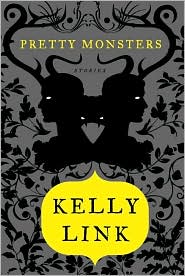 Pretty Monsters is Kelly Link's latest short story collection aimed at young adults. My young adult phase passed a long time ago but personally, I found this book to be as deep and packed as Link's Magic for Beginners and Stranger Things Happen.
First thing that caught my eye is the overall aesthetic of the book. The book jacket, designed by Will Staeble, is upbeat and eye-catching, whether it's simply the presentation of the blurbs or the text on the cover flap. Shaun Tan's art also precedes each story including an apt phrase or two below the neat and refined illustration.
As for the stories themselves, there are nine all in all, with one story original to this collection, the titular "Pretty Monsters". Most of the stories are recent although it does reprint a few stories from her earlier books. The featured stories covers a wide spread, from the absurd and the surreal, to the conventional. Each one unanimously packs a punch and while they are all quite lengthy, I'm amazed at how great they stand up to re-reading (because I'm a Link fan and I've encountered several of them before). Whether this is appropriate for young adults though remains to be seen. Perhaps what makes it apt for that audience is the fact that many of the protagonists are teens and Link does capture their mentality in some of the stories.
I won't waste your time, here's the low-down on Link's featured piece, "Pretty Monsters". It starts out like a traditional story switching back and forth between two seemingly different stories. Link writes with an authentic young adult voice, whether it's the girl pining for her crush or the pressures of being part of a clique. For the most part, Link isn't heavy-handed in her storytelling and there are lots of nuances to the text. And then it all culminates to a powerful ending that has that distinctive Kelly Link signature style. Easily a great and memorable story.
Other stories which particularly caught my eye were "Monster" and "The Surfer". The former is a summer camp story full of excitement and confusion but it all boils down to the characterization of the one boy who doesn't fit in. The author ensnares the reader in an emotional ringer before unleashing the aforementioned monster upon them and it's a delightful yet terrifying scene. The latter, on the other hand, lacks Link's trademark of the absurd or the unbelievable but she makes up for it with good old fashioned storytelling. Again, this story comes down to characterization and the author excels at it. "Surfer" is also a story where Link indulges her science fiction fan by name-dropping a couple of SF novels.
Overall this was a satisfying read and features an interesting perspective on the type of stories that Link writes. There's also the inclusion of the author's staples such as "Magic for Beginners" and "The Faery Handbag" which round up the collection for anyone in doubt.
Pretty Monsters is Kelly Link's latest short story collection aimed at young adults. My young adult phase passed a long time ago but personally, I found this book to be as deep and packed as Link's Magic for Beginners and Stranger Things Happen.First thing that caught my eye is the overall aesthetic of the book. The book jacket, designed by Will Staeble, is upbeat and eye-catching, whether it's simply the presentation of the blurbs or the text on the cover flap. Shaun Tan's art also precedes each story including an apt phrase or two below the neat and refined illustration.
As for the stories themselves, there are nine all in all, with one story original to this collection, the titular "Pretty Monsters". Most of the stories are recent although it does reprint a few stories from her earlier books. The featured stories covers a wide spread, from the absurd and the surreal, to the conventional. Each one unanimously packs a punch and while they are all quite lengthy, I'm amazed at how great they stand up to re-reading (because I'm a Link fan and I've encountered several of them before). Whether this is appropriate for young adults though remains to be seen. Perhaps what makes it apt for that audience is the fact that many of the protagonists are teens and Link does capture their mentality in some of the stories.
I won't waste your time, here's the low-down on Link's featured piece, "Pretty Monsters". It starts out like a traditional story switching back and forth between two seemingly different stories. Link writes with an authentic young adult voice, whether it's the girl pining for her crush or the pressures of being part of a clique. For the most part, Link isn't heavy-handed in her storytelling and there are lots of nuances to the text. And then it all culminates to a powerful ending that has that distinctive Kelly Link signature style. Easily a great and memorable story.
Other stories which particularly caught my eye were "Monster" and "The Surfer". The former is a summer camp story full of excitement and confusion but it all boils down to the characterization of the one boy who doesn't fit in. The author ensnares the reader in an emotional ringer before unleashing the aforementioned monster upon them and it's a delightful yet terrifying scene. The latter, on the other hand, lacks Link's trademark of the absurd or the unbelievable but she makes up for it with good old fashioned storytelling. Again, this story comes down to characterization and the author excels at it. "Surfer" is also a story where Link indulges her science fiction fan by name-dropping a couple of SF novels.
Overall this was a satisfying read and features an interesting perspective on the type of stories that Link writes. There's also the inclusion of the author's staples such as "Magic for Beginners" and "The Faery Handbag" which round up the collection for anyone in doubt.
Book/Magazine Review: Heaven's Bones by Samantha Henderson
Every Monday, I'll be doing spoiler-free, bite-sized book/magazine reviews.
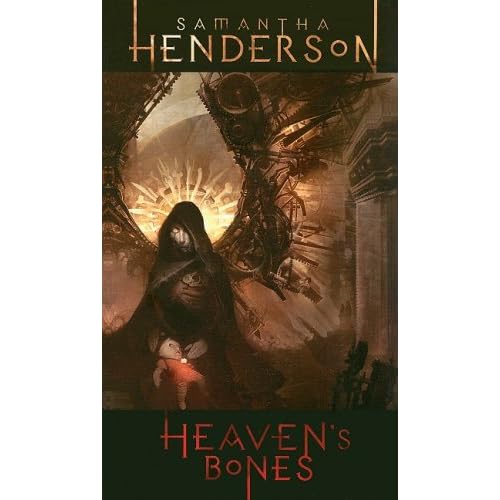 I have mixed feelings when it comes to Heaven's Bones, the latest novel by Samantha Henderson. On one hand, this is a good example of how a game media setting--Ravenloft--is appropriated for the horror/fantasy genre in general. This isn't a D&D novel but rather distills the best aspects of its horror line and transforms it into something that goes beyond its niche. What we end up is a horror/suspense story in the vein of Dracula or Frankenstein rather than I, Strahd or Knight of the Black Rose.
On the other hand, the execution is a mixed bag. Heaven's Bones feels like it still needs some polishing. The novel in my opinion would have benefited from more showing rather than telling, although Henderson does have some good scenes such as clockwork angels or the various medical surgeries. The author also juggles a large cast of characters and while some personalities were fleshed out, a few felt like plot devices, especially with their inclusion late in the book. Lax readers might also find the book a bit confusing because aside from the huge cast, there's some world and time jumping involved. Once one gets past the first half of the book though, everything starts to pick up in pace and action.
Overall this was a ho-hum read. Henderson definitely has her moments but it doesn't occur as often as I'd like. It's certainly a daring attempt on her part trying to balance all the characters in the story, including multiple points of view and varying timelines, but it's simply not as effective compared to other authors who've attempted to do the same thing. Horror fans however shouldn't be discouraged by the Ravenloft inclusion (and in fact the tie isn't really mentioned in the book or the back cover) while Ravenloft fans should be prepared to read something entirely different.
I have mixed feelings when it comes to Heaven's Bones, the latest novel by Samantha Henderson. On one hand, this is a good example of how a game media setting--Ravenloft--is appropriated for the horror/fantasy genre in general. This isn't a D&D novel but rather distills the best aspects of its horror line and transforms it into something that goes beyond its niche. What we end up is a horror/suspense story in the vein of Dracula or Frankenstein rather than I, Strahd or Knight of the Black Rose.On the other hand, the execution is a mixed bag. Heaven's Bones feels like it still needs some polishing. The novel in my opinion would have benefited from more showing rather than telling, although Henderson does have some good scenes such as clockwork angels or the various medical surgeries. The author also juggles a large cast of characters and while some personalities were fleshed out, a few felt like plot devices, especially with their inclusion late in the book. Lax readers might also find the book a bit confusing because aside from the huge cast, there's some world and time jumping involved. Once one gets past the first half of the book though, everything starts to pick up in pace and action.
Overall this was a ho-hum read. Henderson definitely has her moments but it doesn't occur as often as I'd like. It's certainly a daring attempt on her part trying to balance all the characters in the story, including multiple points of view and varying timelines, but it's simply not as effective compared to other authors who've attempted to do the same thing. Horror fans however shouldn't be discouraged by the Ravenloft inclusion (and in fact the tie isn't really mentioned in the book or the back cover) while Ravenloft fans should be prepared to read something entirely different.
Friday, October 31, 2008
October 31, 2008 Links and Plugs
Happy Halloween and good luck to the US election:
- Stevie Chuckles’ Advice to New Writers Part 3.
- Top 10 Steampunk Gadgets.
- Over at the Twin Cities Daily Planet, they interview Coffee House Press.
Podcast Focus: Animalcast
Every Friday, I'll talk about a podcast or two that catches my fancy.
URL: http://animalball.libsyn.com/
RSS Feed: http://animalball.libsyn.com/rss
Description: As far as RPG podcasts go, Animalcast is crass and rude and rough--and that's perfectly fine with me. The Animalball brothers utilize offensive humor and while that's not everyone's cup of tea, they're gamers at heart and not above insulting themselves for the sake of listeners. This is pretty much the equivalent of a mild Howard Stern for the RPG podcasting industry and if you can get into that tone and humor, you might want to check this podcast out.
URL: http://animalball.libsyn.com/
RSS Feed: http://animalball.libsyn.com/rss
Description: As far as RPG podcasts go, Animalcast is crass and rude and rough--and that's perfectly fine with me. The Animalball brothers utilize offensive humor and while that's not everyone's cup of tea, they're gamers at heart and not above insulting themselves for the sake of listeners. This is pretty much the equivalent of a mild Howard Stern for the RPG podcasting industry and if you can get into that tone and humor, you might want to check this podcast out.
Top 10 Best-Sellers as of 2008/10/26
From USA Today's best-seller list (you can find out their basis here):
- Twilight by Stephenie Meyer
- New Moon by Stephenie Meyer
- The Shack by William P. Young
- Eclipse by Stephenie Meyer
- Extreme Measures by Vince Flynn
- Breaking Dawn by Stephenie Meyer
- Brisingr by Christopher Paolini
- The Lucky One by Nicholas Sparks
- The Darkest Evening of the Year by Dean Koontz
- Quicksand by Iris Johansen
Thursday, October 30, 2008
October 30, 2008 Links and Plugs
Running late today but anyway, here's a quickie:

- Stevie Chuckles’ Advice to New Writers Part 2.
- Small Beer Press's pro-Obama Sale Q&A.
- Richard Dansky asks Christopher Golden five questions.
- Ursula K. le Guin talks about fighting for genre for the past few decades.
- This came in the mail but I have no idea with regards to the quality: The Deadbooks.
Secret Histories - a Tim Powers bibliography by John Berlyne
2008/10/30 Tabletop RPG Podcasts
Every Thursday, I post links to various podcasts that deals with tabletop RPGs.
Tabletop RPG (Mostly)
General Discussions/Reviews/Everything Else
- Pulp Gamer episodes: Gateway Roleplay (Out of Character).
- Geek Radio Daily episodes: October 23, 24, 27, 28, 29.
- Animalcast episodes: Episode 64.
- Secret Identity episodes: Issue #137.
- Bear Swarm! episodes: A Very Bear Swarmy Halloween.
- The Podge Cast episodes: Game Store Dreams and Nightmares.
- The Order 66 Podcast episodes: Knights of the Old Errata.
- Fear the Boot episodes: When to upgrade your gaming library.
- This Modern Death episodes: A Distinct Lack of Preparation.
- Wapcaplets episodes: Rackham & Fantasy Flight Part Ways, Metamediocrity, Online Trading Sites.
- Yog-Sothoth episodes: Lurkers & Scarifyers - Halloween 08 Edition.
- Wandering Geek episodes: Dragon Con 08 Recap Vol 1.
- The Game's The Thing episodes: Slipstream, Traveler's Tales, and Coffin Rock.
- Sons of Kryos episodes: Writing with Robin and Vincent (Censored, Non-Censored), Playtesting with Luke and Paul (Censored, Non-Censored), Design with Jared and Luke (Censored, Non-Censored), Theory and Philosophy with Emily and Ron (Censored, Non-Censored).
- Return to Northmoor episodes: Episode 6.
- 3.5 Private Sanctuary episodes: Episode 51.
- Have Games, Will Travel episodes: For a Few Games More #20.
- Midnight's Lair episodes: A Midnights Lair Special.
- Gateway to the Megaverse episodes: Braiiins.
- Fell Calls episodes: For the Second Time.

- Dragons Landing episodes: Episode 94.
- Dpfp episodes: Ship of Ishtar and Prudence.
- Brilliant Gameologist episodes: Horror Tropes (Setting).
- Amorphous Blob Games episodes: So Fresh and So Clean.
- All Games Considered episodes: This is My PODCAST!
- Secret Identity episodes: Issue #137.5.
- Pulp Gamer episodes: Richard Borg.
- The Tome Show episodes: Rouse at GenCon.
- The Star Wars Podcast episodes: Podcast #2 with Sam Witwer.
- Wandering Geek episodes: Jim Pinto.
- The Voice of the Revolution episodes: Beast Hunters review and Imagination Sweatshop interview.
- Master Plan episodes: Interview with Seth Ben-Ezra part 1, on A Flower For Mara.
- Canon Puncture episodes: Sockets and Jerry D. Grayson.
- Atomic Array episodes: The Great City.
- Heroic Cthulhu episodes: Gamer Talk Forty Three, Character building talk followed by very short training mission, Haunting Redoux (1, 2, 3, 4), Horse Redoux (1, 2, 3), El Mundo (1, 2, 3, 4, 5, 6, 7, 8, 9, 10), Come on Baby, Light My Fire (1, 2, 3, 4, 5), B.C.N.U. (1, 2, 3, 4, 5), The Corridors of Power (1, 2, 3, 4), After the Game Chat (1, 2).
- Kore RPG episodes: Strafe's Great Plan.
- The Gamer's Haven episodes: Dungeon Crawl Classics #53 - Sellswords of Punjar (6).
- RPGMP3 episodes: Thunderspire Labyrinth (4).
- The Game Master Show episodes: Ninja Burger (1).
- Fist Full of Comics and Games episodes: 4C System (7).
- Role Playing Public Radio episodes: Esoterrorists, Fear Itself.
Wednesday, October 29, 2008
October 29, 2008 Links and Plugs
Here's some links:
- An interview with the talented Geoff Ryman over at the Nebula Awards Blog by you know who.
- Also at the Nebula Awards Blog is an article by Sheila Finch entitled I Know It When I Read It.
- Lou Anders: Don't Be Good, Be Brilliant.
- Here's an interesting development between Google and writers: Google and Authors Reach Settlement (c/o Mary Robinette Kowal).
- Les Edwards, whose artwork graces the pages of Postscripts magazine, is selling Christmas cards.
- Here's a Dave Eggers video as he talks about contributing to your neighborhood. Ed Champion gives criticism.

Feature: Reading Stories as an Aspiring Writer
Every Wednesday, I'll have an essay or a feature on any topic that catches my fancy!
"Reading" as a word can be deceptive mainly because there are several ways to "read" a story. For example, reading a short story as a reviewer is different from me reading a short story as an editor, as a casual reader, as a critic, or even as a writer. Of course all of those factors aren't isolated and my mind actually melds them into one huge amalgam that only get separated and identified later on when I do my re-readings.
What I'd like to focus on are the reactions I get as a reader-writer. Here are some of my own experiences and you're free to add your own:
"Reading" as a word can be deceptive mainly because there are several ways to "read" a story. For example, reading a short story as a reviewer is different from me reading a short story as an editor, as a casual reader, as a critic, or even as a writer. Of course all of those factors aren't isolated and my mind actually melds them into one huge amalgam that only get separated and identified later on when I do my re-readings.
What I'd like to focus on are the reactions I get as a reader-writer. Here are some of my own experiences and you're free to add your own:
- I Want to Be a Writer: This is perhaps the most difficult reaction to recapture, mainly because it's either happened to you already or it hasn't. These are the stories which spurn you to be a writer. Usually, you read them during your childhood but late-bloomers can also find such a story later in life. They may not necessarily be the greatest stories ever written but there's definitely something about the narrative that called out to you. Hopefully, it's because the story was great. Otherwise...
- I Can Do Better: There are, honestly, some stories which elicits such a reaction because they're so bad or so flawed (or perhaps even hubris on your part). Sometimes, it is this type of story that actually spurns you to be a writer (see above) or simply agitates you enough to start writing. Check out this video from Stephen King.
- This is Amazing but I'll Never Write Like This: As a writer, there will be some realities you'll face. You'll eventually come across a story that'll blow your mind away and you realize you'll never write this kind of text. There are usually one of two reasons for this: either you don't have the skill to pull it off or your style is simply too different. When it comes to the former, there are three possible reactions. Those who simply aspire to write might give up then and there. Second are those who are content with the stories they're actually capable of writing. And the third hope to attain that kind of skill some day: it might not be tomorrow, not even next year or the year after that, but eventually, they'll get there.
- I Can Write Like This: There are some stories that feel like bait dangled in front of you. It's a terrific story--perhaps even one of your all-time favorites--and it's a story that's attainable on your end, provided you work at it. If the story in the previous item takes leaps and bounds of experience before you can write one, this one simply requires you to overcome an immediate hurdle. Again, there are several reasons for this. It could be that the writer has a similar style to yours. It could also be a story that opens your eyes to new possibilities, new paradigms, new techniques that you haven't thought of before.
Tuesday, October 28, 2008
October 28, 2008 Links and Plugs
This is going to be a busy week for me so you guys and gals enjoy:
- Topless Robot headline: Slave Leia Pillow Fight. (Yes, it's a slow news day here at Bibliophile Stalker.)
- Over at Tor, Stevie Chuckles’ Advice to New Writers.
- The New Yorker has an article on Late Bloomers.
- If you run into the people that stole George R. R. Martin's sword, whack them with it.
- In Telegraph, there's an article on Richard Dawkins plan to write a children's book because he doesn't like anti-scientific fairy tales.

Interview: Jay Lake
Every Tuesday, I'll have an interview posted.
 Jay Lake is a the 2004 winner of the John W. Campbell Award for Best New Writer and has been nominated multiple times for the Hugo and World Fantasy Awards. He is the author of several short stories and novels which include Escapement and the upcoming Madness of Flowers.
Thanks for agreeing to do the interview!
You are most welcome. It's always a pleasure to do these things. Besides, I'm a writer. I don't easily get tired of talking about myself.
First off, how has your childhood shaped your present writing? What were the books that you read at the time?
My childhood has immensely shaped my writing. I was born in Taiwan (1964), and mostly raised in Taiwan (1971-1976) and Nigeria (1977-1981). I had many experiences which most Americans never encounter. Growing up outside my own culture, living as a minority -- albeit privileged as a white American expat, seeing so much of the physical and human variety of the world. These developed my sense of place and my sense of wonder long before fiction honed those for me as either a reader or a writer.
Because it was the 1970s, before widely available VCRs or satellite television, I also grew up without that medium. Very unusual for an American of my generation. We had books, lots of them, all the time. I read Andre Norton's Forerunner and Witchworld series. I read the classic Heinlein juveniles. I read Lord of the Rings and Dhalgren, though I didn't understand Delany in the slightest back in sixth grade. I'm honestly not sure I understand him now, either, but at least I'm theoretically more experienced.
At what point did you consider pursuing writing "seriously"? What were your writing goals back then?
My first step in that direction was around my junior or senior year in college, perhaps 1995. I read Gene Wolfe's Book of the New Sun, having kiped it off a housemate's shelf. That was a profound revelation for me. I was amazed anyone was *allowed* to do that in fiction. I didn't really get in gear until I joined my first workshop in 1990, and it took me 11 years of steady work to get published. That whole decade, my writing goals were "sell something." Just one story, and I would die a happy man.
What are your writing goals now?
Be better. I have sufficient hubris to want to write a Great Book someday. That won't happen unless I get a hell of a lot better, and somewhat lucky to boot. Luck I can only partially control, but I can run hard right at better.
Currently, what's the biggest challenge in achieving your present goals?
Not being better yet. Seriously, writing is one of the few occupations I'm aware of where the more you know, the less adequate you feel. Back in 1995 I was an unsung genius. All you had to do was ask me, I'd have explained it to you in detail. These days I feel barely competent. I *know* better, I'm very proud of my successes, but at the same time, I am ever more aware of the gaps in my skill and capability.
Congrats in winning your recent bout with cancer. Do you foresee yourself writing a story on the subject in the future?
Probably every story I ever write. Directly? I don't know. Seems hard to imagine I won't, but I tend to shy away from message-based writing and didacticism. Right now, a cancer story would feel very message-driven to me. Watch this space for more details.
How influential was winning the Writers of the Future award or the John W. Campbell award to your career?
Fantastically so. My Writers of the Future win was my Campbell qualifying sale. I won't go so far as to say that without WotF I wouldn't have won the Campbell, but it's a fair speculation. That one-two punch in 2003-2004 helped raise my profile in the field, which in turn helped drive my ability to sell novels. Name recognition is not required in a new author, more or less by definition, but it sure as hell helps. The Campbell also raised my profile in Fandom, specifically, which has helped me make a bigger impression on the Con circuit. That's another optional behavior which can be both entertaining and beneficial if one has the desire and the right crowd skills to pursue it.
Let's talk about your writing. I loved Trial of Flowers from Night Shade Books. When you wrote it, did you already have a planned sequel in mind or was Madness of Flowers developed later on?
Trial was written as a standalone. Madness was developed later on, at the publisher's request. I have a third book in mind, Reign of Flowers, but I probably won't write it unless Madness of Flowers does very well indeed. I love the world and the characters, but it would be difficult to switch publishers for an existing series, and right now Night Shade has no plans to extend past the second book.
What was the inspiration for that particular series?
A long time ago, I read about a, Italian Renaissance court custom of raising children in boxes to create court dwarfs. Even now, I have no idea if this was true more than once, or even once, but it had always struck me as incredibly strange. Combine that with my love for the New Weird city fiction of the past ten years--City of Saints and Madmen, Perdido Street Station, The Etched City and so forth--and I wanted to play in that sandbox.
Plus I wanted to write about gods living in the sewers.
How about the inspiration behind Mainspring and Escapement? What were the challenges in writing these novels?
Heh. The original inspiration for Mainspring was a writing exercise which was assigned to me at an Oregon Coast Professional Writers Workshop retreat. I pretty much pulled the outline out of the air, though I have a longtime fascination with clockwork, orreries and automata. Working on the first novel involved doing a lot of reading on the history of timekeeping, the development of clockmaking, and similar topics. Fascinating stuff. I also had to do a bunch of moderately heavy lifting in the theology and philosophy sections of my personal library. By the time I got to Escapement, the world was pretty well established, and I was then working with existing tropes and themes. Different set of challenges there, especially working inside a wider variation of cultures and settings. I've been outlining Tourbillion, the third book in this narrative arc, and it's weirder and more ambitious than the first two, working to draw them together. I expect to write Tourbillion this fall.
Which are you more comfortable with: writing novels or short stories?
I don't think that question really has an answer. They're different crafts. Closely related, but very distinct. Short stories have the self-evident benefit of having a relatively brief effort/reward cycle, as opposed to the years it can take to shepherd a novel through the writing and production process, but since I can be a very patient man, those are really just additional aspects of the distinction between the two forms. I've argued in the past for a more detailed hierarchy of work -- right now we have short story, novelette, novella and novel, at least as measured by award categories -- which would break the spectrum up further.
Let's move on to Jay Lake as editor. What made you decide to pursue editing anthologies?
Because it's a hell of a lot of fun. Deborah Layne of Wheatland Press got me into editing in the first place, when she conceived of the Polyphony anthology series. I was clueless on the initial volume, but I'm a quick study. At this point, I'd probably edit more than I do if someone wanted to pay me to do it. I find the process very rewarding, and it definitely illuminates my own writing for me in sometimes unexpected ways.
As an editor, what do you look for in a story?
Something lateral. I'm a sucker for a strong, unusual voice, but clever plotting, a truly oddball character, or something else entirely can also catch my eye. There's a balance in editing--mostly you don't buy just anything you like, you're working towards certain themes, lengths, etc. So those factors can influence a selection. But if I like a story enough, I'll find a way to pull it in.
What's your editorial "routine" like?
Read. Think. Try to find a reason to reject. Some things go on the "further consideration" pile. Sturgeon's Law says 90% of everything is crap, but mostly I find mediocrity and "almost good enough" in the slush pile a lot more often than I find crap. I can't figure out of this should be encouraging or depressing.
Is there a big shift for you between your writer hat and your editorial hat?
Yes. My editorial hat is all about critical reading, audience reaction, and a certain external view of the manuscript. My writer hat aggressively disregards those considerations in favor of a storytelling flow. I very rarely analyze my own writing while I'm doing it, and not so often after the fact either. I constantly analyze what I'm reading, especially for editorial.
In your opinion, how has the Internet changed publishing?
It's like money, it changes everything. And nothing. My relationship with Tor wouldn't be much different without the Internet, except that letters would take a week or more to be answered, instead of an afternoon of email lag. And I'd be mailing more manuscript boxes around.
On the short fiction side, especially in the independent press, business and editorial processes have been highly adaptive. The most obvious form of this is e-publishing. Strange Horizons, for example. In classical publishing, a lot of cash gets tied up in manufacturing and fulfillment of the story objects in the form of books and magazines. An e-market in theory is committing their entire budget to wordage. We'll disregard infrastructure costs for the purposes of this example, but even factored in, the incremental cost of getting a single story to a single reader is a tiny fraction of the print world.
Basically, the Internet opened a new channel with a very different balance of capital and expense. We're still wrestling as a field with what that channel means in terms of legitimacy and prestige, but things have gone long past the "fad" stage.
To me, you're one of the more visible authors. What are the steps that you take to promote yourself?
It's been organic. Despite rumor, I never had a master plan. I published a few stories, won a few awards, starting dressing funny and acting out in public. The rest is history.
More to the point, I make myself pretty visible both online and in real life. I have a lot of fun doing it, which I think rubs off on people. And I like to share.
I love the fact that you make several podcasts available to the public. What made you decide to do so? Are you yourself a fan of podcast fiction?
Well, I'd be doing more but that whole effort got derailed by my cancer this past spring. I'm not quite back to full capacity, but at some point I'll resume the podcasting. Hopefully soon. Oddly, I don't listen to much of it. I don't use an iPod or other personal music player--don't like earphones, don't like to not hear my environment. But I love the idea of podcast fiction, and really want to support it.
Your writing has evolved over the years. What would you say is the biggest difference between your writing when you started out compared to the present?
I'm getting better. I hope. Seriously, I bring a lot more self-awareness to my fiction now than I used to. Not in the drafting process, which is still much like taking soundings from the deep, but in the revision process. I think that's where a lot of my growth comes from. It results in more nuanced, subtle work, and deeper characterization.
At least that's what I tell myself. That's my story and I'm sticking to it.
The iconic Jay Lake is Jay Lake with a Hawaiian shirt. Why the Hawaiian shirt? How many shirts do you have in the closet?
I figured out a long time ago that there were hundreds of long haired fat guys in black t-shirts at any given convention. I decided being a long haired fat guy in a loud shirt would be more fun. A lot more fun. Plus they're comfortable. And I have about 40 in my closet.
Since some RPG fans read this blog, what has been your experience with RPGs?
RPGs were a huge part of my formative experiences as a teen. I went to boarding schools from 9th grade on, and as a sophomore discovered blue box D&D. I still have my brown books, too, but I bought them for background reading to go with the blue box set. There's not much else to do at boarding school except drink, which I've never been heavily into, so old school tabletop RPGs with graph paper, pencils and dice were my life through high school and college. I think I learned a lot about story telling, audiences, plot and character from that. Of course, I had to then spend some years unlearning the whole "my D&D campaign would make a *great* novel" thing. But yes, hugely important.
By the late 1980s I'd left regular gaming, and I've never gone deep again. These days it would subtract from my writing time, which really doesn't feel like a rational option for me personally.
What advice do you have for aspiring authors?
Write more. Turn off the tv, put down the online gaming, read some more books and write more. We only have so much time, so much plot energy in our heads. I turned off my tv in 1994, and my last computer game in 2000, because I wanted to be a Producer as well as a Consumer. However you get to it, write, and write more.
You'd be amazed how hard this advice can be to follow.
Advice for aspiring editors?
Read more. And find someone else to finance and publish the work. Editing is fun, but I find publishing to be deeply mind-numbing.
Anything else you want to plug?
Read my books! I have Madness of Flowers coming out late this year, Death of a Starship next year, and Green next year. Heck, read everybody's books. Ghu knows more sales never hurt anyone.
 Jay Lake is a the 2004 winner of the John W. Campbell Award for Best New Writer and has been nominated multiple times for the Hugo and World Fantasy Awards. He is the author of several short stories and novels which include Escapement and the upcoming Madness of Flowers.
Thanks for agreeing to do the interview!
You are most welcome. It's always a pleasure to do these things. Besides, I'm a writer. I don't easily get tired of talking about myself.
First off, how has your childhood shaped your present writing? What were the books that you read at the time?
My childhood has immensely shaped my writing. I was born in Taiwan (1964), and mostly raised in Taiwan (1971-1976) and Nigeria (1977-1981). I had many experiences which most Americans never encounter. Growing up outside my own culture, living as a minority -- albeit privileged as a white American expat, seeing so much of the physical and human variety of the world. These developed my sense of place and my sense of wonder long before fiction honed those for me as either a reader or a writer.
Because it was the 1970s, before widely available VCRs or satellite television, I also grew up without that medium. Very unusual for an American of my generation. We had books, lots of them, all the time. I read Andre Norton's Forerunner and Witchworld series. I read the classic Heinlein juveniles. I read Lord of the Rings and Dhalgren, though I didn't understand Delany in the slightest back in sixth grade. I'm honestly not sure I understand him now, either, but at least I'm theoretically more experienced.
At what point did you consider pursuing writing "seriously"? What were your writing goals back then?
My first step in that direction was around my junior or senior year in college, perhaps 1995. I read Gene Wolfe's Book of the New Sun, having kiped it off a housemate's shelf. That was a profound revelation for me. I was amazed anyone was *allowed* to do that in fiction. I didn't really get in gear until I joined my first workshop in 1990, and it took me 11 years of steady work to get published. That whole decade, my writing goals were "sell something." Just one story, and I would die a happy man.
What are your writing goals now?
Be better. I have sufficient hubris to want to write a Great Book someday. That won't happen unless I get a hell of a lot better, and somewhat lucky to boot. Luck I can only partially control, but I can run hard right at better.
Currently, what's the biggest challenge in achieving your present goals?
Not being better yet. Seriously, writing is one of the few occupations I'm aware of where the more you know, the less adequate you feel. Back in 1995 I was an unsung genius. All you had to do was ask me, I'd have explained it to you in detail. These days I feel barely competent. I *know* better, I'm very proud of my successes, but at the same time, I am ever more aware of the gaps in my skill and capability.
Congrats in winning your recent bout with cancer. Do you foresee yourself writing a story on the subject in the future?
Probably every story I ever write. Directly? I don't know. Seems hard to imagine I won't, but I tend to shy away from message-based writing and didacticism. Right now, a cancer story would feel very message-driven to me. Watch this space for more details.
How influential was winning the Writers of the Future award or the John W. Campbell award to your career?
Fantastically so. My Writers of the Future win was my Campbell qualifying sale. I won't go so far as to say that without WotF I wouldn't have won the Campbell, but it's a fair speculation. That one-two punch in 2003-2004 helped raise my profile in the field, which in turn helped drive my ability to sell novels. Name recognition is not required in a new author, more or less by definition, but it sure as hell helps. The Campbell also raised my profile in Fandom, specifically, which has helped me make a bigger impression on the Con circuit. That's another optional behavior which can be both entertaining and beneficial if one has the desire and the right crowd skills to pursue it.
Let's talk about your writing. I loved Trial of Flowers from Night Shade Books. When you wrote it, did you already have a planned sequel in mind or was Madness of Flowers developed later on?
Trial was written as a standalone. Madness was developed later on, at the publisher's request. I have a third book in mind, Reign of Flowers, but I probably won't write it unless Madness of Flowers does very well indeed. I love the world and the characters, but it would be difficult to switch publishers for an existing series, and right now Night Shade has no plans to extend past the second book.
What was the inspiration for that particular series?
A long time ago, I read about a, Italian Renaissance court custom of raising children in boxes to create court dwarfs. Even now, I have no idea if this was true more than once, or even once, but it had always struck me as incredibly strange. Combine that with my love for the New Weird city fiction of the past ten years--City of Saints and Madmen, Perdido Street Station, The Etched City and so forth--and I wanted to play in that sandbox.
Plus I wanted to write about gods living in the sewers.
How about the inspiration behind Mainspring and Escapement? What were the challenges in writing these novels?
Heh. The original inspiration for Mainspring was a writing exercise which was assigned to me at an Oregon Coast Professional Writers Workshop retreat. I pretty much pulled the outline out of the air, though I have a longtime fascination with clockwork, orreries and automata. Working on the first novel involved doing a lot of reading on the history of timekeeping, the development of clockmaking, and similar topics. Fascinating stuff. I also had to do a bunch of moderately heavy lifting in the theology and philosophy sections of my personal library. By the time I got to Escapement, the world was pretty well established, and I was then working with existing tropes and themes. Different set of challenges there, especially working inside a wider variation of cultures and settings. I've been outlining Tourbillion, the third book in this narrative arc, and it's weirder and more ambitious than the first two, working to draw them together. I expect to write Tourbillion this fall.
Which are you more comfortable with: writing novels or short stories?
I don't think that question really has an answer. They're different crafts. Closely related, but very distinct. Short stories have the self-evident benefit of having a relatively brief effort/reward cycle, as opposed to the years it can take to shepherd a novel through the writing and production process, but since I can be a very patient man, those are really just additional aspects of the distinction between the two forms. I've argued in the past for a more detailed hierarchy of work -- right now we have short story, novelette, novella and novel, at least as measured by award categories -- which would break the spectrum up further.
Let's move on to Jay Lake as editor. What made you decide to pursue editing anthologies?
Because it's a hell of a lot of fun. Deborah Layne of Wheatland Press got me into editing in the first place, when she conceived of the Polyphony anthology series. I was clueless on the initial volume, but I'm a quick study. At this point, I'd probably edit more than I do if someone wanted to pay me to do it. I find the process very rewarding, and it definitely illuminates my own writing for me in sometimes unexpected ways.
As an editor, what do you look for in a story?
Something lateral. I'm a sucker for a strong, unusual voice, but clever plotting, a truly oddball character, or something else entirely can also catch my eye. There's a balance in editing--mostly you don't buy just anything you like, you're working towards certain themes, lengths, etc. So those factors can influence a selection. But if I like a story enough, I'll find a way to pull it in.
What's your editorial "routine" like?
Read. Think. Try to find a reason to reject. Some things go on the "further consideration" pile. Sturgeon's Law says 90% of everything is crap, but mostly I find mediocrity and "almost good enough" in the slush pile a lot more often than I find crap. I can't figure out of this should be encouraging or depressing.
Is there a big shift for you between your writer hat and your editorial hat?
Yes. My editorial hat is all about critical reading, audience reaction, and a certain external view of the manuscript. My writer hat aggressively disregards those considerations in favor of a storytelling flow. I very rarely analyze my own writing while I'm doing it, and not so often after the fact either. I constantly analyze what I'm reading, especially for editorial.
In your opinion, how has the Internet changed publishing?
It's like money, it changes everything. And nothing. My relationship with Tor wouldn't be much different without the Internet, except that letters would take a week or more to be answered, instead of an afternoon of email lag. And I'd be mailing more manuscript boxes around.
On the short fiction side, especially in the independent press, business and editorial processes have been highly adaptive. The most obvious form of this is e-publishing. Strange Horizons, for example. In classical publishing, a lot of cash gets tied up in manufacturing and fulfillment of the story objects in the form of books and magazines. An e-market in theory is committing their entire budget to wordage. We'll disregard infrastructure costs for the purposes of this example, but even factored in, the incremental cost of getting a single story to a single reader is a tiny fraction of the print world.
Basically, the Internet opened a new channel with a very different balance of capital and expense. We're still wrestling as a field with what that channel means in terms of legitimacy and prestige, but things have gone long past the "fad" stage.
To me, you're one of the more visible authors. What are the steps that you take to promote yourself?
It's been organic. Despite rumor, I never had a master plan. I published a few stories, won a few awards, starting dressing funny and acting out in public. The rest is history.
More to the point, I make myself pretty visible both online and in real life. I have a lot of fun doing it, which I think rubs off on people. And I like to share.
I love the fact that you make several podcasts available to the public. What made you decide to do so? Are you yourself a fan of podcast fiction?
Well, I'd be doing more but that whole effort got derailed by my cancer this past spring. I'm not quite back to full capacity, but at some point I'll resume the podcasting. Hopefully soon. Oddly, I don't listen to much of it. I don't use an iPod or other personal music player--don't like earphones, don't like to not hear my environment. But I love the idea of podcast fiction, and really want to support it.
Your writing has evolved over the years. What would you say is the biggest difference between your writing when you started out compared to the present?
I'm getting better. I hope. Seriously, I bring a lot more self-awareness to my fiction now than I used to. Not in the drafting process, which is still much like taking soundings from the deep, but in the revision process. I think that's where a lot of my growth comes from. It results in more nuanced, subtle work, and deeper characterization.
At least that's what I tell myself. That's my story and I'm sticking to it.
The iconic Jay Lake is Jay Lake with a Hawaiian shirt. Why the Hawaiian shirt? How many shirts do you have in the closet?
I figured out a long time ago that there were hundreds of long haired fat guys in black t-shirts at any given convention. I decided being a long haired fat guy in a loud shirt would be more fun. A lot more fun. Plus they're comfortable. And I have about 40 in my closet.
Since some RPG fans read this blog, what has been your experience with RPGs?
RPGs were a huge part of my formative experiences as a teen. I went to boarding schools from 9th grade on, and as a sophomore discovered blue box D&D. I still have my brown books, too, but I bought them for background reading to go with the blue box set. There's not much else to do at boarding school except drink, which I've never been heavily into, so old school tabletop RPGs with graph paper, pencils and dice were my life through high school and college. I think I learned a lot about story telling, audiences, plot and character from that. Of course, I had to then spend some years unlearning the whole "my D&D campaign would make a *great* novel" thing. But yes, hugely important.
By the late 1980s I'd left regular gaming, and I've never gone deep again. These days it would subtract from my writing time, which really doesn't feel like a rational option for me personally.
What advice do you have for aspiring authors?
Write more. Turn off the tv, put down the online gaming, read some more books and write more. We only have so much time, so much plot energy in our heads. I turned off my tv in 1994, and my last computer game in 2000, because I wanted to be a Producer as well as a Consumer. However you get to it, write, and write more.
You'd be amazed how hard this advice can be to follow.
Advice for aspiring editors?
Read more. And find someone else to finance and publish the work. Editing is fun, but I find publishing to be deeply mind-numbing.
Anything else you want to plug?
Read my books! I have Madness of Flowers coming out late this year, Death of a Starship next year, and Green next year. Heck, read everybody's books. Ghu knows more sales never hurt anyone.
Subscribe to:
Posts (Atom)