Wednesday, September 24, 2008
Plug:: Judith Berman Interview at The Nebula Awards
I got to interview Judith Berman over at the Nebula Awards site!


Essay: The Term Speculative Fiction in Philippine Literature
Every Wednesday, I have an essay on any topic that catches my fancy!
These past few days, I’ve been deliberating about the term speculative fiction (or spec fic for short) and its role in Philippine literature. It's a term that's gained momentum in local publishing circles and that can probably be attributed to Dean Francis Alfar. Obviously, he didn't invent the term but borrowed it from its international context. However, it was he who started using spec fic to describe his writing and others followed suit. In the introduction of Cristina Pantoja Hidalgo's 2008 anthology Tales of Fantasy and Enchantment, she mentions that Dean and his wife Nikki are "the Oberon and Tatania [sic] of Philippine speculative fiction."
Personally, I'm more familiar with spec fic's component parts. I consider myself an unabashed fantasy fan for example. We also have writers like Emil Flores who align themselves more with science fiction than speculative fiction. A question by critics is why utilize the label speculative fiction when we already have genre classifications like fantasy, science fiction, and horror.It's a legitimate complaint and one that spec fic writers should ponder. One reason is because spec fic encapsulates a wider scope, everything from fantasy to science fiction to horror and everything else in between, from the New Weird to Interstitial to Magic-Realism. Compared to its component labels, spec fic is more inclusive. We're not going to say "your story lacks credible science so it's not science fiction but fantasy." When in doubt, one can err on the side of spec fic.
The second reason is that words have connotations. When you mention fantasy for example, the image one conceives is polarized: either you imagine J. R. R. Tolkien's Middle-Earth mythos or one of the actors in the recent wave of Teleseryes on TV. Spec fic in my opinion doesn't have any strong associations with it so far, which has certain advantages and disadvantages.
For one thing, it's certainly gained credibility as it's being discussed and accepted in literary circles. Compare spec fic to existing genres such as romances and horror which are proving to be best-sellers but seldom discussed on a critical level unless it's part of someone's thesis or pet theory. Philippine romance in my opinion is patronized more than it is respected and is relegated to the realm of pop. Arguably the same can be said for horror and chick lit. Spec fic in my opinion has somehow managed to wrangle itself somewhere in between, gaining literary attention but not wholly accepted, acquired a cult following but not enough to elevate it to actual best-seller status. Would spec fic cease to be as popular as it is now if it were known by another term such as SF&F (science fiction and fantasy)? I don't know, the moment has already passed (although there have certainly been attempts to simply use "Fantasy" as a label, from Anvil Publishing's Anvil Fantasy imprint to Milflores's latest book, Tales of Fantasy and Enchantment). But certainly the choice of words has played an integral part with regards to its current acceptance.
Another problem is that because spec fic is such a foreign term, it usually needs to be explained. Just listen to any interviews or read any articles on local spec fic. One of the opening lines is to define and clarify what it means. Compare that to mentioning fantasy, science fiction, or horror, wherein listeners and readers stop asking for an explanation as they have inklings of those genre (even if those preconceptions might be erroneous).
Similarly, we have no real icon when it comes to Philippine spec fic. When we talk about komiks, we have Darna or Panday. When we talk about "the Filipino novel", we have Jose Rizal's Noli me Tangere. When we speak about Filipino literature in English, we have N. V. M. Gonzales's and his various short stories such as "Bread of Salt." How about speculative fiction? Admittedly, we have a writer in mind--Alfar--but which body of work best represents this label?
Of course this vagueness might not be so bad. Fantasy's poster child is J. R. R. Tolkien but the popularity of Lord of the Rings also ghettoed everything else that came after it. Instead of being classified as Fiction, novels and books that contained similar themes and tropes were shelved under fantasy.
Do we really need an icon for Philippine spec fic? And if so, what form should it take? Admittedly most people are drawn more to the idea of a novel. When one speaks of becoming a writer for example, they typically imagine writing the great novel rather than stories that are a few thousand words long. But that needn't be the case. H. P. Lovecraft and Shirley Jackson for example have made big impacts in horror via their short stories. Can local spec fic not rest on short stories, considering our output ratio of short stories compared to novels?
Alfar's novel, Salamanca, has certainly gained local prestige, winning both the Palancas and the Gintong Aklat awards. It's tempting to use it as our icon but personally, I find Salamanca to better embody Filipino magic-realism rather than speculative fiction in general. If it were left up to me, I'd pick his story L'Aquilone du Estrellas (The Kite of Stars) as our local icon because it crams a lot of strong elements rather than having one dominant agenda.
Of course those aren't our only choices. While the term spec fic is something that's only used recently, there are many works and authors preceding Alfar which can retroactively be classified as speculative fiction. Greg Brillantes, Alfred Yuson, and Joy Dayrit comes to mind. Many of their stories contain elements of the fantastical, from Yuson's super masculine rebel in Great Philippine Jungle Energy Cafe to the duwendes and surreal moments of Dayrit's stories in her collection The Walk.
Let's also not ignore the movements in Tagalog, whether it's Francisco Baltazar's Florante at Laura (albeit in verse) to Alvin Yapan's Palanca-winning "Apokalipsis". Roberto Anonuevo has an essay on Science Fiction and Philippine Literature (my translation can be found here) which documents attempts at science fiction as early as the 1930s and one might peruse the numerous winners of the Palanca category "Futuristic Fiction". And it's prolificness we're talking about, David Hontiveros certainly meets that criteria, as he seems to have dabbled in everything from Palanca awards to novels to comics.
Personally, what I find lacking in Philippine culture when it comes to spec fic are readers. Rather than take the "not many Filipinos are readers" argument, I'll dare say it's the opposite. According to UNESCO, our country has a literacy rate in the 90s. I'd like to think that our literacy is channeled into other mediums. And as far as spec fic readers in general are concerned, our bookstores are lined with best-selling fantasy/sci-fi authors such as J. K. Rowling, J. R. R. Tolkien, Neil Gaiman, Robert Jordan, Frank Herbert, etc. Many Filipinos do purchase such books but again, there's a disproportionate amount of fans of Western spec fic compared to fans of local spec fic. Whether this is a lack of awareness, lack of supply (the print-run of most books are a few thousand at most and there's a lot of good fiction that have won awards and the like but still haven't been published or distributed competently), or simply lack of interest, I can't really say.
What energizes me however is the fact that there's this new movement in Philippine fiction, especially considering the strong emphasis on realist agendas (i.e. social relevance). Some might dispute with me on that particular matter as they feel that Philippine fiction is riddled with fiction written in the realist mode but I beg to disagree. If you've read this essay, I've more than shown that there are a lot of works, both canon and pop, that are speculative in nature. No, the biggest difference between speculative fiction and realist fiction in the Philippines isn't so much the method in which we tell our stories but rather in our agendas and how we interpret texts.
When we talk about realist fiction in the Philippines, we're really talking about fiction whose agendas tend to be political commentaries or can be interpreted as being socially relevant. Our model, it seems, is Jose Rizal's Noli me Tangere and El Filibusterismo which were reflective of the political and social climate of its era. More than a hundred years has passed and we haven't really strayed much from that particular formula. Past Filipino authors have either incorporated said agendas into their writing or risk being classified as mere pop (with a few exceptions).
For example, in the 2003 Palanca Awards, Yvette Uy Tan's story "Sidhi" won third prize in the Futuristic Fiction category. While it has speculative fiction elements (a girl who miraculously cures a polluted river), one of the elements that stand out is its inclusion of the Pasig River and the author's attempt to address this social injustice (the plight of the poor, the pollution of one of the country's icons, the role of religion, etc.). The same story was reprinted in Alfar's Philippine Speculative Fiction Vol. 2 but one need not appreciate it solely for its social context. When I first read it, what resonated is Tan's craft of writing as well as the trials of a girl who didn't fit in. Political relevance is not a priority as far as my checklist goes and I appreciated the other virtues of the text. Could "Sidhi" not be interpreted as simply a unique coming-of-age story rather than one that reflects the many political causes of the nation?
Similarly, when it comes to Kristin Mandigma's story "Excerpt from a Social-Realist Aswang" which was published by Clarkesworld Magazine, someone asked me on my blog "Can you tell me which elements of Kristin's story aside from the "aswangs" and "tikbalangs" can qualify as having Filipino qualities? Divorce the mythology from it, what still makes it Filipino?" Her answer was this: "The brilliant thing about Kristin's story is that it is well-informed about the current intricacies of the Philippine political situation, particularly the infighting that's happening the factions of the Socialist/Communist movement like the CPP/NPA. In fact, she's satirizing all those political exiles! Also, if you've noticed how militant groups constantly use overblown rhetoric during their television interviews, you'll also get the Kristin's language satirizes that kind of jargon-mongering as well. It offers different facets to different people."
Not that there's anything wrong with that interpretation, and it's certainly a deep reading of the text, but it's that kind of paradigm that marks many of the fiction that have won awards or considered Literary. Can we not appreciate a story on the surface level, for its ability to evoke one emotion (laughter, fear, sadness, or simply entertainment)? And woe to Filipino writers that every story they write must reflect the Philippine political situation in order to be considered truly Filipino. As if including Philippine myths, or that the author brought their own unique Filipino experiences into the story, isn't enough to mark the text they write as genuinely Filipino. One might as well claim that in order to appreciate Gulliver's Travels, one must be well-versed in English history and politics.
Philippine speculative fiction, on the other hand, recognizes that fiction doesn't always have to be socially relevant. Can't we write stories simply to entertain? That's not to say local spec fic isn't socially relevant or doesn't possess gravity. More than a few modern spec fic stories tackle that (spec fic is inclusive, remember?). But the biggest differences is that writers are now able to write and pursue their own agendas without feeling guilt about the lack of Filipino characters or Filipino settings or importance on how their work will change the face of Philippine literature while still being able to gain a certain amount of literary acceptance.
For example, a story I enjoyed from the 1st Philippine Graphic/Fiction Awards was Philbert Ortiz Dy's "The Great Philippine Space Mission". It's a parody and a very funny story with its premise of a gossip-powered spaceship saving the world. Is it political? Only in the loosest sense that one of the main characters is the daughter of a political martyr. Is the story reflective of the plight of the poor? No, but it is an interesting commentary on how Filipinos love showbiz.
Another example are the stories that are being published in The Digest of Philippine Genre Stories. Dominique Cimafranca's "Twilight of the Magi" and Vin Simbulan's "The Last Stand of Aurundar" are high fantasy, unabashed sword & sorcery stories that feature far-flung worlds and not a Filipino in sight. Yet these are, arguably, examples of Philippine speculative fiction. It might not be the type of stories that the literati or the critics might want to be published yet a) it's written by Filipinos, b) published by Filipinos, c) read by Filipinos, and d) appreciated by Filipinos. I'm sure there is still pressure among local writers to write something that is socially conscious but spec fic is breaking ground in the sense that its writers are starting to write what they want instead of writing what their professors, teachers, and mentors want.
Now I'm not advocating responsibility-free writing but rather a widening of our borders. As I said before, Philippine spec fic can be socially relevant, in the same way that George Orwell wrote one of the most powerful political books via science fiction (1984) and fantasy (Animal Farm). But dominance of a certain style or agenda can lead to stagnation and spec fic simply enables us to explore other areas.
Tuesday, September 23, 2008
The 3rd Philippine Graphic Fiction Awards Extended
From Fully Booked: (at the time of this posting, someone was lazy when it came to formatting so for everyone's sakes, here are the rules with the appropriate spacing; also note the disappearance of guideline #11)
The 3rd Philippine Graphic Fiction Awards is officially extended and the new deadline for submission of entries is NOVEMBER 3, 2008.
CONTEST GUIDELINES:
1. Submissions must be given or delivered before or on November 3, 2008, with a duly accomplished application form and resume, to be sealed inside a brown envelope with the heading, "3rd Philippine Graphic/Fiction Awards." All submissions should be given or delivered to: Fully Booked Customer Service Fully Booked Bldg 6, 902 Bonifacio High Street Bonifacio Global City 1634 Taguig City Only 1 submission per envelope (for those submitting to all three categories). Application forms may be downloaded below.
2. The contest is open to all Filipino citizens, even those who may be in a foreign country at the time, so long as they are still legal citizens, except current officers and employees of Fully Booked and the contest's sponsors.
3. All submissions must be in English except for the short film category, which may be in English or Filipino with English subtitles.
4. There are three categories: comics, prose fiction and short film. Contestants may join in all categories, and collaborations are allowed; however, each contestant may only submit and/or be involved with only one (1) submission per category.
5. Submissions must not have been awarded by another body or published in a national publication. Submissions to the short film category must not have been exhibited commercially, locally or internationally.
6. All submissions must be original. No adaptations of produced / published / copyrighted material are allowed. All intellectual property rights of submissions must belong to the author/s and director/s. Fully Booked and its sponsors shall be exempt from any and all liability in the event that the submission is said to infringe upon the intellectual property rights of another existing work. All rights revert to respective authors and directors, but FULLY BOOKED maintains/reserves the right to publish submissions without permission / approval / compensation.
7. a. PROSE - Submissions must fall under the genres of science fiction, fantasy and/or horror. Stories may not exceed seven thousand (7,000) words. Submissions must include four (4) hard copies, typewritten or computerized (preferably computerized). Submissions should be double-spaced on letter-size bond paper (8 1/2 X 11 inches), with approximately one-inch margin on all sides. Fonts should be Arial or Times New Roman and the font size should be 12. The author/s' name and address must not appear on the submission or any of its pages. Every page must contain the title of the work and must be numbered consecutively (e.g. 1 of 20, 5 of 15 and so on). The submission must include one (1) soft copy on a CD-ROM (files should be in .rtf [Rich Text Format]).
b. COMICS - For Comics, the theme is open (non-fiction is allowed). Twelve (12) pages is the maximum length. All submissions should be in black and white. Contestants may use any media they wish. No signatures/names must appear on any of the pages. Submissions must include four (4) hard copies (letter-size bond paper [8 1/2 X 11 inches]) and one (1) soft copy on CD-ROM (files should be in .jpg format, with art scanned at a minimum of 300 dpi); no original art must be submitted.
c. SHORT FILM - Submissions must fall under the genres of science fiction, fantasy and/or horror. The production of the short film must be in 2008, it should not exceed 20 minutes (including credits) and must be submitted in a digital video format (DVD). This category is open to professionals, however, no corporate financing is allowed.
8. Fully Booked has no obligation to return submissions.
9. In case submissions from overseas win, an authenticated copy of the Authorization Form by the Philippine Embassy or Consulate will be required.
10. The Board of Judges shall have the discretion, not to award any prize if, in its judgment, no worthy submission has been entered.
12. Fully Booked has the sole right to designate the persons who shall constitute the Board of Judges in each of the contest categories. The decision of the majority of the Board of Judges in all categories shall be final.
13. All rules and guidelines of the contest must be followed STRICTLY. Non-compliance will subject the submission to immediate disqualification. For any questions or clarifications, please email us at philgraphicfiction@fullybookedonline.com
The 3rd Philippine Graphic Fiction Awards is officially extended and the new deadline for submission of entries is NOVEMBER 3, 2008.
CONTEST GUIDELINES:
1. Submissions must be given or delivered before or on November 3, 2008, with a duly accomplished application form and resume, to be sealed inside a brown envelope with the heading, "3rd Philippine Graphic/Fiction Awards." All submissions should be given or delivered to: Fully Booked Customer Service Fully Booked Bldg 6, 902 Bonifacio High Street Bonifacio Global City 1634 Taguig City Only 1 submission per envelope (for those submitting to all three categories). Application forms may be downloaded below.
2. The contest is open to all Filipino citizens, even those who may be in a foreign country at the time, so long as they are still legal citizens, except current officers and employees of Fully Booked and the contest's sponsors.
3. All submissions must be in English except for the short film category, which may be in English or Filipino with English subtitles.
4. There are three categories: comics, prose fiction and short film. Contestants may join in all categories, and collaborations are allowed; however, each contestant may only submit and/or be involved with only one (1) submission per category.
5. Submissions must not have been awarded by another body or published in a national publication. Submissions to the short film category must not have been exhibited commercially, locally or internationally.
6. All submissions must be original. No adaptations of produced / published / copyrighted material are allowed. All intellectual property rights of submissions must belong to the author/s and director/s. Fully Booked and its sponsors shall be exempt from any and all liability in the event that the submission is said to infringe upon the intellectual property rights of another existing work. All rights revert to respective authors and directors, but FULLY BOOKED maintains/reserves the right to publish submissions without permission / approval / compensation.
7. a. PROSE - Submissions must fall under the genres of science fiction, fantasy and/or horror. Stories may not exceed seven thousand (7,000) words. Submissions must include four (4) hard copies, typewritten or computerized (preferably computerized). Submissions should be double-spaced on letter-size bond paper (8 1/2 X 11 inches), with approximately one-inch margin on all sides. Fonts should be Arial or Times New Roman and the font size should be 12. The author/s' name and address must not appear on the submission or any of its pages. Every page must contain the title of the work and must be numbered consecutively (e.g. 1 of 20, 5 of 15 and so on). The submission must include one (1) soft copy on a CD-ROM (files should be in .rtf [Rich Text Format]).
b. COMICS - For Comics, the theme is open (non-fiction is allowed). Twelve (12) pages is the maximum length. All submissions should be in black and white. Contestants may use any media they wish. No signatures/names must appear on any of the pages. Submissions must include four (4) hard copies (letter-size bond paper [8 1/2 X 11 inches]) and one (1) soft copy on CD-ROM (files should be in .jpg format, with art scanned at a minimum of 300 dpi); no original art must be submitted.
c. SHORT FILM - Submissions must fall under the genres of science fiction, fantasy and/or horror. The production of the short film must be in 2008, it should not exceed 20 minutes (including credits) and must be submitted in a digital video format (DVD). This category is open to professionals, however, no corporate financing is allowed.
8. Fully Booked has no obligation to return submissions.
9. In case submissions from overseas win, an authenticated copy of the Authorization Form by the Philippine Embassy or Consulate will be required.
10. The Board of Judges shall have the discretion, not to award any prize if, in its judgment, no worthy submission has been entered.
12. Fully Booked has the sole right to designate the persons who shall constitute the Board of Judges in each of the contest categories. The decision of the majority of the Board of Judges in all categories shall be final.
13. All rules and guidelines of the contest must be followed STRICTLY. Non-compliance will subject the submission to immediate disqualification. For any questions or clarifications, please email us at philgraphicfiction@fullybookedonline.com
Plug: Locally-Published Books
Here's a teaser for an upcoming comic (you can click the image for a large picture):
 Anyway, here are some recently-released books that Filipino readers might enjoy.
 Back in April, I did a book review on R. Kwan Laurel's collection Ongpin Stories. It's only lately that I've been spotting it in bookstore shelves so grab a copy now.
 I haven't gotten around to purchasing a copy but Jose Dalisay's latest novel got shortlisted for the 2007 Man Asian Literary Prize. You can order a copy here.
 A book I saw at the Manila International Book Fair was The Flip Reader. Flip Magazine was one of the best Filipino magazines printed, period. I was fortunate enough to have copies of the magazine at home (somewhere underneath the pile of books) but those who weren't able to catch it the first time gets a second chance with this book as it compiles some of the best articles and essays during the magazine's all-too short-lived print run. I'm still waiting for it to appear on bookstore shelves. You can order here.
 Anyway, here are some recently-released books that Filipino readers might enjoy.Back in April, I did a book review on R. Kwan Laurel's collection Ongpin Stories. It's only lately that I've been spotting it in bookstore shelves so grab a copy now.I haven't gotten around to purchasing a copy but Jose Dalisay's latest novel got shortlisted for the 2007 Man Asian Literary Prize. You can order a copy here.A book I saw at the Manila International Book Fair was The Flip Reader. Flip Magazine was one of the best Filipino magazines printed, period. I was fortunate enough to have copies of the magazine at home (somewhere underneath the pile of books) but those who weren't able to catch it the first time gets a second chance with this book as it compiles some of the best articles and essays during the magazine's all-too short-lived print run. I'm still waiting for it to appear on bookstore shelves. You can order here.
Feature: Interview with Jesse Willis of SFF Audio
Every Tuesday, I'll have a feature article posted.
Jessi Willis is the co-founder and senior editor of SFF Audio.
Thanks for agreeing to do the interview. How did you get into science fiction/fantasy?
I first got interested in Fantasy when I was a very young kid. My father had a book with a dragon on the cover. I asked him to read it to me, and he did. That book was Tolkien's The Hobbit of course. Later on, after my father died, I asked my father's younger brother, my uncle, to read me The Lord Of The Rings. And he did! It turns out these guys, my father and his four brothers were big readers of Science Fiction and Fantasy when they were kids. Still later my uncle gave me a copy of Ringworld - and that's how I really got into SF.
What are some of your favorite books or who are some of your favorite authors?
That's a tough question. I have many favourites. It's almost easier to say what books and authors don't appeal to me. But, if you twist my arm, and ask for some examples of what I think makes good introductory books... In Science Fiction, I always recommend William Gibson's Neuromancer. And both Ringworld and Protector by Larry Niven of course. I'm also very partial to Philip K. Dick's The Man In The High Castle. In Fantasy I still hold The Lord Of The Rings up as the gold standard. On the author front it's a similar story. I enjoy so many authors - here are just few: Robert E. Howard, H.P. Lovecraft, Robert A. Heinlein, Spider Robinson, Clifford D. Simak, and out of the SFF genre I can't get enough of Lawrence Block or Donald E. Westlake.
What made you decide to start up SFF Audio along with Scott Danielson?
Well, back 2001 Scott was writing a column for SFsite.com, maybe a year into his column I had written to him about some suggested listening. We became internet friends and a few months later I think it was Scott who thought it might be cool to have a website all about Science Fiction and Fantasy audio - kind of like his column but writ large.
What are your goals in setting up SFF Audio? What currently are your challenges in meeting those goals? How is the site faring so far?
I'd say that the goals were rather muzzy at first, we knew the basic sort of thing we'd do, write reviews of audiobooks and audio drama and point people towards good listening on the net. As the site evolved we came up with editorial policies, stylistic and graphic regularities. At one point I came up with the idea of posting minimum one story per day, every day. And achieved it for a while. Today, it turns out now that we have sometimes four or five posts per day on average, and yet some days nothing gets posted.
The site averages about 1000 unique visitors per day - which is pretty impressive. One thing we don't track at the moment, and should is our RSS feed usage.
Whenever I interview someone when it comes to websites, I always wonder about the logistical aspects of it. First question with regards to this matter is whether the site pays for itself and if not, if there's an intention to do so in the future?
The site does pay for itself in terms of hosting and bandwidth. But, we don't actually pay anybody. Money comes in on a regular basis through Google ads. With it we've been able to make a few capital expenditures on things like our awesome logo, and a professionally produced podcast promo. It also allows us to make the occasional donation. I'm very proud of the fact that SFFaudio was the first donater to Escape Pod, Psuedopod and Podcastle.
Aside from posting links to SFF Audio, is there anything else you do for the website that's "behind the scenes"? How different or similar is your assigned duties compared to Scott?
I'm basically the siterunner. Scott's more the webmaster and the reviewer whipper. I execute most ideas (and most posts) all on my own, consulting with Scott and the other folks I've cajoled into working on SFFaudio. When there are serious editorial policy changes I always want lots of people to argue with. I'm probably far too radical for my own good. Scott's more conservative, more grounded. When I think I might be about to do something crazy I turn to Scott to check my thinking.
What's your regular schedule like?
First thing I usually sign into the site to moderate the comments. Next I check our technorati ranking. When it goes up I get happy, when it goes down I figure it isn't the end of the world. I also follow any backlinks. Then I check my email, I get lots of email from contributors who don't post their own stuff to the site. They give me post ideas and often I work on them (listenin', writin' and photoshopin') over the course of the whole day. I also have a lot of listening to do - maybe three hours per day. Scott told me how many reviews I'd written since the site started and I was very impressed. On the larger scale I've started a few traditions on the site, sort of annual events. For three years running July 1st (Canada Day) is "Review of Red Panda Day" and November 11th (Remembrance Day) is "SFFaudio Challenge Day." I like traditions. Recently I started up the "Five Free Favourites" post which goes up on Fridays.
What was the first podcast you listened to or how did you get into podcasts?
I got into podcasts because I was scouring the internet looking for them. Part of my routine, back then, and today, is to search the web for good FREE stuff to listen to. I tumbled to the Dragon Page podcast early on, that may well have been the first one I heard.
What is it about podcasts that appeals to you?
I'm an audio guy. I love storytelling, both fiction and non. Podcasts are that. Podcasting is a revolution greater than both radio and television combined because it makes anyone with the bent for it a broadcaster. I love podcasts because they bring the minds, the ideas, and the voices I want to hear right to my ears. Blogging is cool, and certainly more permanent than the ephemeral nature of many podcasts, but, podcasting is intimate and emotionally connective. Blogging can be that way, but often isn't.
What for you constitutes a good podcast?
If a podcast is telling me something I didn't know, allowing me to spend time with the person on the other end (who I rightly or wrongly consider a friend), or connecting with me in some other way - it's a good podcast.
If we are talking fiction about audiobook style podcasts... it has to be well read, good sound levels, sound-effect free, and unabridged.
Have you read a story for a podcast before? Are you planning to do so in the future?
Oh no, I'm a terrible reader. I get asked to be in Audio Dramas on a regular basis, but I'm a totally useless actor. Reading a story would violate my own standards for a good fiction podcast.
Right now, which do you prefer more or find more time devoting to: print books or audio books?
Unquestionably the answer is audiobooks. It has been that way for about ten years. I read paperbooks (every day) but the ones I read are ones that aren't available in audio. I read paperbacks, textbooks, magazines, comics, anything that isn't available in audio. The way I see it, reading in any form is reading, ideas are ideas. Information can enter your mind through your eyes, your ears, or your fingers (braille).
Any future plans for the site?
We're talking about an SFFaudio podcast, we'll see if that happens - we need Scott to make the time on that. Other than that, more of the same! Got any ideas?
What advice can you give to podcasters?
My main advice is, if you've got a podcast that fits into the SFFaudio spectrum, email me. I'll give you a post even if I think your podcast is shit.
Advice for aspiring writers--be it for books or podcasts?
Don't expect anyone to care about your podcast fiction unless it is unabridged. Excerpts suck.
Anything else you'd like to plug?
Yes, there's this really cool blog out of the Philippines. It's called Bibliophile Stalker. The guy who runs it has exquisite taste in interview subjects. Check it out.
Jessi Willis is the co-founder and senior editor of SFF Audio.
Thanks for agreeing to do the interview. How did you get into science fiction/fantasy?
I first got interested in Fantasy when I was a very young kid. My father had a book with a dragon on the cover. I asked him to read it to me, and he did. That book was Tolkien's The Hobbit of course. Later on, after my father died, I asked my father's younger brother, my uncle, to read me The Lord Of The Rings. And he did! It turns out these guys, my father and his four brothers were big readers of Science Fiction and Fantasy when they were kids. Still later my uncle gave me a copy of Ringworld - and that's how I really got into SF.
What are some of your favorite books or who are some of your favorite authors?
That's a tough question. I have many favourites. It's almost easier to say what books and authors don't appeal to me. But, if you twist my arm, and ask for some examples of what I think makes good introductory books... In Science Fiction, I always recommend William Gibson's Neuromancer. And both Ringworld and Protector by Larry Niven of course. I'm also very partial to Philip K. Dick's The Man In The High Castle. In Fantasy I still hold The Lord Of The Rings up as the gold standard. On the author front it's a similar story. I enjoy so many authors - here are just few: Robert E. Howard, H.P. Lovecraft, Robert A. Heinlein, Spider Robinson, Clifford D. Simak, and out of the SFF genre I can't get enough of Lawrence Block or Donald E. Westlake.
What made you decide to start up SFF Audio along with Scott Danielson?
Well, back 2001 Scott was writing a column for SFsite.com, maybe a year into his column I had written to him about some suggested listening. We became internet friends and a few months later I think it was Scott who thought it might be cool to have a website all about Science Fiction and Fantasy audio - kind of like his column but writ large.
What are your goals in setting up SFF Audio? What currently are your challenges in meeting those goals? How is the site faring so far?
I'd say that the goals were rather muzzy at first, we knew the basic sort of thing we'd do, write reviews of audiobooks and audio drama and point people towards good listening on the net. As the site evolved we came up with editorial policies, stylistic and graphic regularities. At one point I came up with the idea of posting minimum one story per day, every day. And achieved it for a while. Today, it turns out now that we have sometimes four or five posts per day on average, and yet some days nothing gets posted.
The site averages about 1000 unique visitors per day - which is pretty impressive. One thing we don't track at the moment, and should is our RSS feed usage.
Whenever I interview someone when it comes to websites, I always wonder about the logistical aspects of it. First question with regards to this matter is whether the site pays for itself and if not, if there's an intention to do so in the future?
The site does pay for itself in terms of hosting and bandwidth. But, we don't actually pay anybody. Money comes in on a regular basis through Google ads. With it we've been able to make a few capital expenditures on things like our awesome logo, and a professionally produced podcast promo. It also allows us to make the occasional donation. I'm very proud of the fact that SFFaudio was the first donater to Escape Pod, Psuedopod and Podcastle.
Aside from posting links to SFF Audio, is there anything else you do for the website that's "behind the scenes"? How different or similar is your assigned duties compared to Scott?
I'm basically the siterunner. Scott's more the webmaster and the reviewer whipper. I execute most ideas (and most posts) all on my own, consulting with Scott and the other folks I've cajoled into working on SFFaudio. When there are serious editorial policy changes I always want lots of people to argue with. I'm probably far too radical for my own good. Scott's more conservative, more grounded. When I think I might be about to do something crazy I turn to Scott to check my thinking.
What's your regular schedule like?
First thing I usually sign into the site to moderate the comments. Next I check our technorati ranking. When it goes up I get happy, when it goes down I figure it isn't the end of the world. I also follow any backlinks. Then I check my email, I get lots of email from contributors who don't post their own stuff to the site. They give me post ideas and often I work on them (listenin', writin' and photoshopin') over the course of the whole day. I also have a lot of listening to do - maybe three hours per day. Scott told me how many reviews I'd written since the site started and I was very impressed. On the larger scale I've started a few traditions on the site, sort of annual events. For three years running July 1st (Canada Day) is "Review of Red Panda Day" and November 11th (Remembrance Day) is "SFFaudio Challenge Day." I like traditions. Recently I started up the "Five Free Favourites" post which goes up on Fridays.
What was the first podcast you listened to or how did you get into podcasts?
I got into podcasts because I was scouring the internet looking for them. Part of my routine, back then, and today, is to search the web for good FREE stuff to listen to. I tumbled to the Dragon Page podcast early on, that may well have been the first one I heard.
What is it about podcasts that appeals to you?
I'm an audio guy. I love storytelling, both fiction and non. Podcasts are that. Podcasting is a revolution greater than both radio and television combined because it makes anyone with the bent for it a broadcaster. I love podcasts because they bring the minds, the ideas, and the voices I want to hear right to my ears. Blogging is cool, and certainly more permanent than the ephemeral nature of many podcasts, but, podcasting is intimate and emotionally connective. Blogging can be that way, but often isn't.
What for you constitutes a good podcast?
If a podcast is telling me something I didn't know, allowing me to spend time with the person on the other end (who I rightly or wrongly consider a friend), or connecting with me in some other way - it's a good podcast.
If we are talking fiction about audiobook style podcasts... it has to be well read, good sound levels, sound-effect free, and unabridged.
Have you read a story for a podcast before? Are you planning to do so in the future?
Oh no, I'm a terrible reader. I get asked to be in Audio Dramas on a regular basis, but I'm a totally useless actor. Reading a story would violate my own standards for a good fiction podcast.
Right now, which do you prefer more or find more time devoting to: print books or audio books?
Unquestionably the answer is audiobooks. It has been that way for about ten years. I read paperbooks (every day) but the ones I read are ones that aren't available in audio. I read paperbacks, textbooks, magazines, comics, anything that isn't available in audio. The way I see it, reading in any form is reading, ideas are ideas. Information can enter your mind through your eyes, your ears, or your fingers (braille).
Any future plans for the site?
We're talking about an SFFaudio podcast, we'll see if that happens - we need Scott to make the time on that. Other than that, more of the same! Got any ideas?
What advice can you give to podcasters?
My main advice is, if you've got a podcast that fits into the SFFaudio spectrum, email me. I'll give you a post even if I think your podcast is shit.
Advice for aspiring writers--be it for books or podcasts?
Don't expect anyone to care about your podcast fiction unless it is unabridged. Excerpts suck.
Anything else you'd like to plug?
Yes, there's this really cool blog out of the Philippines. It's called Bibliophile Stalker. The guy who runs it has exquisite taste in interview subjects. Check it out.
Monday, September 22, 2008
Plug: Impending Zombie Invasion of the New York Times List?
From Jeremy Lassen:
So, I just found out that the Night Shade title THE LIVING DEAD made the NY Times best seller REPORTING "In Contention" list.
It doesn't mean the book made the list (regular or extended), but what it probably means that it shifted enough copies at the distributors and wholesalers that it was one of the top books in its category (Trade Paperback adult fiction), and is thus considered "In Contention" and retailers are asked to enter the number of copies sold. Without this prompting, a book only gets counted if it is a "write in" title, and books that are write ins almost never make the list.
A Rough estimate shows that just under 100 books get pre-listed in this category each week.
I'll find out on Tuesday if we made the extended list. But still. It's kind of cool. For the last couple years, one of our company goals has been t crack the NY Times Extended list. This is a nice first step.
Oh, and if you were planning on buying The Living Dead, or get copies for people as a gift, if you were to all run out and buy it this week, That might help us for next week. If everybody who reads this message buys 2 copies, and posts this message to their blog, we'll be on! :)
Books in the Mail
Should have posted this last week and following the trend of people posting photos of physical books they get sent (and filtered by the local post office who will open the package in front of you, stare at them quizzically, and finally surrender by handling you the package with amazed looks)...

Weird Tales courtesy of Silence Without. She held a contest and lucky me. =)
 Green Stone of Healing series which was sent for review. My review of the third book here. At the very least, you can judge the book for yourself via the site which lets you browse it online for free.

Weird Tales courtesy of Silence Without. She held a contest and lucky me. =)
 Green Stone of Healing series which was sent for review. My review of the third book here. At the very least, you can judge the book for yourself via the site which lets you browse it online for free.
Book Review: The Living Dead edited by John Joseph Adams
Every Monday, I'll be doing spoiler-free, bite-sized book reviews.
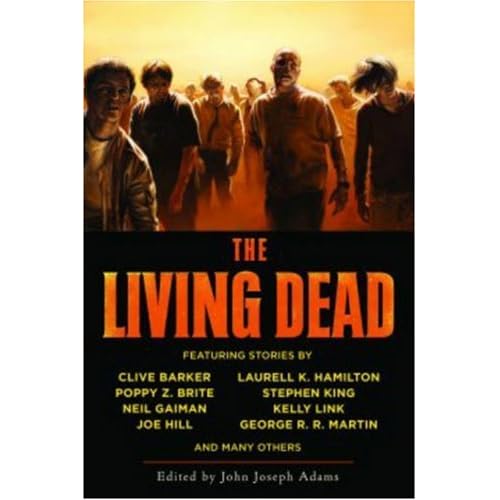 Right from the very beginning, The Living Dead blew me away and this is easily John Joseph Adams’s best anthology yet. The book is quite meaty with thirty four stories and Adams covers a lot of ground, from the literary to the experimental. And surprisingly, I found myself enjoying most of the stories, with a rare few falling in the mediocre range. Picking my three standout stories was difficult as there's a huge pool to choose from and my agendas clash with each other: do I highlight what's politically relevant or what's taboo, what's well written or what's fun?
After much deliberation, the first story that stuck to me was Jeffrey Ford's "Malthusian's Zombie". This is the usual Ford story that engulfs the reader with his characterization and detailed but enthralling writing style. I had read this piece before but this does not take away from the ending which impressed me nonetheless. Ford combines the fantastical with the horrifying and the strength of this piece is that the story's zombie is all too human.
"Meathouse Man" by George R. R. Martin dives into taboo territory but what's discomforting about this story is its emotional resonance. This could easily have been a high school romance story yet it's set in a post-apocalyptic setting with zombie handlers which distills the author's agenda. "Meathouse Man" wouldn't have worked if readers didn't sympathize with its protagonist and Martin succeeds in that part and everything else falls into place.
The anthology ends with "How the Day Runs Down" by John Langan and is original to this book. This short story also caught my eye and is a contender just like the other stories featured in The Living Dead. Langan effectively uses the theater as his setting and tells an epic yet character-driven story of how the world succumbed to the zombie apocalypse. Sprinkle in some humor, horror, and an unconventional narrator and you get an impressive piece to conclude the book.
There are lots of terrific stories in The Living Dead and Adams impressed me with this anthology as it shows he's getting better as an editor--and this easily outshines both of his previous anthologies combined. Quite a must-have book, not just for zombie fans, but for readers who love well-written fiction. There's no sitting on the fence with this book: each story will have an impact on you.
Rating: 4.5/5.
Right from the very beginning, The Living Dead blew me away and this is easily John Joseph Adams’s best anthology yet. The book is quite meaty with thirty four stories and Adams covers a lot of ground, from the literary to the experimental. And surprisingly, I found myself enjoying most of the stories, with a rare few falling in the mediocre range. Picking my three standout stories was difficult as there's a huge pool to choose from and my agendas clash with each other: do I highlight what's politically relevant or what's taboo, what's well written or what's fun?After much deliberation, the first story that stuck to me was Jeffrey Ford's "Malthusian's Zombie". This is the usual Ford story that engulfs the reader with his characterization and detailed but enthralling writing style. I had read this piece before but this does not take away from the ending which impressed me nonetheless. Ford combines the fantastical with the horrifying and the strength of this piece is that the story's zombie is all too human.
"Meathouse Man" by George R. R. Martin dives into taboo territory but what's discomforting about this story is its emotional resonance. This could easily have been a high school romance story yet it's set in a post-apocalyptic setting with zombie handlers which distills the author's agenda. "Meathouse Man" wouldn't have worked if readers didn't sympathize with its protagonist and Martin succeeds in that part and everything else falls into place.
The anthology ends with "How the Day Runs Down" by John Langan and is original to this book. This short story also caught my eye and is a contender just like the other stories featured in The Living Dead. Langan effectively uses the theater as his setting and tells an epic yet character-driven story of how the world succumbed to the zombie apocalypse. Sprinkle in some humor, horror, and an unconventional narrator and you get an impressive piece to conclude the book.
There are lots of terrific stories in The Living Dead and Adams impressed me with this anthology as it shows he's getting better as an editor--and this easily outshines both of his previous anthologies combined. Quite a must-have book, not just for zombie fans, but for readers who love well-written fiction. There's no sitting on the fence with this book: each story will have an impact on you.
Rating: 4.5/5.
Rating System:
1 - There are better ways to spend your time.
2 - Ho hum books, usually typical of its genre. Probably only recommendable to die-hard fans.
3 - A cut above the rest, usually with one or more elements that sets it apart from the norm.
4 - Highly recommended and is easily a pioneer of the genre.
5 - A classic or it will be.
Saturday, September 20, 2008
9/20/2008 Plugs
After recovering from my Internet woes (one moment I can't access Google, then another moment I can't access Livejournal after resetting the router/modem), here's a couple of plugs:
- Fast Ships Black Sails at Wired.
- More pirate goodness as you can download Shimmer's Pirate Issue for free... but only until the 19th.
- James A. Owen's awesome pirate art.
- Avast ya scurvy lads, new Clarkesworld guidelines.
- Oh, and Marshall Payne set up this Happy Birthday Charles A. Tan page. Everything's better with pirates!
Friday, September 19, 2008
Book Ordering Travails Part 2
Last August 25, 2008, I placed orders on some books. I got them from the store today and here's the turnout:

 The Good: Well, they did claim it'd be 3 weeks (assuming the right conditions) and it's roughly been 3 weeks.
The Delayed: Sam's Heaven's Bones hasn't arrived. Four books out of five ain't bad. Steve's Magic in the Mirrorstone still isn't on the shelves either.
The Bad: Entire process still isn't as quick as I'd like to be (I'd say the entire transaction including payment took around 15 minutes).
What really bugged me though was that after swiping my discount card in their cash register, the customer service rep told me that discounts don't apply to special orders. Told him that I was given a discount before (and I inquired about it as well when I originally placed the order) but he told me there's a new memo which stopped that. Now I'm fine with company memos but they should have told me that before swiping my discount card in the cash register.
The Ugly: Before I got my books, a customer was inquiring if they had a small book entitled Etiquette. The customer rep typed in the search field Etequette. Multiple times. No wonder the search engine didn't yield any results.
Up Next: Let me just gather my funds as it's been depleted by a personal project right now and the latest D&D books. Will be trying to order books from Small Beer Press and Lethe Press (and the Worlds of Their Own book that I wasn't able to obtain originally).

 The Good: Well, they did claim it'd be 3 weeks (assuming the right conditions) and it's roughly been 3 weeks.
The Delayed: Sam's Heaven's Bones hasn't arrived. Four books out of five ain't bad. Steve's Magic in the Mirrorstone still isn't on the shelves either.
The Bad: Entire process still isn't as quick as I'd like to be (I'd say the entire transaction including payment took around 15 minutes).
What really bugged me though was that after swiping my discount card in their cash register, the customer service rep told me that discounts don't apply to special orders. Told him that I was given a discount before (and I inquired about it as well when I originally placed the order) but he told me there's a new memo which stopped that. Now I'm fine with company memos but they should have told me that before swiping my discount card in the cash register.
The Ugly: Before I got my books, a customer was inquiring if they had a small book entitled Etiquette. The customer rep typed in the search field Etequette. Multiple times. No wonder the search engine didn't yield any results.
Up Next: Let me just gather my funds as it's been depleted by a personal project right now and the latest D&D books. Will be trying to order books from Small Beer Press and Lethe Press (and the Worlds of Their Own book that I wasn't able to obtain originally).
9/19/2008 Plugs
- Lethe Press is releasing Spicy Slipstream Stories this weekend. Win a free copy by posting a photo of your thigh.
- While we're on the subject of photos and photo memes, Science, Fucking, Fiction!
- David de Beer's 12 Useful Blogs for Genre Writers.
- Nick Kauffman on The Purpose of Book Reviews.
Podcast Focus: What Are You Working On?
Every Friday, I'll talk about a podcast or two that catches my fancy.
URL: http://waywo.podbean.com/
RSS Feed: http://waywo.podbean.com/
Description: What Are You Working On? occupies this niche of RPGs and miniatures, especially the latter part where they talk about painting techniques or modifying existing miniatures to suit their specific RPG games. They also crossover into other tabletop games such as board games and CCGs but for the most part, it's an enjoyable level-headed banter as the hosts talk about their games and play experiences.
URL: http://waywo.podbean.com/
RSS Feed: http://waywo.podbean.com/
Description: What Are You Working On? occupies this niche of RPGs and miniatures, especially the latter part where they talk about painting techniques or modifying existing miniatures to suit their specific RPG games. They also crossover into other tabletop games such as board games and CCGs but for the most part, it's an enjoyable level-headed banter as the hosts talk about their games and play experiences.
Top 10 Best-Sellers as of 2008/9/14
From USA Today's best-seller list (you can find out their basis here):
- Twilight by Stephenie Meyer
- New Moon by Stephenie Meyer
- The Shack by William P. Young
- Breaking Dawn by Stephenie Meyer
- Eclipse by Stephenie Meyer
- Hot, Flat, and Crowded by Thomas Friedman
- The War Within: A Secret White House History 2006-2008 by Bob Woodward
- Night in Rodanthe by Nicholas Sparks
- The Last Lecture by Randy Pausch, Jeffrey Zaslow
- Book of the Dead by Patricia Cornwell
Thursday, September 18, 2008
2008/9/18 Tabletop RPG Podcasts
Every Thursday, I post links to various podcasts that deals with tabletop RPGs.
Tabletop RPG (Mostly)
General Discussions/Reviews/Everything Else
- Pulp Gamer episodes: Catan Traders and Barbarians Expansion (The Game Kennel), Pre-Release Discussion (GAMA Trade Show Seminar 2008), Ahoy Maties! (Out of Character).
- Geek Radio Daily episodes: September 11, 12, 15, 16, 17; DragonCon Wrapup.
- Secret Identity episodes: Issue #131.
- The Order 66 Podcast episodes: Baby Daddies and a Bucket of Hot Wings.
- Fell Calls!, The Podcast About the Iron Kingdoms, episodes: A Supposedly Fun Thing I'll Never Do Again.
- Bear Swarm! episodes: Matt's 4th Edition Game.
- The Podge Cast episodes: Slappin' the Hose.
- Animalcast episodes: Episode 39.
- RPGCast episodes: "Stop That Train, I Wanna Egg McMuffin".
- Save Against Frostbite episodes: Pete's scat mercenaries.
- Narrative Control episodes: Episode 3.
- 3.5 Private Sanctuary episodes: Episode 48.
- All Games Considered episodes: More GenCon and Railroading.
- Fear the Boot episodes: An explanation of the upcoming week of mini-episodes, An introduction, What is an RPG?, Why Play an RPG?, Common Objections.
- Geekson! episodes: Episode 100.
- Grimm Studios Podcast episodes: Player Concepts.
- Have Games Will Travel episodes: A Few More Games #14.
- Lords of Tyr Podcast episodes: Podcast 009.
- Natural 20 Podcast episodes: Better Living through RolePlaying.
- Nuketown Radioactive episodes: Summer's End.
- This Modern Death episodes: Why Indie RPG’s Are Utter Bollocks.
- Secret Identity episodes: Issue #131.5 with Kevin McKeever.
- Pulp Gamer episodes: Pete Fenlon of Mayfair Games.
- The Tome episodes: Ed Greenwood Origins 08, Rob Heinsoo at GenCon.
- Roleplaying Public Radio episodes: Interview with Jonny Nexus of Critical Miss and author of Game Night.
- Secret Life of Girl Gamers episodes: GenCon 2008 Interviews and Demos: Green Fairy Games.
- Stabbing Contest episodes: GPNW jr./Bennett-Rigney mini-con.
- The Game's the Thing episodes: Robin Elliot of Triple Ace Games and Say Anything.
- Heroic Cthulhu episodes: Gamer Talk 42, Tweed (1, 2, 3, 4, 5, 6, 7, 8, 9), Tulku (1, 2, 3, 4, 5, 6, 7), Roman Picnic Brawl (1, 2, 3), Old (1, 2, 3, 4).
- RPGMP3 episodes: Rolemaster (9), Beyond the Mountains of Madness (9), Sorcerer Cyberpunk (2),
- Kore RPG episodes: Lets Blow This Joint.
- The Gamer's Haven episodes: D&D Kingdom of Thoth (10), Dungeon Crawl Classics #53 - Sellswords of Punjar (0).
Subscribe to:
Posts (Atom)