Friday, January 13, 2012

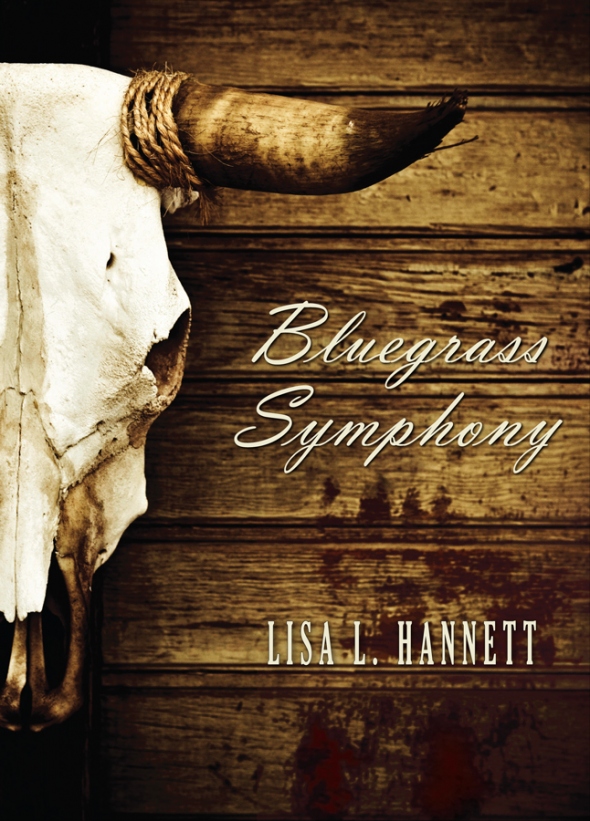
Book Review: Bluegrass Symphony by Lisa L. Hannett

 "It's not fair," I told Lisa L. Hannett over Twitter. When we talk about an author's style, it's usually a quality that's refined and polished over years. Hannett is one of those rare writers who can write using a variety of voices — and does so wonderfully. It's not simply having an ear for dialog, but possessing the ability to translate what's spoken into the written word and using it to convey to readers the mindset, upbringing, and culture of her characters. Every story in Bluegrass Symphony, for example, has a unique, unmistakable narrator. It's not simply knowing the difference between first-, second-, and third-person narratives, but knowing when to use it and understand the nuances of each perspective. Some writers, for example, avoid second-person because it's difficult to immerse the reader, but when Hannett does utilize it, it's a seamless experience. It's also not simply about sticking to one central theme as Hannett writes using different premises: fortune-telling hens, soul-smoking mayors, minotaur-infested dystopias, or even immortality-rewarding beauty pageants. But despite these seemingly disparate concepts, there's also this sense that this is uniquely a Hannett piece, as the reader will always find some form of tragedy and darkness lurking underneath every story.

That's the impression one gets after reading Bluegrass Symphony, and it's a clever title for a short story collection. There's no story titled "Bluegrass Symphony," and the author provides an explanation at the end of the book, but just from hearing those two words, it already conveys a certain expectation — and the reader wouldn't be wrong. If this were the Philippines, I'd label Hannett's stories as provincial, but for non-Filipinos, the country, would be a better description. Hannett certainly captures that kind of atmosphere, even when she's writing all these diverse stories — and as an aside, another unfair fact is that eleven of the twelve of the stories in this collection are original to the book. They are all very good stories, immediately winning you over with tone and character, but they're also challenging that if you skip a beat, you'll miss out on important details. There's insight at the end of each story, but it's not necessarily one that readers will always welcome: Hannett's fiction seldom ends pleasantly, or if it does, it comes at a steep price. "From the Teeth of Strange Children," for example, explores various types of relationships (some predatory, some otherwise), in addition to contributing something new to the vampire mythology. The exploration of these relationships is what makes the story shine, and it's these mixture of emotions that give it resonance. I'm still on the fence when it comes to the the effectiveness of the ending in "The Short Go: A Future In Eight Seconds," but it's a memorable dystopia, one that Hannett writes convincingly through her effective characterization. "Down the Hollow" is transgressive and haunting, yet is brief enough and contains all the elements that makes Hannett's stories wonderful and unique.

Bluegrass Symphony is one of those collections that feels more like an anthology due to the author's wide range. This is easily a must-read book of 2011, doubly so since most of the stories aren't reprints.

Thursday, January 12, 2012

January 12, 2012 Links and Plugs

Interviews and Profiles
Advice/Articles

News
The Flame Alphabet: A Novel by Ben Marcus

    Book Review: Zoo City by Lauren Beukes

    There are novels that defy categorization: they don't fit into common marketing conventions, or at the very least, aren't limited to the stereotypes associated with their genre. The prose of Zoo City wasn't immediately striking — its appeal to me was due to an entirely different reason — but there's skill in it being plain. And perhaps that's the paradox here. There's so much going on in Zoo City: it's science fiction, it's fantasy, it's crime... but the narrative is focused, down-to-earth, and ultimately, the conceit doesn't get in the way of telling an actual story. Lauren Beukes writes a complete, solid novel, and while some writers mask their weaknesses with style, Beukes allows her text stand on its own, guiltless in front of a jury.

    What is memorable, however, is how there's this continuous interaction with the reader even once you've put the book down. I've spent the past few days pondering on the possibilities of Zoo City fan fiction, and it's not everyday that such a story inspires me so. Nonwriters might simply dismiss this as the concept, the same way that they might approach an author and offer to sell them an "idea" they had. But that's not truly the case, as it's Beukes's execution (in this case, conscious restraint) that makes the novel work. I've heard comparisons to Philip Pullman's Golden Compass but I think those conclusions are unfair because the animal companions — for lack of a better term — behave differently in each novel (the social implications alone are different). There is also the way that Beukes hints, insinuates, and implies a larger backstory, but never tips her hand. In that sense, Zoo City feels like a realist novel, as the reader remains ignorant of the underlying cosmology of the world by the time they reach the end. Instead, the anchor to the narrative is the central protagonist, and her ending isn't a convenient resolution.

    In terms of technique, Beukes utilizes elements of the epistolary novel to great effect. They feel authentic and modern; whether they'll date themselves in the future is best left to speculation, but as far as the present is concerned, it's well done. Nor do I feel, at any point, that they are extraneous. The inclusion is justified and again, Beukes doesn't jump at every opportunity to insert news clipping, emails, or letters. There's a compelling reason for their place in the story, and the author includes just enough to whet your appetite without breaking the momentum.

    Perhaps a key element in describing Beukes's style in Zoo City is restraint. The author never feels insecure about their technique or the reader's intelligence. What you end up with is this polished novel that's clear, concise, and imaginative, without drawing too much attention to its uniqueness. That might be a detraction for some narratives but in the case of Zoo City, it works.

    Wednesday, January 11, 2012

    January 11, 2012 Links and Plugs

    Interviews and Profiles

    Advice/Articles

    News

     The Liminal People by Ayize Jama-Everett

    Book Review: Queen of Kings by Maria Dahvana Headley


    Some novels take time to develop: it can be front-loaded exposition or a scenic tour of the book's setting. What's striking about Queen of Kings is Maria Dahvana Headley eschews that method and delivers a story that dives immediately into the action and never gives the reader time to catch their breath. It's one exciting scene after another, making this a quick read that can't be put down.

    It's a common misconception that the appeal of a story is its concept — in this case, the secret history of a shapeshifting, blood-drinking Cleopatra. While that's a reasonable elevator pitch, what makes the novel work is Headley's conscious decisions with technique. First, the chapters are quick and short, and while the descriptions can get sparse, it follows the narrative's agenda of getting to the exciting bits as soon as possible. Second, the author has an awareness of her genre's strengths and weaknesses. The introduction of certain characters like the senate or Virgil might appear abrupt, but since this is historical fantasy, the reader is equipped with knowledge of these personalities so their presence feels natural — if not outright warranted by the reader. On the other hand, characters that are new to the story are given their proper introduction, but just enough so that it doesn't bog down the narrative. By most accounts, Headley exercises brevity, and it's a practice that's in the service of the story.

    The third element that makes Queen of Kings such an enticing read is the way the author tackles conflict. In many traditional narratives, high fantasy included, there is the sense that the reader knows how it's all going to end. One reason for this is that conflict — and war — tends to be polarized: you have the protagonist's side and the opposing side, usually good vs. evil. That's not the case in Queen of Kings as there are numerous agendas in play at any given time so it's not even a two-front war but sheer chaos. It even comes to a point where the reader isn't sure whether they should be rooting for a particular character or not. What's impressive with Headley is that while some authors might hold back, whether in creating too many factions or simply the lengths the various characters will go to, here it all seems like an organic progression that keeps the reader guessing. Is it contrived? Of course, it is, and Headley even scores bonus points when it comes to aligning the narrative with known history, but what's satisfactory is that it never seems manufactured. Contributing to this is the continuous sense of confusion among the characters, especially early in the novel, where their perception is different from what's objectively taking place. We've seen it utilized to great effect in epic fantasies like The Wheel of Time or A Song of Ice and Fire, but all Headley needs is a few pages and two chapters to illustrate contrasting views of the same incident. There are other techniques which Headley uses such as juxtaposition, but for the most part, it's the author's ability to weave the illusion of chaos that sets the book apart.

    In Queen of Kings, the reader never knows what's going to happen next as alliances are made left and right, along with betrayals and double-crosses that go hand in hand with them. The presence of history and mythology is also a resource the author mines, which makes its inclusion a rational and seeded solution. Maria Dahvana Headley writes a focused, compelling narrative that excels in what it's supposed to do, and is a great example of synergy with authorial intent.

    Tuesday, January 10, 2012

    Book Review: Engines of Desire: Tales of Love & Other Horrors by Livia Llewellyn

    I want to begin this review with a digression: what makes a great James Bond actor? Arguably, the best in the film's franchise, whether it's Sean Connery or Daniel Craig (sorry Pierce Brosnan), is due to their unpredictability. Despite their charm, there's always this sense that they can murder you without a moment's hesitation. This element isn't limited to what's written on the script but extends to the charisma, personality, and believability of the actor. I bring this up because one recurring motif in Livia Llewellyn's stories is the way she writes her characters: they are compelling protagonists, but the reader is never quite sure whether they should ally — I use the term because they automatically win the reader's sympathy — with them or fear them. In most cases, it's both, and it's amazing how Llewellyn conveys this through prose — without the aid of actors.

    As a collection, Engines of Desire is aptly titled. There's a certain roughness when it comes to the word "engine" but it's also workman-like and efficient. Llewellyn's prose isn't perfect as there's bits here and there that could be polished, but overall, it gets the job done. The inclusion of desire, on the other hand, is what separates the author from her peers, as it is a common element in most of Llewellyn's stories. If the topic was Lovecraft's bane, the author incorporates it into her narrative and channels it into something primal that triggers our collective lizard-brain. It's sensual, yes, but just like her protagonists, one must always question whether surrendering to it is safe. The image that springs to mind when describing this collection is that of an Ouroboros: the narrative is engaging, but it also fuel for what comes next, thus creating this cycle of satisfaction and hunger.

    There are ten stories in this book and the only time the author falters for me is "Brimstone Orange" mainly due to its length. One would argue that the other flash fiction piece in the collection, "Teslated Salishan Evergreen," should suffer such a fate, but its parameters are well-defined (a faux encyclopedic entry on a fictional plant) and the concept is executed perfectly. When it comes to must-reads, it's a tie between "At the Edge of Ellensburg" and "Jetsam". Both contain elements of what makes Llewellyn terrific and unique: forbidden passion, characters that are double-edged, and a darkness that simultaneously destroys and saves. Thematically, the two stories are different from each other, but both bear the distinction of a Llewellyn story without the heavy-handedness of Lovecraft pastiches. "Her Deepness," a lengthy, fantastical (steampunkish?) piece, is similarly engaging, although it lacks a certain level of eroticism that marks her other stories.  Still, it's a memorable story that digs deep into one's inner darkness, both literally and figuratively. The titular story, "Engines of Desire," is nothing to shrug off, and it's an interesting technique that showcases why O. Henry-type stories aren't necessarily to be praised: Llewellyn reveals her hand early on and it's the character's motivation that piques the reader's curiosity.

    While Llewellyn's writing can be demure when it needs to be, for the most part, it's seldom elegant, and that's the potency of the author's technique. Imagine the word "fuck" for example, and while other writers might use it to simply insult, Llewellyn's apt usage is such that it both seduces and kicks the reader in the groin. The author is unapologetic when it comes to Engines of Desire, and to read such a collection is to know corrupted passion. Such base emotions are seldom spoken in polite company, and that's where this book revels in.

    January 10, 2012 Links and Plugs

    Interviews and Profiles

    Advice/Articles

    News
    Tribulations by Ken Shufeldt

    Monday, January 09, 2012

    January 9, 2012 Links and Plugs

    Interviews and Profiles
    Advice/Articles

    Empire State by Adam Christopher

    Friday, January 06, 2012

    January 6, 2012 Links and Plugs

    Interviews and Profiles
    Advice/Articles


     The Serpent Sea by Martha Wells

    Thursday, January 05, 2012

    Essay: Unpacking the Philippine Policy on Book Taxes

    I am not a lawyer. What I do have, however, is documentation. What I want to discuss is the country's policy when it comes to the taxation of books. I don't want to limit it to the law itself, but rather the implementation and enforcement of policy (for example, this iPhone App wouldn't be necessary of taxi drivers in the country actually followed policy).

    Last May 2009, the issue of the "Book Blockade" is brought up by Robin Hemley. Manuel L. Quezon III has a detailed timeline of the events that transpired. Suffice to say, then-President Arroyo lifts taxes on book imports.

    However, this isn't the end of the discussion when it comes to taxes on import books. And as I said in an old blog entry, what takes place isn't a "book blockade" per se, although numerous writers, bloggers, and journalists have used the term:
    There are some things which I want to clarify: this is not (just) the book blockade. For the most part, the book blockade centered on importers of books, namely the distributors and bookstores. That aspect was successfully fended off (for now). The issue of arbitrary taxing of individuals at the post office is a separate issue, and was not championed by Rep. Teodoro Locsin Jr.
    To be fair to Robin Hemly, I am guilty of what he was originally fearful of:
    However, what worries me is that some bloggers in the Philippines are parsing the issues too finely, in such a legalistic manner that they run the risk of diluting the issue entirely. The bottom line is that the Philippines is in direct violation of an international U.N. treaty it ratified in 1979 that prohibits any and all duties imposed on books. It's that simple. No wiggle room. 
    So in 2009, while (commercial) importers of books may have been exempted from taxes on import books, individuals weren't. In August of the same year, there was this complaint:
    According to the NBDB, the individual book buyer must apply for duty exemption at the DOF. You get the exemption the same day you apply for it; you have to apply for an exemption every time you have books coming in. It’s just how it is right now.
    Before I proceed, let me present to you receipts from the post office from 2011, just to show you how much tax a citizen has to pay.

    From March 2011:

    From November 2011:
    Here's the breakdown:

    Customs Documentary Stamp - P250.00
    Import Processing Fee - P250.00
    BIR Documentary Stamp - P15.00
    Rate of Duty - 1% of Declared Value
    VAT - 12% of the sum of Customs Documentary Stamp, Import Processing Fee, BIR Documentary Stamp, Rate of Duty, and Declared Value.

    As an example, a P500.00 paperback book would cost you P642.00.

    The breakdown would be P250.00 (Customs Documentary Stamp) + P250.00 (Import Processing Fee) + P15.00 (BIR Documentary Stamp) + P5.00 (Rate of Duty) + P122 (VAT).

    Here's another example, a set of books amounting to P2,000.00. The total tax would be P839.00.

    P250.00 (Customs Documentary Stamp) + P250.00 (Import Processing Fee) + P15.00 (BIR Documentary Stamp) + P20.00 (Rate of Duty) + P304 (VAT).

    When it comes to policy, the problem here is that the taxation of these books are arbitrary. I have some packages which aren't taxed. Others are. Lately, I'm being taxed for books that are shipped in boxes (as opposed to envelopes). Clearly, there is a problem with implementation and enforcement.

    As far as filing an exemption is concerned, here's the instructions from the National Book Development Board's (NBDB) website (I am only highlighting passages with regards to fees):
    VALUE OF IMPORTATION                    FILING FEE
    Php100,000.00 and below                       Php     200.00
    From Php 100,000.00    to Php 140,000.00            400.00
    From Php 140,000.00 to Php 700,000.00               600.00          
    From Php 700,000.00 to Php 1,000,000.00             800.00
    Over Php 1,000,000.00                            1,000.00   
    But wait, there's more:
    After getting the appropriate signature, the importer, with all the approved documents, should proceed to the postal office to pay the appropriate BOC and Postal Office

    fees as follows:

    Import Processing Fee
    Customs Documentary Stamp     Php 515.00
    BIR Stamp
          
    Post Office Parcel Fee        Php 35.00
    TOTAL                          Php 545.00

    Now the second fee (Import Processing Fee, etc.) is in line with the breakdown I gave previously. I also want to amend that the Post Office Parcel Fee has been increased to P40.00.

    So under the exemption guidelines, whether I'm seeking exemption for a book costing P100.00 or books costing P99,999.99, it's going to cost me P645.00 [sic].

    To be fair, to a commercial importer or institution, the exemption process might be considered reasonable. To an individual, however, the effort, time, and costs is arguably not worth it.

    Moving on with our discussion, In August 2011, the DOF issued another statement, which can be summarized as: you need to file for exemption. (For reference, consult these PDFs: CUSTOMS MEMORANDUM ORDER NO. 25-2011 and CUSTOMS MEMORANDUM ORDER NO. 25-2011A.)

    As of December 12, 2011, the Department of Finance issued a new department order (which was publicly disclosed a few days ago). In many ways, it is more favorable than the previous memo. I'll quote the relevant sections:
    c. Personal effects/personal use – As explained by Customs Administrative Order No. 7-72 or the implementing rules and regulations of Section 105 of the TCCP, as amended, this term refers to those embracing all articles of personality not considered as merchandise, including books.

    For purposes of this Order, books considered as personal effects or for personal use shall mean those, the quantities of which do not exceed twelve (12) copies of any one work when imported by an institution; or six (6) copies of any one work when imported by an individual.

    3. Guidelines

    All imported books, whether for commercial or personal use with the exception of those published by or for a private commercial enterprise essentially for advertising purposes as stated in Annex A of the Florence Agreement, are exempt from customs duties. Importation of books is likewise exempt from value-added tax (VAT) pursuant to Section 109 (R) of the National Internal Revenue Code.

    3.1 For Books Imported in Commercial Quantities

    Prior to the release by the Bureau of Customs (BOC) of books imported in commercial quantities, the importers must first present an endorsement from the Revenue Office of the Department of Finance for the duty- and VAT-free importation of books/materials covered by the Florence Agreement which shall be issued after submission of the following documents —

    ...

    3.2 For Books Imported as Personal Effects or for Personal Use

    The endorsement prescribed under Section 3.1 hereof shall not be required for books imported as personal effects or for personal use as defined under Section 2(b) of this Order, whether transported as accompanied baggage, through couriers or the post offices. Said importations however, should be cleared and released through the required declaration of goods as provided under existing rules and regulations.

    There is even further clarification in today's announcement:
    Books that are for “personal use” are those “embracing all articles of personality not considered as merchandise.” This should “not exceed 12 copies of any one work when imported by an institution or six copies of any one work when imported by an individual.”

    Otherwise, imports will be treated as of “commercial quantity,” considered “in excess of what is compatible and commensurate with a person’s normal requirements,” the order stated.

    Under this classification, the order said importers must first present an endorsement from the Revenue Office of the Finance department, certifying that products to be imported fall within those granted tax and duty exemptions by the Florence Agreement.

    The order listed down documentary requirements that need to be submitted to secure such endorsement. They are: bill of lading, commercial invoice, packing list with title of books, affidavit to the effect that the shipment consists of books, certification from UNESCO Office in the Philippines attesting that the importation/s is/are covered by the Florence Agreement, and registration certificate with the National Book Development Board as book importer or publisher.

    In case of donated books, a deed of donation duly authenticated by the Philippine Consulate abroad and deed of acceptance must be provided, the order stated. An authority is also required should the consignee assign a representative to facilitate the books’ release.
    What does this mean?

    Well, theoretically, if the book is for personal use (six or less copies of the same title for an individual, twice that for institutions), then you will not be taxed. And by tax, that probably means VAT and Rate of Duty (if NBDB's exemption policies applies here). It is unclear whether the other fees apply. For example, there is no omitting the P40.00 Post Office Parcel Fee. That's a reasonable cost for a public service. There is an argument to be made, however, for the various Documentary Stamps and Processing Fees, which amount to P515.00.

    Another issue for me is that while it's nice to have this in theory, whether this will be actually be implemented. The Post Office and Customs have, after all, disregarded the law as evidenced by events prior to and post Book Blockade.

    To commercial institutions, this is a boon, as the law is transparent. For other institutions, however, such as libraries (which may exceed the twelve-book limit) or charities (or whoever might solicit book donations), this might be an issue.

    At least one Senator, Senator Pia Cayetano, wants further clarification and simplification:
    “However, we are still trying to get clarification from the DOF on the procedures for the clearance and release of imported books. For those importing for commercial purposes, there’s a long list of requirements under the directive. I am of the opinion that these requirements are too stiff, and I will take this up with the DOF. For those importing for personal purposes, I just want to ensure that there won’t be cumbersome paperwork involved.”

    At the same time, she said the DOF Order should also be disseminated to all BOC and DOF offices and personnel, as well as courier services, to prevent any confusion in its implementation.
    January 5, 2012 Links and Plugs

    Interviews and Profiles
    Advice/Articles

    News

    A Working Writer's Daily Planner 2012

    Wednesday, January 04, 2012

    January 4, 2012 Links and Plugs

    Interviews and Profiles

    Advice/Articles

    News
    Three Messages and A Warning edited by Eduardo Jiménez Mayo & Chris. N. Brown

    Tuesday, January 03, 2012

    January 3, 2012 Links and Plugs

    Interviews and Profiles

    Advice/Articles

    News

    MM9 by Hiroshi Yamamoto

    Monday, January 02, 2012

    January 2, 2012 Links and Plugs

    Interviews and Profiles

    Advice/Articles

    News

    Eyes to See by Joseph Nassise

    Sunday, January 01, 2012

    2011

    Fell in love.

    Heart got broken.

    Went to WFC.

    Met in person some of my good friends, favorite writers, editors, publishers, etc.

    Bought an iPod Touch and an iPad.

    Traveled abroad after more than a decade.

    Traveled alone.

    Editing an original anthology.

    Started a podcast.

    Started writing for comics again.

    Quit day job.

    Got a new job.

    Gave a talk at a local con.

    Got a credit card.

    Indulged in beer.

    Pneumonia.

    Chronic Blepharitis.