Here's a news item I stumbled upon. It's entitled Anonymous Blog Exposes Controversy and its source material can be found here. Basically, the mayor supposedly was "examining" some of the donations for a public school and when the principal complained, the former had dump trucks literally dump the donations in front of the public school. Here's an anonymous comment defending the mayor.
My brain is pondering the reasons as to how the mayor could actually be innocent (1. lack of other vehicles to transport the goods, 2. incompetence on the deliverers rather than actual malice on the mayor) but I'm jaded enough to not be surprised at Philippine corruption (or failing that, stupidity in getting caught at such an obvious act).
Friday, December 05, 2008


December 5, 2008 Links and Plugs
I got soaked on the way to the office...
- Identifying the "Right Agent for Your Work"
- One of the things you can do to help out during the recession is support publishers. In this case, check out Small Beer Press's offerings! A sale! And all their books on a flash drive!
- Nick Kauffman's Three-Step Guide to Successful Blogging.
- Edward Champion gives commentary in The Knopf Times Book Review.
Podcast Focus: Narrative Control
Every Friday, I'll talk about a podcast or two that catches my fancy.
 URL: http://narrativecontrol.com/
RSS Feed: http://narrativecontrol.libsyn.com/rss
Description: Narrative Control is one of the newer gaming podcasts that debuted a few months ago. The focus of this podcast is narrative-style gaming, paying attention to the story elements and role-playing aspects of a game. What I enjoy about the show is that it's relatively short, only thirty minutes long, yet making good use of that time.
URL: http://narrativecontrol.com/RSS Feed: http://narrativecontrol.libsyn.com/rss
Description: Narrative Control is one of the newer gaming podcasts that debuted a few months ago. The focus of this podcast is narrative-style gaming, paying attention to the story elements and role-playing aspects of a game. What I enjoy about the show is that it's relatively short, only thirty minutes long, yet making good use of that time.
Top 10 Best-Sellers as of 2008/11/30
From USA Today's best-seller list (you can find out their basis here):
- Twilight by Stephenie Meyer
- New Moon by Stephenie Meyer
- Eclipse by Stephenie Meyer
- Breaking Dawn by Stephenie Meyer
- The Pagan Stone by Nora Roberts
- The Appeal by John Grisham
- Cross Country by James Patterson
- The Shack by William P. Young
- The Christmas Sweater by Glenn Beck
- The Last Lecture by Randy Pausch and Jeffrey Zaslow
Thursday, December 04, 2008
December 4, 2008 Links and Plugs
My wallet always doesn't have enough money...
- I hope you can drop by the Nebula Awards to read my post entitled The Term Speculative Fiction, a modified essay that was previously published in this blog.
- In case I haven't mentioned it enough times on this blog, check out Jeff & Ann Vandermeer's anthology Black Ships, Fast Sails. Keep to the Code even has a fun book trailer.
- Pablo Defendini interviews Dave Gibbons.
- Melanie & Steve Rasnic Tem on The Tyranny of the Original Idea.
- In case you haven't heard, there's a lot of lay-offs happening around in the publishing industry. Andrew Wheeler is keeping track.
- SF Signal asks: Is the World Finally Ready for eBooks?
- There's a huge conversation brewing over at An Ethical Question Involving eBooks. Also check out part two.

2008/12/4 Tabletop RPG Podcasts
Every Thursday, I post links to various podcasts that deals with tabletop RPGs.
Tabletop RPG (Mostly)
General Discussions/Reviews/Everything Else
- Pulp Gamer episodes: Facebook Fury (Out of Character), The Future of Media (Gen Con Seminar 2008).
- Geek Radio Daily episodes: December 1, 2, 3.
- Bear Swarm! episodes: World Building: Systems.
- The Podge Cast episodes: The System is Down, Yo!
- The Order 66 Podcast episodes: The Order 66 Holiday Special.
- Wapcaplets episodes: DiceCast (Promo).
- Fell Calls episodes: Higgedly Piggedly.

- Animalcast episodes: Episode 68.
- THACO episodes: Campaign Length, Genre.
- Ninja vs Pirates episodes: Going back to Arisia!
- Gateway to the Megaverse episodes: Coalition Critique.
- This Modern Death episodes: Groupthink.
- Wandering Men episodes: Dead Men Driving (6).
- Save Against Frostbite episodes: Violent Burning Douche.
- Return to Northmoor episodes: D&D and Story Games: Will they Blend? (2)
- Nuketown Radio Active episodes: The Sound of Distant Crashing Xboxes.
- Fear the Boot episodes: never letting them see you sweat, no dice and almost no players.
- Dragon's Landing Inn episodes: Episode D 97.
- Brilliant Gameologists episodes: Overdone Payouts (System).
- The Game's The Thing episodes: Dark Heresy with Ross Watson.
- The Voice of the Revolution episodes: Annalise review and Luke Crane interview.
- The Game Master Show episodes: Ninja Burger - Mike Fiegel.
- Sons of Kryos episodes: GenCon 08 Interviews Podcast part 1.
- Heroic Cthulhu episodes: Zombie Redoux (1, 2, 3), Hotel Redoux (1, 2, 3, 4, 5, 6), Rave Redoux (1, 2, 3, 4), Trouble Comes in Threes (1, 2, 3, 4, 5, 6, 7, 8, 9, 10, 11, 12, 13, 14), Gateway to Adventur (1, 2, 3, 4), Swift Resolution (1, 2, 3, 4, 5, 6, 7), Grave Discussions (1, 2, 3, 4).
- Kore RPG episodes: What Smells Like Owlbear (1).
- The Gamer's Haven episodes: Quest for the Silver Santas (4).
Wednesday, December 03, 2008
December 3, 2008 Links and Plugs
Time to do Christmas shopping...
- There's a couple of interviews. Jen West chats with Ysabeau Wilce over at the Nebula Awards while John Joseph Adam asks a few questions with Robin Wasserman.
- Congrats to the nominees of the 2nd Black Quill Awards.
- Jim C. Hines shows us his Rules of Self Promotion.
- The Book Design Review releases their Favorite Book Covers of 2008.
- Not that you haven't read it yet but it's worth mentioning again, Neil Gaiman on Why Defend Freedom of Icky Speech.

Essay: Philippine Speculative Fiction and The Publishing Industry
Every Wednesday, I'll have an essay or a feature on any topic that catches my fancy!
Talking about the local publishing industry can be difficult, mainly because everyone's publishing numbers are usually kept secret. Of course one hears a rough estimate of the stats here and there but ultimately they're not a source that one can rely on to confirm or deny. Much like a Mission: Impossible episode, they are disavowed. So take the numbers that I present with a grain of salt and don't ask me to state my sources.
I wouldn't describe the Philippine publishing industry as "flourishing" by any means but whether it's healthy or not depends on your perspective. On one hand, we have magazines like FHM which have print-runs in the six digits and Tagalog romance novels in the vein of Mills & Boon selling as high as 50,000 copies. On the other hand, for most fiction "literary" (i.e. not pop) publishers, the term "best-seller" takes on a different meaning when the goal is selling a thousand copies in a span of five years.
Nonfiction (i.e. cookbooks) is usually an area that's profitable to publishers but what I want to focus on is the fiction side (besides, I don't have the numbers for nonfiction either). Again, the most popular genre which bookstores can't help but stock is Philippine romance. They sell for under a dollar and have been quite popular for the past few decades. The print run is anywhere from 10,000 to 50,000 copies and authors are usually paid a lump sum (anywhere between $200~$400). Unfortunately, the said genre is also frowned upon by the literati (i.e. ignored) except as the subject of term papers and studies. At this point, it's cliche to state that they are one of the local best-selling books.
The second most popular genre in the last decade is horror. This wasn't always the case but for some strange reason, that particular market clicked. The most prominent publisher is PsiCom, which also publishes Chick Lit. How popular is horror? Well according to PsiCom's site, they have 52 horror titles and the True Philippine Ghost Stories franchise is in its 24th volume. The books retail for under two dollars and probably an estimated print-run of anywhere from 5,000 copies to 20,000 copies. Much like romance, more or less ignored by the literati but respectable publishers have released their own horror titles (edited and/or written by similarly respectable editors/writers).
Another genre which I have absolutely no numbers for but similarly popular is the aforementioned Chick Lit. Aside from PsiCom, Summit Media--the local publisher of the very popular FHM magazine--also forayed into the genre a few years ago. What made Summit Media (and to a certain extent, PsiCom) different from conventional publishers is that instead of using the bookstore distribution chain (the bookstores obtain as much as 60% of the cover price), they started selling their books through their already-established magazine distribution network (which aside from having more visibility, pays a lower percentage to the retailer). (It has to be mentioned that romance novels can also be found at magazine outlets.)
Children's books are another semi-profitable area of publishing. One can enjoy print-runs in four to five digits, especially if your particular book is picked up as required reading for the academia. Again, the price point of the books are relatively low, usually under two dollars for the really popular ones.
What haven't I talked about yet? Everything else. Unless you're required reading for schools and universities (Bata, Bata... Paano Ka Ginawa ["Child, Child... How Were You Made?"] was required reading for my high school so that meant all 247 students of my batch had to have copies, whether they were brand-new or secondhand--most likely the former; multiply that by all the other schools that require it every school year and you've got a really lucrative title using offset printing), fiction books have print-runs of anywhere from a few hundred (i.e. the minimum the printer will allow) to a few thousand. Following economies of scale, the prices of such books are also more expensive, ranging from $5 to $10. Most likely, those award-winning books or novels that win local literary awards will belong to this category.
Unfortunately, Philippine speculative fiction also falls under this category, whether it's the short story collections of the various authors (prominent Filipino author Joy Dayrit for example is someone I could classify as speculative fiction, even if she might not consider herself so) or actual anthologies and magazines like Philippine Speculative Fiction and The Digest of Philippine Genre Stories respectively. Selling a thousand copies of each is probably already optimistic. (On the brighter side of things, almost canonical writers such as Alfred Yuson will probably enjoy a long print run with his magic-realist satire novel Great Philippine Jungle Energy Cafe for the same reasons as Bata, Bata... Paano Ka Ginawa).
And it's not like other publishers haven't tried. Psicom tried to penetrate the spec fic market for a mass market audience with Pinoy Amazing Adventures and it's been discontinued after one release. Let's put it this way: there are four titles listed under its "Other Fiction Books" section, Pinoy Amazing Adventures included, and all but one are listed under their "bestsellers" column. Can you guess which one it is?
People, depending on who you ask, will cite various reasons to explain this phenomenon. Some will complain about the price ("the books are too expensive") but then that becomes a chicken-or-the-egg dilemma (will low price of books actually guarantee higher sales?) and I don't really see price being the primary hurdle (for example, Filipinos don't have problems buying equally-expensive imported books). Some will cite incompetent distribution (it's probably easier to order an imported title than a locally-published book from bookstores) and distribution leads into other problems as well (such as the retailers keeping 60% of the sales and leaving little profit for either the distributor or the actual publisher). Another hypothesis that might be thrown into the mix is to translate English works into the more common Filipino but again, why are imported books, which are not in Filipino, selling in this country? And perhaps the more cynical ones will claim that Filipinos aren't really readers but that really doesn't take into account the actual sales of books or the prolificness of fanfic readers (and writers!) in the country.
When it comes to promoting Philippine speculative fiction outside the country, it might seem like a futile endeavor to do so. I mean sure, Dean Francis Alfar's short story collection The Kite of Stars and Other Stories or his anthology Philippine Speculative Fiction Vol. 3 might be cited in The Year's Best Fantasy and Horror 2008 but once the acknowledgment is said and done, what's next? It's not like international readers will have a convenient--or at least inexpensive--method of acquiring the book. Since few people outside of the Philippines have actually read the book, it's not too far of a stretch for conspiracy theorists to accuse me of making all this stuff up (and that's certainly a concept book for you--writing the speculative fiction texts of an imaginary culture). And this honestly isn't limited to speculative fiction but Philippine literature in general. We're inclusive and we're honestly not working with models that help promote and distribute our works outside of the nation (that's not to say no one is doing just that--two years ago, I remember this publisher whose books are aimed at Overseas Foreign Workers and Filipinos abroad, making them available in their designated countries). It's actually not a problem if publishers are publishing books solely for readers in this country. But honestly, looking at the local publishing industry, aside from the pop books, where is it headed? As it is, I don't see established publishers doubling their print-runs in the next five years. If anything, their market is shrinking and as far as my limited perspective is concerned, they're not doing anything radically new or different to avert that inevitability.
There are probably people who think it's traitorous or un-nationalistic of me to consider foreign publication as one of my hopes for Philippine speculative fiction (and as a nation, we have some advantages lucrative to Western markets, such as our texts already written in English instead of paying costs for translation). But why not? Some foreign publishers have better distribution models than those we have here and, well, there's some demand for Philippine speculative fiction abroad. And honestly, internationally-published writers like Jessica Hagedorn have mileage that wouldn't be possible had she solely been published in the Philippines. There was even a recent blog entry featuring Filipinos getting published in Singapore (where they'll hopefully enjoy a larger print-run and visibility).
As far as Philippine speculative fiction goes, arguably we can rely on the output of our writers in online markets (and one of the reasons why I put up the Philippine Speculative Fiction Sampler in the first place), but that's only a portion of the fiction that gets produced (not to mention that it doesn't showcase all of our best work). And the fact is, the Philippines is still pretty much a traditional country and some writers favor print over online texts, even if they can conceivably have a larger target audience with the latter rather than the former. But honestly, local print runs are relatively low that even independent publishers abroad will probably have more economically-feasible models in place and higher print-runs. Is it too much to ask to have a system where I can refer books and fiction to other people (be they local or abroad) without having them go through scavenger hunts just to find the titles that I want to talk about? (On a side note, you can check out AnthologyBuilder which includes fiction from the likes of Dean Francis Alfar and Alexander Marcos Osias, in addition to the other talented authors they feature.)
Talking about the local publishing industry can be difficult, mainly because everyone's publishing numbers are usually kept secret. Of course one hears a rough estimate of the stats here and there but ultimately they're not a source that one can rely on to confirm or deny. Much like a Mission: Impossible episode, they are disavowed. So take the numbers that I present with a grain of salt and don't ask me to state my sources.
I wouldn't describe the Philippine publishing industry as "flourishing" by any means but whether it's healthy or not depends on your perspective. On one hand, we have magazines like FHM which have print-runs in the six digits and Tagalog romance novels in the vein of Mills & Boon selling as high as 50,000 copies. On the other hand, for most fiction "literary" (i.e. not pop) publishers, the term "best-seller" takes on a different meaning when the goal is selling a thousand copies in a span of five years.
Nonfiction (i.e. cookbooks) is usually an area that's profitable to publishers but what I want to focus on is the fiction side (besides, I don't have the numbers for nonfiction either). Again, the most popular genre which bookstores can't help but stock is Philippine romance. They sell for under a dollar and have been quite popular for the past few decades. The print run is anywhere from 10,000 to 50,000 copies and authors are usually paid a lump sum (anywhere between $200~$400). Unfortunately, the said genre is also frowned upon by the literati (i.e. ignored) except as the subject of term papers and studies. At this point, it's cliche to state that they are one of the local best-selling books.
The second most popular genre in the last decade is horror. This wasn't always the case but for some strange reason, that particular market clicked. The most prominent publisher is PsiCom, which also publishes Chick Lit. How popular is horror? Well according to PsiCom's site, they have 52 horror titles and the True Philippine Ghost Stories franchise is in its 24th volume. The books retail for under two dollars and probably an estimated print-run of anywhere from 5,000 copies to 20,000 copies. Much like romance, more or less ignored by the literati but respectable publishers have released their own horror titles (edited and/or written by similarly respectable editors/writers).
Another genre which I have absolutely no numbers for but similarly popular is the aforementioned Chick Lit. Aside from PsiCom, Summit Media--the local publisher of the very popular FHM magazine--also forayed into the genre a few years ago. What made Summit Media (and to a certain extent, PsiCom) different from conventional publishers is that instead of using the bookstore distribution chain (the bookstores obtain as much as 60% of the cover price), they started selling their books through their already-established magazine distribution network (which aside from having more visibility, pays a lower percentage to the retailer). (It has to be mentioned that romance novels can also be found at magazine outlets.)
Children's books are another semi-profitable area of publishing. One can enjoy print-runs in four to five digits, especially if your particular book is picked up as required reading for the academia. Again, the price point of the books are relatively low, usually under two dollars for the really popular ones.
What haven't I talked about yet? Everything else. Unless you're required reading for schools and universities (Bata, Bata... Paano Ka Ginawa ["Child, Child... How Were You Made?"] was required reading for my high school so that meant all 247 students of my batch had to have copies, whether they were brand-new or secondhand--most likely the former; multiply that by all the other schools that require it every school year and you've got a really lucrative title using offset printing), fiction books have print-runs of anywhere from a few hundred (i.e. the minimum the printer will allow) to a few thousand. Following economies of scale, the prices of such books are also more expensive, ranging from $5 to $10. Most likely, those award-winning books or novels that win local literary awards will belong to this category.
Unfortunately, Philippine speculative fiction also falls under this category, whether it's the short story collections of the various authors (prominent Filipino author Joy Dayrit for example is someone I could classify as speculative fiction, even if she might not consider herself so) or actual anthologies and magazines like Philippine Speculative Fiction and The Digest of Philippine Genre Stories respectively. Selling a thousand copies of each is probably already optimistic. (On the brighter side of things, almost canonical writers such as Alfred Yuson will probably enjoy a long print run with his magic-realist satire novel Great Philippine Jungle Energy Cafe for the same reasons as Bata, Bata... Paano Ka Ginawa).
And it's not like other publishers haven't tried. Psicom tried to penetrate the spec fic market for a mass market audience with Pinoy Amazing Adventures and it's been discontinued after one release. Let's put it this way: there are four titles listed under its "Other Fiction Books" section, Pinoy Amazing Adventures included, and all but one are listed under their "bestsellers" column. Can you guess which one it is?
People, depending on who you ask, will cite various reasons to explain this phenomenon. Some will complain about the price ("the books are too expensive") but then that becomes a chicken-or-the-egg dilemma (will low price of books actually guarantee higher sales?) and I don't really see price being the primary hurdle (for example, Filipinos don't have problems buying equally-expensive imported books). Some will cite incompetent distribution (it's probably easier to order an imported title than a locally-published book from bookstores) and distribution leads into other problems as well (such as the retailers keeping 60% of the sales and leaving little profit for either the distributor or the actual publisher). Another hypothesis that might be thrown into the mix is to translate English works into the more common Filipino but again, why are imported books, which are not in Filipino, selling in this country? And perhaps the more cynical ones will claim that Filipinos aren't really readers but that really doesn't take into account the actual sales of books or the prolificness of fanfic readers (and writers!) in the country.
When it comes to promoting Philippine speculative fiction outside the country, it might seem like a futile endeavor to do so. I mean sure, Dean Francis Alfar's short story collection The Kite of Stars and Other Stories or his anthology Philippine Speculative Fiction Vol. 3 might be cited in The Year's Best Fantasy and Horror 2008 but once the acknowledgment is said and done, what's next? It's not like international readers will have a convenient--or at least inexpensive--method of acquiring the book. Since few people outside of the Philippines have actually read the book, it's not too far of a stretch for conspiracy theorists to accuse me of making all this stuff up (and that's certainly a concept book for you--writing the speculative fiction texts of an imaginary culture). And this honestly isn't limited to speculative fiction but Philippine literature in general. We're inclusive and we're honestly not working with models that help promote and distribute our works outside of the nation (that's not to say no one is doing just that--two years ago, I remember this publisher whose books are aimed at Overseas Foreign Workers and Filipinos abroad, making them available in their designated countries). It's actually not a problem if publishers are publishing books solely for readers in this country. But honestly, looking at the local publishing industry, aside from the pop books, where is it headed? As it is, I don't see established publishers doubling their print-runs in the next five years. If anything, their market is shrinking and as far as my limited perspective is concerned, they're not doing anything radically new or different to avert that inevitability.
There are probably people who think it's traitorous or un-nationalistic of me to consider foreign publication as one of my hopes for Philippine speculative fiction (and as a nation, we have some advantages lucrative to Western markets, such as our texts already written in English instead of paying costs for translation). But why not? Some foreign publishers have better distribution models than those we have here and, well, there's some demand for Philippine speculative fiction abroad. And honestly, internationally-published writers like Jessica Hagedorn have mileage that wouldn't be possible had she solely been published in the Philippines. There was even a recent blog entry featuring Filipinos getting published in Singapore (where they'll hopefully enjoy a larger print-run and visibility).
As far as Philippine speculative fiction goes, arguably we can rely on the output of our writers in online markets (and one of the reasons why I put up the Philippine Speculative Fiction Sampler in the first place), but that's only a portion of the fiction that gets produced (not to mention that it doesn't showcase all of our best work). And the fact is, the Philippines is still pretty much a traditional country and some writers favor print over online texts, even if they can conceivably have a larger target audience with the latter rather than the former. But honestly, local print runs are relatively low that even independent publishers abroad will probably have more economically-feasible models in place and higher print-runs. Is it too much to ask to have a system where I can refer books and fiction to other people (be they local or abroad) without having them go through scavenger hunts just to find the titles that I want to talk about? (On a side note, you can check out AnthologyBuilder which includes fiction from the likes of Dean Francis Alfar and Alexander Marcos Osias, in addition to the other talented authors they feature.)
Tuesday, December 02, 2008
December 2, 2008 Links and Plugs
I'm back at the 9-hour day job:
- Check out the latest issue of Lone Star Stories!
- For more unconventional online fiction, check out Tumbarumba. Technophobes might need to be patient with this one.
- I didn't get the memo but there's apparently the Book Bloggers Blog, complete with a Q&A (i.e. do they review PDFs, interview authors, etc.).
- Jane Lindskold has a commentary on book covers (specifically her own).
- Jo Walton on Swearing in Genre Fiction.
- Jessica Faust on Decoding Agent-Speak (which is similar to the language I receive in rejection letters). As a bonus, get to know the many lines of Harlequin.
- Marshall Payne interviews T.L. Morganfield over at The Fix.
- I don't own an iPhone/iPod Touch so I can't vouch for its effectiveness but if you want to read PDFs (and other documents) without emailing it to yourself, check out ACTPrinter.
- Call for Submissions: Queer SF Anthology.
Interview: Lucius Shepard
Every Tuesday, I'll have an interview posted.
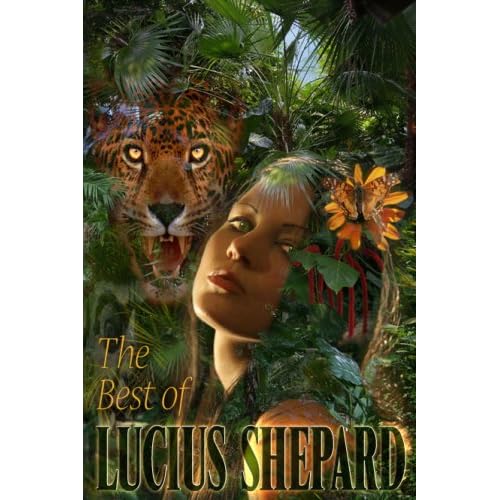 Lucius Shepard is the author of several novels, short stories, and novellas. Over the course of his long career, he has been nominated and won various awards including the John W. Campbell Award, The Hugo, and The Nebula Awards.
Thanks for agreeing to do the interview. Let's talk about your latest short story collection The Best of Lucius Shepard. How did Subterranean Press end up publishing it and what was your criteria for picking the stories in the book?
Bill Schaeffer asked me and I said, Sure. Simple as that. I actually didn’t pick most of the stories. I might have gone another way, included more of the later stories, different ones, but I’m happy with the book. People have complained that there’s no introduction—I could care less about an intro. The book is huge, over 600 pages, and I imagine Bill, like me, was pleased to sacrifice an intro so we could squeeze in another story. The stories I did pick were just ones I had a fondness for, like for instance, "Hands Up! Who Wants to Die?" I loved the narrative voice in that one so much, I’m writing another story about the same character, Maceo, called "Bad Hair Day". "Hands Up" wasn’t a popular story, but it’s a writer’s story, one writers might appreciate more than readers. Matter of fact, that and "Stars Seen Through Stone" were the only stories I was sure of. I would have liked to include "A Traveler’s Tale", which I think was my best early story, but you can’t have everything... though if I’d had to choose the stories myself, I might have wound up with only a handful of stories and a bunch of fragments.
You're a writer who's been published for more than two decades. What would you say is one of the biggest differences between your writing back then and your writing now? Do you have moments like "oh crap, I wrote that" or are you proud of all your babies?
The biggest difference between my writing 20 years ago and now, I don’t write as many terrible stories. I've learned not to go down so many wrong roads. I’m more precise with my language and I have a larger emotional palette. I use less adjectives, and I’ve learned to use adverbs. I don’t write quite as descriptively as once I did (there’s less emphasis on sensory detail) but that’s by choice and I do a much better job at evoking psychological nuance. Thus my characters are more well defined though where they are at any given moment is less so.
I’m not proud of anything I’ve written and I’m downright ashamed of quite a bit. I aspire to be proud of something someday.
You've written everything from short stories to novellas to novels. What length do you find yourself most comfortable with or does it all depend on the story?
Well, yeah, the story usually dictates its own length. In my case, I usually generate stories that seem to fall between 20 and 60 thousand words, the novella-short novel range. But part of that has been dictated by financial necessity, having to make money in the short term rather than utilizing the wiser and more lucrative strategy of writing novels. I’d like to think that but for fortune I’d be sitting on 10 more novels at least, but I don’t know. Actually I wrote a novella about that very subject called Dog-Eared Paperback Of My Life that’s coming out next year, about an alternate me who discovers my/his work while looking up his sales on Amazon and goes on a sort of odyssey described in one of the less financially successful writer’s books. I don’t think people will like it because the main character is a jerk, to put it mildly, but hey—never lie about yourself in prose, unless you’re writing something the police are going to hold you to.
Anyway, I’m trying to become a real novelist now. We’ll see how that works out.
In Nick Gever's interview with you at Infinity Plus, you mentioned that early on, you made a decision not to be a writer due to your horrible experiences with your father. What was the tipping point that made you pursue writing as a profession?
My band broke up. I was in my early thirties, and I looked around and said, Shit, I better find some other way of making a living. I didn’t want to wind up in an armpit bar playing ‘Melancholy Baby’ on the harmonica to a bunch of drunks who remembered me from when I used to be a local celebrity and came out to see me for old time’s sake. I had no skills except a certain facility with the English language, so I wrote half a story, based on this old man I had known down in San Cristobal de las Casas in Mexico. I didn't much like it and gave up on it. I was a mess. Depressed, drinking a lot, watching crud like Jim Baker and Pat Robertson on TV. I liked to mock them—I used to do a great imitation of Pat in the old days, spinning his Wheel of Fortune with the names of cities written on it and squeezing his eyes shut and saying, ‘Right now, the power of our Lord Jesus Christ is healing a case of gallstones in Quincy, Indiana.’ But I’m a southern boy, one of their own, and as much as I despised them, I came from that place they inhabited, where they honed their chops—I was prone to be victimized. One day while I was watching, the preacher told everybody out in TVland to put their hands on the TV set and ask Jesus to come into their heart. Well, damn if I didn’t lay my hands on the TV and I was just about to close my eyes and concentrate real hard and pray for Jesus to help me, when I became aware of what I was doing and jerked my hands away. Close fucking call. I might have felt a static discharge and mistaken it for divine intervention. That’s how bad off I was. So I told my wife what I had done and the next day she mailed my half-story off to the Clarion workshop without my knowledge. I remember on the day I got the acceptance letter, my horoscope in the Detroit Free Press said, ‘You will receive good news about a manuscript.’ How weird is that? When I read the letter, well, I knew Jesus couldn’t have been responsible, but I half-believed that the Big Red Dude was involved.
So that, and the workshop itself, which gave me confidence that I could do this, were the tipping points.
What are your current goals as a writer?
I’ve always had only one goal and that’s to write something that outlasts me. Still working on that. Currently I’m writing a sort-of vampire novel that I hope will win the Nobel Prize.
That might be a joke, in case you were wondering.
Are there any recent/new writers whose works excite you?
I don’t have time to read as much as I would like, but yeah, there are a few names : Kathy Sedia, Ben Peek, David Moles, Ben Rosenbaum. John Langan, Nathan Ballingrud. I don’t know if Laird Barron qualifies as a new writer, but I respond to his stuff. Michael Cisco has been around for a while, but he would be new to most people, unfortunately. Chris Barzak is newish—I dig him. Ysabeau Wilce is very cool. I loved that novella she had in F&SF. There are also writers who are relatively new to me like M. Rickert and Holly Black, but have been making waves for some time. I’m sure I’m leaving people out.
I'm a big fan of The Inferior 4+1. Since I'm interviewing you and not the rest of the crew, how did you get involved with The Inferior 4+1 and what's the origin story behind it? Why is it named The Inferior 4+1?
Was it Paul Witcover who came up with the name? I think so, though Paul Di Filippo may have been the guilty party. There was a comic called the Inferior Five (I never read it), so since we were four and planned on having the occasional guest blogger and didn’t want to be sued, we chose to call it what we did, or the I4 for short. There's supposed to be a banner beside the logo of the Inferior Four with the legend: Making the World Safe For Indie Writers. But no one’s gotten around to putting it up so far. Which is typical of us indie people.
Me and Liz Hand and Paul DiFi were going to do a group blog with Bruce Sterling, but Bruce wanted to make the blog a commercial enterprise and none of the rest of us had the energy for that, so we dragooned Paul W into joining. We just thought we ought to have some sort of web presence, no matter how pitiful. And that’s how the I4 became the media giant it is today.
Claiming that you've had an adventurous life is an understatement. What's the biggest hurdle you've had to face?
The death of my first wife in a car accident was certainly one. I was very young and it basically unhinged me. I did some things during the following years that I’m not proud of in the least—I think I indulged my grief, I chose to become a lunatic because it was easier than the alternative. I’m finally writing something about that, a short novel called Extras, which will be in a collection I have coming out from Golden Gryphon in 2010, so I’m not going to talk about it more here. I’ll just say that it still affects me, still governs choices I’ve made and make, and is probably responsible for a number of failed relationships.
The death of my friend and mentor, Robert Izdepski, who was a tireless worker for human rights in Central America... that was a bad one. We had a ton of things cooking. A documentary film (for which I planned to write the narration) about the oppression and plight of cane and banana workers in Nicaragua and Honduras, among other projects. I don’t know who can carry on his work. He was my moral referent and the most necessary individual I’ve ever met. He’d just won a court case in Honduras against the Dole Corporation, an almost impossible feat, and had a heart attack while celebrating on a trip to Costa Rica with two of his kids. I was merely a tiny part of his team and I’m hoping one of the kids will pick up the burden and get in touch with me. I was planning to write a book about Bob... but it required his participation, so that’s gone. That’s one hurdle I don’t know if I can get over.
I could go on, but I’d get too upset.
What kind of music do you listen to when you write?
None, actually. The trouble with music is that, having been a musician, I become too analytic about what I’m listening to and get caught up in it. What I do to prevent myself from getting too squirrely with all that silence is I turn on the TV low, usually to soap operas or the Lifetime Channel. I’ve written most of my stories with the Guiding Light or some G-rated battered wife movie on in the background. The only music I’ve ever been able to ignore is dub, and that won’t even work for me now. I’ll never be one of those guys who can show how cool (or uncool) they are by listing the bands they listened to while writing at the front of their books. It’s too bad. I know lots of obscure bands and I’d love to be able to say, Yeah, I wrote this while listening to Six Organs of Admittance, the Drones, Da Bedi, Alisha Kandisha, Ahlam, Oneida, the Necks, and Ta Dungen. Though I suppose now I sorta have.
You used to be part of a band. Did you ever consider of playing in a band again?
Now? Nope. Unless it’s a fun kind of thing, like playing a one-off set at a con. Even then, I’d be reluctant. My voice is scarily out of shape. Being in a band takes too much energy and time. I’m an obsessive, and I’d want to get it right, so it just wouldn’t be productive for me. Ten years ago, however, I might have been tempted. My ex-brother in law keeps trying to get me in a studio so we can lay down some tunes. Maybe I’ll go for that, because I still enjoy singing and writing music.
How did you get your start in boxing?
I kept getting in fights at school. In the 8th grade, I think I got into some kind of altercation every single day at lunch period. So one day I was at my semi-weekly appointment with the juvie officer (I was on sort of unofficial probation) and he took me to a gym and handed me over to this boxing coach. I was a big kid for 12, and I took to the training pretty well. Boxing coaches don’t mess around with the spiritual side like teachers of karate and tae kwon do. They just say, this’ll knock somebody’s head off and I appreciated that. I liked hitting things, especially when the things were people trying to hit me. But I could have probably used some of the spiritual stuff to ameliorate the ‘hit him in the liver’ approach of my coach. Learning boxing simply made me more of a junior badass. I doubt that was the juvie officer’s intent. Anyway, I boxed for 2,3 years and then got KOed by this guy who looked like a pushover but was very fast. I never saw it coming. When I woke up I didn’t know what had happened. After that, I limited my fighting to bars and such, where I wasn’t as likely to get knocked out.
Is there any tie between your familiarity with boxing and your fascination with martial arts movies?
Yeah, I’m sure there is, and my affinity for many varieties of violent behavior can, I’m sure, be traced back to my childhood; but the past is dead and now I just like watching men or women fight, whether in the movies or the ring or the cage. I’m entranced by the violent arts: boxing, grappling, the martial arts, self-defense systems that are purely efficient like Krav Maga, and so forth.
Like my friend, Katherine Dunn once said of herself, I’d watch a knife fight in an alley. Sometimes I try to come up with some nifty-sounding raison d’etre, but the truth is that while I’m interested in aggression, its causes, its male and female incarnations, etc., I simply enjoy a good fight. But I do like martial arts movies, especially the wuxia of King Hu and the films of Sammo Hung and Bolo Yeung, some of the films of Jeff Speakeman like THE PERFECT WEAPON and Marc Dascascos... Few people are aware that Dascascos’ parents pioneered in the development of martial arts in this country and he’s one of the rare martial arts stars who can actually fight. You can see him fighting his own style in THE BROTHERHOOD OF THE WOLF and a quickie he made called DRIVE. Of course I like Bruce Lee films, too, and Sonny Chiba and early to middle period Jet Li. Martial arts movies are usually fables or simple stories with complex violence. That could be almost be a description of my life, a big part of it, anyway—maybe that’s another reason why I like them. They reflect a measure of my reality in a more dramatic and pleasing way.
Who's your favorite martial artist and why?
Right now it’s Tony Jaa who was in a movie called Ong Bak a few years ago and was all set to become the next Asian superstar, when personal issues intervened. Now he’s back on track and Ong Bak 2 is due this fall in the theaters. What I like about Jaa was his movie had no wire work, it was all about his unbelievable athleticism (some of his stunts were almost superhuman), and his fighting style, which is a primitive form of Muay Thai, very efficient and brutal. I don’t believe he has the charisma of a Bruce Lee, but I believe if the two men actually fought, Jaa would have a very good chance of winning
Do you have any commentary on the public's recent fascination with mixed martial arts?
I love MMA. When I’m home I sometimes go over to Team Quest’s gym and watch folks like Dan Henderson, Chris Leben, Ryan Schulz, Randy Couture (he’s since moved on), and Matt Lindland train. I did an article for Playboy on Chuck Liddell and spent several days with him while he was training for the Quentin Jackson fight. The training these fighters (men and women) undergo is amazing. When they’re getting ready for a fight, it’s not unusual to see them in the gym 8 hours a day, that in addition to cardio work. Most of them are well-spoken, intelligent people with college degrees and have traveled the world as college athletes, so when you have to write about them they’re much more likely to treat you as a professional than many other sports stars.
As for the public’s fascination with the sport, I expect it breaks down this way. The uneducated fans like the blood and the violence, though in reality, MMA is a lot less violent than boxing as regards serious injury. Getting hit a few times with four oz. gloves (usually all it takes) in an MMA fight doesn’t do nearly as much damage as having your brain slapped around a couple of hundred times in a boxing match. The educated fans dig on the techniques involved, but also like the blood and the violence. The MMA fighter cross-trains in Brazilian ju jitsu, grappling, boxing, Muay Thay (kickboxing), and usually one form or another of karate. On the elite level, guys like Fedor Emelienko, George St. Pierre, BJ Penn, Anderson Silva... those men’s skills are incredible. Bottom line, anyone who’s into combat sports responds to violence. I don’t attempt to explain or justify that, it’s just true. I have friends who claim to be interested in the varieties of aggressive behavior, and I don’t doubt that’s true—but they like combat sports as much as I, so their intellectual attachment is a corollary to their visceral one.
On another level, why the public likes it is due to the intelligence with which the sport has been marketed. The Fertiti Brothers and Dana White, who own and run the UFC, knew the demographic they were after and marketed the sport with heavy doses of aggro metal and good-looking women. Doesn’t take a genius to come up with that marketing strategy, but boxing still hasn’t learned the lesson and, as a result, boxing fans as a demographic are growing older and older.
Speaking of movies, how did you end up in that particular industry?
I took a break from writing in the mid-nineties and offered to prostitute myself. Fortunately there weren’t that many takers or I might have wound up wearing black Hugo Boss shirts and taking meetings for a living and believing everything I said. That was a particularly unpleasant period of my life. I was working with people I didn’t respect and that led me to do a lot of very unenlightening drugs. I’ve always had self-esteem issues and LA exacerbated them. Fortunately a few interesting stories have come out of that period. "Larissa Miusov" in Eclipse and a story Playboy has but hasn’t published yet called "The Company He Keeps", and a couple of others. But for the most part, my time in show biz was a waste. I made a lot of money (compared to what I made writing fiction), but I pissed it away, so the whole thing was a wash.
I’m fussing with another Hollywood story, "Dreamburgers At The Mouth of Hell", which may be my definitive statement on the subject.
What are some of the challenges in writing movie reviews?
Well, the main challenge in writing movie reviews for me is in finding good movies. There just aren’t that many good genre movies, in my opinion. Occasionally we’re blessed with one, but for the most part we’re forced to look at what I consider sub-par (to be kind) entertainment. Unlike many reviewers, I refuse to grade on a curve. The idea, for instance, that summer movies should be given a pass because they’re ‘thrill rides’ is bogus—they cost ten bucks, don’t they? They pretend to be entertainment for adults, right? Take a film like DIEHARD. Made in the what... late 80s? Twenty years later and we get excrement like NATIONAL TREASURE and SWORDFISH and ULTRAVIOLET and DOMINO. Compared to those films, DIEHARD is a freaking masterpiece of character development and plot. If we're to grade on a curve, I’d use a film like Diehard as about a C, C+. So finding good movies... that’s the biggest problem. The second biggest problem for me lies in convincing people that I’m not a snob because I hate their favorite movie. People react to that by claiming I don’t like anything except films with subtitles or no budgets, and I have to explain that there’s a reason for that—because with the rare exception, that’s the only place you find a developed story and more than cardboard characters anymore. Take THE SHAWSHANK REDEMPTION, for instance. One of the most puerile, ludicrous, infantile pieces of dreck that ever was flushed down the Hollywood toilet. I mean it’s like a fucking Disney movie about convicts. Yet people love it. Maybe they look at it as a fantasy, but even fantasy has to have a foothold in reality. There’s none in TSR. Being best buds with a black con might get you shanked today; in the 1940s it would have been a sure thing, even in Maine. And does anybody else think that Andy locking himself in the warden’s office and playing opera over the PA would have gotten him in deep doo-doo with the entire population? There’d be a line around the block waiting for a shot at offing him. Convicts are not, generally speaking, opera lovers. Now if TSR had been a parody with comical songs, that would have worked, maybe. Oh well. For the record, I like a whole lot of crap. Romantic comedies, martial arts films, bad horror and scifi films, etc. I ‘m just of the opinion that there should be something other than crap to go along with it. It’s a radical view, I admit.
Otherwise, film reviews are a snap. They’re fun. It gives me great pleasure to insult bad actors and directors who should be putting on Civil War pageants in Drainpipe, Arkansas.
As far as the publishing industry goes, what's the biggest change (or lack of it) that you've witnessed in the past twenty plus years? What's something you want to change about it?
I think the biggest change has been in myself, waking to the realization that Lord Jim and Ulysses were standalone novels, that they required this special designation to differentiate them from the standard trilogy. Seriously, though, I don’t know what I can add to the usual cant. For various reasons, publishing has become increasingly more like Hollywood than like publishing used to be. And when I came along, the old publishing world was already heading down that road. I remember Russell Banks once told me how he’d sit down with Ted Solotaroff and his manuscript would have about a thousand post-its on the pages that Ted had written, and they would have this one- or two-week long dialog about the post-its before they made any editing decisions. I never had that experience with an editor, not even close, and I would have welcomed it, because I didn’t know what I was doing. Hell, I still don’t. But editors were already too busy to edit when I entered the game, doing focus meetings and sales conferences and playing corporate reindeer games and etc. They wrote ‘editorial letters’ that gave a few broad hints about what they thought needed to be done, but nothing in detail. I’m sure there are those among them who can edit and have edited, but nowadays they’re even busier not editing than they used to be. So that’s one thing I’d change—I’d bring back the Maxwell Perkins experience into editing.
A publisher told me over a beer one day: We don’t publish books, we build careers. That‘s a nice slogan, very snappy, makes a good jingle, and it should be the title of someone’s book about publishing, or the name of a new breakfast treat. It implies a partnership with one’s publisher. If only it were true. If only publishers nourished talent and helped guide it along the proper course, instead of jamming it into a slot and selling it as something it’s not and then punishing the author for daring to write a book that wasn’t commercial enough or too commercial or whatever. So that would be another thing I’d change: Authors and publishers would be in partnerships together, rather than one treating the other like yesterday’s cole slaw.
I’d also make sinful publishers run a gauntlet of dominatrix romance writers armed with goads and iron flails... but that’s probably too realistic.
What advice do you have for aspiring writers?
Careerwise, I don’t think I should be giving advice to anyone. Writerly advice, well, just the usual. Write a lot. Write all the time. Be obsessive with it. Steal stuff from writers you admire. Never carry a camera—rely on your memory and your senses to record and interpret the world. I remember when I first went to Egypt I took a trip out to this oasis named Siwa and I came back with about five hundred pictures of sand and little memory of doing other than taking pictures. After that I threw the camera away. Miniature tape recorders are good in order to get to know how dialogue really sounds. After a while you won’t need one. It’s like in school when I used to write cheat sheets—by the time I finished writing them I had the answers down pat and didn’t need them. But recorders are useful for focusing your ear. Theodore Roethke once said, Facts are jewels. They are jewels for a writer. The specifics are what connect with a reader, what give him that special sense of place. Develop your ear and your eye, and you’ll be halfway there. Write what you know, but know as much of the world as you can. Go get yourself a scar and a tattoo. Do some living. Take some risks. It amazes me how many writers I meet who haven’t done much besides go to school and write and hold down a few jobs. Maybe that works for them; I’m certain it does for some; but I remember what my freshman advisor said to me the first time we met. He asked, What do you want to be? I said, maybe a rock and roll musician, or a writer. He said, What are you doing here?
You can always go to college, but you can’t always be 19 or 20. So my best advice would be to live a few stories before you try and write one. Feel some shit. Get intense. Forget who you want to be and be who you are for a while. You may be surprised by what develops. Living that way will give you a bunch of material and teach you a hell of a lot about narrative. Having to talk your way out of trouble in, say, Medan, Indonesia when it’s pouring rain and this little swarthy guy in sunglasses and khakis with a big gun is about to take you for a drive... that can be extremely instructive about the art of bullshit, which is indispensable for a writer. You might not survive it, but look at it as a learning experience.
How about advice for aspiring movie reviewers?
The way things are going, I guess I’d ask, Why bother? If you’re going to get a pay check for reviewing, chances are you’re going to be forced to like damn near everything that comes out of the Hollywood pipeline, or else you’ll be fired. I know a number of reviewers in the print media who have faced this issue and caved. I guess it’s still an easy gig, going to free movies and telling lies about them, but it sure doesn’t offer much in the way of a sense of accomplishment or self-respect. Don’t fall into the trap of worshiping pop culture and thinking that you can make a difference, maybe improve the product, by engaging it on a serious critical level. You can’t. One of the most important functions of the pop culture industry is to generate reams of criticism, both positive and negative, for every artifact produced by the culture industries. By gently chiding these people, suggesting improvements, etc., you’re simply becoming part of the process, playing their game, and they have no reason to pay attention to you. My way, a way I’ve found occasionally gets the attention of movie producers and directors, is to ridicule them, to piss them off if that’s possible.
I had a dust-up with an internet critic recently, a true believer who felt that my methods were tired, and the only real way to influence Hollywood was through gentle persuasion and serious critical engagement. After I got through being pissed off, I wrote a long piece that I was going to post on my blog (but chose not to) that stated pop culture studies and criticism has been carried out in the academic and other spheres for the last fifty years. During that time, while the technical production values of movies and TV shows have improved greatly, the concepts of story and character development have taken a brutal beating and suffered a steady decline until we’ve reached the point that there are treatments written (I’ve seen them) for Hollywood films that specify there will be no emphasis given to character development whatsoever. So encouraging the industry with polite criticism has been proven not to work. To my mind, this is unequivocal, and a case can be made that this sort of criticism has actually exacerbated the problem. Popular studies courses have invaded university curriculums all across the nation. Courses like Princeton’s Getting Dressed, which allows students to discuss ‘jeans and baseball caps, flip-flops and high top sneakers,’ and Penn’s Society at Play, which concerns itself with the significance of coffee shops, malls, Disney movies, the Simpsons, and films such as ‘Pretty Woman.’ To be fair, there are more scholarly courses available that offer the deep bullshit of social critics like John Hartley, whose latest book examines the phenomenon of supermodels and the films of Arnold Scharzenegger, focusing particularly on T-2. Frankly I don’t need an in-depth analysis of T2’s content, political or otherwise. It requires neither Cliff Notes nor an academic filter to understand. The main reason most often given to questions asking why these studies are significant is, so we can learn more about ourselves. Fuck learning about ourselves, at least on this childish level. We’ve become a culture of piddling self-indulgent narcissists whose principal occupation is trying to justify our lack of intellectual rigor by proclaiming ourselves intellectuals in every trivial facet of our lives, in our adolescent obsessions with Dr. Who and Airtender and so forth.
So yeah, I try to make rude noises and wreck bathrooms and yell at the corporate assholes who forcefeed us crap. Why not? The alternative doesn’t seem to do any good. I don’t know if that’s advice, but it’s all l’ve got.
Anything else you want to plug?
Nah.
Lucius Shepard is the author of several novels, short stories, and novellas. Over the course of his long career, he has been nominated and won various awards including the John W. Campbell Award, The Hugo, and The Nebula Awards.Thanks for agreeing to do the interview. Let's talk about your latest short story collection The Best of Lucius Shepard. How did Subterranean Press end up publishing it and what was your criteria for picking the stories in the book?
Bill Schaeffer asked me and I said, Sure. Simple as that. I actually didn’t pick most of the stories. I might have gone another way, included more of the later stories, different ones, but I’m happy with the book. People have complained that there’s no introduction—I could care less about an intro. The book is huge, over 600 pages, and I imagine Bill, like me, was pleased to sacrifice an intro so we could squeeze in another story. The stories I did pick were just ones I had a fondness for, like for instance, "Hands Up! Who Wants to Die?" I loved the narrative voice in that one so much, I’m writing another story about the same character, Maceo, called "Bad Hair Day". "Hands Up" wasn’t a popular story, but it’s a writer’s story, one writers might appreciate more than readers. Matter of fact, that and "Stars Seen Through Stone" were the only stories I was sure of. I would have liked to include "A Traveler’s Tale", which I think was my best early story, but you can’t have everything... though if I’d had to choose the stories myself, I might have wound up with only a handful of stories and a bunch of fragments.
You're a writer who's been published for more than two decades. What would you say is one of the biggest differences between your writing back then and your writing now? Do you have moments like "oh crap, I wrote that" or are you proud of all your babies?
The biggest difference between my writing 20 years ago and now, I don’t write as many terrible stories. I've learned not to go down so many wrong roads. I’m more precise with my language and I have a larger emotional palette. I use less adjectives, and I’ve learned to use adverbs. I don’t write quite as descriptively as once I did (there’s less emphasis on sensory detail) but that’s by choice and I do a much better job at evoking psychological nuance. Thus my characters are more well defined though where they are at any given moment is less so.
I’m not proud of anything I’ve written and I’m downright ashamed of quite a bit. I aspire to be proud of something someday.
You've written everything from short stories to novellas to novels. What length do you find yourself most comfortable with or does it all depend on the story?
Well, yeah, the story usually dictates its own length. In my case, I usually generate stories that seem to fall between 20 and 60 thousand words, the novella-short novel range. But part of that has been dictated by financial necessity, having to make money in the short term rather than utilizing the wiser and more lucrative strategy of writing novels. I’d like to think that but for fortune I’d be sitting on 10 more novels at least, but I don’t know. Actually I wrote a novella about that very subject called Dog-Eared Paperback Of My Life that’s coming out next year, about an alternate me who discovers my/his work while looking up his sales on Amazon and goes on a sort of odyssey described in one of the less financially successful writer’s books. I don’t think people will like it because the main character is a jerk, to put it mildly, but hey—never lie about yourself in prose, unless you’re writing something the police are going to hold you to.
Anyway, I’m trying to become a real novelist now. We’ll see how that works out.
In Nick Gever's interview with you at Infinity Plus, you mentioned that early on, you made a decision not to be a writer due to your horrible experiences with your father. What was the tipping point that made you pursue writing as a profession?
My band broke up. I was in my early thirties, and I looked around and said, Shit, I better find some other way of making a living. I didn’t want to wind up in an armpit bar playing ‘Melancholy Baby’ on the harmonica to a bunch of drunks who remembered me from when I used to be a local celebrity and came out to see me for old time’s sake. I had no skills except a certain facility with the English language, so I wrote half a story, based on this old man I had known down in San Cristobal de las Casas in Mexico. I didn't much like it and gave up on it. I was a mess. Depressed, drinking a lot, watching crud like Jim Baker and Pat Robertson on TV. I liked to mock them—I used to do a great imitation of Pat in the old days, spinning his Wheel of Fortune with the names of cities written on it and squeezing his eyes shut and saying, ‘Right now, the power of our Lord Jesus Christ is healing a case of gallstones in Quincy, Indiana.’ But I’m a southern boy, one of their own, and as much as I despised them, I came from that place they inhabited, where they honed their chops—I was prone to be victimized. One day while I was watching, the preacher told everybody out in TVland to put their hands on the TV set and ask Jesus to come into their heart. Well, damn if I didn’t lay my hands on the TV and I was just about to close my eyes and concentrate real hard and pray for Jesus to help me, when I became aware of what I was doing and jerked my hands away. Close fucking call. I might have felt a static discharge and mistaken it for divine intervention. That’s how bad off I was. So I told my wife what I had done and the next day she mailed my half-story off to the Clarion workshop without my knowledge. I remember on the day I got the acceptance letter, my horoscope in the Detroit Free Press said, ‘You will receive good news about a manuscript.’ How weird is that? When I read the letter, well, I knew Jesus couldn’t have been responsible, but I half-believed that the Big Red Dude was involved.
So that, and the workshop itself, which gave me confidence that I could do this, were the tipping points.
What are your current goals as a writer?
I’ve always had only one goal and that’s to write something that outlasts me. Still working on that. Currently I’m writing a sort-of vampire novel that I hope will win the Nobel Prize.
That might be a joke, in case you were wondering.
Are there any recent/new writers whose works excite you?
I don’t have time to read as much as I would like, but yeah, there are a few names : Kathy Sedia, Ben Peek, David Moles, Ben Rosenbaum. John Langan, Nathan Ballingrud. I don’t know if Laird Barron qualifies as a new writer, but I respond to his stuff. Michael Cisco has been around for a while, but he would be new to most people, unfortunately. Chris Barzak is newish—I dig him. Ysabeau Wilce is very cool. I loved that novella she had in F&SF. There are also writers who are relatively new to me like M. Rickert and Holly Black, but have been making waves for some time. I’m sure I’m leaving people out.
I'm a big fan of The Inferior 4+1. Since I'm interviewing you and not the rest of the crew, how did you get involved with The Inferior 4+1 and what's the origin story behind it? Why is it named The Inferior 4+1?
Was it Paul Witcover who came up with the name? I think so, though Paul Di Filippo may have been the guilty party. There was a comic called the Inferior Five (I never read it), so since we were four and planned on having the occasional guest blogger and didn’t want to be sued, we chose to call it what we did, or the I4 for short. There's supposed to be a banner beside the logo of the Inferior Four with the legend: Making the World Safe For Indie Writers. But no one’s gotten around to putting it up so far. Which is typical of us indie people.
Me and Liz Hand and Paul DiFi were going to do a group blog with Bruce Sterling, but Bruce wanted to make the blog a commercial enterprise and none of the rest of us had the energy for that, so we dragooned Paul W into joining. We just thought we ought to have some sort of web presence, no matter how pitiful. And that’s how the I4 became the media giant it is today.
Claiming that you've had an adventurous life is an understatement. What's the biggest hurdle you've had to face?
The death of my first wife in a car accident was certainly one. I was very young and it basically unhinged me. I did some things during the following years that I’m not proud of in the least—I think I indulged my grief, I chose to become a lunatic because it was easier than the alternative. I’m finally writing something about that, a short novel called Extras, which will be in a collection I have coming out from Golden Gryphon in 2010, so I’m not going to talk about it more here. I’ll just say that it still affects me, still governs choices I’ve made and make, and is probably responsible for a number of failed relationships.
The death of my friend and mentor, Robert Izdepski, who was a tireless worker for human rights in Central America... that was a bad one. We had a ton of things cooking. A documentary film (for which I planned to write the narration) about the oppression and plight of cane and banana workers in Nicaragua and Honduras, among other projects. I don’t know who can carry on his work. He was my moral referent and the most necessary individual I’ve ever met. He’d just won a court case in Honduras against the Dole Corporation, an almost impossible feat, and had a heart attack while celebrating on a trip to Costa Rica with two of his kids. I was merely a tiny part of his team and I’m hoping one of the kids will pick up the burden and get in touch with me. I was planning to write a book about Bob... but it required his participation, so that’s gone. That’s one hurdle I don’t know if I can get over.
I could go on, but I’d get too upset.
What kind of music do you listen to when you write?
None, actually. The trouble with music is that, having been a musician, I become too analytic about what I’m listening to and get caught up in it. What I do to prevent myself from getting too squirrely with all that silence is I turn on the TV low, usually to soap operas or the Lifetime Channel. I’ve written most of my stories with the Guiding Light or some G-rated battered wife movie on in the background. The only music I’ve ever been able to ignore is dub, and that won’t even work for me now. I’ll never be one of those guys who can show how cool (or uncool) they are by listing the bands they listened to while writing at the front of their books. It’s too bad. I know lots of obscure bands and I’d love to be able to say, Yeah, I wrote this while listening to Six Organs of Admittance, the Drones, Da Bedi, Alisha Kandisha, Ahlam, Oneida, the Necks, and Ta Dungen. Though I suppose now I sorta have.
You used to be part of a band. Did you ever consider of playing in a band again?
Now? Nope. Unless it’s a fun kind of thing, like playing a one-off set at a con. Even then, I’d be reluctant. My voice is scarily out of shape. Being in a band takes too much energy and time. I’m an obsessive, and I’d want to get it right, so it just wouldn’t be productive for me. Ten years ago, however, I might have been tempted. My ex-brother in law keeps trying to get me in a studio so we can lay down some tunes. Maybe I’ll go for that, because I still enjoy singing and writing music.
How did you get your start in boxing?
I kept getting in fights at school. In the 8th grade, I think I got into some kind of altercation every single day at lunch period. So one day I was at my semi-weekly appointment with the juvie officer (I was on sort of unofficial probation) and he took me to a gym and handed me over to this boxing coach. I was a big kid for 12, and I took to the training pretty well. Boxing coaches don’t mess around with the spiritual side like teachers of karate and tae kwon do. They just say, this’ll knock somebody’s head off and I appreciated that. I liked hitting things, especially when the things were people trying to hit me. But I could have probably used some of the spiritual stuff to ameliorate the ‘hit him in the liver’ approach of my coach. Learning boxing simply made me more of a junior badass. I doubt that was the juvie officer’s intent. Anyway, I boxed for 2,3 years and then got KOed by this guy who looked like a pushover but was very fast. I never saw it coming. When I woke up I didn’t know what had happened. After that, I limited my fighting to bars and such, where I wasn’t as likely to get knocked out.
Is there any tie between your familiarity with boxing and your fascination with martial arts movies?
Yeah, I’m sure there is, and my affinity for many varieties of violent behavior can, I’m sure, be traced back to my childhood; but the past is dead and now I just like watching men or women fight, whether in the movies or the ring or the cage. I’m entranced by the violent arts: boxing, grappling, the martial arts, self-defense systems that are purely efficient like Krav Maga, and so forth.
Like my friend, Katherine Dunn once said of herself, I’d watch a knife fight in an alley. Sometimes I try to come up with some nifty-sounding raison d’etre, but the truth is that while I’m interested in aggression, its causes, its male and female incarnations, etc., I simply enjoy a good fight. But I do like martial arts movies, especially the wuxia of King Hu and the films of Sammo Hung and Bolo Yeung, some of the films of Jeff Speakeman like THE PERFECT WEAPON and Marc Dascascos... Few people are aware that Dascascos’ parents pioneered in the development of martial arts in this country and he’s one of the rare martial arts stars who can actually fight. You can see him fighting his own style in THE BROTHERHOOD OF THE WOLF and a quickie he made called DRIVE. Of course I like Bruce Lee films, too, and Sonny Chiba and early to middle period Jet Li. Martial arts movies are usually fables or simple stories with complex violence. That could be almost be a description of my life, a big part of it, anyway—maybe that’s another reason why I like them. They reflect a measure of my reality in a more dramatic and pleasing way.
Who's your favorite martial artist and why?
Right now it’s Tony Jaa who was in a movie called Ong Bak a few years ago and was all set to become the next Asian superstar, when personal issues intervened. Now he’s back on track and Ong Bak 2 is due this fall in the theaters. What I like about Jaa was his movie had no wire work, it was all about his unbelievable athleticism (some of his stunts were almost superhuman), and his fighting style, which is a primitive form of Muay Thai, very efficient and brutal. I don’t believe he has the charisma of a Bruce Lee, but I believe if the two men actually fought, Jaa would have a very good chance of winning
Do you have any commentary on the public's recent fascination with mixed martial arts?
I love MMA. When I’m home I sometimes go over to Team Quest’s gym and watch folks like Dan Henderson, Chris Leben, Ryan Schulz, Randy Couture (he’s since moved on), and Matt Lindland train. I did an article for Playboy on Chuck Liddell and spent several days with him while he was training for the Quentin Jackson fight. The training these fighters (men and women) undergo is amazing. When they’re getting ready for a fight, it’s not unusual to see them in the gym 8 hours a day, that in addition to cardio work. Most of them are well-spoken, intelligent people with college degrees and have traveled the world as college athletes, so when you have to write about them they’re much more likely to treat you as a professional than many other sports stars.
As for the public’s fascination with the sport, I expect it breaks down this way. The uneducated fans like the blood and the violence, though in reality, MMA is a lot less violent than boxing as regards serious injury. Getting hit a few times with four oz. gloves (usually all it takes) in an MMA fight doesn’t do nearly as much damage as having your brain slapped around a couple of hundred times in a boxing match. The educated fans dig on the techniques involved, but also like the blood and the violence. The MMA fighter cross-trains in Brazilian ju jitsu, grappling, boxing, Muay Thay (kickboxing), and usually one form or another of karate. On the elite level, guys like Fedor Emelienko, George St. Pierre, BJ Penn, Anderson Silva... those men’s skills are incredible. Bottom line, anyone who’s into combat sports responds to violence. I don’t attempt to explain or justify that, it’s just true. I have friends who claim to be interested in the varieties of aggressive behavior, and I don’t doubt that’s true—but they like combat sports as much as I, so their intellectual attachment is a corollary to their visceral one.
On another level, why the public likes it is due to the intelligence with which the sport has been marketed. The Fertiti Brothers and Dana White, who own and run the UFC, knew the demographic they were after and marketed the sport with heavy doses of aggro metal and good-looking women. Doesn’t take a genius to come up with that marketing strategy, but boxing still hasn’t learned the lesson and, as a result, boxing fans as a demographic are growing older and older.
Speaking of movies, how did you end up in that particular industry?
I took a break from writing in the mid-nineties and offered to prostitute myself. Fortunately there weren’t that many takers or I might have wound up wearing black Hugo Boss shirts and taking meetings for a living and believing everything I said. That was a particularly unpleasant period of my life. I was working with people I didn’t respect and that led me to do a lot of very unenlightening drugs. I’ve always had self-esteem issues and LA exacerbated them. Fortunately a few interesting stories have come out of that period. "Larissa Miusov" in Eclipse and a story Playboy has but hasn’t published yet called "The Company He Keeps", and a couple of others. But for the most part, my time in show biz was a waste. I made a lot of money (compared to what I made writing fiction), but I pissed it away, so the whole thing was a wash.
I’m fussing with another Hollywood story, "Dreamburgers At The Mouth of Hell", which may be my definitive statement on the subject.
What are some of the challenges in writing movie reviews?
Well, the main challenge in writing movie reviews for me is in finding good movies. There just aren’t that many good genre movies, in my opinion. Occasionally we’re blessed with one, but for the most part we’re forced to look at what I consider sub-par (to be kind) entertainment. Unlike many reviewers, I refuse to grade on a curve. The idea, for instance, that summer movies should be given a pass because they’re ‘thrill rides’ is bogus—they cost ten bucks, don’t they? They pretend to be entertainment for adults, right? Take a film like DIEHARD. Made in the what... late 80s? Twenty years later and we get excrement like NATIONAL TREASURE and SWORDFISH and ULTRAVIOLET and DOMINO. Compared to those films, DIEHARD is a freaking masterpiece of character development and plot. If we're to grade on a curve, I’d use a film like Diehard as about a C, C+. So finding good movies... that’s the biggest problem. The second biggest problem for me lies in convincing people that I’m not a snob because I hate their favorite movie. People react to that by claiming I don’t like anything except films with subtitles or no budgets, and I have to explain that there’s a reason for that—because with the rare exception, that’s the only place you find a developed story and more than cardboard characters anymore. Take THE SHAWSHANK REDEMPTION, for instance. One of the most puerile, ludicrous, infantile pieces of dreck that ever was flushed down the Hollywood toilet. I mean it’s like a fucking Disney movie about convicts. Yet people love it. Maybe they look at it as a fantasy, but even fantasy has to have a foothold in reality. There’s none in TSR. Being best buds with a black con might get you shanked today; in the 1940s it would have been a sure thing, even in Maine. And does anybody else think that Andy locking himself in the warden’s office and playing opera over the PA would have gotten him in deep doo-doo with the entire population? There’d be a line around the block waiting for a shot at offing him. Convicts are not, generally speaking, opera lovers. Now if TSR had been a parody with comical songs, that would have worked, maybe. Oh well. For the record, I like a whole lot of crap. Romantic comedies, martial arts films, bad horror and scifi films, etc. I ‘m just of the opinion that there should be something other than crap to go along with it. It’s a radical view, I admit.
Otherwise, film reviews are a snap. They’re fun. It gives me great pleasure to insult bad actors and directors who should be putting on Civil War pageants in Drainpipe, Arkansas.
As far as the publishing industry goes, what's the biggest change (or lack of it) that you've witnessed in the past twenty plus years? What's something you want to change about it?
I think the biggest change has been in myself, waking to the realization that Lord Jim and Ulysses were standalone novels, that they required this special designation to differentiate them from the standard trilogy. Seriously, though, I don’t know what I can add to the usual cant. For various reasons, publishing has become increasingly more like Hollywood than like publishing used to be. And when I came along, the old publishing world was already heading down that road. I remember Russell Banks once told me how he’d sit down with Ted Solotaroff and his manuscript would have about a thousand post-its on the pages that Ted had written, and they would have this one- or two-week long dialog about the post-its before they made any editing decisions. I never had that experience with an editor, not even close, and I would have welcomed it, because I didn’t know what I was doing. Hell, I still don’t. But editors were already too busy to edit when I entered the game, doing focus meetings and sales conferences and playing corporate reindeer games and etc. They wrote ‘editorial letters’ that gave a few broad hints about what they thought needed to be done, but nothing in detail. I’m sure there are those among them who can edit and have edited, but nowadays they’re even busier not editing than they used to be. So that’s one thing I’d change—I’d bring back the Maxwell Perkins experience into editing.
A publisher told me over a beer one day: We don’t publish books, we build careers. That‘s a nice slogan, very snappy, makes a good jingle, and it should be the title of someone’s book about publishing, or the name of a new breakfast treat. It implies a partnership with one’s publisher. If only it were true. If only publishers nourished talent and helped guide it along the proper course, instead of jamming it into a slot and selling it as something it’s not and then punishing the author for daring to write a book that wasn’t commercial enough or too commercial or whatever. So that would be another thing I’d change: Authors and publishers would be in partnerships together, rather than one treating the other like yesterday’s cole slaw.
I’d also make sinful publishers run a gauntlet of dominatrix romance writers armed with goads and iron flails... but that’s probably too realistic.
What advice do you have for aspiring writers?
Careerwise, I don’t think I should be giving advice to anyone. Writerly advice, well, just the usual. Write a lot. Write all the time. Be obsessive with it. Steal stuff from writers you admire. Never carry a camera—rely on your memory and your senses to record and interpret the world. I remember when I first went to Egypt I took a trip out to this oasis named Siwa and I came back with about five hundred pictures of sand and little memory of doing other than taking pictures. After that I threw the camera away. Miniature tape recorders are good in order to get to know how dialogue really sounds. After a while you won’t need one. It’s like in school when I used to write cheat sheets—by the time I finished writing them I had the answers down pat and didn’t need them. But recorders are useful for focusing your ear. Theodore Roethke once said, Facts are jewels. They are jewels for a writer. The specifics are what connect with a reader, what give him that special sense of place. Develop your ear and your eye, and you’ll be halfway there. Write what you know, but know as much of the world as you can. Go get yourself a scar and a tattoo. Do some living. Take some risks. It amazes me how many writers I meet who haven’t done much besides go to school and write and hold down a few jobs. Maybe that works for them; I’m certain it does for some; but I remember what my freshman advisor said to me the first time we met. He asked, What do you want to be? I said, maybe a rock and roll musician, or a writer. He said, What are you doing here?
You can always go to college, but you can’t always be 19 or 20. So my best advice would be to live a few stories before you try and write one. Feel some shit. Get intense. Forget who you want to be and be who you are for a while. You may be surprised by what develops. Living that way will give you a bunch of material and teach you a hell of a lot about narrative. Having to talk your way out of trouble in, say, Medan, Indonesia when it’s pouring rain and this little swarthy guy in sunglasses and khakis with a big gun is about to take you for a drive... that can be extremely instructive about the art of bullshit, which is indispensable for a writer. You might not survive it, but look at it as a learning experience.
How about advice for aspiring movie reviewers?
The way things are going, I guess I’d ask, Why bother? If you’re going to get a pay check for reviewing, chances are you’re going to be forced to like damn near everything that comes out of the Hollywood pipeline, or else you’ll be fired. I know a number of reviewers in the print media who have faced this issue and caved. I guess it’s still an easy gig, going to free movies and telling lies about them, but it sure doesn’t offer much in the way of a sense of accomplishment or self-respect. Don’t fall into the trap of worshiping pop culture and thinking that you can make a difference, maybe improve the product, by engaging it on a serious critical level. You can’t. One of the most important functions of the pop culture industry is to generate reams of criticism, both positive and negative, for every artifact produced by the culture industries. By gently chiding these people, suggesting improvements, etc., you’re simply becoming part of the process, playing their game, and they have no reason to pay attention to you. My way, a way I’ve found occasionally gets the attention of movie producers and directors, is to ridicule them, to piss them off if that’s possible.
I had a dust-up with an internet critic recently, a true believer who felt that my methods were tired, and the only real way to influence Hollywood was through gentle persuasion and serious critical engagement. After I got through being pissed off, I wrote a long piece that I was going to post on my blog (but chose not to) that stated pop culture studies and criticism has been carried out in the academic and other spheres for the last fifty years. During that time, while the technical production values of movies and TV shows have improved greatly, the concepts of story and character development have taken a brutal beating and suffered a steady decline until we’ve reached the point that there are treatments written (I’ve seen them) for Hollywood films that specify there will be no emphasis given to character development whatsoever. So encouraging the industry with polite criticism has been proven not to work. To my mind, this is unequivocal, and a case can be made that this sort of criticism has actually exacerbated the problem. Popular studies courses have invaded university curriculums all across the nation. Courses like Princeton’s Getting Dressed, which allows students to discuss ‘jeans and baseball caps, flip-flops and high top sneakers,’ and Penn’s Society at Play, which concerns itself with the significance of coffee shops, malls, Disney movies, the Simpsons, and films such as ‘Pretty Woman.’ To be fair, there are more scholarly courses available that offer the deep bullshit of social critics like John Hartley, whose latest book examines the phenomenon of supermodels and the films of Arnold Scharzenegger, focusing particularly on T-2. Frankly I don’t need an in-depth analysis of T2’s content, political or otherwise. It requires neither Cliff Notes nor an academic filter to understand. The main reason most often given to questions asking why these studies are significant is, so we can learn more about ourselves. Fuck learning about ourselves, at least on this childish level. We’ve become a culture of piddling self-indulgent narcissists whose principal occupation is trying to justify our lack of intellectual rigor by proclaiming ourselves intellectuals in every trivial facet of our lives, in our adolescent obsessions with Dr. Who and Airtender and so forth.
So yeah, I try to make rude noises and wreck bathrooms and yell at the corporate assholes who forcefeed us crap. Why not? The alternative doesn’t seem to do any good. I don’t know if that’s advice, but it’s all l’ve got.
Anything else you want to plug?
Nah.
Monday, December 01, 2008
December 1, 2008 Links and Plugs
When your snot has blood, that's bad right? Thankfully, today's a holiday in the Philippines...
- P.N. Elrod recommends an All-Book Christmas.
- In the spirit of the holidays, Elizabeth Hand and Paul Witcover are giving people the best Christmas gifts: their books, while supplies last.
- It's your regular Mary Robinette Kowal column with Why Do Fantasy Movies Always Kill the Parents?
- While we're on the subject of movies, check out John Klima's column on a similar thread over at Tor.
- Mark Teppo on Urban Fantasy Is All About Magic.
- Here's a quick audio interview with Nick Mamatas on The Term Paper Artist.
- SF Signal asks Do Science Fiction Fans Hate Libraries? Check the comments for answers, and one of the more insightful ones come from Paul Raven.
- The Nebula Awards has an article on A Basic Introduction to Maya Mythology.
- The New York Times has an opinion column on How to Publish Without Perishing.
- If you submitted to Sybil's Garage, here's an update on their response time.

Book/Magazine Review: Living With the Dead by Darrel Schweitzer
Every Monday, I'll be doing spoiler-free, bite-sized book/magazine reviews.
 If there's anything that caught my eye in Living With the Dead, it's the bizarreness of the atmosphere that makes Darrel Schweitzer seem like the spiritual successor to Franz Kafka. Much of the events is an enigma with only the barest hints of an explanation combined with the pervasive clash of hope and futility. Characterization and plot takes a back seat as at the forefront is Schweitzer's imaginative setting and vivid descriptions.
There's a lot going for this Living With the Dead, from black humor to compelling unpredictability. Various threads are woven together and points of view shift as one progresses through the chapters, bearing similarities to a mosaic novel albeit one with a tighter thread and theme. Nothing is random and every detail has a purpose, although what this purpose is isn't always clear to the reader.
Suffice to say, this book was an enjoyable read that has to be applauded for its weirdness and daring. Those expecting a more conventional story will be disappointed but those that are brave enough to take a dip into the waters of Schweitzer's cerebral prose will be in for the ride of their life.
 If there's anything that caught my eye in Living With the Dead, it's the bizarreness of the atmosphere that makes Darrel Schweitzer seem like the spiritual successor to Franz Kafka. Much of the events is an enigma with only the barest hints of an explanation combined with the pervasive clash of hope and futility. Characterization and plot takes a back seat as at the forefront is Schweitzer's imaginative setting and vivid descriptions.
There's a lot going for this Living With the Dead, from black humor to compelling unpredictability. Various threads are woven together and points of view shift as one progresses through the chapters, bearing similarities to a mosaic novel albeit one with a tighter thread and theme. Nothing is random and every detail has a purpose, although what this purpose is isn't always clear to the reader.
Suffice to say, this book was an enjoyable read that has to be applauded for its weirdness and daring. Those expecting a more conventional story will be disappointed but those that are brave enough to take a dip into the waters of Schweitzer's cerebral prose will be in for the ride of their life.
Book/Magazine Review: Impossibilia by Douglas Smith
Every Monday, I'll be doing spoiler-free, bite-sized book/magazine reviews.

There are only three stories in Impossibilia but each story is unique and different, showcasing a different aspect of Douglas Smith's talent.
"Bouquet of Flowers in a Vase, by Van Gogh" is the strongest piece for me and it's appropriate that it's the first story one runs into. What makes it compelling is the mystery surrounding the protagonist and Smith makes use of flashbacks effectively. This is an easy read and throughout the narrative, the author manages to sustain the suspense as he perpetually hints at something larger. Characterization, foreshadowing, and even action--Smith has it pat down with this story.
The second feature, "Spirit Dance", is an adventurous tale that's propelled by character drama not unlike the first story. The conflict here, however, is more transparent. If this was a Hollywood movie, this would be your blockbuster film, complete with adrenaline-pumping action, expensive special effects, and even a sex scene or two to lure in a mainstream audience. Overall this was an enjoyable story although not as memorable or remarkable as the first.
"Going Down to Lucky Town" again showcases something different on the part of Smith. This is very much a con story and the author succeeds in accomplishing his goals at the same time injecting it with speculative elements. The set-up was handled judiciously and the ending delivered on the goods. This piece caters to a sub-genre (or a combination of two disassociated genres) that's neglected in my opinion but Smith does it justice and gives it the proper treatment it deserves.
Overall, Impossibilia was fun romp that delivered something different. Smith is quite readable and while I wouldn't classify his stories as the paragons of excellence, he definitely writes stories that are exhilarating, enjoyable, and well above competence.

There are only three stories in Impossibilia but each story is unique and different, showcasing a different aspect of Douglas Smith's talent.
"Bouquet of Flowers in a Vase, by Van Gogh" is the strongest piece for me and it's appropriate that it's the first story one runs into. What makes it compelling is the mystery surrounding the protagonist and Smith makes use of flashbacks effectively. This is an easy read and throughout the narrative, the author manages to sustain the suspense as he perpetually hints at something larger. Characterization, foreshadowing, and even action--Smith has it pat down with this story.
The second feature, "Spirit Dance", is an adventurous tale that's propelled by character drama not unlike the first story. The conflict here, however, is more transparent. If this was a Hollywood movie, this would be your blockbuster film, complete with adrenaline-pumping action, expensive special effects, and even a sex scene or two to lure in a mainstream audience. Overall this was an enjoyable story although not as memorable or remarkable as the first.
"Going Down to Lucky Town" again showcases something different on the part of Smith. This is very much a con story and the author succeeds in accomplishing his goals at the same time injecting it with speculative elements. The set-up was handled judiciously and the ending delivered on the goods. This piece caters to a sub-genre (or a combination of two disassociated genres) that's neglected in my opinion but Smith does it justice and gives it the proper treatment it deserves.
Overall, Impossibilia was fun romp that delivered something different. Smith is quite readable and while I wouldn't classify his stories as the paragons of excellence, he definitely writes stories that are exhilarating, enjoyable, and well above competence.
Book/Magazine Review: Postscripts: The A to Z of Fantastic Fiction #16
Every Monday, I'll be doing spoiler-free, bite-sized book/magazine reviews.
 The Philippines has books, books, books but when it comes to the genre magazines, it's almost like an urban legend, something you often hear about but never seem to get a hold of. Postscripts #16 is the first of its kind for me and thankfully, it lived up to the hype that my fantasies shaped it out to be.
The cover art is intriguing although not too striking. The interiors are competent although at times they seem amateurish. While not overtly cute, there's enough shades of it that can be detracting at times although Wayne Blackburst does make it work such as his illustration for William Alexander's story, "Clockwork Iris".
There are ten stories in this issue and I enjoyed most of them, with only one or two that felt mediocre. All of them contain elements of horror, ranging from the subtle to the readily apparent. There's certainly a diverse set of stories included that reading through the magazine doesn't seem repetitive.
A couple of stories caught my attention but I'll focus on my top three. Opening this issue of Postscripts is John Grant's "Will the Real Veronica LeBarr Please Stand Down?" Using his charlatan skills to perform literary legederdemain, Grant creates a compelling character-driven story with multiple twists and turns. What makes it work is that this isn't an easy story to pull off yet the author manages to convince the reader without showing us all his tricks. This is one of the better stories that play around with the narrator's memory.
T. M. Wright's "The Blue-Faced Man" features kinetic writing that hints at some larger. The language is plain and simple although Wright throws in some poetic lines here and there that works within its context. Reading an exchange of letters has never been so exciting and the author's use of subtlety is to be commended.
The third piece I want to highlight is "One of Nine" by Bruce Golden. Again, this is a difficult story to pull off, at least without seeming didactic yet one can easily discard its moralistic/political layer and still appreciate the fiction. Golden makes us sympathize with the protagonist and gives us a good overview of his sports team. There's not much direct conflict present but the tension subtly insinuates itself into the text. And as far as agenda goes, this is the right way to tell such a story, and ties back into the horror of the piece.
Overall this issue didn't disappoint and met my expectations. If you want well-written fiction with touches of the horrific, then Postscripts #16 is a good example of how to do it right. It's not "perfect" by any means but the bar is certainly high with eight out of ten being great stories.
The Philippines has books, books, books but when it comes to the genre magazines, it's almost like an urban legend, something you often hear about but never seem to get a hold of. Postscripts #16 is the first of its kind for me and thankfully, it lived up to the hype that my fantasies shaped it out to be.The cover art is intriguing although not too striking. The interiors are competent although at times they seem amateurish. While not overtly cute, there's enough shades of it that can be detracting at times although Wayne Blackburst does make it work such as his illustration for William Alexander's story, "Clockwork Iris".
There are ten stories in this issue and I enjoyed most of them, with only one or two that felt mediocre. All of them contain elements of horror, ranging from the subtle to the readily apparent. There's certainly a diverse set of stories included that reading through the magazine doesn't seem repetitive.
A couple of stories caught my attention but I'll focus on my top three. Opening this issue of Postscripts is John Grant's "Will the Real Veronica LeBarr Please Stand Down?" Using his charlatan skills to perform literary legederdemain, Grant creates a compelling character-driven story with multiple twists and turns. What makes it work is that this isn't an easy story to pull off yet the author manages to convince the reader without showing us all his tricks. This is one of the better stories that play around with the narrator's memory.
T. M. Wright's "The Blue-Faced Man" features kinetic writing that hints at some larger. The language is plain and simple although Wright throws in some poetic lines here and there that works within its context. Reading an exchange of letters has never been so exciting and the author's use of subtlety is to be commended.
The third piece I want to highlight is "One of Nine" by Bruce Golden. Again, this is a difficult story to pull off, at least without seeming didactic yet one can easily discard its moralistic/political layer and still appreciate the fiction. Golden makes us sympathize with the protagonist and gives us a good overview of his sports team. There's not much direct conflict present but the tension subtly insinuates itself into the text. And as far as agenda goes, this is the right way to tell such a story, and ties back into the horror of the piece.
Overall this issue didn't disappoint and met my expectations. If you want well-written fiction with touches of the horrific, then Postscripts #16 is a good example of how to do it right. It's not "perfect" by any means but the bar is certainly high with eight out of ten being great stories.
Book/Magazine Review: What I Talk About When I Talk About Running by Haruki Murakami
Every Monday, I'll be doing spoiler-free, bite-sized book/magazine reviews.
 Perhaps this book is best described as a memoir. On one hand, Haruki Murakami talks about his trials about running but this isn't a health and wellness book. On the other hand, he also relates it to his career as a writer but this isn't Stephen King's On Writing either.
What I Talk About When I Talk About Running is rather short but it's a compelling read all throughout and Murakami manages to pack a lot in those few pages. He starts out apologetic, not wanting this to be the definitive narrative of anything but later on, Murakami gets in the groove and loosens up as he becomes more honest and writes how running relates with his life, both personal and professional. The author's nonfiction is as charming as his prose but obviously, there's clearly a different quality to it--more along the lines of sensibility and restraint rather than lyricism or big epiphanies.
There's a lot of juggling around as Murakami switches back and forth between his past, an upcoming marathon, and the triathlon. There's a neat progression to the book: it begins in August 2005 and culminates to August of 2006 where Murakami finishes a race (and aptly writes his own epitaph). As someone who considers himself a runner--although not in the same level as athletes and Murakami--I can relate to most of what the author talks about. There's also something motivating about the book that makes me want to pick up a pen and write even if Murakami's advice on writing is indirect at best.
Overall this was an enjoyable read and it's certainly an atypical nonfiction book. Murakami fans who're interested in the author's life will want to pick up the book while aspiring writers might want to give it a try although they should be warned that if they're looking for concrete tips on writing, this isn't the venue to look for it.
 Perhaps this book is best described as a memoir. On one hand, Haruki Murakami talks about his trials about running but this isn't a health and wellness book. On the other hand, he also relates it to his career as a writer but this isn't Stephen King's On Writing either.
What I Talk About When I Talk About Running is rather short but it's a compelling read all throughout and Murakami manages to pack a lot in those few pages. He starts out apologetic, not wanting this to be the definitive narrative of anything but later on, Murakami gets in the groove and loosens up as he becomes more honest and writes how running relates with his life, both personal and professional. The author's nonfiction is as charming as his prose but obviously, there's clearly a different quality to it--more along the lines of sensibility and restraint rather than lyricism or big epiphanies.
There's a lot of juggling around as Murakami switches back and forth between his past, an upcoming marathon, and the triathlon. There's a neat progression to the book: it begins in August 2005 and culminates to August of 2006 where Murakami finishes a race (and aptly writes his own epitaph). As someone who considers himself a runner--although not in the same level as athletes and Murakami--I can relate to most of what the author talks about. There's also something motivating about the book that makes me want to pick up a pen and write even if Murakami's advice on writing is indirect at best.
Overall this was an enjoyable read and it's certainly an atypical nonfiction book. Murakami fans who're interested in the author's life will want to pick up the book while aspiring writers might want to give it a try although they should be warned that if they're looking for concrete tips on writing, this isn't the venue to look for it.
Subscribe to:
Posts (Atom)