Monday, October 20, 2008

Not So Random Bookstore Photos


The local horror genre is quite popular in recent years. Here's a shelf devoted entirely to Philippine pulp horror.


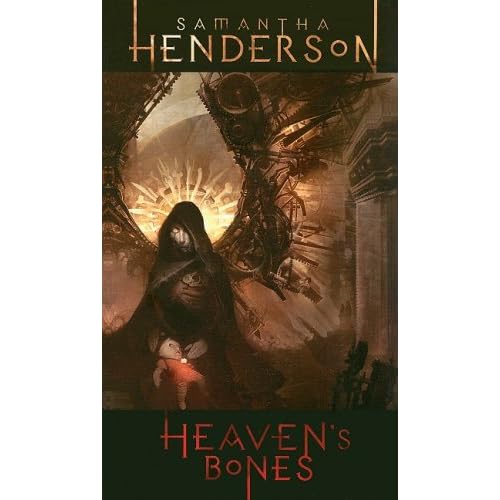
Books are thankfully arranged alphabetically (by author) in Fully Booked. Samantha Henderson's Heaven's Bones is beside Frank Herbert's Dune.

Every time I visit a bookstore (any bookstore!), somebody always seems to be inquiring about Stephenie Meyer's Twilight books. Here's a shelf devoted to them and Christopher Paolini's Brisingr novels. Somewhere in between the vampires and dragons is James A. Owen's The Indigo King.

October 20, 2008 Links and Plugs

There's something spooky when your office building is playing Christmas songs as early as October...
And here's your book plug for the day:

The Spiral Labyrinth by Matthew Hughes

Book/Magazine Review: The Wall of America by Thomas M. Disch

Every Monday, I'll be doing spoiler-free, bite-sized book/magazine reviews.

There's a certain sophistication in Thomas M. Disch's writing especially with his tendency to combine dystopias with a light-hearted and almost playful tone. Most of the stories in Wall of America follow this formula yet the author is flexible enough that the stories come out fresh and unique. "Ringtime" for example prominently features science fiction elements while "One Night, or, Scheherazade's Bare Minimum" is very post-modern. Still, majority of the stories are bleak (and arguably prophetic considering the current economic and political climate) and can weigh down the reader.

I really enjoyed all the stories and perhaps what best characterizes the style of Disch is that he manages to strike a balance among all the elements of a story, whether it's setting, characterization, or plot. His text is meaty but not too intimidating, although concealed in the tone of his story are piercing commentaries that he transforms into satire.

"The Owl and the Pussycat" caught my eye as Disch presents a dysfunctional family that has a surreal quality to it considering that one of their children is a rag doll. There are numerous scenes which are emotionally-charged, whether it's a touching scene between the titular characters or the horror that is eventually unveiled.

"Torah! Torah! Torah!: Three Bible Tales for the Third Millenium" was quite funny as it re-tells famous Bible stories in a different light and it's not flattering. It has several post-modern qualities to it but Disch makes the prose work despite his anachronistic take on events.

"A Knight at the Opera" is one of the more optimistic stories in the collection and it was certainly a fascinating read as Disch tells a conventional story of the character reaching an epiphany--although the method in which he executes this is steady and subtle. Effective characterization makes the story work and uplifts the prose beyond mediocrity.

This was my first time reading Disch and it seems that his reputation is well deserved. I can get into his prose and they have a certain "meatiness" to them. Perhaps he's not in my favorite author's list but certainly someone whose past work I'll keep an eye on. There's also a certain daring on the part of Disch as The Wall of America requires a certain sophistication from its readers or else they'll miss out on the various implications.

Book/Magazine Review: The Indigo King by James A. Owen

Every Monday, I'll be doing spoiler-free, bite-sized book/magazine reviews.

Personally, The Indigo King is reminiscent of the third season of the TV series Heroes: it's quick, it's action-packed, and manages to recapture the charm of the original novel that spawned it.

The writing of James A. Owen is easy to get into and is quite readable. Description is eschewed in favor of a more direct approach, especially when it comes to introducing the characters (and this is pretty much my complaint about the entire series so far). The story kicks off from the start and takes a darker tone compared to the previous two books that preceded it, all the while maintaining its young adult tone and style: characters, for example, tend to die off-screen if at all, and there are several blundering moments for readers to take the story too seriously.

The art of Owen is also impressive as each chapter has an accompanying illustration. The black-and-white medium suits the art particularly well.

In many ways, the third book is an improvement over the two that preceded it. The Indigo King succeeds in bringing our protagonist at the forefront of the action, instead of relying too much on the supporting cast. There's also a strong emphasis on internal character conflict that was present in the first novel and only touched upon in the second, giving the book an additional layer of depth. Then there's all the allusions to various myths, fiction, and real world events that Owen includes which gives well-read readers something to look forward to.

The Indigo King works well for its target audience and goes beyond being a competent sequel. More action, more complexity, and the stakes are larger makes this a worthwhile read, arguably surpassing the books that preceded it. If you enjoyed the writing style of Owen in his previous books, you'll do fine with this one.

Book/Magazine Review: The Enigma of Departure by Nicholas Royle

Every Monday, I'll be doing spoiler-free, bite-sized book/magazine reviews.

Robert Irwin's introduction to The Enigma of Departure seems out of place yet in the first few pages of the book, it all started making sense and I immediately got into Nicholas Royle's writing.

The author dives directly into the action, introducing readers immediately to the conflict. Royle makes good use of flashback as he alternates scenes with the past and present of his protagonist, all the while keeping the story's momentum going. Royle's prose is very much readable and leaves little room for vagueness, instead going for the atmosphere of ambiguity and strangeness. Each chapter ends at just the right point, giving one the opportunity to ponder and deliberate.

While the story is relatively short, each scene is vital as it not only furthers the plot but fleshes out our main protagonist. Royle's agenda with the book is difficult to explain without spoiling it. Suffice to say, it is tricky from a technical standpoint and the author succeeds as Royle's writing is a good fit for what he was attempting. Combine that with compelling storytelling and non-intrusive exposition and you have a winner.

The Enigma of Departure was very much a satisfying and layered reading experience that deserves much praise. If you're looking for an unconventional book that attempts something ambitious and is tinged with elements of the horrific, you might want to take a look at this book.

Book/Magazine Review: Glyphotech and Other Macabre Processes by Mark Samuels

Every Monday, I'll be doing spoiler-free, bite-sized book/magazine reviews.

I'm honestly not a big Lovecraft fan although I've certainly appreciated the well-written homages and authors who were directly influenced by his writings. Glyphotech and Other Macabre Processes is one such collection as Mark Samuels is evidently inspired by the said author yet he writes with such gusto and originality that he makes his own mark in the genre.

Arguably one of Samuels's biggest assets is his ability to create a dreadful atmosphere, sometimes stemming from the most innocuous of circumstances. All that while using easy-to-grasp English that can be detailed when necessary and sparse when appropriate.

The opening story, "Glyphotech", immediately caught my eye. The protagonist is already unconventional as he is an American-turned-Japanese lay man (culturally speaking) working for an American company and this is evidenced by his somewhat stilted language. Yet he is drawn into this strange conspiracy that slowly builds up yet is undeniably very modern while fusing traditional horror tropes. "Glyphotech" sold me and sets the tone for the rest of the book.

Another favorite is "Patient 704" and combines weirdness with the truly horrific. This is compelling psychological horror that doesn't rely on physical or external manifestations but rather dependent on the characterization and the innuendos. It's not a story that impressed me from the outset but it certainly works and is quite enjoyable.

"The Vanishing Point" and "Regina vs. Zoskia" are flat-out weird narratives that take place in the real world and provides interesting yet troubling stories. Again, there is nothing overtly terrifying but reading between the lines, we grasp the true horror of the Lovecraftian mythos: not nihilism or destruction but the impending insanity. Of course rather than present knowledge-than-man-should-never-know, Samuels gives us a reasonable explanation for the spiral towards madness and in the case of the former, the revelation at the end is quite potent.

Glyphotech and Other Macabre Processes is a must-have for Samuels fans but those looking for modern Lovecraftian stories would also do well in trying out the author. The collection is compelling horror that excels in establishing a distinct atmosphere and weirdness.

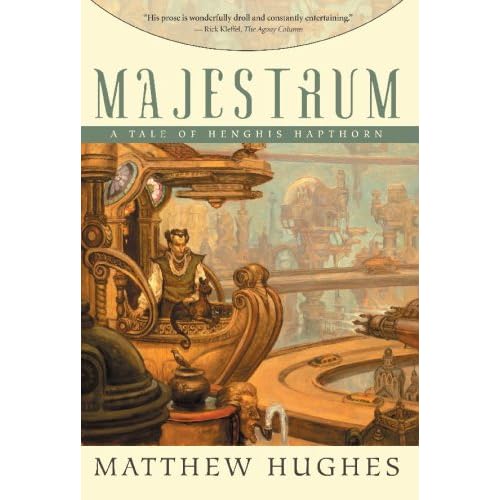
Book/Magazine Review: Majestrum: A Tale of Henghis Hapthorn by Matthew Hughes

Every Monday, I'll be doing spoiler-free, bite-sized book/magazine reviews.

I didn't know what to expect from Matthew Hughes, especially considering I've heard some of his work compared to Jack Vance (for the record, I'm honestly not fond of the Dying Earth stories).

In the first few pages however, I was immediately enthralled. Much of the conflict and tense situations revolves around dialogue and Hughes knows how to effectively utilize them to draw readers in. This is one of those books that gets off to a quick start and little time is wasted on unnecessary details that don't push the plot forward. I didn't have a concrete image of the world in which Majestrum takes place although I was aware of the generalities and implications (i.e. multiple worlds).

What I really liked about the book was its combination of mystery and science fiction/fantasy elements. Perhaps the most memorable work that's similar is Roger Zelazny's Amber series but Majestrum takes a different approach while possessing the same vibe. In fact, what will hook readers 'til the end is most likely its mystery aspect.

Aside from that, another highlight is the protagonist's personality. Henghis Hapthorn, while a talented "discriminator" (i.e. detective), is not without flaws and Hughes conveys this all throughout the novel. He is a flawed, even arrogant, hero which makes him fun to read in the sense that readers are aware he'll be running into danger sooner rather than later.

As for the Vance comparison, Hughes's simplicity of language appeals to me more than Vance ever did. The author however has at least two tributes to Vance. One is the naming convention of magic items and spells, which is clearly Vancian. The other--which I think plays a bigger role in the novel--is the atmosphere Vance managed to capture. Majestrum takes place in a world that is at the brink of a major transition and there is something both bleak and optimistic about that fact. Hughes succeeds in capturing that feeling of wonder and dread while sprinkling compelling conflict all throughout.

Majestrum is recommended if you're looking for that adventure-mystery hybrid that's full of fun and excitement yet different from the usual sword & sorcery fare. Hughes successfully juggles tribute and originality while still telling a compelling story in his own unique style.

Friday, October 17, 2008

Pre-Book Pilgrimage Pimping

I'm planning to do my "book pilgrimage" tomorrow but I did an early one this evening at the nearby Fully Booked (pssst, they should start sponsoring this blog). One thing I remembered about the gratification of blogging is that I have interests that I can share with people who understand me (instead of calling up friends who have no interest in books and immediately ending the conversation).

Anyway, I was keeping an eye out for The Year's Best Fantasy and Horror (I have mine ordered at another bookstore but I could always use the extra copies...) and failed to find a copy (that's what tomorrow's pilgrimage is supposed to do). Instead, I came home with these books (sorry but my camera phone ran out of batteries):

Heaven's Bones by Samantha Henderson

Well, I didn't really "come home" with it. I ordered it two months ago and my copy arrived last week (I'm currently 1/6th into the book). But I'm genuinely surprised to find it at a local bookstore so yay Sam!

Changeling by Delia Sherman

I honestly don't know what to expect although I really loved her story "The Fiddler of Bayou Teche" in The Coyote Road.

The Search for the Red Dragon by James A. Owen

Well, here's the deal. I saw several copies (enough to fill a table so it's not one of those "token" books in a bookstore) a few months back but I didn't buy one back then. For the past two months, I was looking for a copy but couldn't find one. The bookstore probably restocked because of...

The Indigo King by James A. Owen

Well, the Philippines is ahead of schedule in terms of release date... (but you can also order it now at Amazon)

Pretty Monsters by Kelly Link

It's here! Be sure to check the children's section of the bookstore.

On a side note, random people entering the bookstore were inquiring about the Twilight book (with the movie covers).

October 17, 2008 Links and Plugs

It's a payday weekend here in the Philippines and three huge shopping malls (and therefore the bookshops inside) are on sale.
To quote Jon Stewart: And now, your moment of zen.

Podcast Focus: The Voice of the Revolution

Every Friday, I'll talk about a podcast or two that catches my fancy.

URL: http://thevoiceoftherevolution.com/
RSS Feed: http://thevoiceoftherevolution.com/rss
Description: If it's just about indy RPG games, you don't need to look further than The Voice of the Revolution and the official podcast of Indie Press Revolution (IPR). It features interviews, discussion, and the latest news from IPR and I've certainly found it informative as well as broadening my horizons as far as tabletop gaming is concerned.

Top 10 Best-Sellers as of 2008/10/12

From USA Today's best-seller list (you can find out their basis here):

  1. The Lucky One by Nicholas Sparks
  2. Brisingr by Christopher Paolini
  3. Twilight by Stephenie Meyer
  4. New Moon by Stephenie Meyer
  5. The Shack by William P. Young
  6. Eclipse by Stephenie Meyer
  7. Breaking Dawn by Stephenie Meyer
  8. Double Cross by James Patterson
  9. First Impressions by Nora Roberts
  10. The Story Of Edgar Sawtelle: A Novel by David Wroblewski

Thursday, October 16, 2008

October 16, 2008 Links and Plugs

Here's the link round-up, as usual:
As for the plug:

2008/10/16 Tabletop RPG Podcasts

Every Thursday, I post links to various podcasts that deals with tabletop RPGs.

Tabletop RPG (Mostly)

General Discussions/Reviews/Everything Else

Interviews
Actual Play Sessions

Wednesday, October 15, 2008

October 15, 2008 Links and Plugs

Just when you're out of links...
  • Ian McDonald on New Dreams for Old: "Those who argue that understand little about what SF, as a division of fantastic literature is about. Technological projection and future prediction is one of the least of its strengths; at it's best it's a visionary literature. It's all about our hopes and our fears."
  • It's a steampunk SF in SF with photos and coverage by Matt Staggs.
  • Congrats to those who made it to Talebones #38 (TOC at the link).
  • There's a couple of interviews: Lavie Tidhar, Mary Turzillo, and Lawrence Watt-Evans.
  • And for killing time, here's a PETA-cruel (the Datlow will kill me...) flash game: Don't Shoot the Puppy.
And here's some plugs:

A Whisper of Blood: A Collection of Modern Vampire Stories edited by Ellen Datlow

This got released last August but it's still value for money (this actually collects the anthologies Blood is Not Enough and A Whisper of Blood) and makes a great gift for either Halloween or Christmas (perhaps even Thanksgiving?).

Weird Tales #351 September/October 2008 Issue

I am obligated upon pain of death to plug the latest issue of Weird Tales because it features stories from two Filipino expats, Rochita Loenen-Ruiz and Chiles Samaniego. But seriously, enjoy its International Fiction spotlight with authors like Zoran Zivkovic.

Feature: Free Fiction and Writing Podcasts

Every Wednesday, I'll have an essay or a feature on any topic that catches my fancy!

There's a lot of good writing advice out there and perhaps one of the more "universal" recommendations aside from writing is to read, read, and read*. My personal pet peeve when talking to aspiring short story writers is that they don't read short stories, instead citing novels they've recently read (which isn't a bad thing, mind you, but short stories are different from novels and each one has its own set of skills you need to nurture).

Of course one excuse I might hear is that a) I don't have money or b) I don't have time. If you're reading this, it means you have access to the Internet. There's a lot of good fiction online and it's available for free. Here are some recommended sites you might want to visit:

Free Fiction

Free Speculative Fiction Online - A database of various stories around the Internet, compiling links to them in one website. You can search by author or stories nominated for awards.

ChiZine - A quarterly horror magazine that features an ensemble of poetry, fiction, and assorted features (including columns and interviews).

Strange Horizons - A weekly speculative fiction magazine that features fiction and poetry each week.

Clarkesworld Magazine - An online speculative fiction magazine that features two fiction pieces each month (one of which gets podcasted).

Lone Star Stories - A bi-monthly speculative fiction webzine that features consistent fiction and poetry.

Fantasy Magazine - An online magazine that features new fiction every Monday (plus the occasional podcast).

Ideomancer - A quarterly downloadable magazine on speculative fiction which embraces science fiction, fantasy, horror, slipstream, and flash.

Abyss & Apex - A quarterly spec fic magazine that includes fiction and poetry.

Helix or Transcriptphase - The former is a quarterly spec fic magazine on its last issue while the latter site reprints work that was originally published in Helix.

Subterranean - A quarterly magazine with selected content available online.

Night Shade Books - An independent press which has some excerpts and fiction available for download.

Small Beer Press - An indy press publisher (go buy their books!) that has selected fiction/non-fiction from their magazine (Lady Churchill's Rosebud Wristlet) and books available for download.

Tor - A massive SF&F portal from one of the big publishers that includes various fiction and podcasts.

Now what I like about podcasts is that you can multitask while listening to them, whether it's the daily commute or performing some monotonous task such as sweeping the floor. But I'm not about to recommend you podcasted fiction but rather podcasts which focus on the craft of writing. Get motivated and learn while doing chores!

Podcasts

Writing Excuses - A weekly 15-minute podcast that focuses on various techniques when it comes to writing. Hosted by two novelists and a cartoonist.

I Should Be Writing - Aspiring Published author Mur Lafferty talks about writing and the trials she faces in writing and submitting to markets. Also features interviews.

Odyssey Podcasts - 15-minute Audio excerpts by guest lecturers from the Odyssey Writing Workshop.

The Secrets Podcast - Although it's now defunct, Michael Stackpole nonetheless gives helpful writing advice in The Secrets series of podcasts.

Adventures in Sci Fi Publishing - Features interviews with various authors although Shaun Farrel, one of the hosts, tends to ask those relevant "writerly" questions. They also recently had various interviews with the Clarion Workshop speakers and graduates.

The NanoMonkeys - Really short, daily podcasts during NaNoWriMo to get you in the groove of writing your novel. Pssst, it's almost November.

*More esoteric advice might include reading slush piles or becoming a book reviewer (the latter's my suggestion as I've doubled my reading pile and variety of books that I'm actually reading thanks to the necessity of meeting quotas) but let's stick to exposing yourself to reading more fiction first.