Every Friday, I'll toss an idea or two with regards to tabletop RPGs.
There's two things I want to talk about that go hand in hand. The first is the "system matters" philosophy. This is best summed up that the design of the game supports what you want to do with it. For example, Robin D. Laws has an excellent RPG called The GUMSHOE System which is optimized for investigative-type games. From what I understand (I don't own the game--we're an RPG dystopia here in the Philippines--but I'm basing it from what I've heard of it), the various players don't need to roll dice to determine whether they figure out an important clue or not. It's assumed by the game that one of the players find out and it progresses from there. This is great when you're running such games because the mystery doesn't grind to a halt just because your gaming group missed an important clue (or didn't spot that hidden door). In other gaming systems such as GURPS or D&D, it's certainly possible to run investigative-type games but there's usually some hand-waving (i.e. ignoring certain rules) on the part of the GM. One might omit skill checks altogether for example in order to progress the investigation.
Now the system matters philosophy is one of the endless debates out there in gaming fandom so I won't dwell too much on it. Suffice to say, it has its own examples and counter-examples. Now to those who believe in such a theory, my question out there is what RPGs out there have rules for playing a different gender? There's certainly a difference between male/female physiology and psychology after all yet it's not reflected in games whereas we have rules for different "races." When I play D&D for example, roleplaying aside (hence thet system matters inclusion), there's no difference between a male Fighter and a female Fighter. In many ways, this is reminiscent of most video games, where choosing one's gender only affects how you look, not necessarily your particular skills or abilities.
Interestingly enough, one video game where gendere mattered was Pokemon. While not universally applied (what's the difference between a male Pikachu from a female Pikachu?), there were distinctions between male/female genders of a species.
So, what tabletop RPGs do you know have meaningful rule differences between genders? Or should rule differences between genders matter at all?
Showing posts with label rpg musings. Show all posts
Showing posts with label rpg musings. Show all posts
Friday, March 06, 2009


Friday, February 27, 2009
RPG Musings: The Sandbox Game
Every Friday, I'll toss an idea or two with regards to tabletop RPGs.
While there's a plethora of RPGs out there, most gamers play them in one of two ways. The first is what is typically called a "railroad" as it follows a linear path. For a lot of people, this is most likely the type of game you're most familiar with. Just look at most video games as they tend to fall under that category. Now some gamers view this method with scorn as it tends to limit options but I'm not of that opinion. The other type of game is the sandbox game in which the players are theoretically given absolute freedom to do what they want. Some even claim that this is the advantage of tabletop RPGs over the electronic kind since no program can account for all the possibilities that players might act upon.
Strangely enough, when I think of a sandbox game, the best analogy I could come up with was the NES/Famicom game The Legend of Zelda (and in certain ways, this was the proto-RPG of console systems). Unlike a game like say, Mario, in which you progressed left to right (or bottom to top depending on the game) and had a finite number of lives/continues to reach the end goal, the start of the game didn't really give you concrete objectives. You could go anywhere (provided you managed to overcome the obstacles) and possibly enter any of the dungeons whether you were just started out or played it for several hours. It's so free-form, considering the technology available at the time, that gamers were able to play variations of it without altering the game's programming. For example, one popular variant is playing the game without acquiring Link's sword (players must rely on evading enemies initially and then later on using items to overcome obstacles and enemies) or finishing the game with only three hearts.
When I first encountered The Legend of Zelda, it was honestly frustrating, mainly because I was used to the more traditional games. Where do I go? Who should I kill? What should I do? These were the questions that I asked and when I couldn't find the answers, gave up on the game.
In certain ways, I feel the sandbox RPG is like that, especially when you're used to the railroad method. Your GM throws enemies/encounters at you and it's up to you to react to them. In a sandbox game, you're forced to be more pro-active and it's the GM who has to adapt to you rather than vice versa.
Unfortunately, I also don't think the sandbox game is optimal for large groups. Part of the fun of Legend of Zelda is that I was alone and I was free to explore the game. When part of a party, what happens when the democracy doesn't go your way? Or on certain levels, there's some meta-gaming on your part as you don't want to split the group as it'll take time away from the other players (just watch Heroes--not every character is given ample screen time and not everyone is part of the same action).
While there's a plethora of RPGs out there, most gamers play them in one of two ways. The first is what is typically called a "railroad" as it follows a linear path. For a lot of people, this is most likely the type of game you're most familiar with. Just look at most video games as they tend to fall under that category. Now some gamers view this method with scorn as it tends to limit options but I'm not of that opinion. The other type of game is the sandbox game in which the players are theoretically given absolute freedom to do what they want. Some even claim that this is the advantage of tabletop RPGs over the electronic kind since no program can account for all the possibilities that players might act upon.
Strangely enough, when I think of a sandbox game, the best analogy I could come up with was the NES/Famicom game The Legend of Zelda (and in certain ways, this was the proto-RPG of console systems). Unlike a game like say, Mario, in which you progressed left to right (or bottom to top depending on the game) and had a finite number of lives/continues to reach the end goal, the start of the game didn't really give you concrete objectives. You could go anywhere (provided you managed to overcome the obstacles) and possibly enter any of the dungeons whether you were just started out or played it for several hours. It's so free-form, considering the technology available at the time, that gamers were able to play variations of it without altering the game's programming. For example, one popular variant is playing the game without acquiring Link's sword (players must rely on evading enemies initially and then later on using items to overcome obstacles and enemies) or finishing the game with only three hearts.
When I first encountered The Legend of Zelda, it was honestly frustrating, mainly because I was used to the more traditional games. Where do I go? Who should I kill? What should I do? These were the questions that I asked and when I couldn't find the answers, gave up on the game.
In certain ways, I feel the sandbox RPG is like that, especially when you're used to the railroad method. Your GM throws enemies/encounters at you and it's up to you to react to them. In a sandbox game, you're forced to be more pro-active and it's the GM who has to adapt to you rather than vice versa.
Unfortunately, I also don't think the sandbox game is optimal for large groups. Part of the fun of Legend of Zelda is that I was alone and I was free to explore the game. When part of a party, what happens when the democracy doesn't go your way? Or on certain levels, there's some meta-gaming on your part as you don't want to split the group as it'll take time away from the other players (just watch Heroes--not every character is given ample screen time and not everyone is part of the same action).
Friday, February 20, 2009
RPG Musings: Dragon/Dungeon Magazine Online
Every Friday, I'll toss an idea or two with regards to tabletop RPGs.
Pardon me for partially hijacking this section. It's been several months now since Wizards of the Coast re-launched Dragon and Dungeon magazine, the official Dungeons & Dragons publication. Now there are several legitimate reasons not to support the magazines (such as if you're not actually playing in a 4th Edition game). Of course now and again, I'd see someone making a stupid suggestion with regards to both publications, especially when it comes to its online distribution model.
How stupid? Well, something along the lines of (I'm paraphrasing) "I really like the content of both magazines but I wish Wizards of the Coast would make a print version so I suggest boycotting the online version."
I have several rebuttals for that argument but let's first tackle the one with the biggest assumption flaw. The "let's boycott the online version" part so that a print version would eventually be released. Let's put it this way, the online version is probably easier and takes less manpower to put out (it mostly boils down to distribution) than the print version. And if the former isn't successful, why would you think a company would try their hand at the latter?
Honestly, a better suggestion would be to support the online model and suggest that they come out with a print version. There's going to be an print annual and another method is to gobble them up like crazy. Buy boycotting something in order to get a more expensive and labor-intensive iteration doesn't make sense.
The second point I want to bring up is the content. Again, at this point, I don't think a lot of the content that you're currently receiving from the magazines wouldn't be possible if it weren't for the fact that it's currently hosted online. I'm not talking about page count (although that matters too) but the realities of publishing a print magazine (again, mostly focusing on distribution). It usually takes a monthly magazine to have two months of lead time (that is, the content should be ready two months ahead of the printed date) before it can come out on time. Aside from deadlines, what contributes to this time "lag" is the magazine needs to be sent to the printers, proofread, printed, dried, sealed, then distributed all over the country or all over the world depending on your circulation. Distributing a magazine all over America is no easy feat, considering the vast expanse of land as well as climate (distribution in the Philippines is also a major challenge because while we're a significantly smaller country, we're an archipelago with a Manila-centric focus).
Now you might think so what, what if there's a two-month delay? The old magazines handled themselves competently; one just needs to plan two months ahead. Sure, that works to a limited extent. But one of the more appealing features of Dragon right now is its sneak peak at future publications such as the playtest/preview classes. By the time they see print online, the final revisions could have been made the day before. If you're using the more traditional model, the preview you're reading in a magazine could easily be two-months outdated. Or in the case of the playtest classes, two months too late for the designers to have received your feedback.
That's not to say that Dragon and Dungeon magazine are perfect. For example, I still like the latter Paizo-era models for the magazine where Dragon was for players and Dungeon was for Dungeon Masters (currently, the latter is still for Dungeon Masters but now content for the former includes both target audiences). But for the most part, I think the online incarnations of both magazines is the wave of the future.
Pardon me for partially hijacking this section. It's been several months now since Wizards of the Coast re-launched Dragon and Dungeon magazine, the official Dungeons & Dragons publication. Now there are several legitimate reasons not to support the magazines (such as if you're not actually playing in a 4th Edition game). Of course now and again, I'd see someone making a stupid suggestion with regards to both publications, especially when it comes to its online distribution model.
How stupid? Well, something along the lines of (I'm paraphrasing) "I really like the content of both magazines but I wish Wizards of the Coast would make a print version so I suggest boycotting the online version."
I have several rebuttals for that argument but let's first tackle the one with the biggest assumption flaw. The "let's boycott the online version" part so that a print version would eventually be released. Let's put it this way, the online version is probably easier and takes less manpower to put out (it mostly boils down to distribution) than the print version. And if the former isn't successful, why would you think a company would try their hand at the latter?
Honestly, a better suggestion would be to support the online model and suggest that they come out with a print version. There's going to be an print annual and another method is to gobble them up like crazy. Buy boycotting something in order to get a more expensive and labor-intensive iteration doesn't make sense.
The second point I want to bring up is the content. Again, at this point, I don't think a lot of the content that you're currently receiving from the magazines wouldn't be possible if it weren't for the fact that it's currently hosted online. I'm not talking about page count (although that matters too) but the realities of publishing a print magazine (again, mostly focusing on distribution). It usually takes a monthly magazine to have two months of lead time (that is, the content should be ready two months ahead of the printed date) before it can come out on time. Aside from deadlines, what contributes to this time "lag" is the magazine needs to be sent to the printers, proofread, printed, dried, sealed, then distributed all over the country or all over the world depending on your circulation. Distributing a magazine all over America is no easy feat, considering the vast expanse of land as well as climate (distribution in the Philippines is also a major challenge because while we're a significantly smaller country, we're an archipelago with a Manila-centric focus).
Now you might think so what, what if there's a two-month delay? The old magazines handled themselves competently; one just needs to plan two months ahead. Sure, that works to a limited extent. But one of the more appealing features of Dragon right now is its sneak peak at future publications such as the playtest/preview classes. By the time they see print online, the final revisions could have been made the day before. If you're using the more traditional model, the preview you're reading in a magazine could easily be two-months outdated. Or in the case of the playtest classes, two months too late for the designers to have received your feedback.
That's not to say that Dragon and Dungeon magazine are perfect. For example, I still like the latter Paizo-era models for the magazine where Dragon was for players and Dungeon was for Dungeon Masters (currently, the latter is still for Dungeon Masters but now content for the former includes both target audiences). But for the most part, I think the online incarnations of both magazines is the wave of the future.
Friday, February 13, 2009
RPG Musings: The Number of Players
Every Friday, I'll toss an idea or two with regards to tabletop RPGs.
This isn't limited to RPGs but can be applied to games in general. What's the minimum/maximum players and how does the numbers of players change the group dynamics?
D&D for example assumes there's five players and one GM. Adding or subtracting one player more or less keeps the design goals intact but anything beyond that alters the game significantly (which isn't to say it can't be resolved but there's some tinkering involved). An eight-player game for example might make combats last quite a long time and "group initiative" (the player's turn vs. the GM's turn) becomes a detriment as the 8 characters on one side might gang up on one monster and vice versa (8 monsters ganging up on a single PC). It's also difficult to devote time tackling individual storylines in an eight-player game because it could bog down and leave 7 players waiting for the other person to resolve their plotline.
Some GMs are turned off at running a two-player D&D game (mainly it's a factor of time/effort efficiency--that is the hours of prep rewarding only two players when it could easily have been four or five) and again it's a different party dynamic. When it comes to combat, players have to carefully pick their roles. As for roleplaying, there's room here for the party to "split apart" and delve into more complex storylines as the GM only has to divide his attention to two players.
A better example would be other sorts of games. Mafia/Werewolf for example is a great party game but it's not infinitely scalable. I don't think it's possible to run it for a 30-person group for example. On the other end of the spectrum, it can resolve pretty quickly if you're just running it for five people or so.
When applied to RTS games, the number of players actually changes the type of game you're playing. Let's take my experiences with Warcraft III. One on one is the assumed default and you're faced to changed tactics as it becomes a 1 vs. 1 vs. 1 game. You know for certain one player will eventually have to sit it out as they become the first person eliminated. Launching a full attack on one player also leaves you very vulnerable and the game can slow down as each player carefully plays the cat-and-mouse game, waiting for one player to take action and take advantage of that opportunity. In a 2 vs. 2 game, one player's skill can make up for your partner's lack of talent (and it's possible to win a 2 vs. 1 game if you play your cards right). In a 5 vs. 5 game, I've discovered that the individual player's skill level matters less and cooperation and teamwork plays a bigger role. No matter how good you are, 5 opponents at your front door will lead to a massacre.
One element of RPGs however is that they don't tend to tell you on the cover the minimum/maximum players required for the game. It's a stark contrast to board games which mention it outright in the box. Again, that's not to say RPG games aren't scalable, but I'd like to think the designers have an ideal number in mind when designing such a game. Or at the very least, the number of players changes how one interacts with the rest of the group.
This isn't limited to RPGs but can be applied to games in general. What's the minimum/maximum players and how does the numbers of players change the group dynamics?
D&D for example assumes there's five players and one GM. Adding or subtracting one player more or less keeps the design goals intact but anything beyond that alters the game significantly (which isn't to say it can't be resolved but there's some tinkering involved). An eight-player game for example might make combats last quite a long time and "group initiative" (the player's turn vs. the GM's turn) becomes a detriment as the 8 characters on one side might gang up on one monster and vice versa (8 monsters ganging up on a single PC). It's also difficult to devote time tackling individual storylines in an eight-player game because it could bog down and leave 7 players waiting for the other person to resolve their plotline.
Some GMs are turned off at running a two-player D&D game (mainly it's a factor of time/effort efficiency--that is the hours of prep rewarding only two players when it could easily have been four or five) and again it's a different party dynamic. When it comes to combat, players have to carefully pick their roles. As for roleplaying, there's room here for the party to "split apart" and delve into more complex storylines as the GM only has to divide his attention to two players.
A better example would be other sorts of games. Mafia/Werewolf for example is a great party game but it's not infinitely scalable. I don't think it's possible to run it for a 30-person group for example. On the other end of the spectrum, it can resolve pretty quickly if you're just running it for five people or so.
When applied to RTS games, the number of players actually changes the type of game you're playing. Let's take my experiences with Warcraft III. One on one is the assumed default and you're faced to changed tactics as it becomes a 1 vs. 1 vs. 1 game. You know for certain one player will eventually have to sit it out as they become the first person eliminated. Launching a full attack on one player also leaves you very vulnerable and the game can slow down as each player carefully plays the cat-and-mouse game, waiting for one player to take action and take advantage of that opportunity. In a 2 vs. 2 game, one player's skill can make up for your partner's lack of talent (and it's possible to win a 2 vs. 1 game if you play your cards right). In a 5 vs. 5 game, I've discovered that the individual player's skill level matters less and cooperation and teamwork plays a bigger role. No matter how good you are, 5 opponents at your front door will lead to a massacre.
One element of RPGs however is that they don't tend to tell you on the cover the minimum/maximum players required for the game. It's a stark contrast to board games which mention it outright in the box. Again, that's not to say RPG games aren't scalable, but I'd like to think the designers have an ideal number in mind when designing such a game. Or at the very least, the number of players changes how one interacts with the rest of the group.
Friday, February 06, 2009
RPG Musings: 4E and Roles
Every Friday, I'll toss an idea or two with regards to tabletop RPGs.
What I particularly like about the latest edition of D&D is that player roles are clearly defined (defender, striker, leader, controller) and is hard-coded into the classes. For the past few months, we've been playing the Scepter Tower of Spellguard and it started out (and still is!) an unusual party composition: a Dragonborn Paladin (the pre-gen character actually), a Dwarf Fighter, a Genasi Swordmage, a Human Wizard, and a Warforged Barbarian (that's me). That's three defenders, a controller, and a striker.
So far, we've made it without any leader in the group but then again, we've made some adjustments (the Wizard bought healing potions, two characters had Dwarven Armor). Another contributing factor is that we only get to play three hours so we tend to take Extended Rests are the end of the session.
Now two sessions ago, we just hit 4th-level and the Dragonborn Paladin player was unable to join the game. I had a choice of retaining the character or substituting it with either a Leader or a Striker. My thought process went like this: the group needs a Leader in case someone gets heavily damaged. On the other hand, some believe a good defense is a good offense and another Striker can fill that need, especially considering we're trying to speed up combat and run more encounters. Eventually, I went with an archer Ranger while my Barbarian and the other player's Fighter took some Multiclass Feats to gain some healing options.
We got to test-drive the new party dynamics last session and I think it works out. The archer Ranger deals even more damage than the Barbarian but tends to be more fragile.
Another element that's not quite explicit in 4E (that's not necessarily a bad thing) however is that most classes have secondary roles. The Fighter for example, depending on your Build and the Powers you pick, is possibly a Striker or a Leader whose abilities only function for himself. Granted, he doesn't fulfill that role as effective as a straight-out Striker or Leader class but it's there in addition to being a Defender.
It's this kind of depth that leads to character variety I think. Simply saying that "I'm a Dwarven Fighter" doesn't tell me everything about your Role in the group. Yes, you'll make a great Defender but what else do you do?
In another game, the Tiefling Warlock player feels that his character isn't doing as much damage as the other Striker classes but he feels that he's filling in the Controller niche with the various area affects and status conditions he inflicts.
I like the fact that Roles are more clearly defined in 4E and players can make more conscious decisions because of this (as was the case in re-picking the 5th character of the party) but I feel the "secondary role" needs to be more stressed. It is mentioned in the books but I feel it's barely recognizable by the casual player and one has to deduce it from their abilities and Powers.
What I particularly like about the latest edition of D&D is that player roles are clearly defined (defender, striker, leader, controller) and is hard-coded into the classes. For the past few months, we've been playing the Scepter Tower of Spellguard and it started out (and still is!) an unusual party composition: a Dragonborn Paladin (the pre-gen character actually), a Dwarf Fighter, a Genasi Swordmage, a Human Wizard, and a Warforged Barbarian (that's me). That's three defenders, a controller, and a striker.
So far, we've made it without any leader in the group but then again, we've made some adjustments (the Wizard bought healing potions, two characters had Dwarven Armor). Another contributing factor is that we only get to play three hours so we tend to take Extended Rests are the end of the session.
Now two sessions ago, we just hit 4th-level and the Dragonborn Paladin player was unable to join the game. I had a choice of retaining the character or substituting it with either a Leader or a Striker. My thought process went like this: the group needs a Leader in case someone gets heavily damaged. On the other hand, some believe a good defense is a good offense and another Striker can fill that need, especially considering we're trying to speed up combat and run more encounters. Eventually, I went with an archer Ranger while my Barbarian and the other player's Fighter took some Multiclass Feats to gain some healing options.
We got to test-drive the new party dynamics last session and I think it works out. The archer Ranger deals even more damage than the Barbarian but tends to be more fragile.
Another element that's not quite explicit in 4E (that's not necessarily a bad thing) however is that most classes have secondary roles. The Fighter for example, depending on your Build and the Powers you pick, is possibly a Striker or a Leader whose abilities only function for himself. Granted, he doesn't fulfill that role as effective as a straight-out Striker or Leader class but it's there in addition to being a Defender.
It's this kind of depth that leads to character variety I think. Simply saying that "I'm a Dwarven Fighter" doesn't tell me everything about your Role in the group. Yes, you'll make a great Defender but what else do you do?
In another game, the Tiefling Warlock player feels that his character isn't doing as much damage as the other Striker classes but he feels that he's filling in the Controller niche with the various area affects and status conditions he inflicts.
I like the fact that Roles are more clearly defined in 4E and players can make more conscious decisions because of this (as was the case in re-picking the 5th character of the party) but I feel the "secondary role" needs to be more stressed. It is mentioned in the books but I feel it's barely recognizable by the casual player and one has to deduce it from their abilities and Powers.
Friday, January 30, 2009
RPG Musing: Traps and D&D
Every Friday, I'll toss an idea or two with regards to tabletop RPGs.

I've occasionally GM'd for both D&D 3.5 and 4th Edition and one element I don't often use is traps. Which is ironic I think because if we're just talking about the dungeon delve--you know, entering a dungeon and plundering everything in sight for loot--traps make the most logical sense. I mean here you are, entering a structure that's been abandoned for several centuries. There's only so many undead and constructs that the GM can throw at you. Traps seem like the perfect eternal defenders and let's face it, when we watch movies and we see our heroes enter an ancient ruin, the first thing we expect are traps! Nothing seems more cinematic.
In practice however, it takes a skillful GM to make traps exciting. For me, there are two problems that come to the fore when dealing with them. The first is that often, they become the Rogue's schtick. Have the Rogue roll Search followed by Disable Device (or Perception and Thievery in 4E). That's well and good for the Rogue--he or she gets some spotlight--but what about the rest of the players? (I'm not advocating that every scene should incorporate all the players but as much as possible, involving the entire group is highly encouraged.) The other problem is that it could give rise to the paranoid player syndrome, the type that searches every nook and cranny they run into, which can lead to a time sink (both in-game and during the actual session).
 That's not to say it's not impossible to craft a trap-centric campaign. The Tomb of Horrors for example is one of those either you love it or you hate it modules. Personally, my issue with that module isn't that it's full of traps, but rather that the traps tend to be lethal in the "sudden death" sort of way. I mean why bother tracking down HP when the next thing you'll be running into is a Sphere of Annihilation? Still, Tomb of Horrors proves that a death-trap dungeon can work. If executed properly.
I think that's the real caveat. Anything can honestly work if executed properly. The real challenge is figuring out how to do that.
 One of my favorite books from the D&D 3.5 era is Dungeonscape by Jason Bulmahn and Rich Burlew (yes, that Rich Burlew). Some of the material here got adapted for the 4E Dungeon Master's Guide but it's no replacement for the actual book in my opinion. There's an entire chapter on traps which was very informative. For example, it breaks down the various functions of traps (most GM's tend to only think traps serve only one or two functions):
However, the big highlight for me is a short sidebar giving Five Encounter Trap Tips (I omitted the elaborations):
It's even possible to come up with cool encounters that's entirely composed of traps. Imagine a room wherein the walls are closing in (PCs can make a Strength check to delay the walls while somebody looks for the main mechanism and disable it permanently) while saws pop out of the ground, moving in a predictable if inconvenient pattern. Or maybe the PCs enter a room where there's large gargoyle heads in each corner and once they reach the center of the room, a portcullis drops and the gargoyle heads start filling the area with water. Of course those who approach the gargoyle head might be in for a surprise when they randomly spit out acid... Throw in a couple of other elements such as the exit being a sentient door that asks a riddle (or simply a physical challenge to overcome as it fights back) or spike traps that emerge in random locations.

I've occasionally GM'd for both D&D 3.5 and 4th Edition and one element I don't often use is traps. Which is ironic I think because if we're just talking about the dungeon delve--you know, entering a dungeon and plundering everything in sight for loot--traps make the most logical sense. I mean here you are, entering a structure that's been abandoned for several centuries. There's only so many undead and constructs that the GM can throw at you. Traps seem like the perfect eternal defenders and let's face it, when we watch movies and we see our heroes enter an ancient ruin, the first thing we expect are traps! Nothing seems more cinematic.
In practice however, it takes a skillful GM to make traps exciting. For me, there are two problems that come to the fore when dealing with them. The first is that often, they become the Rogue's schtick. Have the Rogue roll Search followed by Disable Device (or Perception and Thievery in 4E). That's well and good for the Rogue--he or she gets some spotlight--but what about the rest of the players? (I'm not advocating that every scene should incorporate all the players but as much as possible, involving the entire group is highly encouraged.) The other problem is that it could give rise to the paranoid player syndrome, the type that searches every nook and cranny they run into, which can lead to a time sink (both in-game and during the actual session).
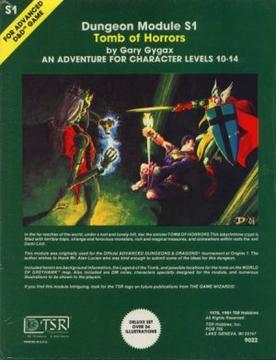 That's not to say it's not impossible to craft a trap-centric campaign. The Tomb of Horrors for example is one of those either you love it or you hate it modules. Personally, my issue with that module isn't that it's full of traps, but rather that the traps tend to be lethal in the "sudden death" sort of way. I mean why bother tracking down HP when the next thing you'll be running into is a Sphere of Annihilation? Still, Tomb of Horrors proves that a death-trap dungeon can work. If executed properly.
I think that's the real caveat. Anything can honestly work if executed properly. The real challenge is figuring out how to do that.
 One of my favorite books from the D&D 3.5 era is Dungeonscape by Jason Bulmahn and Rich Burlew (yes, that Rich Burlew). Some of the material here got adapted for the 4E Dungeon Master's Guide but it's no replacement for the actual book in my opinion. There's an entire chapter on traps which was very informative. For example, it breaks down the various functions of traps (most GM's tend to only think traps serve only one or two functions):
- Killing Intruders (Sphere of Annihilation, Finger of Death trap)
- Softening Intruders (arrows, Fireball, etc.)
- Gaining Combat Advantages (Kobolds and a room full of pressure plates which the Kobolds are too light to trigger)
- Discouraging Pursuit (pit traps)
- Testing Intruders (the infamous water-filling-a-room trap)
- Ejecting Intruders (teleports)
- Altering the Dungeonscape (mobile walls and suddenly-locking doors)
However, the big highlight for me is a short sidebar giving Five Encounter Trap Tips (I omitted the elaborations):
- Get Everyone Involved.
- Keep the PCs Engaged.
- Provide Multiple Ways to Defeat the Trap.
- Vary the Focus of Traps.
- Make It Last.
It's even possible to come up with cool encounters that's entirely composed of traps. Imagine a room wherein the walls are closing in (PCs can make a Strength check to delay the walls while somebody looks for the main mechanism and disable it permanently) while saws pop out of the ground, moving in a predictable if inconvenient pattern. Or maybe the PCs enter a room where there's large gargoyle heads in each corner and once they reach the center of the room, a portcullis drops and the gargoyle heads start filling the area with water. Of course those who approach the gargoyle head might be in for a surprise when they randomly spit out acid... Throw in a couple of other elements such as the exit being a sentient door that asks a riddle (or simply a physical challenge to overcome as it fights back) or spike traps that emerge in random locations.
Friday, January 23, 2009
RPG Musings: RPG Podcast Networks
Every Friday, I'll toss an idea or two with regards to tabletop RPGs.
You'd think I'd stop talking about gaming podcasts but here I am again.
When I started listening to tabletop RPG podcasts in 2007, there were just two podcast networks to turn to: RPGPodcasts.com and Goblin: The Gaming Broadcast Network. You wanted to be part of the first one because it aggregates all the RPG-related podcasts and well, the latter was the only other network in town.
2008 (and early 2009) however saw the birth of several new gaming podcast networks (to say nothing of the RPG Bloggers) in addition to the number of podcasts that have were created and podfaded. Some of these networks were already in existence, merely formalizing its official status. Others, on the other hand, were seemingly disparate shows and decided hey, let's team-up!
I want to ask though, what's the value of such networks? Is it like a Christmas basket, where fans might get a selection of pre-selected shows? Or is it simply a badge of some sort that'll hopefully draw interest to others in the same network? How about you, what RPG Podcast Networks are you subscribed to?
Anyway, here's some links to the RPG Podcast Networks that I know of (feel free to add any that I might have missed):
RPGPodcasts.com
Goblin: The Gaming Broadcast Network
War Pig Radio
Vorpal Network
Spooky Outhouse Productions
d20 Radio
Pulp Gamer
You'd think I'd stop talking about gaming podcasts but here I am again.
When I started listening to tabletop RPG podcasts in 2007, there were just two podcast networks to turn to: RPGPodcasts.com and Goblin: The Gaming Broadcast Network. You wanted to be part of the first one because it aggregates all the RPG-related podcasts and well, the latter was the only other network in town.
2008 (and early 2009) however saw the birth of several new gaming podcast networks (to say nothing of the RPG Bloggers) in addition to the number of podcasts that have were created and podfaded. Some of these networks were already in existence, merely formalizing its official status. Others, on the other hand, were seemingly disparate shows and decided hey, let's team-up!
I want to ask though, what's the value of such networks? Is it like a Christmas basket, where fans might get a selection of pre-selected shows? Or is it simply a badge of some sort that'll hopefully draw interest to others in the same network? How about you, what RPG Podcast Networks are you subscribed to?
Anyway, here's some links to the RPG Podcast Networks that I know of (feel free to add any that I might have missed):
RPGPodcasts.com
Goblin: The Gaming Broadcast Network
War Pig Radio
Vorpal Network
Spooky Outhouse Productions
d20 Radio
Pulp Gamer
Friday, January 02, 2009
RPG Musings: D&D 4E - Fighter Attack Powers and Weapons
Every Friday, I'll toss an idea or two with regards to tabletop RPGs.
What I like about Fighters in D&D 4E is how they can specialize in different weapons and this is reflected in the powers they choose. For example, a Fighter wielding Heavy Blades might get bonuses to attack or damage equal to their Dexterity modifier. Dexterity, Constitution, and Wisdom also becomes a secondary or tertiary stat depending on your Build.
However, while this concept is present in the 4E Player's Handbook, I don't think it's explored to its full potential. For one, at least going by the Player's Handbook (Martial Power alleviates this lacking), not every level has what I call a "weapon-based" Encounter Attack Power. Levels 3, 13, and 23 are covered in the core book but how about levels 1, 7, 17 and 27? Martial Power introduces options for Axe, Hammer and Mace wielders, but are inconsistent for the other weapons. Level 17 for example has an attack specifically for Light/Heavy Blade Fighters but is lacking one for Flails, Picks, Polearms, and Spears. (Interestingly enough, Staffs are listed under page 77 of the Player's Handbook yet there are no Fighter powers that support it. Polearms, on the other hand, actually use Dexterity rather than Wisdom; Wisdom is only used to qualify for the feat Polearm Gamble.)
The second overlooked potential is in making use of the secondary stats. For example, when it comes to Polearms, there are three Encounter Attack powers in the Player's Handbook that are specifically catered to it yet only one of the three actually uses Dexterity for its "rider" effects. The rest ignore Dexterity altogether (one causes the Slow condition while the other increases your Critical Hit threat range). The only other time Dexterity is used ever again is to qualify for some feats. So despite Dexterity or Wisdom supposedly being the secondary stat of Polearms, a Fighter could easily do away with Dexterity when using Polearms. (To the credit of the designers, Dexterity and Light/Heavy Blades are fully exploited, as well as Constitution and Axes/Hammers/Maces, especially with the release of Martial Power.)
The third lacking, and this is partially tied to the secondary stats problem, is creating rider effects for the weapons that make it unique and if possible, are dependent on the secondary stats. For example, one of the most common ability is extra damage based on your Fighter's Dexterity or Constitution modifier. While that's all well and good, it can be boring. Going back to Polearms, it does have interesting rider effects, such as the Slow condition and the higher Critical Hit threat range. It's not tied to its secondary stat however but it's a step in the right direction.
What am I proposing? Aside from fleshing out all the weapon groups across all the Encounter Attack Power levels (one doesn't need to duplicate the levels already covered by the Player's Handbook), room for budding game designers is to create new Attack Powers (and to a certain extent, Feats and Paragon Paths) that not only uses the secondary stat of the various weapons, but create meaningful and interesting effects beyond extra damage or attack bonuses (or rather not too much of those).
For example, to simulate the rapid cuts of a Light Blade, a secondary effect of such a Power might include ongoing damage (or perhaps damage equal to your Dexterity modifier on a miss). When it comes to Hammers, one might strike a nearby opponent with so much force that opponents within a number of squares equal to your Constitution modifier are knocked prone due to the reverberations. For that samurai flavor, Heavy Blades and Polearms might enable you to ignore the resistances of your enemies as you enter a zen-like trance and hit the opponent's vital areas. Axes might deal 1d6 extra points of damage equal to your Constitution modifier on a critical hit to mimic its lethality (or alternatively, deal a minimum amount of damage equal to one-half your Constitution modifier per die).
I can certain imagine such a PDF or a book being released by a third party company. Just add in a few feats and perhaps a Prestige Path (or even Epic Destiny) to cover each weapon group. Those more ambitious might even tackle Daily Powers for the various weapons or unique magic items. (After Adventurer's Vault though, do we really need more weapons, Military or Superior?)
Sample Powers (These Haven't Been Playtested):
Executioner's Decapitation Fighter Attack 27
With a hefty swing, you strike down a vulnerable opponent, aiming for their vital areas.
Encounter * Martial, Weapon
Standard Action Melee weapon
Requirement: Target must be prone, restrained, or stunned.
Target: One creature
Attack: Strength vs. AC
Hit: 5[W] + Strength modifier damage.
Weapon: If you are wielding an axe, you can score a critical hit on a roll of 18-20. On a critical hit, you deal an extra 1d6 points of damage equal to your Constitution modifier.
Armor Basher Fighter Attack 27
With one powerful strike, your opponent's armor reverberates at the impact of your attack.
Encounter * Martial, Weapon
Standard Action Melee weapon
Target: One creature
Attack: Strength vs. AC
Hit: 3[W] + Strength modifier damage and the target takes a -2 penalty to AC and grants combat advantage to your allies until the end of your next turn.
Weapon: If you are wielding an flail, the target takes a penalty to AC equal to your Dexterity modifier until the end of your next turn.
Tremor Strike Fighter Attack 27
Holding your ground, you transfer your center of gravity into your weapon and and a powerful wave hits those around you.
Encounter * Martial, Weapon
Standard Action Close burst 1
Target: Each enemy in burst
Attack: Strength vs. Fortitude
Hit: 2[W] + Strength modifier damage and you knock the target prone.
Weapon: If you are wielding a hammer, the attack is instead a burst equal to one-half your Constitution modifier.
Flash of Cuts Fighter Attack 27
Your flurry of attacks are so fast it seems like they are just one strike. It is only later on that your opponent realizes you have wounded them in several areas.
Encounter * Martial, Weapon
Standard Action Melee weapon
Target: One or more creatures
Attack: Strength vs. AC, three attacks
Hit: 1[W] + Strength modifier damage. If at least two attacks hits the same target, the target takes 5 ongoing damage (save ends).
Weapon: If you are wielding a light blade, the target receives a penalty to the saving throw equal to your Dexterity modifier.
Cut the Waterfall Fighter Attack 27
Your sensei has trained you to focus so much so that your blade is able to cut a waterfall.
Encounter * Martial, Weapon
Standard Action Melee weapon
Target: One creature
Attack: Strength vs. AC
Hit: 3[W] + Strength modifier damage. This attack ignores any resistances the target might have.
Weapon: If you are wielding a heavy blade, the target loses any resistance it has for a number of rounds equal to one-half your Dexterity modifier.
Knock Their Brains Fighter Attack 27
Few are able to take a blow to the head and remain unscathed.
Encounter * Martial, Weapon
Standard Action Melee weapon
Target: One creature
Attack: Strength vs. AC
Hit: 4[W] + Strength modifier damage and the target takes a -2 penalty to attack rolls until the end of your next turn. On a critical hit, the target is dazed.
Weapon: If you are wielding a mace, the target takes a penalty to attack rolls equal to your Constitution modifier until the end of your next turn.
Striking for Ore Fighter Attack 27
The dwarves have honed their skills with picks through years of harvesting minerals from the mines. Flesh and bone are unfortunately softer than metal and all it takes is one precise strike to create a breaking point.
Encounter * Martial, Weapon
Standard Action Melee weapon
Target: One creature
Attack: Strength vs. AC
Hit: 3[W] + Strength modifier damage and the target gains vulnerability 5 to all weapon attacks until the end of your next turn.
Weapon: If you are wielding a pick, you can make a basic attack as a free action after the attack with a bonus to the attack roll equal to your Constitution modifier.
Keeping Your Distance Fighter Attack 27
Through flexibility and lots of training, you have learned to extend your weapon's reach temporarily to throw off your enemies.
Encounter * Martial, Weapon
Standard Action Close blast 2
Target: Each enemy in blast.
Attack: Strength vs. Reflex
Hit: 3[W] + Strength modifier damage. The target is pushed 1 square.
Weapon: If you are wielding a polearm, this attack has a range of blast 3 instead and you push the targets a number of squares equal to one-half your Dexterity modifier.
Visualizing the Gap Fighter Attack 27
Your enemy's vital areas loom in front of you like a huge target. You use your momentum to propel the strike
Encounter * Martial, Weapon
Standard Action Melee weapon
Target: One creature
Attack: Strength vs. AC
Hit: 3[W] + Strength modifier damage. You can score a critical hit on a roll of 18-20.
Special: When charging, you can use this power in place of a melee basic attack. If you move at least 5 squares during the charge, you can score a critical hit on a roll of 17-20.
Weapon: If you are wielding a spear, you can move an extra number of squares equal to your Dexterity modifier during the charge.
What I like about Fighters in D&D 4E is how they can specialize in different weapons and this is reflected in the powers they choose. For example, a Fighter wielding Heavy Blades might get bonuses to attack or damage equal to their Dexterity modifier. Dexterity, Constitution, and Wisdom also becomes a secondary or tertiary stat depending on your Build.
However, while this concept is present in the 4E Player's Handbook, I don't think it's explored to its full potential. For one, at least going by the Player's Handbook (Martial Power alleviates this lacking), not every level has what I call a "weapon-based" Encounter Attack Power. Levels 3, 13, and 23 are covered in the core book but how about levels 1, 7, 17 and 27? Martial Power introduces options for Axe, Hammer and Mace wielders, but are inconsistent for the other weapons. Level 17 for example has an attack specifically for Light/Heavy Blade Fighters but is lacking one for Flails, Picks, Polearms, and Spears. (Interestingly enough, Staffs are listed under page 77 of the Player's Handbook yet there are no Fighter powers that support it. Polearms, on the other hand, actually use Dexterity rather than Wisdom; Wisdom is only used to qualify for the feat Polearm Gamble.)
The second overlooked potential is in making use of the secondary stats. For example, when it comes to Polearms, there are three Encounter Attack powers in the Player's Handbook that are specifically catered to it yet only one of the three actually uses Dexterity for its "rider" effects. The rest ignore Dexterity altogether (one causes the Slow condition while the other increases your Critical Hit threat range). The only other time Dexterity is used ever again is to qualify for some feats. So despite Dexterity or Wisdom supposedly being the secondary stat of Polearms, a Fighter could easily do away with Dexterity when using Polearms. (To the credit of the designers, Dexterity and Light/Heavy Blades are fully exploited, as well as Constitution and Axes/Hammers/Maces, especially with the release of Martial Power.)
The third lacking, and this is partially tied to the secondary stats problem, is creating rider effects for the weapons that make it unique and if possible, are dependent on the secondary stats. For example, one of the most common ability is extra damage based on your Fighter's Dexterity or Constitution modifier. While that's all well and good, it can be boring. Going back to Polearms, it does have interesting rider effects, such as the Slow condition and the higher Critical Hit threat range. It's not tied to its secondary stat however but it's a step in the right direction.
What am I proposing? Aside from fleshing out all the weapon groups across all the Encounter Attack Power levels (one doesn't need to duplicate the levels already covered by the Player's Handbook), room for budding game designers is to create new Attack Powers (and to a certain extent, Feats and Paragon Paths) that not only uses the secondary stat of the various weapons, but create meaningful and interesting effects beyond extra damage or attack bonuses (or rather not too much of those).
For example, to simulate the rapid cuts of a Light Blade, a secondary effect of such a Power might include ongoing damage (or perhaps damage equal to your Dexterity modifier on a miss). When it comes to Hammers, one might strike a nearby opponent with so much force that opponents within a number of squares equal to your Constitution modifier are knocked prone due to the reverberations. For that samurai flavor, Heavy Blades and Polearms might enable you to ignore the resistances of your enemies as you enter a zen-like trance and hit the opponent's vital areas. Axes might deal 1d6 extra points of damage equal to your Constitution modifier on a critical hit to mimic its lethality (or alternatively, deal a minimum amount of damage equal to one-half your Constitution modifier per die).
I can certain imagine such a PDF or a book being released by a third party company. Just add in a few feats and perhaps a Prestige Path (or even Epic Destiny) to cover each weapon group. Those more ambitious might even tackle Daily Powers for the various weapons or unique magic items. (After Adventurer's Vault though, do we really need more weapons, Military or Superior?)
Sample Powers (These Haven't Been Playtested):
Executioner's Decapitation Fighter Attack 27
With a hefty swing, you strike down a vulnerable opponent, aiming for their vital areas.
Encounter * Martial, Weapon
Standard Action Melee weapon
Requirement: Target must be prone, restrained, or stunned.
Target: One creature
Attack: Strength vs. AC
Hit: 5[W] + Strength modifier damage.
Weapon: If you are wielding an axe, you can score a critical hit on a roll of 18-20. On a critical hit, you deal an extra 1d6 points of damage equal to your Constitution modifier.
Armor Basher Fighter Attack 27
With one powerful strike, your opponent's armor reverberates at the impact of your attack.
Encounter * Martial, Weapon
Standard Action Melee weapon
Target: One creature
Attack: Strength vs. AC
Hit: 3[W] + Strength modifier damage and the target takes a -2 penalty to AC and grants combat advantage to your allies until the end of your next turn.
Weapon: If you are wielding an flail, the target takes a penalty to AC equal to your Dexterity modifier until the end of your next turn.
Tremor Strike Fighter Attack 27
Holding your ground, you transfer your center of gravity into your weapon and and a powerful wave hits those around you.
Encounter * Martial, Weapon
Standard Action Close burst 1
Target: Each enemy in burst
Attack: Strength vs. Fortitude
Hit: 2[W] + Strength modifier damage and you knock the target prone.
Weapon: If you are wielding a hammer, the attack is instead a burst equal to one-half your Constitution modifier.
Flash of Cuts Fighter Attack 27
Your flurry of attacks are so fast it seems like they are just one strike. It is only later on that your opponent realizes you have wounded them in several areas.
Encounter * Martial, Weapon
Standard Action Melee weapon
Target: One or more creatures
Attack: Strength vs. AC, three attacks
Hit: 1[W] + Strength modifier damage. If at least two attacks hits the same target, the target takes 5 ongoing damage (save ends).
Weapon: If you are wielding a light blade, the target receives a penalty to the saving throw equal to your Dexterity modifier.
Cut the Waterfall Fighter Attack 27
Your sensei has trained you to focus so much so that your blade is able to cut a waterfall.
Encounter * Martial, Weapon
Standard Action Melee weapon
Target: One creature
Attack: Strength vs. AC
Hit: 3[W] + Strength modifier damage. This attack ignores any resistances the target might have.
Weapon: If you are wielding a heavy blade, the target loses any resistance it has for a number of rounds equal to one-half your Dexterity modifier.
Knock Their Brains Fighter Attack 27
Few are able to take a blow to the head and remain unscathed.
Encounter * Martial, Weapon
Standard Action Melee weapon
Target: One creature
Attack: Strength vs. AC
Hit: 4[W] + Strength modifier damage and the target takes a -2 penalty to attack rolls until the end of your next turn. On a critical hit, the target is dazed.
Weapon: If you are wielding a mace, the target takes a penalty to attack rolls equal to your Constitution modifier until the end of your next turn.
Striking for Ore Fighter Attack 27
The dwarves have honed their skills with picks through years of harvesting minerals from the mines. Flesh and bone are unfortunately softer than metal and all it takes is one precise strike to create a breaking point.
Encounter * Martial, Weapon
Standard Action Melee weapon
Target: One creature
Attack: Strength vs. AC
Hit: 3[W] + Strength modifier damage and the target gains vulnerability 5 to all weapon attacks until the end of your next turn.
Weapon: If you are wielding a pick, you can make a basic attack as a free action after the attack with a bonus to the attack roll equal to your Constitution modifier.
Keeping Your Distance Fighter Attack 27
Through flexibility and lots of training, you have learned to extend your weapon's reach temporarily to throw off your enemies.
Encounter * Martial, Weapon
Standard Action Close blast 2
Target: Each enemy in blast.
Attack: Strength vs. Reflex
Hit: 3[W] + Strength modifier damage. The target is pushed 1 square.
Weapon: If you are wielding a polearm, this attack has a range of blast 3 instead and you push the targets a number of squares equal to one-half your Dexterity modifier.
Visualizing the Gap Fighter Attack 27
Your enemy's vital areas loom in front of you like a huge target. You use your momentum to propel the strike
Encounter * Martial, Weapon
Standard Action Melee weapon
Target: One creature
Attack: Strength vs. AC
Hit: 3[W] + Strength modifier damage. You can score a critical hit on a roll of 18-20.
Special: When charging, you can use this power in place of a melee basic attack. If you move at least 5 squares during the charge, you can score a critical hit on a roll of 17-20.
Weapon: If you are wielding a spear, you can move an extra number of squares equal to your Dexterity modifier during the charge.
Subscribe to:
Posts (Atom)