Every Wednesday, I have an essay on any topic that catches my fancy!
Several years ago, I remember reading an article at how the Japanese were speed-readers, consuming manga as thick as phonebook directories (the weekly manga anthologies) under an hour while riding the subway or bullet trains. Now I'm not doubting that such a feat can be accomplished. For one thing, they are comics after all and it's not like they're reading a novel. However, one thing that hasn't been pointed out is the language: that is, they're Japanese reading Japanese text. Now that distinction is quite different from say, an American reading English text. It's not simply a matter of someone reading a text in their own native language but rather the structure of their language itself.
Without going into too much detail, Japanese has three kinds of Japanese characters. Of the three, the most important distinction are Kanji characters, which in turn are drawn from Chinese Han characters. What makes Han characters difficult to learn is that they're logograms. The closest analogy I can think of that explains logograms (without sounding too technical) is that they're like symbols. For example, we have the "No Jaywalking" street sign. The street sign itself is a symbol. One option city planners could have used instead of inventing the No Jaywalking sign is to simply spell it out: N-O J-A-Y-W-A-L-K-I-N-G. But what's quicker for your brain to process, the sign or the spelled-out rule? Most people (and I hope you're one of them) would choose the former. However, the problem with symbols is that not necessarily everyone understands them. That's why we actually have driving classes, to educate and check that drivers understand the symbols used in the streets. And that quick processing is needed because when you're on the road, speed is of the essence and one doesn't always have the time to read long lines of texts (good typography also helps).
Going back to Chinese language, their entire alphabet is pretty much like that. There's lots of memorization involved but once you do memorize it, going through Chinese text is quick. And because Han characters are logograms, they also more or less conform to a certain size (compare the words "disease" and "Pneumonoultramicroscopicsilicovolcanoconiosis"--there's a distinct length difference between the two), which also explains why Chinese (and to a certain extent, Japanese) books tend to be shorter and slimmer compared to books printed in the West. (And if you're a video game geek, will also explain why the 256-character limit on the NES wasn't as much as a hindrance to the Japanese.) But that same application applies to manga. It's a quick read for the Japanese because half of what they're reading are logograms (the two other Japanese characters are katakana and hirigana but they aren't logograms).
Personally, I only noticed this phenomenon when I was watching movies with Chinese subtitles. It was quicker for me to process the Chinese subtitles compared to the English ones. Unfortunately, my Chinese is horrible, so that's not really much of an asset on my part. I'd just like to clarify that there is nothing phenomenal about the Japanese being able to read their manga quickly. It's not an issue of the comic format but rather of the language they're using.
Showing posts with label language. Show all posts
Showing posts with label language. Show all posts
Wednesday, January 16, 2008


Monday, June 18, 2007
I Dream of Kanji
Chinese was easily one of the subjects I dreaded most in grade school and high school. It wasn't because of the difficulty but rather learning the language seemed so alien, so unnatural. My classmates would tell each other reasons not to learn it: 1) We never spoke mandarin outside of Chinese class, 2) We were already studying English and Filipino, why add a third language to our curriculum, and 3) We'd have translators when we needed to talk to someone in Chinese. Of course this was all rationalization on our part, an excuse for our inability to grasp the lessons that was being taught to us for the past thirteen years.
We had Chinese class every single day, averaging at 45 minutes a day. What was chilling about the class was its monotony, at how the teacher would talk to us in a language we never understood yet expected us to pass the exams. For thirteen years, me and my classmates passed the subject through sheer short-term memory, memorizing what was needed to pass the current exam and then discarding it once we were done. Our brains were like those 1.44 MB diskettes--reformatted every so often to make space for new data.
One of the lessons that stuck to me was vocabulary class. The school year was divided into four quarters and in each quarter, we'd have at least two sets of vocabulary to memorize. Each vocabulary exercise was composed of ten new words so theoretically, we'd have learned eighty new words every school year. Unfortunately, the fact of the matter is, I was fortunate if I retained a dozen of those vocabulary words in my memory. And even then, I wouldn't get the pronunciation right.
Occasionally, I'd have dreams of being in school once more (actually, even when I was student, I was already having dreams of being in class). One of the pseudo-nightmares was being in Chinese class once more and the teacher was lecturing us on vocabulary. The dream I just had, I think we were being made to memorize thirty vocabulary words, thirty words that I was unfamiliar with and had an upcoming test with.
We had Chinese class every single day, averaging at 45 minutes a day. What was chilling about the class was its monotony, at how the teacher would talk to us in a language we never understood yet expected us to pass the exams. For thirteen years, me and my classmates passed the subject through sheer short-term memory, memorizing what was needed to pass the current exam and then discarding it once we were done. Our brains were like those 1.44 MB diskettes--reformatted every so often to make space for new data.
One of the lessons that stuck to me was vocabulary class. The school year was divided into four quarters and in each quarter, we'd have at least two sets of vocabulary to memorize. Each vocabulary exercise was composed of ten new words so theoretically, we'd have learned eighty new words every school year. Unfortunately, the fact of the matter is, I was fortunate if I retained a dozen of those vocabulary words in my memory. And even then, I wouldn't get the pronunciation right.
Occasionally, I'd have dreams of being in school once more (actually, even when I was student, I was already having dreams of being in class). One of the pseudo-nightmares was being in Chinese class once more and the teacher was lecturing us on vocabulary. The dream I just had, I think we were being made to memorize thirty vocabulary words, thirty words that I was unfamiliar with and had an upcoming test with.
Friday, October 27, 2006
Collective Nouns
Apparently, that's the term for words included in statements like a murder of crows, a crash of rhinos (ah, Magic: The Gathering, is there nothing you do not teach?).
You can visit The Collective Noun Page for an unofficial list. One of the more speculative ones include an anthology of prostitutes ("Hey, we should come up with an anthology!" "Of writers? Or prostitutes? Either way's fine...").
You can visit The Collective Noun Page for an unofficial list. One of the more speculative ones include an anthology of prostitutes ("Hey, we should come up with an anthology!" "Of writers? Or prostitutes? Either way's fine...").
Thursday, October 12, 2006
Chinese/Japanese Characters 101: Lesson 3 Chinese-Japanese Transparency
The language I am most familiar with, first and foremost, is English. Chinese was a subject I was taught for at least eleven years but the lessons at the time didn't seem to sink in. Japanese, on the other hand, was a language I taught myself, and it was easier for me to grasp it thanks to my prior knowledge of Chinese.
This an attempt of mine to share my frugal knowledge on Chinese and Japanese characters. I'm tackling the two, instead of say just Japanese, because for one thing, both languages are linked to each other (or rather it's more proper to say that Japanese is linked to Chinese). Moreover, while there are several books and online webpages there that tackle Chinese and Japanese exclusively, I think it would be more interesting on my part to tackle them both and how they're related to each other.
Based on the previous lessons, one might think that just because you know Chinese you’ll automatically know Japanese (at least the kanji part) and vice versa. Unfortunately, this isn’t true. Will it be easier for you? In a way, yes, especially considering navigating through a Chinese and Japanese dictionary is the same, but I’ll get to that in the future. In the meantime, here are some significant differences.
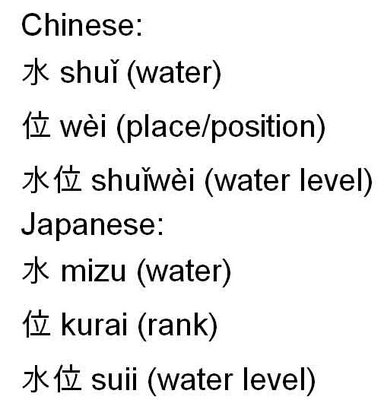
First is the fact that both Chinese and Japanese might have the same kanji, but they’re pronounced differently. For example, in Chinese, water is pronounced as shui. In Japanese, however, it’s pronounced as mizu. However, that’s just the beginning. In Chinese, you can combine two characters to form a word with a new meaning. I call these compound words, and it’s much like English compound words. In Chinese, when you combine water with the character for location, wei, you get water level. In Japanese, the same characters can be combined to form the same meaning. However, the pronunciation becomes different in Japanese. Alone, water is pronounced as mizu, while the character that’s location in Chinese is pronounced as kurai (its meaning is also slightly different, meaning position or rank instead of a location). Combined, it merely becomes suii. It is important to note that in compound words, Chinese characters are always pronounced the same way, although their meanings can change. Japanese, on the other hand, alters in pronunciation depending on which characters it’s paired up with, as well as its meaning.
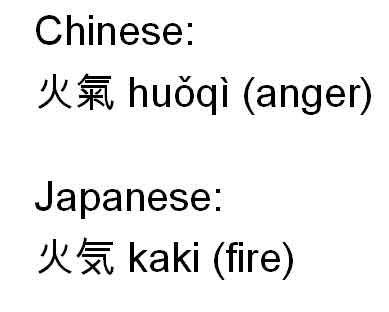
Of course sometimes, when you combine the same two characters, their meanings change. For example, huoki in Chinese means anger. Using the same characters for Japanese, you end up with kaki which stands for fire.
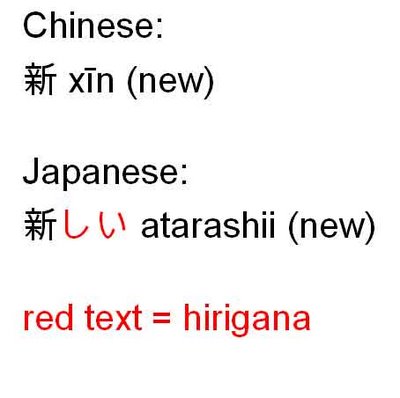
There are also situations when the Japanese kanji is supplemented by hiragana characters. For example, the character for new in Chinese is xin. In Japanese, it is atarashii, and it is comprised of a combination of kanji and hiragana.
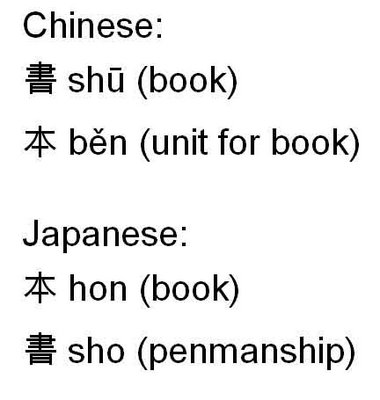
Then there’s the rare instance when the characters have been corrupted. For example, the Chinese character for book is shu. In Japanese, it’s hon. Yet these are two entirely different kanji characters. Where did the latter get its meaning? Well, hon has a Chinese equivalent. It’s pronounced as ben. It’s normally used as a unit for books. What I mean by unit is that in Chinese, in between a number and a noun is a Chinese character that’s used as a unit. In English, the closest I can think of is storm in a storm of crows or fleet in a fleet of ships. Now ben is usually a unit used to measure printed material, such as books. In Japanese, there are no such things as units. Shu still exists in Japanese, except its meaning is now penmanship rather than book.
Lastly, there are more Chinese characters than Japanese kanji characters. The Japanese government has 1,945 recommended characters to be used as a guideline by the populace but that number is still dwarfed by the number of total Chinese characters. To make a long story short, there will be Chinese characters that do not exist in the Japanese language. It is harder for a Japanese person to learn Chinese compared to a Chinese person to learn Japanese (because the former supposedly has a better mastery of kanji) but the Chinese person will still need to readjust to the different meanings of words he is familiar with, not to mention grammar and syntax. A Japanese learning Chinese, on the other hand, has a lot of kanji to familiarize himself with, in addition to readjusting to the kanji he already knows.
This an attempt of mine to share my frugal knowledge on Chinese and Japanese characters. I'm tackling the two, instead of say just Japanese, because for one thing, both languages are linked to each other (or rather it's more proper to say that Japanese is linked to Chinese). Moreover, while there are several books and online webpages there that tackle Chinese and Japanese exclusively, I think it would be more interesting on my part to tackle them both and how they're related to each other.
Based on the previous lessons, one might think that just because you know Chinese you’ll automatically know Japanese (at least the kanji part) and vice versa. Unfortunately, this isn’t true. Will it be easier for you? In a way, yes, especially considering navigating through a Chinese and Japanese dictionary is the same, but I’ll get to that in the future. In the meantime, here are some significant differences.
First is the fact that both Chinese and Japanese might have the same kanji, but they’re pronounced differently. For example, in Chinese, water is pronounced as shui. In Japanese, however, it’s pronounced as mizu. However, that’s just the beginning. In Chinese, you can combine two characters to form a word with a new meaning. I call these compound words, and it’s much like English compound words. In Chinese, when you combine water with the character for location, wei, you get water level. In Japanese, the same characters can be combined to form the same meaning. However, the pronunciation becomes different in Japanese. Alone, water is pronounced as mizu, while the character that’s location in Chinese is pronounced as kurai (its meaning is also slightly different, meaning position or rank instead of a location). Combined, it merely becomes suii. It is important to note that in compound words, Chinese characters are always pronounced the same way, although their meanings can change. Japanese, on the other hand, alters in pronunciation depending on which characters it’s paired up with, as well as its meaning.

Of course sometimes, when you combine the same two characters, their meanings change. For example, huoki in Chinese means anger. Using the same characters for Japanese, you end up with kaki which stands for fire.

There are also situations when the Japanese kanji is supplemented by hiragana characters. For example, the character for new in Chinese is xin. In Japanese, it is atarashii, and it is comprised of a combination of kanji and hiragana.

Then there’s the rare instance when the characters have been corrupted. For example, the Chinese character for book is shu. In Japanese, it’s hon. Yet these are two entirely different kanji characters. Where did the latter get its meaning? Well, hon has a Chinese equivalent. It’s pronounced as ben. It’s normally used as a unit for books. What I mean by unit is that in Chinese, in between a number and a noun is a Chinese character that’s used as a unit. In English, the closest I can think of is storm in a storm of crows or fleet in a fleet of ships. Now ben is usually a unit used to measure printed material, such as books. In Japanese, there are no such things as units. Shu still exists in Japanese, except its meaning is now penmanship rather than book.
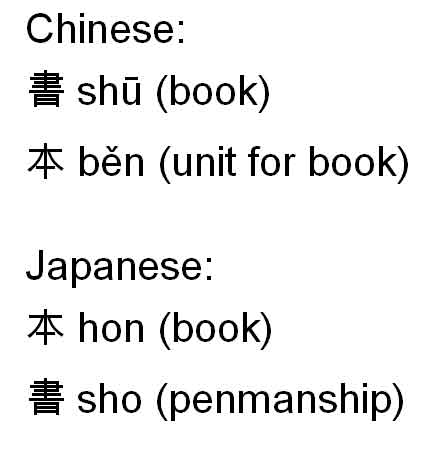
Lastly, there are more Chinese characters than Japanese kanji characters. The Japanese government has 1,945 recommended characters to be used as a guideline by the populace but that number is still dwarfed by the number of total Chinese characters. To make a long story short, there will be Chinese characters that do not exist in the Japanese language. It is harder for a Japanese person to learn Chinese compared to a Chinese person to learn Japanese (because the former supposedly has a better mastery of kanji) but the Chinese person will still need to readjust to the different meanings of words he is familiar with, not to mention grammar and syntax. A Japanese learning Chinese, on the other hand, has a lot of kanji to familiarize himself with, in addition to readjusting to the kanji he already knows.
Monday, October 09, 2006
Chinese/Japanese Characters 101: Lesson 2 Pronunciation
The language I am most familiar with, first and foremost, is English. Chinese was a subject I was taught for at least eleven years but the lessons at the time didn't seem to sink in. Japanese, on the other hand, was a language I taught myself, and it was easier for me to grasp it thanks to my prior knowledge of Chinese.
This an attempt of mine to share my frugal knowledge on Chinese and Japanese characters. I'm tackling the two, instead of say just Japanese, because for one thing, both languages are linked to each other (or rather it's more proper to say that Japanese is linked to Chinese). Moreover, while there are several books and online webpages there that tackle Chinese and Japanese exclusively, I think it would be more interesting on my part to tackle them both and how they're related to each other.
In the previous lesson, we established that Chinese and kanji characters are more like symbols rather than the phonetics common to Western languages. So how does one go about figuring how to pronounce a word?
Let’s take the kanji character for love, “ai”. In Japanese, there’s two ways to write this: in hirigana, and in kanji. Obviously, hirigana will reveal how the kanji character is pronounced. In this case, the kanji character is used more often than not, and resorting to writing ai in hirigana betrayers a person’s lack of familiarity with the language. As a learning tool, certain kanji characters are sometimes accompanied with hirigana characters written above them (and more rarely, katakana characters if the author intends to have the kanji characters pronounced in a different or foreign way). This is called hirigana and can usually be seen in books and comics designed for teenagers (or basically any printed material that’s helping the reader make the transition from hirigana to kanji).
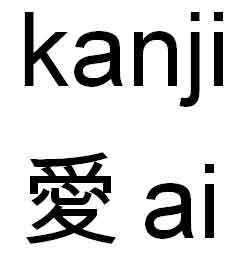
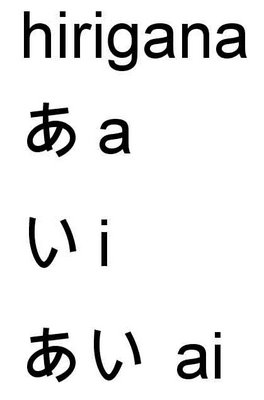
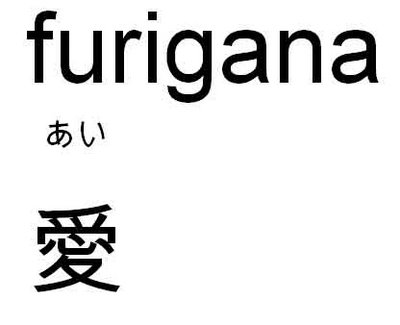
The question you might be asking is why bother with kanji at all if there’s always a hirigana equivalent for it. Well for one thing, as mentioned in the previous lesson, kanji characters speed up the reading process. The other, perhaps more important reason, is that it helps differentiate from other similar-sounding words. In English, it’s what we would call homonyms. There’s only so many letters in the Japanese alphabet and it is inevitable that certain words will be pronounced the same as other words. However, a distinct difference will be how they are written. It could be a different combination of hirigana and kanji characters or simply a different kanji character altogether. Third is the fact that kanji characters are like symbols, and kanji characters are composed of other kanji characters (I call them “root words”). Sometimes, the meaning of root words are related to the kanji character which they’re a part of. For example, in the case of ai, it contains the kanji character for heart, shin. It’s not a significant logical leap to associate heart with love.
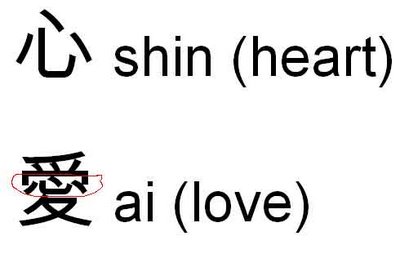
Chinese, on the other hand, poses a different problem. Unlike Japanese which has three scripts (hirigana, katakana, and kanji), it simply has one. Its entire alphabet are composed of kanji characters. So how does a Chinese person figure out how to pronounce a word?
Well, there’s zhuyin, which is a pronunciation guide for the Chinese. If the Japanese have furigana which uses hirigana to guide readers on how to pronounce a kanji character, zhuyin is the equivalent of hirigana. However, unlike hirigana, zhuyin is never used as a standalone word but simply exists to show how Chinese characters are pronounced. You can think of them as the funky pronunciation guides preceding the definition of a word in English dictionaries. You only see them when you’re interested in figuring out how a word is pronounced but aside from that, never see it used in formal texts. For each Chinese character, a zhuyin will usually comprise of one or two characters, plus an accent note. Unlike Japanese, Chinese is monosyllabic: that is, there’s only one syllable sound for each character, whereas Japanese characters range anywhere between one to three. To compensate for this lack of variety, Chinese has four accents which act to differentiate similar-sounding words. Nonetheless, Chinese still has homonyms, and either the written characters or familiarity with the usage (in the case of actual conversations) enables people to distinguish between similar sounding words.
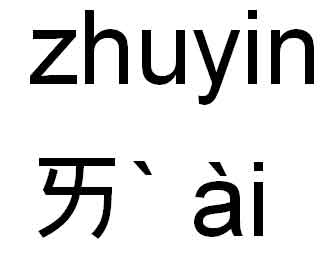
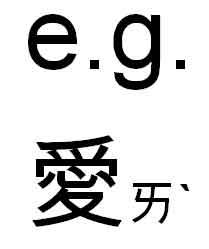
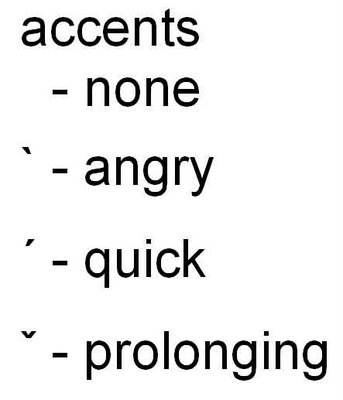
Of course if you’re an English speaker, you’ll probably be more familiar with romaji and pinyin. The former is used for Japanese, and is a guide on how to pronounce Japanese words using Roman characters. The latter is like romaji, except it’s used for Chinese characters.

This an attempt of mine to share my frugal knowledge on Chinese and Japanese characters. I'm tackling the two, instead of say just Japanese, because for one thing, both languages are linked to each other (or rather it's more proper to say that Japanese is linked to Chinese). Moreover, while there are several books and online webpages there that tackle Chinese and Japanese exclusively, I think it would be more interesting on my part to tackle them both and how they're related to each other.
In the previous lesson, we established that Chinese and kanji characters are more like symbols rather than the phonetics common to Western languages. So how does one go about figuring how to pronounce a word?
Let’s take the kanji character for love, “ai”. In Japanese, there’s two ways to write this: in hirigana, and in kanji. Obviously, hirigana will reveal how the kanji character is pronounced. In this case, the kanji character is used more often than not, and resorting to writing ai in hirigana betrayers a person’s lack of familiarity with the language. As a learning tool, certain kanji characters are sometimes accompanied with hirigana characters written above them (and more rarely, katakana characters if the author intends to have the kanji characters pronounced in a different or foreign way). This is called hirigana and can usually be seen in books and comics designed for teenagers (or basically any printed material that’s helping the reader make the transition from hirigana to kanji).

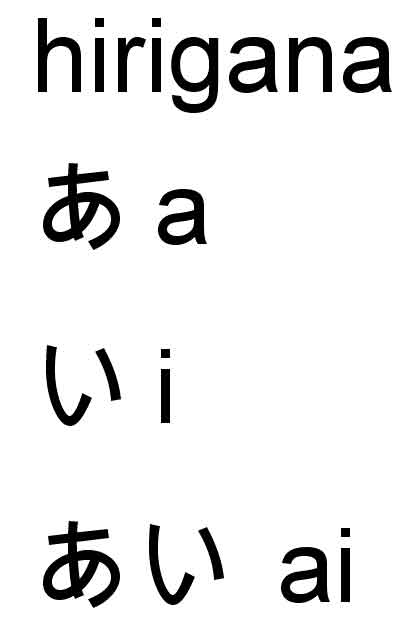
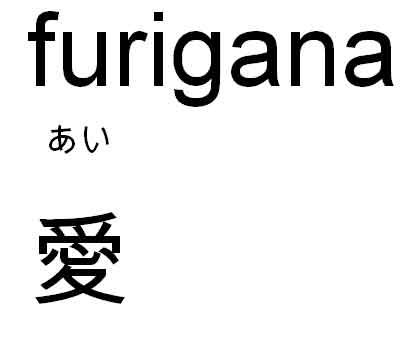
The question you might be asking is why bother with kanji at all if there’s always a hirigana equivalent for it. Well for one thing, as mentioned in the previous lesson, kanji characters speed up the reading process. The other, perhaps more important reason, is that it helps differentiate from other similar-sounding words. In English, it’s what we would call homonyms. There’s only so many letters in the Japanese alphabet and it is inevitable that certain words will be pronounced the same as other words. However, a distinct difference will be how they are written. It could be a different combination of hirigana and kanji characters or simply a different kanji character altogether. Third is the fact that kanji characters are like symbols, and kanji characters are composed of other kanji characters (I call them “root words”). Sometimes, the meaning of root words are related to the kanji character which they’re a part of. For example, in the case of ai, it contains the kanji character for heart, shin. It’s not a significant logical leap to associate heart with love.

Chinese, on the other hand, poses a different problem. Unlike Japanese which has three scripts (hirigana, katakana, and kanji), it simply has one. Its entire alphabet are composed of kanji characters. So how does a Chinese person figure out how to pronounce a word?
Well, there’s zhuyin, which is a pronunciation guide for the Chinese. If the Japanese have furigana which uses hirigana to guide readers on how to pronounce a kanji character, zhuyin is the equivalent of hirigana. However, unlike hirigana, zhuyin is never used as a standalone word but simply exists to show how Chinese characters are pronounced. You can think of them as the funky pronunciation guides preceding the definition of a word in English dictionaries. You only see them when you’re interested in figuring out how a word is pronounced but aside from that, never see it used in formal texts. For each Chinese character, a zhuyin will usually comprise of one or two characters, plus an accent note. Unlike Japanese, Chinese is monosyllabic: that is, there’s only one syllable sound for each character, whereas Japanese characters range anywhere between one to three. To compensate for this lack of variety, Chinese has four accents which act to differentiate similar-sounding words. Nonetheless, Chinese still has homonyms, and either the written characters or familiarity with the usage (in the case of actual conversations) enables people to distinguish between similar sounding words.
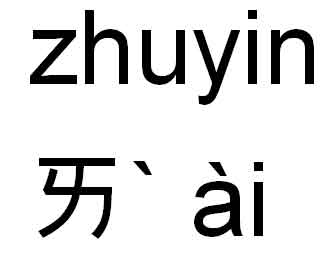
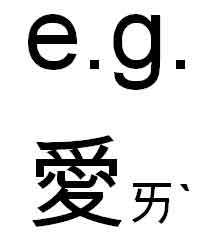

Of course if you’re an English speaker, you’ll probably be more familiar with romaji and pinyin. The former is used for Japanese, and is a guide on how to pronounce Japanese words using Roman characters. The latter is like romaji, except it’s used for Chinese characters.

Sunday, October 08, 2006
Chinese/Japanese Characters 101: Lesson 1 Signs and Symbols
The language I am most familiar with, first and foremost, is English. Chinese was a subject I was taught for at least eleven years but the lessons at the time didn't seem to sink in. Japanese, on the other hand, was a language I taught myself, and it was easier for me to grasp it thanks to my prior knowledge of Chinese.
This an attempt of mine to share my frugal knowledge on Chinese and Japanese characters. I'm tackling the two, instead of say just Japanese, because for one thing, both languages are linked to each other (or rather it's more proper to say that Japanese is linked to Chinese). Moreover, while there are several books and online webpages there that tackle Chinese and Japanese exclusively, I think it would be more interesting on my part to tackle them both and how they're related to each other.
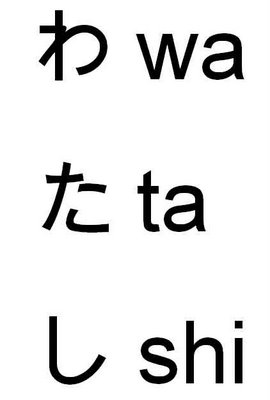
Japanese has three "alphabets": hiragana, katakana, and kanji (Chinese characters). The first two is pretty much like most of the western languages. Hirigana and katakana act as pronunciation guides, and when we hear certain combination of letters used in conjunction with each other, they form the actual words which we’re familiar with. For example, "I" or "me" in Japanese is watashi. This is usually written in hiragana. It’s when we see the characters of wa, ta, and shi together that we make the mental translation of it meaning "me".
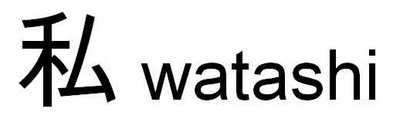
Kanji, on the other hand, doesn’t work that way. There’s no inherent guide on how to pronounce the word. Instead, it’s like signs and symbols. The closest approximation I have for Western culture is that it’s like Egyptian hieroglyphs. Chinese characters are pictograms which convey a certain meaning, depending on the characters used. For example, in Japanese, watashi also has a kanji character. However, it gives readers little insight on how it should be pronounced. However, the advantage of this is that when one is familiar with such characters, it’s faster to comprehend such words. Unlike wa-ta-shi where we process three characters to make sense of a word, the kanji of watashi is simply one character. It’s like seeing a sign on the street: we immediately know what it signifies once we catch a glimpse of it.
The Chinese language only uses kanji. There is no such thing as hiragana or katakana in Chinese. Japanese, on the other hand, can come in hiragana, katakana, kanji, or a combination of hiragana and kanji (there is no mixed combination of katakana and kanji).
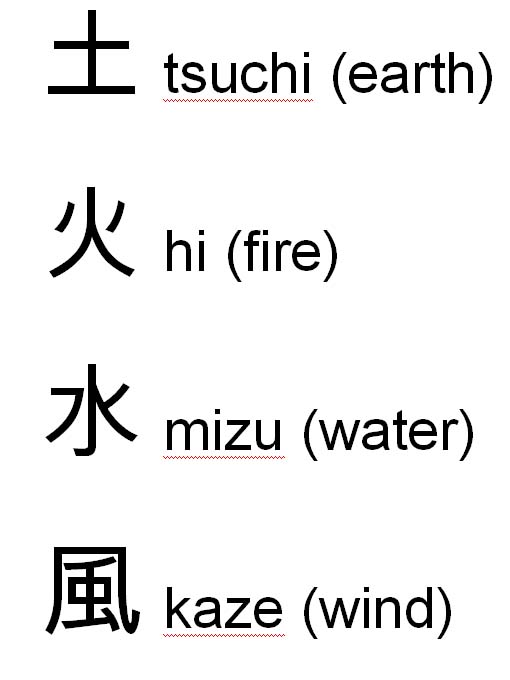
Here are other examples of kanji characters: (Pronunciations so far have been in Japanese; the Chinese way of pronouncing them is different, and will be tackled later on.)

This an attempt of mine to share my frugal knowledge on Chinese and Japanese characters. I'm tackling the two, instead of say just Japanese, because for one thing, both languages are linked to each other (or rather it's more proper to say that Japanese is linked to Chinese). Moreover, while there are several books and online webpages there that tackle Chinese and Japanese exclusively, I think it would be more interesting on my part to tackle them both and how they're related to each other.
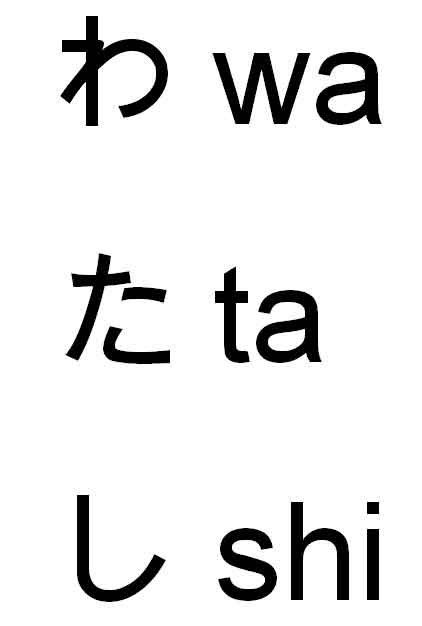
Japanese has three "alphabets": hiragana, katakana, and kanji (Chinese characters). The first two is pretty much like most of the western languages. Hirigana and katakana act as pronunciation guides, and when we hear certain combination of letters used in conjunction with each other, they form the actual words which we’re familiar with. For example, "I" or "me" in Japanese is watashi. This is usually written in hiragana. It’s when we see the characters of wa, ta, and shi together that we make the mental translation of it meaning "me".
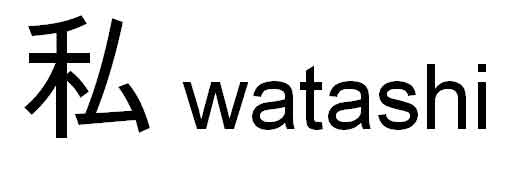
Kanji, on the other hand, doesn’t work that way. There’s no inherent guide on how to pronounce the word. Instead, it’s like signs and symbols. The closest approximation I have for Western culture is that it’s like Egyptian hieroglyphs. Chinese characters are pictograms which convey a certain meaning, depending on the characters used. For example, in Japanese, watashi also has a kanji character. However, it gives readers little insight on how it should be pronounced. However, the advantage of this is that when one is familiar with such characters, it’s faster to comprehend such words. Unlike wa-ta-shi where we process three characters to make sense of a word, the kanji of watashi is simply one character. It’s like seeing a sign on the street: we immediately know what it signifies once we catch a glimpse of it.
The Chinese language only uses kanji. There is no such thing as hiragana or katakana in Chinese. Japanese, on the other hand, can come in hiragana, katakana, kanji, or a combination of hiragana and kanji (there is no mixed combination of katakana and kanji).
Here are other examples of kanji characters: (Pronunciations so far have been in Japanese; the Chinese way of pronouncing them is different, and will be tackled later on.)
Subscribe to:
Posts (Atom)