Folks,
I would have liked to keep this one quiet for a little while, but because of upcoming conventions and of course the need to keep my publishers informed, it seems to me unfair to withhold the news. I have been diagnosed with a very rare form of early
onset Alzheimer's, which lay behind this year's phantom "stroke".
We are taking it fairly philosophically down here and possibly with a mild optimism. For now work is continuing on the completion of Nation and the basic notes are already being laid down for Unseen Academicals. All other things being equal, I
expect to meet most current and, as far as possible, future commitments but will discuss things with the various organisers. Frankly, I would prefer it if people kept things cheerful, because I think there's time for at least a few more books yet :o)
PS I would just like to draw attention to everyone reading the above that this should be interpreted as 'I am not dead'. I will, of course, be dead at some future point, as will everybody else. For me, this maybe further off than you think - it's too soon to tell. I know it's a very human thing to say "Is there anything I can do", but in this case I would only entertain offers from very high-end experts in brain chemistry.
Thursday, December 13, 2007
Pratchett Diagnosed with Alzheimers
From Discworld News:


PGS Christmas Issue!
Breaking from tradition of plugging its latest issue a month or two before its release, Philippine Genre Stories has begun to distribute its Christmas issue in bookstores. Here's the Table of Contents:
"Jumpercable: The Crossing" by Erica Gonzales
"The Magic Christmas Box" by MRR Arcega
"Noche Buena" by Andrew Drilon
"The Off-Season" by Michael A.R. Co
"Twilight of the Magi" by Dominique Cimafranca
"Jumpercable: The Crossing" by Erica Gonzales
"The Magic Christmas Box" by MRR Arcega
"Noche Buena" by Andrew Drilon
"The Off-Season" by Michael A.R. Co
"Twilight of the Magi" by Dominique Cimafranca
Frederik Schodt on Astro Boy
From Newsarama
Over at Newsarama, Chris Arrant has an interview with Frederik Schodt (Manga! Manga! and Dreamland Japan) on Astro Boy:
Over at Newsarama, Chris Arrant has an interview with Frederik Schodt (Manga! Manga! and Dreamland Japan) on Astro Boy:
It's probably hard to find a direct analogy to Astro Boy, or Tetsuwan Atomu, in American culture. In the sense that Astro Boy helped kick start the manga and anime revolution in Japan, and is now an almost universally recognized character, I suppose he might be close to Mickey Mouse. Astro Boy is still widely visible in Japan, through merchandising of manga, anime, and licensed goods such as toys, stationary, and so forth. He is also used in the advertising of everything from bank securities to home security systems. And at sports events in most Japanese schools, the theme song to the original 1963 Astro Boy anime series is usually played to liven things up. Astro Boy is by no means a dead or moribund character. In 2009, as many already fans know, the Hong Kong and Hollywood-based company, Imagi, is also scheduled to bring out an all CG Astro Boy feature film.
Fiction/Writing and Tabletop RPG Podcasts for 2007/12/13
Every Thursday, I post links to various podcasts that deal with the topic of fiction, writing, and tabletop RPGs.
Last week there was a couple of podcast episodes that dealt with deciding what gifts to get for the holiday season. Wandering Geek Podcast tackles electronics for the traveling gamer in Geek Gift Guide. Role Playing Public Radio is more game oriented as it talks about rewards for your players in Loot. Geek Label Radio has their Holiday Shopping Guide episode and talks on a wide assortment of gifts. On the fiction side, you might want to listen to CBC Radio's coverage of C.S. Lewis's interesting life.
Fiction/Writing
Tabletop RPG (Mostly)
Last week there was a couple of podcast episodes that dealt with deciding what gifts to get for the holiday season. Wandering Geek Podcast tackles electronics for the traveling gamer in Geek Gift Guide. Role Playing Public Radio is more game oriented as it talks about rewards for your players in Loot. Geek Label Radio has their Holiday Shopping Guide episode and talks on a wide assortment of gifts. On the fiction side, you might want to listen to CBC Radio's coverage of C.S. Lewis's interesting life.
Fiction/Writing
- The Agony Column recordings: Bill Minor, Jeremy Lassen of Nightshade Books on eBooks and free books, Bettina Aptheker and Megan Seely, NPR Series First Books with Xiaolu Guo, Felix Gilman.
- Podictionary tackles the following words: brand, penitentiary, jail, porcelain, china.
- The Penguin Podcast features Happy Holidays! with Dave Barry.
- Tor and Forge Books has a chat with John Scalzi, Scott Westerfield, and Justine Larbalestier (part 1).
- The Sci Phi Show interviews Charlie Stross.
- The Bat Segundo Show interviews: Yannick Murphy, Garth Risk Hallberg.
- The Word Nerds tackle Silence and Speechlessness.
- Word Balloon features Heroes co-executive producers Jeph Loeb and Jesse Alexander.
Tabletop RPG (Mostly)
- Pulp Gamer episodes: Games, Education, and Youth Groups (GTS Seminar); The Future of Podcasting (Gen Con Panel), Holiday Roleplay.
- Heroic Cthulhu actual game recording: Logan Tries Vegemite, Diver (1, 2, 3, 4), Wild Horses (1, 2, 3), Statue (1, 2, 3), Zoo, Park (1, 2, 3), Bikini (1, 2), Martini (1, 2), Gunshot (1, 2), Amityville (1, 2, 3), Bed and Breakfast (1, 2, 3, 4, 5), Questionable Tastes (1, 2, 3), Martini (1, 2, 3).
- The Sons of Kryos talk about Character, NPC, and Player Goals.
- Virtual Play has another set of actual game recordings: With Great Power and Spirit of the Century.
- Wandering Geek Podcast has their second Game Bag Review Show.
- The Game Master Show has uploaded the third part of their Gerry Grayson Godsend Agenda crossover actual game recording with House of the Harping Monkey.
- House of the Harping Monkey ends their crossover with The Game Master Show with the fourth and last part of the Gerry Grayson Godsend Agenda game.
- The Durham 3's latest episode is entitled Setting Limits.
- Fell Calls! latest episode is called Pssst! We're Your Secret Santa.
- Fist Full of Comics and Games has the following podcasts: Monarch Comics Briefing for December 5, 2007: Gift for the Comic Geek, This Week in Geek for December 9, 2007, an interview with Peter Fernandez and Corine Orr (the former voices Speed Racer/Racer X and the latter Trixie), an interview with Lisa Ortiz (too many characters she voiced to mention), an interview with Sonny Straight (ditto, too many voices), and Peter Tatara on New York Anime Festival.
- Master Plan talks with Luke Crane about Scene Framing and Pacing Mechanics.
- Fear the Boot tackles RPG Maps.
- Geek Label Radio talks about the Supernatural.
- Gamer Radio Zero interviews Bart Carroll on DDI and Mark Durian on M:TG bannings and restrictions in their latest episode.
- The Basics of the Game interviews Brandes Soddard.
- Gaming Steve interviews Randy Beuhler, VP of Digital Gaming at WotC.
Word Count is the Writer's Currency
I was listening to Michael Stackpole's seminar on Breaking Into Freelance Writing and one of the things he mentions (actually just a few sentences) is that writers use word count as a measurement. You don't use pages and based on my experiences in the publishing industry, I know how fickle page numbers can be: different typefaces and sizes, illustrations and photos, paper size and layout are all variables which alters the page count. Word count is indeed a closer approximation of how long an article, essay, short story, or novel should be although word count in itself is still imprecise (but it's the closest thing we've got). In some publications, they even pay you by the word so it is an important gauge any writer should familiarize themselves with. If you'll notice, a lot of submissions usually state word count to put limitations on the entries they're accepting. In some cases, specifications like margins, font and font size is indicated and that's perhaps the only time that it's acceptable not to give a word count of how long your submission should be. Notice that the latter is usually the practice in schools and universities, especially when it comes to term papers and thesis's. Nonetheless, I find word count to be a more accurate measurement, especially determining how long it takes me to write a certain project. Also, I find that word counts are less intimidating than page numbers. What most people don't realize is that a single 8.5 x 11 page of double spaced, font Arial or Times New Roman size 12 (typically the standard) is just around 300 words. Or a blog entry at around this length. Filling say, ten to twenty pages isn't that difficult. Simply imagine writing ten to twenty blog entries.
So What if All Fiction is Truly Speculative?
Here in the Philippines, I wouldn't go as far to say that local genre fiction gets little respect in literary circles, but rather realism is emphasized more than, well, anything else. And in many ways, this is true to the rest of the world as well. Sure, a few titles have made it into the literary canon, Dracula and Frankenstein for horror, Fahrenheit 451 and 1984 for science fiction, and Lord of the Rings and Chronicles of Narnia for fantasy. There is one argument being thrown about however: that all fiction is speculative, so why bother with these labels of genre or speculative fiction? While I don't contend with the fact that all fiction is truly speculative, that's not to say that there is no difference between a realist novel and a speculative one. More importantly, it is that difference that matters to other people. Even if I blindly accept that there is no difference between a Filipino science-fiction novel and a Filipino realist novel, I can't expect other people to see it that way. If I want to bridge the gap between speculative fiction and realist fiction, I need to work with the latter's paradigm (or in some people's opinion, go against their paradigm) but never, ever, ignore that paradigm. If people use the term speculative fiction, it is to distinguish itself from other genres, but at the same time encapsulate the works of fantasy, science fiction, and horror.
Another argument following the line of thought that all fiction is speculative, a certain critic goes as far to say that the Philippines is already rich in speculative fiction and he mentions this in every single discussion about speculative fiction. My honest answer to that is so what? I think every nation is rich in the culture of speculative fiction: old religions into myths and honestly what nation is without their own faiths and beliefs? But that doesn't stop them from writing about it. If you stop writing about something (even realism) just because it's popular, it ceases to grow and becomes stagnant. If we want to push the agenda of speculative fiction, one needs to continue creating such a culture. It is not enough to have a history of speculative fiction but rather one must sustain the act of creating and writing such stories (and this applies to all forms of writing).
Another argument following the line of thought that all fiction is speculative, a certain critic goes as far to say that the Philippines is already rich in speculative fiction and he mentions this in every single discussion about speculative fiction. My honest answer to that is so what? I think every nation is rich in the culture of speculative fiction: old religions into myths and honestly what nation is without their own faiths and beliefs? But that doesn't stop them from writing about it. If you stop writing about something (even realism) just because it's popular, it ceases to grow and becomes stagnant. If we want to push the agenda of speculative fiction, one needs to continue creating such a culture. It is not enough to have a history of speculative fiction but rather one must sustain the act of creating and writing such stories (and this applies to all forms of writing).
Philippine Speculative Fiction Vol. 3 for Sale

Philippine Speculative Fiction Vol. 3 won't be available in bookstores until next year so if you're interested in acquiring a copy, feel free to contact me or Banzai Cat (go get them from Banzai Cat because he's an award winning author and is more pliant and charming). Retail price is P300.00.
SFWA Needs Contracts!
From Mary Robinette Kowal
As part of a study on contracts, SFWA is seeking to enlarge and update their database of representative contract terms from the major publishers. Authors interested in participating may email e-contracts, or scans of their paper contracts, to president@sfwa.org or mail paper copies to SFWA, Attn: Michael Capobianco, at P.O. Box 877, Chestertown, MD 21620. Please redact anything that you don’t want to reveal.
If possible, please note if the contract is boilerplate language or if it has been negotiated. Of particular interest are e-book rights.
Wednesday, December 12, 2007
Nobel Prize Winner for Literature 2007 Acceptance Speech
From SF Signal
Doris Lessing, who won the Nobel Prize for Literature, has posted her acceptance speech:
Doris Lessing, who won the Nobel Prize for Literature, has posted her acceptance speech:
Writing, writers, do not come out of houses without books.
There is the gap. There is the difficulty.
I have been looking at the speeches by some of your recent prizewinners. Take the magnificent Pamuk. He said his father had 1 500 books. His talent did not come out of the air, he was connected with the great tradition.
Take V.S. Naipaul. He mentions that the Indian Vedas were close behind the memory of his family. His father encouraged him to write. And when he got to England by right he used the British Library. So he was close to the great tradition.
Let us take John Coetzee. He was not only close to the great tradition, he was the tradition: he taught literature in Cape Town. And how sorry I am that I was never in one of his classes: taught by that wonderfully brave bold mind.
In order to write, in order to make literature, there must be a close connection with libraries, books, the Tradition.
I've Been Converted!
Every Wednesday, I have an essay on any topic that catches my fancy!
We're currently in the transition where a distinction is being made between books printed on paper and books printed electronically. Suffice to say, the current prevailing paradigm is that the former is superior to the latter (and in fact, more than a few people regard themselves as "published" only when they have a print publication credit to their name as opposed to an online one). As a writer, I very much agree with that sentiment, print being tangible evidence I can show my parents and peers that hey, I'm a writer! As a reader though, my habits have been changing. While I'm fortunate enough to surround myself with friends who love reading books, that's not the case with everyone. Some people eschew books in favor of other print materials be it magazines, broadsheets, or blogs and while some might proclaim that as the death of reading fiction, that's not necessarily the case as some short fiction do turn up in mainstream magazines. Lately, I've been spending more and more hours staring at the computer screen than reading print, mainly because there's a lot of work-related tasks that must be done on the computer. Checking email, blog surfing, and checking my Friendster/Multiply/Facebook if I had a social network account is easily part of my daily routine, perhaps to the point that I feel I missed something if I don't do so. My main point is that I've grown accustomed to reading on a computer screen.
I don't mean to sound apologetic about it and in fact, that's an advantage. I mean some people are able to consume text in print voraciously but when it comes to all things electronic, they hesitate. I'm someone who can do both! But staying true to my title, it's more than just that. Often, there are days when I'm easily motivated to turn on the computer and read text from the computer screen, but feel that opening my bag and picking up the book that's stored there too much of a hassle. It's true, I'm favoring electronic text over printed material! There are a couple of factors which I attribute to this. First and foremost, I've grown accustomed to using the computer. Computer screens are the new TV! But unlike the complaints hurled by parents and authority figures with regards to television, I can easily claim that I'm using the computer because it's necessary for work or that it's educational. Second, I can multitask when I'm using the computer. For example, my hands are free and the computer screen is holding itself upright on its own. Contrary to popular belief, I do eat. And eating while reading is something I like to do but isn't optimal when you're reading a paperback. Not only do I need both hands to turn the pages, I'm also afraid I'll smudge and ruin the book with my stained fingers. A computer keyboard and mouse can easily be cleaned but the same can't be said for print books. The third reason is that it honestly takes less effort to read from a computer. I mean the text is already there and the screen is well-lit. I don't know about you but I find flicking a computer switch much easier than standing up, going to where my book is shelved, picking it up, and then finding a comfortable seat or position to read.
Having said that, I'm not yet a traitor to the previous paradigm. In Lit Crit, we receive short stories in electronic format and while most people opt to print the stories and then read them, I personally read them from the screen. That's for short stories and novellas though and I have yet to read an entire novel from the computer screen. Of course the beauty of reading is that if you're already engrossed, all the discomforts and limitations cease to matter and that very much applies whether I'm reading an eBook or an actual print book. And at the end of the day, I think that's what matters the most. One can easily spend hours reading blogs and navigating through social networks. It's easily as engrossing as getting lost in a novel although some might question the "literariness" of such sites. Still, more than a few short stories, poetry, and essays have been posted on the 'net and eBooks (everything from the Bible to canon to mainstream publications) are readily available for download. I don't know about you but surfing Amazon from the comforts of my home is much more convenient than scheduling a trip to Bonifacio High Street to visit the massive Fully Booked bookstore and then spending an additional hour looking for a particular book--unless it is my intent to kill time (and book hunting has its own separate pleasures). For me, anything that facilitates and encourage reading is good.
As a writer though, online books are a great resource. Navigating through computer tabs is much more preferred than keeping a pile of books on my side, bookmarking entries and fearing that I'll eventually crease their pages from the wear and tear. This is probably most evident when I'm creating characters/monsters for my tabletop RPG games where I'm using more than one book. In fact, one of the advantages is that I can easily copy/paste material (or site them as a source for those of you writing term papers) into my document. I can easily juggle several books and I don't miss the days when there's several encyclopedias on my lap yet I'm only using them one at a time.
I haven't made the big leap yet though when it comes to the next level of eBook reading, which is the portable eBook readers. I have yet to find a device which satisfies my PDF needs and at a budget I can afford. For now, I'll have to settle for good old print books. Perhaps one big advantage of print books is that they aren't so ubiquitous. When people see me reading a book, they get curious and ask me what book I'm reading and it's an excuse to promote my agenda of reading. The same can't be said when they see you using the computer though. Besides, the former makes me look smarter even if that's not necessarily true.
We're currently in the transition where a distinction is being made between books printed on paper and books printed electronically. Suffice to say, the current prevailing paradigm is that the former is superior to the latter (and in fact, more than a few people regard themselves as "published" only when they have a print publication credit to their name as opposed to an online one). As a writer, I very much agree with that sentiment, print being tangible evidence I can show my parents and peers that hey, I'm a writer! As a reader though, my habits have been changing. While I'm fortunate enough to surround myself with friends who love reading books, that's not the case with everyone. Some people eschew books in favor of other print materials be it magazines, broadsheets, or blogs and while some might proclaim that as the death of reading fiction, that's not necessarily the case as some short fiction do turn up in mainstream magazines. Lately, I've been spending more and more hours staring at the computer screen than reading print, mainly because there's a lot of work-related tasks that must be done on the computer. Checking email, blog surfing, and checking my Friendster/Multiply/Facebook if I had a social network account is easily part of my daily routine, perhaps to the point that I feel I missed something if I don't do so. My main point is that I've grown accustomed to reading on a computer screen.
I don't mean to sound apologetic about it and in fact, that's an advantage. I mean some people are able to consume text in print voraciously but when it comes to all things electronic, they hesitate. I'm someone who can do both! But staying true to my title, it's more than just that. Often, there are days when I'm easily motivated to turn on the computer and read text from the computer screen, but feel that opening my bag and picking up the book that's stored there too much of a hassle. It's true, I'm favoring electronic text over printed material! There are a couple of factors which I attribute to this. First and foremost, I've grown accustomed to using the computer. Computer screens are the new TV! But unlike the complaints hurled by parents and authority figures with regards to television, I can easily claim that I'm using the computer because it's necessary for work or that it's educational. Second, I can multitask when I'm using the computer. For example, my hands are free and the computer screen is holding itself upright on its own. Contrary to popular belief, I do eat. And eating while reading is something I like to do but isn't optimal when you're reading a paperback. Not only do I need both hands to turn the pages, I'm also afraid I'll smudge and ruin the book with my stained fingers. A computer keyboard and mouse can easily be cleaned but the same can't be said for print books. The third reason is that it honestly takes less effort to read from a computer. I mean the text is already there and the screen is well-lit. I don't know about you but I find flicking a computer switch much easier than standing up, going to where my book is shelved, picking it up, and then finding a comfortable seat or position to read.
Having said that, I'm not yet a traitor to the previous paradigm. In Lit Crit, we receive short stories in electronic format and while most people opt to print the stories and then read them, I personally read them from the screen. That's for short stories and novellas though and I have yet to read an entire novel from the computer screen. Of course the beauty of reading is that if you're already engrossed, all the discomforts and limitations cease to matter and that very much applies whether I'm reading an eBook or an actual print book. And at the end of the day, I think that's what matters the most. One can easily spend hours reading blogs and navigating through social networks. It's easily as engrossing as getting lost in a novel although some might question the "literariness" of such sites. Still, more than a few short stories, poetry, and essays have been posted on the 'net and eBooks (everything from the Bible to canon to mainstream publications) are readily available for download. I don't know about you but surfing Amazon from the comforts of my home is much more convenient than scheduling a trip to Bonifacio High Street to visit the massive Fully Booked bookstore and then spending an additional hour looking for a particular book--unless it is my intent to kill time (and book hunting has its own separate pleasures). For me, anything that facilitates and encourage reading is good.
As a writer though, online books are a great resource. Navigating through computer tabs is much more preferred than keeping a pile of books on my side, bookmarking entries and fearing that I'll eventually crease their pages from the wear and tear. This is probably most evident when I'm creating characters/monsters for my tabletop RPG games where I'm using more than one book. In fact, one of the advantages is that I can easily copy/paste material (or site them as a source for those of you writing term papers) into my document. I can easily juggle several books and I don't miss the days when there's several encyclopedias on my lap yet I'm only using them one at a time.
I haven't made the big leap yet though when it comes to the next level of eBook reading, which is the portable eBook readers. I have yet to find a device which satisfies my PDF needs and at a budget I can afford. For now, I'll have to settle for good old print books. Perhaps one big advantage of print books is that they aren't so ubiquitous. When people see me reading a book, they get curious and ask me what book I'm reading and it's an excuse to promote my agenda of reading. The same can't be said when they see you using the computer though. Besides, the former makes me look smarter even if that's not necessarily true.
Apples Aren't Oranges
Typically when we have two different products, we usually say we can't compare the two because it's like comparing apples to oranges--an expression meant to signify that they're entirely different animals and different standards should be used. In fiction, this can apply to a variety of circumstances: comparing a romance text to a horror text, comparing a short story to a novel. I bring this up because as much as we know that they're different, there are nonetheless circumstances when we compare two dissimilar subjects (and this occurs more often in real life). I wasn't the first one who noticed it but in the upcoming Gawad Likhaan Contest, why are short stories--or rather a short story collection--in the same category as novels? Granted, there might be budget constraints in terms of finances for the awards but I find such a category more in favor of the former than the latter. Both might have the same length and while there are elements of a short story that intersect with that of the novel, there are also other factors which make them completely different such as pacing and characterization. I find the advantage with the former mainly because you have several opportunities to impress the judges. Let's say in 200 pages, you have 10 short stories and while there might be a weak story or two in there, if the other 8 short stories are terrific, then you're more likely to win against that lone novel which has only one chance to impress you. Granted, the novel can pack more themes and subject matter into the story, but it's not really the same as ten stories that tackle a different theme and subject matter each, is it? I'm not saying that the novel can win in such a category. It can but it must really be a very, very outstanding novel to do so. Or let's say the judges give preferential treatment to the novel--what happens to the short stories submissions then? Having said that, I'm nonetheless grateful we have such competitions.
Blogging Routine
Lately I've been keeping a regular blogging schedule. There's several reasons why I do this:
First, it's because I love to write. Honestly, self-publishing has this instant gratification, especially when you have an audience. Blogging is merely the result of my writing rather than say, a desire to acquire income through blogging (which is why the site is ad free!).
Second, it's to exercise my writing muscles. Okay, my goal is to be a fiction writer (although I do have secondary goals or breaking into other writing markets, hint hint!) and while blogging isn't fiction writing (because I post little fiction in my blog), it is writing nonetheless (and I do write a variety of material here such as reviews, essays, and pseudo press releases). Blogging forces me to use those writing muscles and more importantly, to keep a writing schedule. That's why I have posts Monday through Fridays. The specific commitments isn't as important as the fact that I have a commitment to writing on some level.
Third, it's to get better. Honestly, I write a lot of crap or less-than-optimal documents. Sometimes, the only way you'll realize this is when you seen them in print. Right now, I'm spotting some weak spots when it comes to my book reviews and manga reviews so there's room for improvement there. As for my other blogging segments, it's always improving (take a look at my tabletop podcast coverage: my first coverage last August and my latest one this month). The improvement isn't necessarily by leaps and bounds but at least there's improvement, even if they're baby steps.
Fourth, it's my way of giving back to the community. For the most part, I'd like to think that most of my entries are doing a service or informative in some way. I mean I hope my "emo" posts are few and what dominates the most are blog entries which other people find useful. At the very least, if I don't succeed as a fiction writer, I can always be a reporter or columnist or blogger (but honestly I prefer to create content rather than just talk about 'em).
First, it's because I love to write. Honestly, self-publishing has this instant gratification, especially when you have an audience. Blogging is merely the result of my writing rather than say, a desire to acquire income through blogging (which is why the site is ad free!).
Second, it's to exercise my writing muscles. Okay, my goal is to be a fiction writer (although I do have secondary goals or breaking into other writing markets, hint hint!) and while blogging isn't fiction writing (because I post little fiction in my blog), it is writing nonetheless (and I do write a variety of material here such as reviews, essays, and pseudo press releases). Blogging forces me to use those writing muscles and more importantly, to keep a writing schedule. That's why I have posts Monday through Fridays. The specific commitments isn't as important as the fact that I have a commitment to writing on some level.
Third, it's to get better. Honestly, I write a lot of crap or less-than-optimal documents. Sometimes, the only way you'll realize this is when you seen them in print. Right now, I'm spotting some weak spots when it comes to my book reviews and manga reviews so there's room for improvement there. As for my other blogging segments, it's always improving (take a look at my tabletop podcast coverage: my first coverage last August and my latest one this month). The improvement isn't necessarily by leaps and bounds but at least there's improvement, even if they're baby steps.
Fourth, it's my way of giving back to the community. For the most part, I'd like to think that most of my entries are doing a service or informative in some way. I mean I hope my "emo" posts are few and what dominates the most are blog entries which other people find useful. At the very least, if I don't succeed as a fiction writer, I can always be a reporter or columnist or blogger (but honestly I prefer to create content rather than just talk about 'em).
Tuesday, December 11, 2007
Anticipating Philippine Speculative Fiction for 2008
The year is far from over yet so many events seemed to have happened for speculative fiction in the Philippines. First and foremost I think are the local publications. First are the dedicated fiction magazines like Philippine Genre Stories and Story Philippines. The former is a magazine devoted to genre fiction (most notably but not limited to science fiction, fantasy, and horror) while the latter is a more "general" publication and more than a few speculative fiction stories have managed to sneak into its pages. Then there's the more mainstream readership of Psi Com publishing, most famous for its line of True Philippine Ghost Stories but over the years it's managed to publish other horror collections and even a fantasy digest anthology Pinoy Amazing Adventures. There's also the magazines and broadsheets that publish fiction such as the mainstay The Philippines Free Press but we're also seeing short stories in other flashy magazines like Rogue (and hopefully other publications as well like Imagine). Last but not least are the actual books on speculative fiction, most notably the anthologies Expeditions (and the 2nd Graphic/Fiction Awards that accompanied it) by Fully Booked and Philippine Speculative Fiction Vol. 3 by Dean & Nikki Alfar. Of particular note with the former was that Neil Gaiman himself came to the Philippines not only to give a talk at the Ad Congress but to launch the book. With regards to the latter, Dean Alfar also released his collection of short stories this year, The Kite of Stars and Other Stories, under Anvil Publishing, who just launched their new imprint, Anvil Fantasy. Salamanca, Dean's first novel published the previous year, was also short-listed for the Madrigal-Gonzales Best First Book Awards.
But the year isn't over yet and there's still 20 days left in the year! Philippine Genre Stories will be releasing its Christmas issue hopefully before Christmas while more than a few local authors have been published in foreign markets: Philippine Genre Stories publisher Kenneth Yu got published in The Town Drunk, Read or Die founder Kristin Mandigma got published in Clarkesworld Magazine, Lit Critters founding member Kate Aton-Osias got published in Magic Realism, and Nikki Alfar should be published in Fantasy Magazine soon.
As for next year, there's much to look forward to. Story Philippines should be launching its new imprint Story Philippines Junior and for now, it looks like there will be a 3rd Philippine Graphic/Fiction Awards and hopefully another volume of Philippine Speculative Fiction by the Alfars. I'm also looking forward to Vin Simbulan's A Time for Dragons: An Anthology of Philippine Draconic Fiction and another Filipino author will be published in Weird Tales.
But the year isn't over yet and there's still 20 days left in the year! Philippine Genre Stories will be releasing its Christmas issue hopefully before Christmas while more than a few local authors have been published in foreign markets: Philippine Genre Stories publisher Kenneth Yu got published in The Town Drunk, Read or Die founder Kristin Mandigma got published in Clarkesworld Magazine, Lit Critters founding member Kate Aton-Osias got published in Magic Realism, and Nikki Alfar should be published in Fantasy Magazine soon.
As for next year, there's much to look forward to. Story Philippines should be launching its new imprint Story Philippines Junior and for now, it looks like there will be a 3rd Philippine Graphic/Fiction Awards and hopefully another volume of Philippine Speculative Fiction by the Alfars. I'm also looking forward to Vin Simbulan's A Time for Dragons: An Anthology of Philippine Draconic Fiction and another Filipino author will be published in Weird Tales.
Wheel of Time Continues With Brandon Sanderson
From Dragonmount:
Tor Books announced today that novelist Brandon Sanderson has been chosen to finish the final novel in Robert Jordan’s bestselling Wheel of Time fantasy series. Robert Jordan, one of the greatest storytellers of the 20th and early 21st centuries, died September 16th after a courageous battle with the rare blood disease amyloidosis.
The new novel, A MEMORY OF LIGHT, will be the twelfth and final book in the beloved fantasy series which has sold over 14 million copies in North America and over 30 million copies worldwide. The last four books in the series were all #1 New York Times bestsellers, and for over a decade fans have been eagerly awaiting the final novel that would bring the epic story to its conclusion.
Harriet Popham Rigney, Jordan’s beloved wife and editor, said of her decision to have Sanderson complete the last book in The Wheel of Time series: “I have chosen Brandon Sanderson to complete Robert Jordan’s great work, and I am absolutely delighted that he accepted. I will of course be editing this book as I have all of the other books of The Wheel of Time.”
Manga Review: MW by Osamu Tezuka
Every Tuesday I'll post either an anime or manga review.
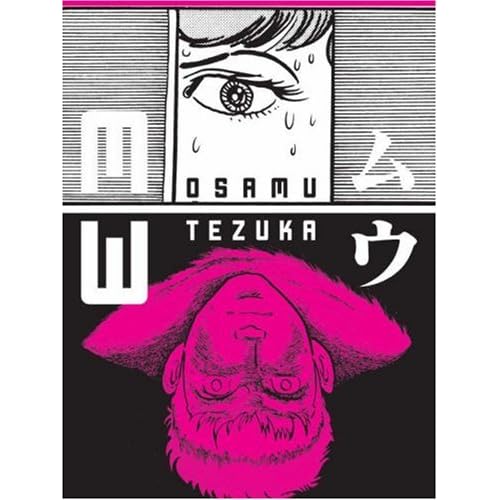
Over the past few months, I’ve been exploring Tezuka’s other non-mainstream works, sampling titles like Buddha and Apollo’s Song. Of course like most anime fans, I’ve been a fan of Tezuka, if only for Astro Boy (“Tetsuwan Atom”) if not anything else. I have yet to read Ode to Kirihito but MW is vastly different from his other works. This title is very adult and that is made clear in the first chapter where we witness our protagonist ransoms a dead child, skewers the father with a speed boat, and then jumps a Catholic priest so they can have burning homosexual sex. Morality, redemption, and Machiavellian methods are recurring themes in MW and is easily a precursor to sophisticated manga of the past decade such as Monster. In MW, we also witness the versatility of Tezuka as his artwork leans more toward the serious although there are some moments when he resorts to the slapstick—usually to show that the characters are infuriated.
My first impression of the title is that it really looks like a book and Vertical, the publisher, does great credit to Tezuka in its packaging. It’s not as fancy and full of supplemental material as say, Dark Horse’s Kurosaki Corpse Delivery Service or Viz’s Tekkon Kinkreet but rather it’s more servicable and sturdy. While I’m not a fan of flipped manga, MW for the most part doesn’t really suffer from it. The price, $24.95, might appear steep, but MW is actually quite thick (to the point that I couldn’t finish it in one sitting and had to continue it the next day) and is easily the equal of the omnibus editions that a couple of manga publishers are now releasing, in thickness if not in size.
In terms of the actual story, MW is quite plotty yet is similarly full of character development. The events that take place stretch the possibility of what’s “realistic” but doesn’t break it, although I wouldn’t be surprised of modern readers will find that some of the scenarios to be “too convenient” for our hero. For the most part, I have no problems with the art although there are times when Tezuka falters a bit and there’s too much minimalism for my taste. Overall however, it’s really a tightly-packed title that’s engrossing and mature, a graphic novel thriller decades ahead of its time. Strictly not for the kids at home but very much a hallmark of its era. As much as I enjoy Tezuka’s other work, with the sole exception of Testuwan Atom, this is easily his best one yet, although that simply might be appealing to my adult sensibilities. Grab this manga if you want something sophisticated or if you’re a US comic fan, it easily falls under the domain of what’s considered indy. Otherwise, if you’re more into pop and fast, upbeat action, you might want to pass on this as it’s more cerebral and even dragging at times.
Rating: 4/5.
Subscribe to:
Posts (Atom)