Wednesday, October 17, 2012

October 17, 2012 Links and Plugs

Interviews and Profiles

Advice/Articles
Reviews
Art

News
Events
Crowd-Funded Projects

Tuesday, October 16, 2012

Guest Blog: Inspiration: When the Chafe Point Strikes a Spark, or what made the idea for a story into the maverick signature for a series by Janny Wurts


Janny Wurts is the author of numerous successful fantasy novels, including the acclaimed Cycle of Fire trilogy and The Wars of Light and Shadow series. She is also co-author, with Raymond E. Feist, of the worldwide bestselling Empire series. Her skill as a horsewoman, offshore sailor, and musician is reflected in her novels. She is also a talented artist, and illustrates many of her own covers.


A writer doesn’t draw their explosive ideas from the comfort zone. Passionate fire is more likely to flare from the stacked deck of discontent, and the vivid disappointments encountered amid the shattering experiences of life. How better to escape, as a middle child, from two older brothers who were bigger and stronger, and two younger sisters who tended to tattle when the tastier adventures involved a foray into the forbidden? And where better to stray off limits with safety, than to immerse in a work of fantasy? I gorged on faerie tales and mythology, since fantasy then was not as widespread, or as readily available.

Then, didn’t the stereotype grate on my nerves, that over and over again the ‘hero’ was a blond, always handsome and tall, and the bad guy  was the sardonic sneak, inevitably with dark hair? And didn’t it sting, for a young brunette reader, that this profile carried over into movies, cartoons, and at times, even, to prejudice in real life?

I can honestly say that ranting annoyance seeded the original story concept: that the Wars of Light and Shadow would take this maddening, blinded cliché and stand it upside down with a vengeance. Oh, I’d play with the irony – the pretty, charismatic blond HERO-type would appear to hold all the right cards – but with two sides of the argument involved from the start, the little, introspective ANTAGONIST-type would in fact take the readers’ sympathy by storm.

Although the cookie cutter type Quest against a Dark Lord was prevalent at the time, I chose not to write my epic story in cast iron form. Along with the irritation just listed, Tolkien’s world building had set the bar. First thing I set off to build an original world, the history and the setting. Too young to have experienced enough, for me, this also involved biting off an enormous chunk of life experience: I embarked on exotic travel, offshore sailing, period re-enactment –  ‘the epic’ became the excuse to experiment with every possible sort of fun to lend the action a facet of realism. I went overboard – literally – determined to bring the epic battles up to a benchmark standard. This involved research in depth, studying war and tactics from about the Roman era up to the point where gunpowder changed everything. Within the world just created, with about five interlocking approaches to magic, the various periods had to be ‘mixed and matched’ to fit a place and time that is not our earth. I watched movies, spent late nights chatting with historical war gamers, energized on enthusiasm, Earl Grey Tea and sugar high from Coca-Cola.

Then came The Moment – the spark – the life-changing crucible of experience that threw every concept I thought I had into meltdown. I attended a screening of a documentary film on the Battle of Culloden, re-enacted and shot in black and white, and depicted with all of the layers of ‘Bonnie Prince Charlie’ romance, stripped off. No flinching from the horror, as a small, ill equipped band of Scottish clansmen stood in the mud and sleet, being ripped apart as artillery fire pounded them down, from uphill, while their commanding officers failed to give the order to charge. I went into that dark theater naive with conviction, and came out in a head-spinning state of upheaval and shock. Sad to say that nothing in my life had prepared me for the gristly reality that is war.

All the worse, because overlaid on the facts I’d acquired, the horrific realities of The Battle of Culloden Field in fact were no different than any of the other armed encounters I’d studied (Roman era up to the emergence of gunpowder). History as taught in our classrooms was too often glossed over with sanitized lies. The news depicted by papers and networks became exposed, at one stroke, as grotesquely biased and over simplified. Movies, entertainment, and worst of all, epic fantasy  perpetuated the distortion: war as told by the victor and glorified as a heroic endeavor inculcates the concept that might makes right. How tidy, that bloodletting causes are made clear, that one side is ‘wrong,’ the other is ‘better than’ and that the world’s sorry inequities find a just redress.

Left out of the picture: the misery, the brutality, the sheer bloody havoc that repeatedly solves nothing at all – that the winners of any conflict at arms had either: superior numbers, superior tactics, better weapons, or sheer dumb luck. The justifications that survive tell us nothing about what each side gave their lives for. We examine all too little from multiple viewpoints, take little stock of the cultural misunderstandings, and too often choose to turn the blind eye to the inequities never redressed, but glossed over until the nuance got steamrolled with death and ruthlessly eliminated.

Chafe point met spark with an impact that exploded every concept I had in the making. I have never again regarded the news, or a story, or a work of entertainment the same way. Life shifted to a quest to seek understanding, with recognition that right and wrong have many angles of view. Differences are messy, and the  entanglements offered by ideologies fall far short, and truth is not absolute, but many-faceted. Nine volumes later, from Curse of the Mistwraith to Initiate’s Trial, the Wars of Light and Shadows still stretches to sound the heights and the depths. To explore the qualities that comprise a hero, then shift angle, and encounter the very same virtues precipitating a downfall. Balanced thought is about embracing change, and continuously expanding awareness. I can hope that this series, now two volumes from ringing in the finale, continues to break the polarized concept of black and white. That human beings are both good and bad, light and dark, expansive and fallible, selfish and altruistic – and above any other thing, richly inventive.

A series written over decades of life is bound to accumulate other chafe points along the way. Today’s fashionable penchant for grim-dark dystopia surely has sparked a personal backlash. I prefer the stance that loss of hope is ‘the enemy’ rather than the foibles and fallacies of human nature. Let Athera be a world where you might want to live, filled with causes that, but for the grace of knowing multiple sides of a conflict, will not flinch from difficult questioning of the pat answers. May the tables be turned, not once, but many times, and as a last flip off to the laziness of quite a few of my respected peers – let me never EVER rely on the cheater’s tactic of cliffhangers!

October 16, 2012 Links and Plugs

Interviews and Profiles

Advice/Articles
Reviews

News
Heiresses of Russ 2012 edited by Connie Wilkins & Steve Berman

Monday, October 15, 2012

October 15, 2012 Links and Plugs

Interviews and Profiles

Advice/Articles
Reviews

Art


News

Events
Remember Why You Fear Me by Robert Shearman

Friday, October 12, 2012

October 12, 2012 Links and Plugs

Interviews and Profiles

Advice/Articles
Art

News

Events

Jagannath by Karin Tidbeck

Thursday, October 11, 2012

October 11, 2012 Links and Plugs

Interviews and Profiles

Advice/Articles
Reviews
Art

News
Iron Skin by Tina Connolly

Wednesday, October 10, 2012

October 10, 2012 Links and Plugs

Interviews and Profiles

Advice/Articles
Art

News

After: Nineteen Stories of Apocalypse and Dystopia edited by Ellen Datlow and Terri Windling

Tuesday, October 09, 2012

October 2012 Recommended Reading

If I've been relatively silent in the past few months, the truth is, I've been remiss on my reading, among other things.

But here's some recommendations that recently rejuvenated my love for short fiction:


After: Nineteen Stories of Apocalypse and Dystopia edited by Ellen Datlow and Terri Windling

This is one of the strongest original anthologies from the collaboration between Datlow and Windling that I've read to date. As an anthology, the powerful, effective stories are spread out and there's a lot of winners here. "The Segment" by Genevieve Valentine sets the mood for the entire book and provides an unlikely venue for the dystopia: television (not in the Reality TV sense but what many people perceive as news). Valentine's characters however are what wins you over as the nuances and subtlety become evident as you progress through the piece. What if vampirism can be cured? is the question that's tackled in "After the Cure" by Carrie Ryan, which is a grim story about coping, survival, and prejudice. The story felt like it didn't hold back and Ryan lives up to her premise. "Valedictorian" by N.K. Jemisin was impressive with its hypothetical scenario and philosophy that feels organic while "Blood Drive" by Jeffrey Ford features engrossing language and a jovial tone—without ignoring the harsh reality in the background. There are lots of other terrific stories in the book, but these four are the ones that stand out immediately.


Crackpot Palace by Jeffrey Ford

I'm actually only midway through this collection but I'm making a recommendation now for two reasons: the first is that every single story I've read so far does not disappoint, and the second is that I've read several of these stories previously in their original publication, and they're just as effective the second time around. As far as Ford's body of work is concerned, the stories are very different from each other while still retaining the sensibilities that makes Jeffrey Ford's writing Jeffrey Ford: "Polka Dots and Moonbeams" is vastly different from "Sit the Dead" or "The Seventh Expression of the Robot General". It is also of personal interest to me to follow the adventures of the fictional Jeffrey Ford (and his fictional wife Lynne) that creeps up in his stories. I've actually ordered three copies of this book to give to friends...


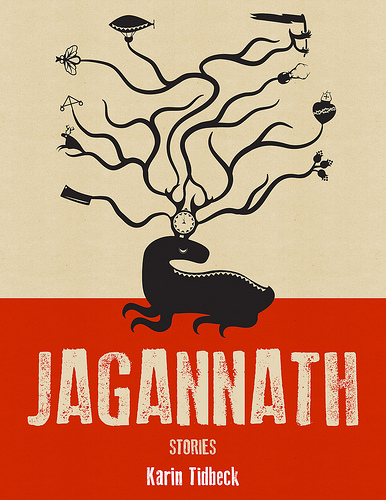
Jagannath by Karin Tidbeck

If people ask me to recommend an author from the Philippines, I immediately go with Dean Francis Alfar because when I first encountered his writing, it was unlike anything that I've encountered before. Reading Jagannath is similar to my first experience reading Alfar's work. Tidbeck's sensibilities are uniquely hers and opened my eyes to a different way of reading fiction. On one hand, you have a story like "Beatrice" which features an elegant rhythm and does not draw attention to the illogical premise that drives the story (people falling in love with inanimate objects). On the other hand, you have something bizarre and dark like "Aunts" (aunts are butchered and scavenged). And in the case of some stories, at the back of your mind is Swedish culture and mythology: you know it's being referenced (and adds another layer), but they're not necessary to enjoy the story. There's a lot to digest in Tidbeck's fiction, some of which makes you squirm—which is a good thing.


"England Under the White Witch" by Theodora Goss

Ever since Goss's short story collection In the Forest of Forgetting, I've always been eager to devour her fiction. In the past few years, stories that impressed me include "“Child-Empress of Mars," “Singing of Mount Abora," and "The Mad Scientist's Daughter," but Goss's published output for 2012 is just as impressive. "Beautiful Boys" published in Asimov's Science Fiction was a compelling piece and could easily have been one of my favorites for the year until I read "England Under the White Witch." Aside from the elegance of language and the beautiful description, the story struck a resonant chord with me, especially in light of our current political situation. In retrospect, Goss's story could easily have fit in the Datlow/Windling anthology I mentioned above, and it's a story that provides something interesting to readers, whether you're in it for the style, the imagery, or the characters.


"Weaving Dreams" by Mary Robinette Kowal

Another author I'm impressed with is Kowal and what I admire when it comes to her short fiction is that she's not afraid to try different techniques, styles, and genres, while still retaining her own sensibilities. "Weaving Dreams" caught me off-guard in the sense that it's unlike anything I've encountered previously but reading it was comfortable because it showed the same precision and care Kowal exercises in many of her stories. It's an alternate history and Kowal combines two mythologies seamlessly, with that fact being integral to the story. Much like Goss, Kowal hits all the right beats, whether it's language, tone, or characterization. But whereas Goss's piece was filled with gravity, this one reminds me that reading is fun.

October 9, 2012 Links and Plugs

And just a reminder, the Strange Horizons Fund Drive.

Interviews and Profiles

Advice/Articles
Reviews

Art
News
The Cascadia Subduction Zone, Vol.2, 4

Monday, October 08, 2012

October 8, 2012 Links and Plugs

Interviews and Profiles

Advice/Articles
 Reviews
 Art

News

Unstuck #1

Friday, October 05, 2012

October 5, 2012 Links and Plugs

Interviews and Profiles

Advice/Articles
Reviews
Art

News

Events
Under My Hat edited by Jonathan Strahan

Thursday, October 04, 2012

October 4, 2012 Links and Plugs

Interviews and Profiles

Advice/Articles
Reviews
Art

News
Events
The Girl Who Fell Beneath Fairyland and Led the Revels There by Catherynne M. Valente.

Wednesday, October 03, 2012

October 3, 2012 Links and Plugs

Interviews and Profiles

Advice/Articles

Reviews
Art

News
Events
Apex Issue 41

Tuesday, October 02, 2012

October 2, 2012 Links and Plugs

Interviews and Profiles

Advice/Articles
Reviews

Art

News
Events
Clarkesworld #73

Monday, October 01, 2012

October 1, 2012 Links and Plugs

Interviews and Profiles
Advice/Articles
Reviews
Art
News

Events
The Troika by Stepan Chapman